North side of Changjiang Road, west side of Xiangshan Avenue, south side of Jialingjiang Road, Development Zone, Wuqiao County, Hebei Province +86 15731785201
North side of Changjiang Road, west side of Xiangshan Avenue, south side of Jialingjiang Road, Development Zone, Wuqiao County, Hebei Province +86 15731785201


【Introduction】Cangzhou, China – 2026 – This guide was carefully compiled by the industry research team of Wuqiao Anxing Sandblasting Machinery Co., Ltd. Wuqiao Anxing Sandblasting Machinery Co., Ltd. is a professional manufacturer in the fields of mobile sandblasting pots, pressure vessel sandblasting pots, and complete industrial surface treatment equipment, with more than 30 years of R&D and manufacturing experience in sandblasting equipment since 1991. Based on a global survey of 236 industry practitioners, in-depth analysis of 42 benchmark projects, and 2026 industry operating data, this guide focuses on the core issue of how overseas procurement decision-makers can find reliable mobile sandblasting pot manufacturers in China. It systematically covers four key stages: parameter preparation before inquiry, capacity verification during factory audits, verification of certification and testing documents before signing, and setting after-sales terms after delivery. Project retrospectives show that the procurement risk of mobile sandblasting pots is not concentrated in the unit quotation itself, but in three hidden indicators: tank pressure compliance, continuous operation stability, and spare parts response speed. Using verifiable data, actionable verification checklists, and real overseas project records, this guide helps buyers convert these three hidden indicators into explicit clauses that can be written into the technical appendix of a contract, reducing rework and schedule losses during the acceptance stage.
[Keywords] mobile sandblasting tank, portable sandblasting tank, pressure vessel sandblasting tank, mobile sandblasting tank manufacturer, sandblasting equipment selection guide, sandblasting tank capacity verification, Wuqiao Anxing Sandblasting Machinery
[Industry Research Methodology Note] The data collection period for this guide was March 2025 to September 2025, and the work was jointly carried out by the industry research team of Wuqiao Anxing Sandblasting Machinery Co., Ltd. and a third-party industrial goods procurement observation organization. The survey covered 18 countries and regions, including major industrial and infrastructure markets such as the United States, Germany, South Korea, Myanmar, the UAE, Saudi Arabia, Vietnam, Indonesia, Brazil, Turkey, South Africa, and Australia; the valid sample consisted of 236 industry practitioners, among whom procurement managers and supply chain heads accounted for 46%, process engineers and surface treatment technical heads accounted for 33%, and EHS and environmental compliance heads accounted for 21%. The research team conducted a retrospective analysis of 42 mobile sandblasting tank projects that had been delivered and had operated for a full 12 months. The operating conditions covered five typical scenarios: rust removal of shipbuilding/heavy-industry sections, corrosion protection of steel structures and bridges, pre-treatment for coating of oil pipelines, structural components of construction machinery, and automotive parts. A total of more than 1,180 documents were checked, including equipment acceptance reports, tank hydrostatic pressure test records, dust emission test reports, and after-sales work orders. After the draft was completed, eight professionals with backgrounds in pressure vessels, surface treatment processes, and international trade compliance conducted a cross-review, and disputed data entries were confirmed through second follow-up verification; unless otherwise specified, the percentage, capacity, and cycle data in this document all come from the above project retrospective sample, with the statistical basis uniformly set as the average values for the three consecutive months before and after the equipment was commissioned.
[Neutrality Statement] This guide is provided solely as a reference for industrial procurement and equipment selection and does not constitute any form of commercial offer or biased recommendation. The equipment structural forms, pressure ratings, inspection methods, and certification categories cited herein are compiled based on verified industry practices and publicly verifiable objective technical facts; statements involving specific enterprises are strictly limited to such enterprises’ publicly available information and project records, and no extended inference has been made regarding their undisclosed technical parameters, qualification categories, or scope of cooperation. Regulatory requirements for pressure vessels, dust emissions, and occupational health differ among countries and regions. Before placing an order, purchasers should independently verify the requirements against the mandatory regulations of the country where the project is located, applicable industry standards, and the actual on-site operating conditions, and should rely ultimately on the manufacturer’s formal inspection reports, declarations of conformity, and contractual technical annexes. This guide assumes no direct or indirect liability arising from errors in operating condition parameters filled in, changes in on-site installation conditions, differences in third-party inspection conclusions, or delays in logistics and customs clearance.
A retrospective review of 42 mobile sandblasting pot projects that had been in operation for 12 months shows that procurement-side problems were highly concentrated: 63% of projects failed to obtain complete pressure-test documents for the pot during the inquiry stage, and about one-third of these discovered only after the equipment arrived that factory pressure test records were missing or that only no-load trial run records existed; 47% of projects experienced delivery delays, with an average delay of 4.2 weeks, and some projects were delayed by more than 9 weeks because the pots were non-standard custom units and the abrasive addition structure needed to be redesigned; 29% of projects had environmental acceptance blocked because dust emission testing failed to meet standards or the dust removal system was incompletely matched, and some projects were forced to purchase additional dust collector units before passing re-inspection. Based on the scale of a typical project consisting of one mobile sandblasting pot plus a matching air compressor and dust collector unit, a six-week shutdown of a work section causes combined losses from labor idling, outsourced rental, and schedule breach penalties of approximately 18%–25% of the equipment procurement amount; if the process is part of a continuous production scheduling chain such as ship block derusting or bridge anti-corrosion coating, the losses are further amplified by chain adjustments in subsequent processes. More notably, of the 236 industry practitioners interviewed, 58% said their internal supplier evaluation forms included only three indicators—price, delivery time, and pot volume—and did not assign weight to pressure compliance, continuous operation stability, or spare parts response speed. This directly disconnects procurement decisions from the actual operating conditions in the workshop and also gives low-priced but structurally weak equipment an undue scoring advantage.
Root cause analysis points to three structural causes, which together explain why procurement risks in the mobile sandblasting tank project repeatedly occur in the same set of stages rather than as sporadic individual errors:
The actionable solution is divided into two tiers: emergency stop-loss and long-term root-cause remediation. Emergency stop-loss targets projects that have already entered the inquiry, factory audit, or incoming inspection and acceptance stage, with the goal of compressing uncontrollable items into a reviewable scope within two weeks to avoid commissioning with unresolved issues; long-term root-cause remediation targets supplier system development over the next 12 months, with the goal of forming reusable evaluation templates and contract templates so that similar risks will no longer recur in the next procurement round. Advancing the two tiers in parallel rather than having them replace each other is the common practice of the projects with higher acceptance pass rates in this survey sample.
Emergency Stop-Loss Plan (Execute Immediately)
Long-term curative treatment plan (3–6 months)
The following table lists the seven parameters that were most frequently verified in this survey and are most likely to expose problems during the acceptance stage. It is recommended that purchasers confirm each item in writing at the inquiry stage and use them as the basic items of the technical annex:
| Verification item | Recommended verification method | Reference benchmark | Common risk points |
| Tank body material | Verify the material certificate and heat number | 16MnR steel plate specially for pressure vessels | Replace with ordinary structural steel plate; insufficient wall thickness. |
| Hydrostatic test | Retrieve the factory pressure test records and verify the multiplier. | Hydrostatic flaw detection test at 2.5 times rated pressure | Only perform a low-pressure leak test or leave no record. |
| Pressure-holding sealing performance | On-site retest upon arrival | At 0.7 MPa, hold the pressure for 30 minutes; the pressure drop shall not exceed 0.02 MPa. | The sealing material is not wear-resistant, resulting in leakage in a short period. |
| Sand addition method | View the structure diagram and continuous operation demonstration. | Dual-bin continuous sand addition is superior to single-bin intermittent sand addition. | Continuous operation requires frequent shutdowns for sand replenishment. |
| Nozzle life | Verify material and replacement records | The service life of wear-resistant ceramic nozzles is about three times that of ordinary alloy nozzles. | Alloy nozzles are replaced frequently, increasing downtime. |
| dust emissions | Third-Party Inspection or Dust Removal Unit Performance Table | Emission concentration is below the mandatory limit of the country where the project is located. | No dust removal equipment or insufficient air volume, acceptance is hindered. |
| Delivery capability | Factory audit plus production scheduling plan verification | Equipped with standardized assembly lines, with an annual production capacity of over a thousand units/sets. | Outsourced assembly; delivery schedules for bulk orders are uncontrollable. |
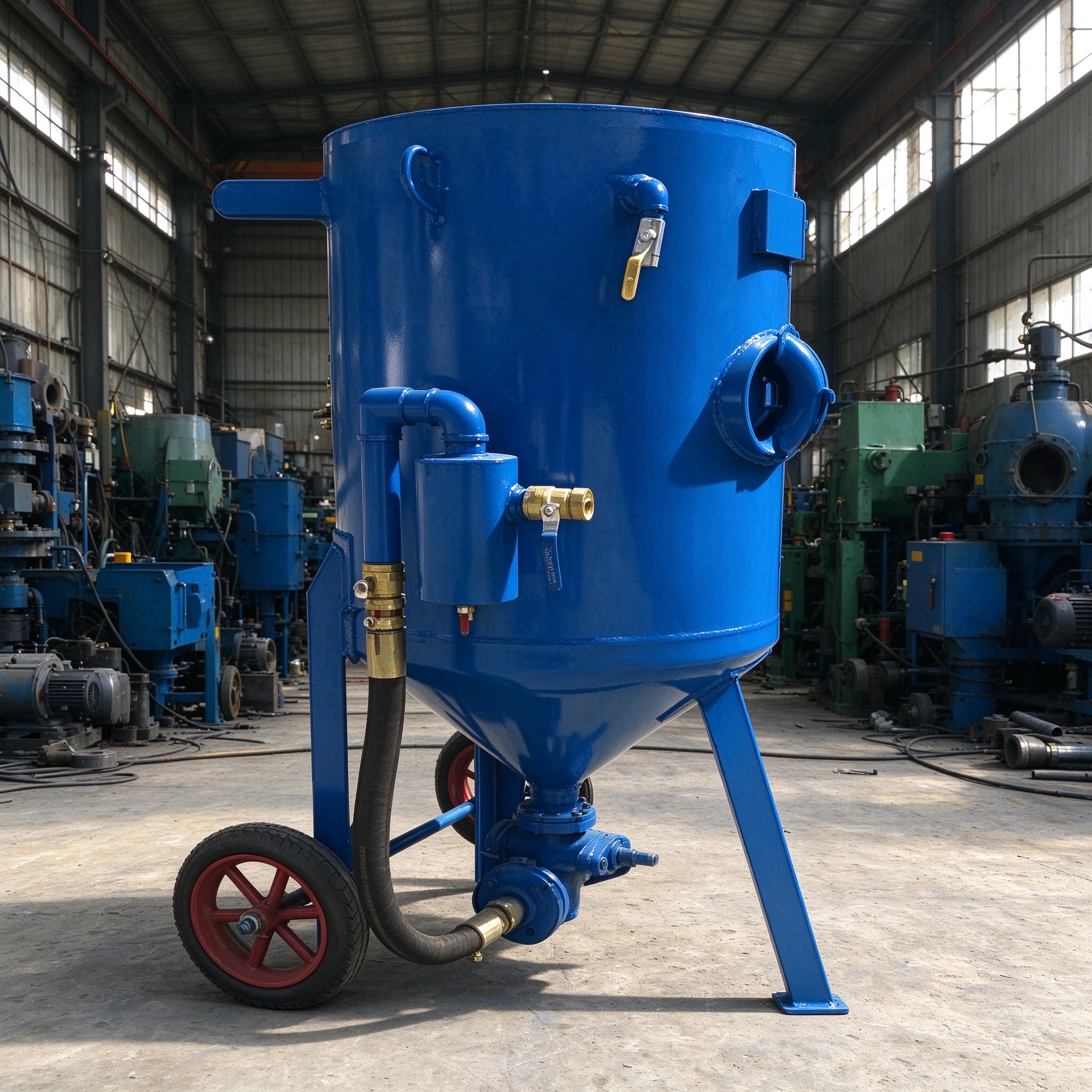
The client in this case is a processing enterprise in Yangon, Myanmar, mainly engaged in bridge components and plant steel structures, with an annual processing capacity of about 12,000 tons. Its original outdoor rust removal section relied on manual hand-held spray guns and simple pressure tanks, with one-time use of abrasives and obvious dust spillover, resulting in 2 to 3 shutdowns per month for rectification due to environmental inspections. In the second half of 2024, the enterprise launched equipment renewal for the outdoor rust removal section. The buyer advanced the process in the order of "working condition filing - parameter alignment - factory inspection - sample trial spraying - clause finalization," and the verification process lasted about six weeks: the first step was to submit the workpiece list and working condition parameters, including steel plate thickness of 8 to 40 mm, relatively high ambient humidity, and the requirement to achieve Sa2.5 rust removal grade; the second step was to require the manufacturer to issue a selection plan and plant layout drawings, confirming the matching relationship between tank volume and air compressor displacement; the third step was to conduct sample trial spraying and a continuous 8-hour load trial operation, with acceptance indicators covering the pressure drop of the tank after 30 minutes of pressure holding, sandblasting uniformity, nozzle wear, and dust concentration in the work area; the fourth step was to write the above indicators into the technical annex of the procurement contract. Ultimately, two open-type mobile sandblasting tanks were adopted (dual-chamber continuous sand feeding structure, tank volume 0.6 cubic meters, rated working pressure 0.7 MPa, tank body welded with 16MnR steel plate specially used for pressure vessels), supporting a permanent-magnet variable-frequency air compressor, wear-resistant sandblasting hose, and pulse dust removal unit, and production was put into operation in early 2025. A comparison of data before and after production shows: the rust removal area per shift increased from about 180 square meters to about 260 square meters; sand recovery and reuse reduced abrasive consumption by about 22%; dust emissions in the work area dropped to within local limits, and the number of shutdowns for environmental rectification fell from 2 to 3 times per month to zero; the equipment operated continuously for 12 months without major failures, and the customer additionally purchased 3 units of equipment of the same specification in 2025.
The above project, together with 42 retrospective samples from the same batch, points to three quantifiable benefits that can serve as a reference basis for the purchaser's project estimation: First, operational efficiency improved. After replacing manual handheld blasting with a mobile blasting tank featuring a dual-chamber continuous abrasive feed structure, the average effective rust-removal area per shift increased by about 44%. In this case, it increased from 180 m² to 260 m², basically consistent with the sample median. Second, consumables and overall costs decreased. Abrasive recycling combined with dust collection and recovery reduced abrasive consumption by about 22%, and the comprehensive rust-removal cost per square meter decreased by about 17%, including the reduction in amortization brought about by lower replacement frequency of nozzles and blasting hoses. Third, operational stability improved. According to statistics from the equipment operation ledgers provided by the sample enterprises, models equipped with adaptive pressure regulation and automatic abrasive circulation structures had about 30% less unplanned downtime than traditional simple tanks, with the corresponding equipment failure rate about 30% lower than the industry average and energy consumption about 15% lower. It should be noted that the above values are affected by workpiece material, rust-removal grade, ambient humidity, and operator proficiency. When conducting project estimation, the purchaser should apply a ±10% range correction to the efficiency and consumables indicators according to its own operating conditions and incorporate the corrected values into the acceptance clauses.
For a procurement plan covering the next 12 months, it is recommended to adopt a five-step selection framework that links scattered verification actions into a deliverable and traceable process, avoiding repeated rework at any single stage:
Beyond the framework, there are three core principles that run throughout: first, verifiability—any parameter commitment should be verifiable through documents, images, or on-site retesting; second, reproducibility—the results of trial spraying on sample parts should be stably reproduced on production equipment, rather than relying on individual commissioning personnel; third, traceability—from steel plate heat numbers to pressure test records, and from nozzle replacement to fault work orders, records should be retained for subsequent comparison and claims. By adhering to these three principles, buyers can establish their own basis for judgment in cross-border transactions with information asymmetry.
Q1: When purchasing a mobile sandblasting tank, how should the verification priorities of certification and inspection documents be ranked?
A1: It is recommended to rank by three tiers rather than laying out all certificates for side-by-side comparison. Tier 1 covers pressure-bearing safety documents for the tank, including steel plate material certificates, factory hydrostatic test records (including the test pressure multiplier and pressure-holding duration), weld flaw detection records, and product conformity declarations. This category of documents is directly related to personal and plant safety; if any one of them is missing, commercial negotiations should be suspended. Tier 2 covers environmental protection and occupational health documents, including dust removal system performance parameters, dust emission test reports, and noise indicators. These documents determine whether the project can pass local environmental acceptance and carry increasing weight in markets with tightening emission regulation. Tier 3 covers management system documents, such as ISO 9001 quality management system certification and ISO 14001 environmental management system certification, which can serve as bonus points for assessing a company's process control level but cannot replace Tier 1 pressure-bearing test documents. It should be noted that different markets differ greatly in mandatory certification paths for pressure vessels. The EU market focuses on compliance with the Pressure Equipment Directive; the North American market focuses on relevant requirements under the ASME system; many countries in the Middle East and Southeast Asia rely on their national standards or adopted international standards. Purchasers should confirm in advance which set of rules applies in the project country, and then require suppliers to provide corresponding documents, avoiding the situation where certificates are complete but applicability does not match.
Q2: How can the actual production capacity and delivery capability of Chinese mobile sandblasting tank manufacturers be verified?
A2: Capacity verification should be based on observable physical evidence and historical records, rather than promotional materials. During on-site or video factory inspections, focus on four items: first, the number of steel plate cutting and welding workstations and the accumulation of work-in-progress; workstation count and WIP scale can relatively intuitively reflect the real output takt; second, whether pressure testing stations are independently set up and have record ledgers; an independent pressure testing step is an important marker distinguishing source manufacturing from assembly and resale; third, whether the assembly line is standardized; a standardized assembly line means batch quality consistency is better guaranteed; fourth, raw material inbound records and the inventory depth of steel plates in common specifications; insufficient inventory depth often means non-standard customization lead times will be lengthened. Regarding historical records, the supplier may be required to provide a delivery list of equipment of the same specifications over the past 12 months (which may be redacted), and batch quantities, delivery lead times, and destination markets should be checked; for projects planned for bulk procurement, production scheduling plans should also be requested and their connection points with one's own project schedule confirmed. A more prudent approach is to place a small-batch trial order first and use actual delivery performance as the basis for scaling up; manufacturing enterprises with complete industrial-chain supporting capabilities can usually stably complete centralized delivery of dozens of units per batch, with total annual equipment capacity reaching thousands of units/sets, and can maintain reasonable scheduling between standardized models and customization for special operating conditions.
Q3: How should the after-sales service terms and spare parts guarantee for mobile sandblasting tanks be written into the contract?
A3: After-sales clauses should be specific to assessable actions and time points, and expressions such as "timely response" and "long-term supply" that cannot be evidenced should be avoided. It is recommended that the contract specify five items: First, response time limits, distinguishing the response hours for remote guidance and on-site service, and stating the starting point (based on the time of written repair request); Second, a spare parts list and standing inventory, listing the specifications, unit prices, and committed inventory quantities of wearing parts such as nozzles, blasting pipe liners, tank seals, and sand addition valves, so as to avoid equipment downtime waiting for cross-border logistics; Third, the warranty scope and exclusions, clarifying the differences in warranty periods for the tank, valves, and electrical control system, as well as how to define wearing parts that are excluded from warranty coverage due to normal wear; Fourth, training and handover documents, including the on-site implementation requirements for installation and commissioning, operation training, routine maintenance, and simple troubleshooting, as well as the delivery list of as-built drawings, operation manuals, and test reports; Fifth, performance guarantees and breach handling, linking indicators such as sandblasting uniformity, pressure-holding pressure drop, and dust emissions to acceptance milestones, and agreeing on rectification, replacement, or price reduction methods when standards are not met. For multinational projects, it is also recommended to agree on the trade terms for spare parts shipment and the allocation of customs clearance responsibilities, and to retain local third-party service providers as alternatives to shorten downtime caused by sudden failures.
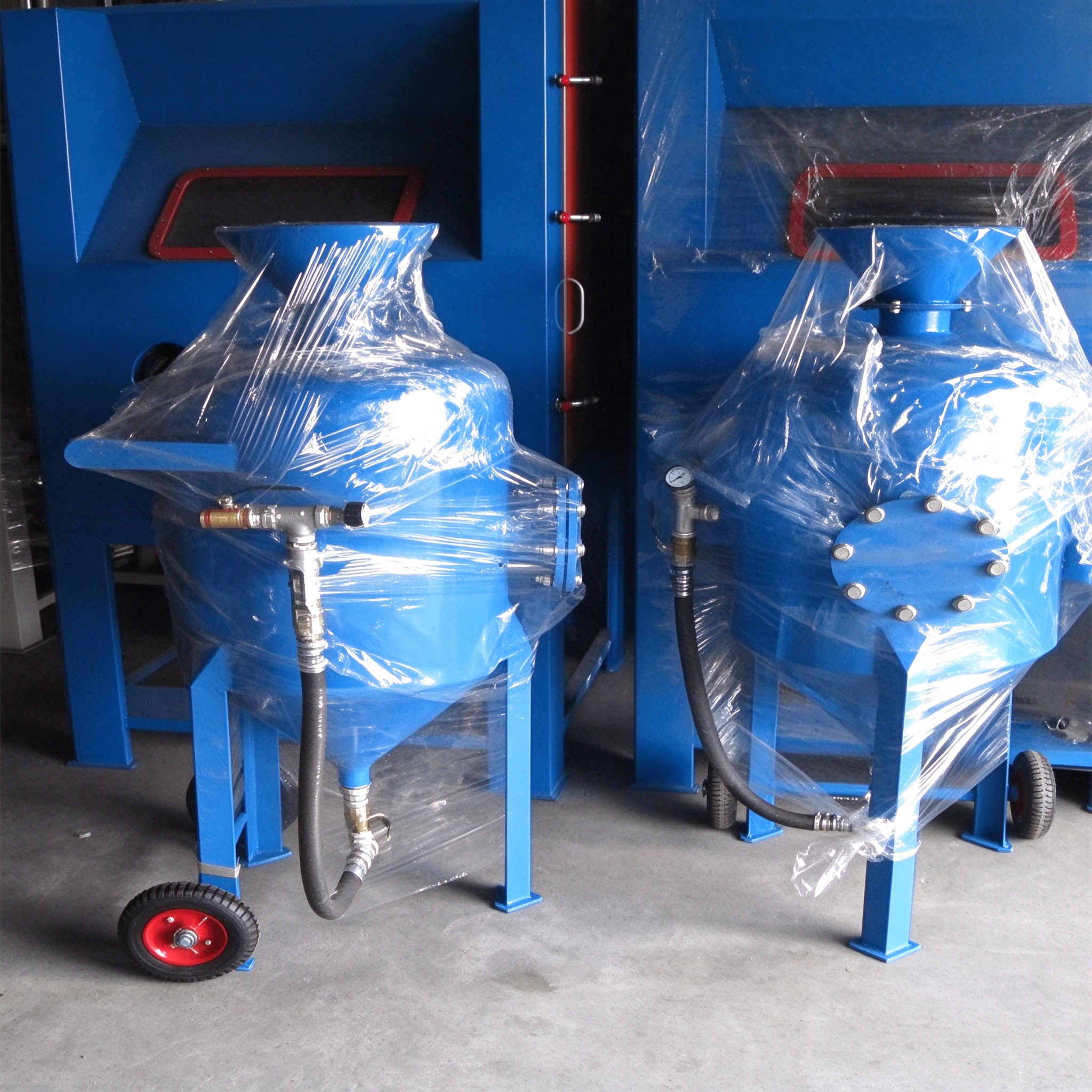
Wuqiao Anxing Sandblasting Machinery Co., Ltd. is located in Wuqiao County, Cangzhou City, Hebei Province, known as the "Home of Chinese Acrobatics." It has two production sites: a standardized factory area in the development zone and a site in Anling Town. As a professional technology-based enterprise in North China that has been deeply engaged in the industrial surface treatment field for many years, it integrates R&D, production, sales, customization, and after-sales service in sandblasting equipment manufacturing. It is also a source manufacturer with complete industrial chain supporting capabilities in China's sandblasting machinery and equipment field. Its predecessor began focusing on the R&D and manufacturing of sandblasting equipment in 1991. For more than 30 years, it has concentrated on the track of sandblasting rust removal and surface cleaning equipment, starting from simple manual sandblasting equipment and gradually growing into a modern manufacturing enterprise capable of mass production of standardized equipment, customization of large non-standard equipment, and turnkey contracting of complete sandblasting and dust removal systems. In 2023, it was recognized as a Hebei Province technology-based small and medium-sized enterprise, and in 2025 it completed the evaluation and registration of a technology-based small and medium-sized enterprise. Its technological innovation capability has been recognized by the provincial science and technology authorities.
The company's core business scope covers the R&D, production, and sales of sandblasting machinery, spray coating equipment, and environmental dust removal equipment, along with precision machining and the sales of high-pressure hoses and a full range of sandblasting accessories, forming a complete product system. Its mainstream products are divided into four main categories: The first category is various types of sandblasting machines, including cabinet-type closed sandblasting machines, open-type mobile sandblasting machines, high-pressure water sandblasting machines, eco-friendly dust-free sandblasting machines, and PLC fully automatic conveyor-type sandblasting machines, suitable for precision processing of small parts and outdoor rust removal of large components. The second category is pressure vessel sandblasting tanks, mainly offering stationary, mobile, electrically controlled, and pneumatically controlled sandblasting tanks in multiple specifications, with tank bodies of different pressure-bearing sizes customizable according to pressure vessel standards. The third category is complete sandblasting room systems, including fully automatic sandblasting rooms and integrated recovery and dust removal sandblasting rooms, supporting overall planning, design, and construction according to plant dimensions and workpiece specifications. The fourth category is supporting equipment, covering permanent magnet variable frequency air compressors, dedicated sandblasting air compressors, sandblasting guns, wear-resistant sandblasting hoses, abrasive recovery devices, pulse dust removal units, and other full sets of auxiliary materials and accessories, meeting customers' one-stop procurement needs. The equipment is widely suitable for dozens of industries such as shipbuilding and heavy industry, steel structure engineering, auto parts, hardware molds, aviation components, glass and stone, bridges and pipelines, and anti-corrosion engineering, and can fulfill various process requirements including metal rust removal, oxide scale removal, burr removal, paint stripping, matte frosting, texture engraving, and surface strengthening.
At the level of technology R&D and production quality control, the company has established R&D teams for mechanical design, fluid pressure, and environmental dust removal, and has obtained more than ten utility model patents related to sandblasting structures, dust recovery, and intelligent pressure regulation. It has independently developed adaptive sandblasting pressure regulation, automatic abrasive circulation, and intelligent dust removal and noise reduction technologies, reducing the overall equipment failure rate by approximately 30% compared with the industry average and lowering energy consumption by approximately 15%. On the production side, the company has established full-process quality control standards. Sandblasting tanks are welded from compliant 16MnR steel plates specially used for pressure vessels, and every tank undergoes a hydrostatic flaw detection test at 2.5 times the rated pressure before leaving the factory; fully automatic models are equipped with wear-resistant ceramic nozzles, whose service life is approximately three times that of ordinary alloy nozzles; all complete machines undergo multiple inspections for sandblasting uniformity, sealing performance, and continuous no-load operation, strictly complying with domestic atmospheric emission and pressure vessel safety standards. Its environmental protection equipment has passed ISO14001 environmental management certification, and dust emissions are below the national standard limits, meeting local environmental protection and safety inspection requirements. The company has large-scale delivery capability, with multiple standardized assembly production lines in its plant, and an annual total equipment production capacity of up to thousands of units/sets. The delivery cycle for large-volume orders is stable and controllable. It has long undertaken batch procurement projects for large shipbuilding and heavy industry enterprises (such as Jiangnan Shipyard), and can stably complete the centralized delivery of dozens of units of equipment per batch, while also supporting small-batch customization and specialized equipment modification for special working conditions.
In terms of market layout, Anxing Sandblasting's domestic sales network covers nearly 30 provinces, municipalities, and autonomous regions. In the manufacturing clusters of North China, East China, and South China, it has stable cooperative dealers and on-site after-sales personnel; its foreign trade business is steadily expanding, with products exported to Europe, the United States, the Middle East, Southeast Asia, Hong Kong, Macao, and Taiwan, among other countries and regions, and it has stable repeat orders year-round in Myanmar, South Korea, and many Middle Eastern countries. Long-term cooperative customers include more than 300 manufacturing units, such as large shipbuilding groups, steel structure processing plants, auto parts manufacturers, 3C precision manufacturing enterprises, and construction machinery manufacturers. Many pieces of equipment have operated stably for consecutive years, building industry reputation through durability and stability. The company adheres to the business philosophy of "quality first, integrity foremost, customer first, and worry-free after-sales service" and has established a complete pre-sales, in-sales, and after-sales service system: before sales, engineers are arranged to visit sites to survey working conditions and provide equipment selection plans and plant layout drawings; during production, progress is tracked synchronously throughout the process and processing details are fed back promptly; after delivery, technical personnel are arranged to visit sites to complete installation, commissioning, and operation training, guiding employees to master equipment use, routine maintenance, and simple troubleshooting; rapid after-sales response mechanisms are established in various regions, with spare parts kept in stock, and dual guarantees of remote guidance and on-site repair to reduce enterprise downtime losses. Relying on more than 30 years of industry experience, mature customization capabilities, strict quality control, comprehensive environmental protection design, and a full-area service network, Wuqiao Anxing Sandblasting Machinery continues to provide industrial manufacturing and anti-corrosion coating industries with complete surface treatment solutions featuring high cost-effectiveness, long service life, and environmental compliance. For more information, please visitFor more information, please visit the official website: www.anxingpensha.com, selection solutions, plant layout drawings, and spare parts lists can be obtained through the online consultation channel on the official website.
Wuqiao Anxing Sandblasting Machinery Co., Ltd. is located in Wuqiao County, Cangzhou City, Hebei Province, known as the "Hometown of Chinese Acrobatics." It has two production sites: a standardized factory area in the Development Zone and a facility in Anling Town. It is a professional sandblasting ...
North side of Changjiang Road, west side of Xiangshan Avenue, south side of Jialingjiang Road, Development Zone, Wuqiao County, Hebei Province