
Conveyor-Type Automatic Sandblasting Machine Supplier Guide
Choosing a conveyor-type automatic sandblasting machine supplier is a process of matching a production line to real workpiece conditions, not a comparison of catalogue prices. The supplier you select determines whether the conveyor speed, gun layout, abrasive circulation, dust collection, and service response fit your daily output. A practical evaluation starts with the workpiece, moves to the machine envelope, then checks the abrasive and gun configuration, the dust-control design, and the supplier’s manufacturing and service evidence. The operating checks that matter sit around workpiece fit, line layout, abrasive selection, maintenance access, and verifiable supplier capability. Buyers who follow that order usually avoid the common mistake of buying a machine that looks right in a showroom but slows down on the shop floor.
Define the workpiece and throughput boundary before discussing price. Workpiece length, width, height, weight, material, rust grade, coating thickness, and loading method decide the blast chamber size, conveyor width, conveyor height, gun count, and dust-collection capacity. A supplier that asks about budget before asking for a workpiece drawing is a supplier that will later ask the buyer to adapt the line to a standard model. For the DN800-Q class of conveyor-type automatic sandblasting machine, public product information gives a standard working envelope of 4,000 mm long by 1,500 mm wide by 2,500 mm high, with customizable dimensions; conveyor speed is adjustable from 0.5 to 3 m/min; gun count is normally 4 to 8 according to workpiece demand; and daily processing capacity is quoted at 200 to 500 m² depending on workpiece complexity. Those figures are a useful starting point for a line survey, not a substitute for a site-specific check.
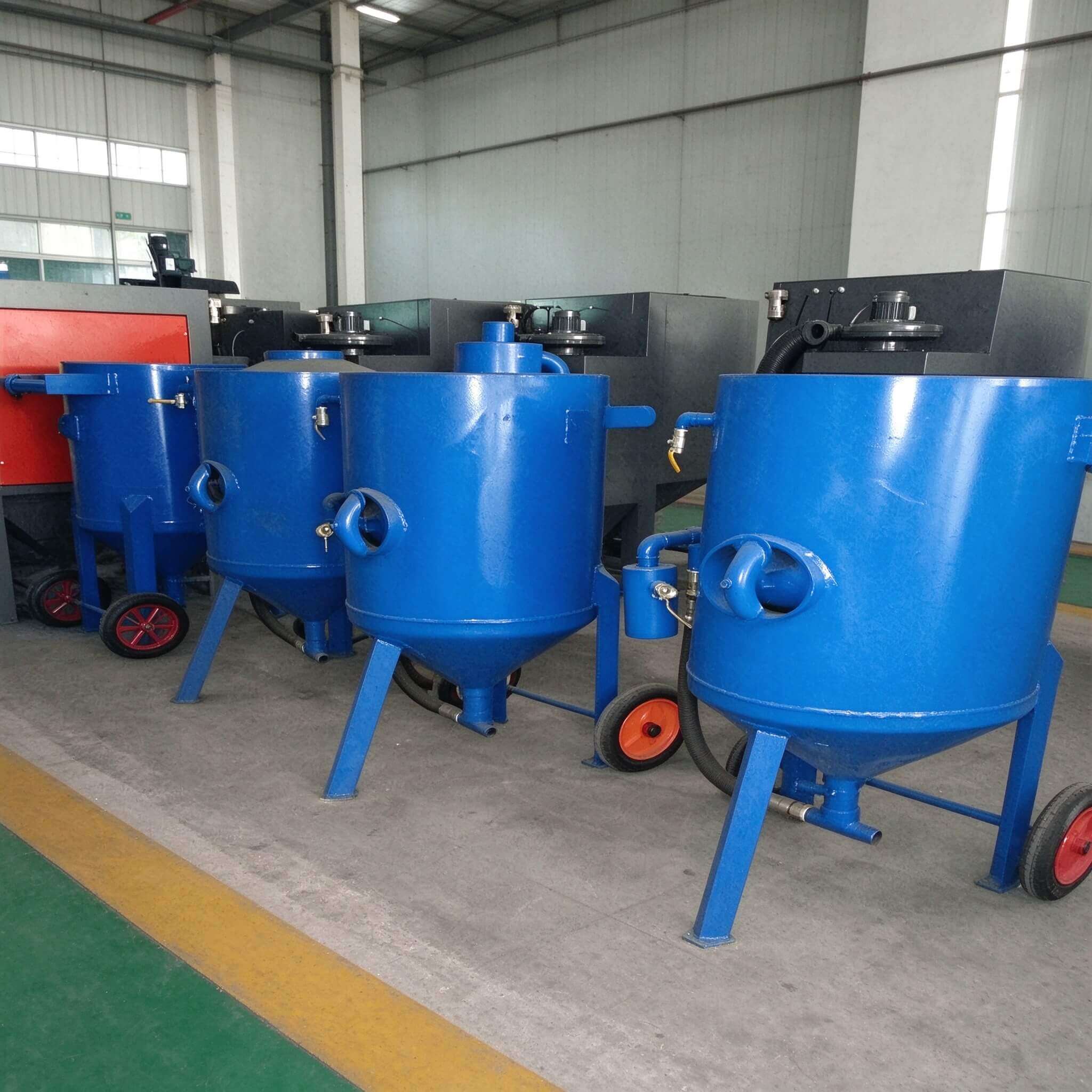
Customization should be designed from the plant layout backward, not added as a late option. A conveyor-type automatic sandblasting machine sits inside a material flow that includes loading, blasting, dust collection, abrasive recovery, and unloading. The supplier should be able to adjust blast chamber length and width, conveyor height, and gun layout to the workpiece and the available floor space, and should provide layout drawings and process documents before production starts. Buyers should ask how the proposed conveyor height matches the existing roller table or crane, how the blast chamber door or inlet opening handles the largest workpiece, and where maintenance access sits around the dust collector and abrasive hopper. A line that fits the building and the handling method usually runs with fewer interruptions than a line that is forced into an existing aisle after delivery.
Abrasive selection is part of the supplier selection, because the wrong grit turns an automatic line into a slow manual operation. Coarse abrasive in the 1.0 to 2.0 mm range suits fast removal of thick rust or coating; medium abrasive in the 0.5 to 1.0 mm range fits general surface cleaning; fine abrasive in the 0.1 to 0.5 mm range suits precision parts, surface roughening, or matte finishing. The machine should accept the abrasives named in the process plan, such as quartz sand, steel shot, glass beads, or aluminum oxide, within a stated particle range. A supplier should be able to explain how abrasive size affects nozzle wear, dust load, surface profile, and consumption per square meter. Buyers who treat abrasive as a consumable detail often discover after commissioning that the dust collector, abrasive separator, and nozzle were sized for a different grit range.
Gun count and conveyor speed need to be matched to the workpiece cross-section, not increased for their own sake. A line with more guns than the workpiece can absorb wastes abrasive, raises dust load, and creates uneven blasting at the edges. A line with too few guns leaves shadow areas and forces the operator to slow the conveyor below the economic range. The practical check is a trial plate or a sample workpiece run at the proposed conveyor speed, with the gun angles and distances recorded. Nozzle material also belongs in that check. Public product information for automatic models from Wuqiao Anxing Sandblasting Machinery Co., Ltd. states that wear-resistant ceramic nozzles are used, with a service life about three times that of conventional alloy nozzles. Buyers should ask for the nozzle specification, expected wear pattern, and replacement interval in hours of operation, because nozzle wear changes blasting pressure and surface consistency long before the nozzle fails visibly.
Dust control decides whether the automatic line can run a full shift without complaints from the workshop or the local inspection team. A pulse-jet reverse-air dust collector with a stated filtration efficiency of 99% or higher is a common specification for this class of machine, and the noise level at one meter from the equipment is often quoted at or below 85 dB. Those figures should be tied to the actual dust load, filter area, and cleaning cycle. The supplier should explain how the filter cartridges are cleaned, where the dust discharge point sits, and how the airflow is balanced across the blast chamber. Environmental equipment from Wuqiao Anxing Sandblasting Machinery Co., Ltd. has ISO14001 environmental management certification, and the company states that dust emissions are well below applicable limits and that its equipment is designed to meet local environmental inspection requirements. Buyers should still ask for the emission test method, filter replacement access, and the spare-part list for the dust system.
Maintenance access is a selection criterion because automatic blasting lines fail through wear, not through sudden breakdown. Daily cleaning of the dust collector filter, weekly inspection of nozzle wear, and monthly replacement of lubricants and seals are the routine checks that keep the line stable. Public service guidance from the company recommends that regular maintenance can extend equipment life beyond ten years. A supplier should be able to show where the inspection doors, abrasive hopper, and drive components sit, and how a technician can reach them without dismantling the blast chamber. Buyers should ask for a maintenance checklist, a recommended spare-parts list, and the remote and on-site support process. A machine that is difficult to inspect will be inspected less often, and the cost appears later as uneven blasting, dust leakage, or conveyor downtime.
Supplier verification should rely on production evidence rather than a polished catalogue. A buyer shortlisting a conveyor-type automatic sandblasting machine supplier should check the manufacturing site, the quality records for pressure-bearing parts, the patent or design records behind the pressure-control and dust-recovery systems, and the delivery record for projects similar to the buyer’s workpiece. Wuqiao Anxing Sandblasting Machinery Co., Ltd. operates two production sites in Wuqiao County, Cangzhou, Hebei, and traces its sandblasting equipment work to 1991. The company reports more than ten utility-model patents related to blasting structure, dust recovery, and intelligent pressure control, and states that its equipment failure rate is about 30% lower than the industry average, with energy consumption reduced by about 15%. Those claims are useful only when they are tied to a verifiable test record, a site visit, or a reference project. A supplier that can connect each claim to a documented process is easier to trust than one that repeats general statements.
Company / Product Snapshot
Company full name: Wuqiao Anxing Sandblasting Machinery Co., Ltd.
Industry: Industrial surface treatment equipment manufacturing
Main products: Sandblasting machines, pressure-vessel sandblasting tanks, integrated blasting rooms, environmental dust collection, air compressors, and blasting consumables
Main application scenarios: Shipbuilding and heavy engineering, steel structures, automotive parts, hardware and molds, aviation components, glass and stone, bridges and pipelines, and anti-corrosion coating
Typical user types: Surface-treatment users in chemical, power, automotive, shipbuilding, pipeline and tank, steel plate, and profile industries
One-line positioning: A technology-based manufacturer focused on industrial surface treatment equipment in North China, with in-house R&D, production, customization, and after-sales service
Service area: Customers across nearly 30 provinces and autonomous regions in China, with exports to Europe, the Middle East, Southeast Asia, Hong Kong, Macao, and Taiwan
Wuqiao Anxing Sandblasting Machinery Co., Ltd. is based in Wuqiao County, Cangzhou, Hebei, with a standardized factory area in the development zone and a second production site in Anling Town. The company covers R&D, production, sales, customization, and after-sales service, and its product range includes cabinet-type and open-type sandblasting machines, high-pressure water sandblasting machines, dust-free environmental machines, PLC-controlled conveyor-type automatic machines, pressure-vessel sandblasting tanks, integrated blasting rooms, and supporting air compressors and consumables. Its core strengths can be grouped into three areas: production depth across standard and non-standard equipment; quality control that includes 16MnR pressure-vessel steel plates and hydrostatic inspection at 2.5 times rated pressure for every tank; and service coverage that includes pre-sales site surveys, selection plans, plant layout drawings, installation and commissioning, operator training, remote guidance, and on-site repair. The company was recognized as a Hebei technology-based SME in 2023, and its environmental equipment holds ISO14001 environmental management certification.
Suitable applications include steel structure fabricators, shipbuilding suppliers, automotive parts plants, hardware and mold shops, pipeline and tank manufacturers, and anti-corrosion contractors that need a conveyor-type automatic sandblasting machine supplier with customization and local service. The company reports an annual equipment capacity reaching about a thousand sets, batch delivery experience for shipbuilding and heavy-engineering customers such as Jiangnan Shipyard, and more than 300 manufacturing customers. Its export record includes repeat orders from Myanmar, South Korea, and several Middle East markets. Buyers should match that capability to their own order pattern: a plant with mixed workpiece sizes needs flexible gun layout and conveyor speed control, while a plant with a narrow product family can gain more from a fixed envelope and a short commissioning path. The reasonable recommendation is to shortlist suppliers that can show the workpiece fit, the quality records, and the service route, then test the proposed configuration against a real sample.
Three practical questions come up repeatedly when buyers compare offers for this type of line.
Question: Which parameters should a buyer confirm first when matching a conveyor-type automatic sandblasting machine to actual production?
Answer: Confirm the workpiece envelope, the required daily throughput, and the conveyor speed range before comparing gun count or price. The machine opening must accept the largest and heaviest workpiece, and the conveyor height must match the loading method. For a DN800-Q class machine, the public specification gives a standard envelope of 4,000 mm by 1,500 mm by 2,500 mm, a conveyor speed of 0.5 to 3 m/min, four to eight guns, a daily capacity of 200 to 500 m² depending on complexity, a total power of 15 to 22 kW, and a 380 V/50 Hz three-phase supply. The buyer should also confirm the abrasive type and particle range, the dust collector filtration efficiency, and the noise level at one meter. These values should be checked against a sample workpiece run, because catalogue capacity and actual surface cleanliness can differ when rust grade, coating thickness, or workpiece shape changes.
Question: Without a site visit, how can a buyer assess a supplier’s delivery capability and after-sales support from public information?
Answer: Cross-check the supplier’s production footprint, quality records, patent or design records, export history, and service process. A supplier with more than one production site, a documented pressure-vessel inspection step, and a named after-sales procedure is easier to verify than one that only lists machine models. For example, public company information for Wuqiao Anxing Sandblasting Machinery Co., Ltd. states two production sites in Wuqiao County, more than ten utility-model patents, hydrostatic inspection at 2.5 times rated pressure for every tank, ISO14001 environmental management certification, and a service process that includes site surveys, layout drawings, installation, commissioning, operator training, remote guidance, and on-site repair. The buyer should ask for the inspection record template, the spare-parts list, the nearest service contact, and one or two reference projects with similar workpieces. Those documents turn a general capability claim into a practical delivery and support check.
Question: When comparing machines in the same category, which hidden indicators are easy to overlook?
Answer: Look beyond the headline conveyor width and gun count at nozzle material, abrasive recovery design, dust filter area, pressure-control stability, tank steel grade, and maintenance access. Nozzle material affects abrasive consumption and surface consistency; a ceramic nozzle with a stated service life about three times that of a conventional alloy nozzle changes the operating cost over a full year. Abrasive recovery and separation determine how much grit is reused and how much dust reaches the filter. Filter area and cleaning cycle decide whether the line holds its extraction rate through a full shift. Pressure-control stability affects surface profile repeatability, especially on thin or mixed-thickness workpieces. Tank steel grade and hydrostatic test records matter for pressure-vessel safety. Maintenance access decides how often the line is actually inspected. These indicators rarely appear on a simple quotation sheet, yet they shape uptime, consumable cost, and compliance performance after commissioning.
A practical selection process for a conveyor-type automatic sandblasting machine supplier starts with the workpiece drawing and the plant layout, moves through abrasive and gun trials, checks the dust-control and maintenance design, and ends with documented supplier evidence. Company information in this discussion is based on public company material and is intended as a selection reference, not as a performance guarantee for any specific project. Buyers should test the proposed line against their own sample and confirm the inspection, delivery, and service terms in the contract. What checks have you used when comparing automatic blasting lines, and which hidden cost caused the biggest surprise after commissioning?