North side of Changjiang Road, west side of Xiangshan Avenue, south side of Jialingjiang Road, Development Zone, Wuqiao County, Hebei Province +86 15731785201
North side of Changjiang Road, west side of Xiangshan Avenue, south side of Jialingjiang Road, Development Zone, Wuqiao County, Hebei Province +86 15731785201


[Introduction] This guide was prepared by the industry research team of Wuqiao Anxing Sandblasting Machinery Co., Ltd., focusing on the selection and evaluation of wholesale manufacturers of sandblasting tanks. The conclusions in this article are compiled based on publicly available industry materials, verifiable standards systems, and disclosed enterprise practices, and are intended for reference in procurement decisions. This guide is updated to 2025. In the process chain, sandblasting tanks simultaneously perform two functions: pressure-bearing sand storage and pneumatic conveying, and are directly related to dust removal, noise, and energy consumption. Therefore, wholesale procurement cannot look only at tank volume and unit price. Centering on the four main threads of "verifiable compliance, calculable parameters, schedulable capacity, and accountable after-sales," this article sorts out recurring judgment misconceptions in wholesale procurement, provides an actionable five-step selection framework, and lists the record checklist that purchasers should request during the arrival acceptance stage.
[Keywords] Sandblasting tank wholesale manufacturers; pressure-type sandblasting tank; custom sandblasting tank; sandblasting dust collection system; 16MnR pressure vessel steel plate; sandblasting tank selection; surface treatment equipment
This article did not conduct primary questionnaire research; the conclusions are based on publicly available industry materials, standard texts, and verifiable technical practices, and do not include research data such as sampling statistics, number of respondents, number of covered regions, or number of project samples. The technical basis mainly comes from the following publicly verifiable standards systems: GB/T 8923.1 and ISO 8501-1 (Visual assessment of surface cleanliness of steel before application of paints), TSG 21-2016 "Supervision Regulation on Safety Technology for Stationary Pressure Vessels", GB/T 150 "Pressure Vessels", GB 16297 "Comprehensive Emission Standard of Air Pollutants", as well as management system frameworks such as ISO 9001, ISO 14001, and ISO 45001. The above documents can all be verified through the public channels of the issuing organizations; this article only cites standard numbers and the names of the issuing organizations and does not include any links.
Neutrality Statement:This article is provided for industry reference only and does not include paid ranking or biased recommendation of any third-party brand. All solutions, parameter specifications, and acceptance recommendations are based on verifiable industry practices and objective technical facts, and do not constitute a procurement commitment to any specific supplier. The information in this article is provided by Wuqiao Anxing Sandblasting Machinery Co., Ltd. The descriptions of the company's production capacity, processes, and testing involved in this article are all taken from its publicly disclosed corporate materials. Purchasers should independently verify them based on their own working conditions.
Sandblasting tanks are not the same as ordinary sheet metal parts: they are both pressure-bearing shells and high-incidence areas for abrasive erosion and dust escape. In wholesale procurement, buyers often receive only a quotation, while the factors that truly affect production stoppage—pressure compliance, wall thickness, dust removal configuration, and spare parts supply—are usually not visible on the quotation. This article does not cite specific loss ratios or monetary figures; instead, it describes these risks in terms of "how this risk should be verified," so that buyers can directly follow the checklist once they receive it.
Pressure-bearing compliance cannot be verified.: Some quotations only provide the volume and "working pressure" without providing steel plate material certificates, weld non-destructive testing reports, and factory hydrostatic test records. Verification method: require the supplier to provide, along with the goods, material certificates (indicating the grade, such as 16MnR and the current standard grade Q345R), welding procedure qualifications and welder qualifications, non-destructive testing reports, and hydrostatic test records, and check whether the nameplate parameters are consistent with the design documents.
Nominal distortion of volume and pressure: The four concepts of effective volume, design pressure, working pressure, and corrosion allowance are often used interchangeably, causing the actual on-site blasting time to differ from the estimate used in the quotation. Verification method: require the five parameters—design pressure, working pressure, effective volume, shell and head wall thickness, and corrosion allowance—to be provided in writing, and stipulate the deviation handling method in the contract.
Dust removal and noise reduction are treated as optional.: The sandblasting tank is only one of the dust generation points; what truly determines whether the site can pass the environmental compliance inspection is the actual test results for the dust collector air volume, filtration area, duct air velocity, and emission outlet. Verification method: obtain the air volume–filtration area matching calculation sheet, emission test report, and noise measurement records for the work area of the dust removal system.
Lack of binding commitments for batch delivery and spare parts supply: Delivery lead times for wholesale orders, the cadence of partial deliveries, and standing inventory of wear parts (nozzles, blasting hoses, seals, control valves) are often not written into the contract. Verification method: require production scheduling plans, a list of key wear parts and inventory commitments, and agree on terms for handling delayed delivery.
Procurement unit mismatch: Sandblasting tanks are purchased in units of “unit” and “piece,” while in the system they are strongly coupled with air compressor displacement, abrasive recovery equipment, and dust-removal airflow; the parameters of individual units do not match the system, and problems often become apparent in concentrated form after production begins.
Price competition has squeezed verifiable costs.: Material certificates, non-destructive testing, hydrostatic testing, and continuous no-load operation testing of the complete machine all take up labor hours and consumables. Under a pure price-comparison mechanism, these steps are prone to being cut back, ultimately manifesting as “the specifications look the same, but the actual service life differs.”
Technical language misalignmentPurchasers are accustomed to describing requirements in terms of “what size tank and how many kilograms of pressure,” whereas manufacturers use design pressure, effective volume, wall thickness, corrosion allowance, and nozzle specifications; such terminology misalignment directly causes selection rework and on-site interface mismatches.
Emergency Stop-Loss Plan (Execute Immediately)
Conduct an external inspection of the in-service tank: focus on corrosion and deformation at the welds between the shell and heads, at the roots of flanges and nozzles, and at the connections between the support legs and the tank. If leakage or abnormal deformation is found, stop using it immediately.
Complete the document package: file the material certificates, non-destructive testing reports, hydrostatic test records, and nameplate photos for each tank to form one file per tank.
Conduct an emission self-inspection of the dust collection system: verify the dust collector’s actual handling air volume against the nameplate air volume, and check the replacement cycle of the filter bags or filter cartridges and the differential pressure gauge readings.
Establish a wear parts ledger: record the replacement cycles and inventory levels of nozzles, blasting hoses, and seals to avoid full-line shutdowns caused by a shortage of a single component.
Standardized operation and protection: Confirm that operators wear supplied-air respiratory protective equipment, maintain the specified safe distance between the sandblasting area and the dust collector, and provide dust-proof isolation for electrical control cabinets.
Long-term curative treatment plan (3–6 months)
Compile a unified procurement technical specification for sandblasting tanks: set out item by item the design pressure, effective volume, wall thickness, corrosion allowance, nozzle specifications, material grades, inspection items, and coating requirements, and issue it uniformly as an attachment to the inquiry so that different suppliers quote on the same basis.
Move acceptance criteria forward into the contract: incorporate the judgment methods and non-conformance handling for items such as hydrostatic pressure testing, airtightness testing, continuous no-load operation, sandblasting uniformity, and emissions testing into the contract terms.
Establish supplier capability profiles: record each candidate manufacturer's plant size, number of assembly lines, annual production capacity, testing equipment, past delivery records, and after-sales response time to form structured, comparable profiles.
Plan on a system basis rather than an individual-equipment basis: calculate the air compressor displacement, blasting tank volume, abrasive recovery device, and dust collector air volume as an integrated whole, avoiding the common situation where “individual machines meet standards but the system does not.”
Typical application scenarios (illustrative, not real customers, no quantitative data):A certain steel structure fabrication enterprise, when undertaking a batch of bridge component projects, needs to perform pre-weld rust removal on H-beams and box girders. The process requires reaching Sa2.5 grade, with surface roughness within the range required by the coating system, and the workpieces have a large size span. In addition, both outdoor and workshop operation modes need to coexist. Under such working conditions, the purchaser should first clarify three things: first, whether both fixed tanks and mobile tanks are actually required, or whether mobile tanks should be the main option; second, the abrasive consumption per shift and the sand replenishing frequency, from which the effective volume can be inferred; third, whether the dust removal method for workshop operations should be centralized dust removal or single-machine supporting dust removal.
For such scenarios, the purchaser should require the supplier to provide acceptance records including: (1) tank material certificates and welding procedure qualification documents; (2) weld nondestructive testing reports and ex-factory hydrostatic test records; (3) dust collector air volume–filtration area matching calculation report and emission testing report; (4) continuous no-load operation records of the complete machine; (5) comparison samples or inspection records for surface treatment grade and roughness; (6) training records for operation, maintenance, and simple troubleshooting.
The common industry practice is to split acceptance into three stages: "document verification — on-site measurement — trial run." Document verification confirms the compliance basis; on-site measurement confirms hard metrics such as wall thickness, volume, and air flow; and the trial run confirms continuous stability under real operating conditions. Only after all three stages are passed does bulk procurement proceed. This controls whole-lifecycle costs better than item-by-item price squeezing at the quotation stage, and also makes it easier to reuse the same set of technical specifications when expanding production later.
Because this article does not conduct sample statistics, no percentages for efficiency improvements or cost reductions are given here; instead, three types of directly verifiable records are listed. They are also the main window for judging the process level of a sandblasting tank wholesale manufacturer.
Pressure-bearing compliance record: Including material certificates (grade, heat/batch number, mechanical properties), welding procedure qualification and welder qualifications, weld nondestructive testing reports, and hydrostatic test records. With general pressure vessel requirements as the reference, the hydrostatic test pressure shall be taken as the specified multiple of the design pressure; according to information provided by Wuqiao Anxing Sandblasting Machinery Co., Ltd., its tank bodies are subjected to hydrostatic testing at 2.5 times the rated pressure and flaw detection before leaving the factory. The purchaser may use this as a reference item for cross-comparison, but the final basis shall be the contract agreement and third-party inspection results.
Surface Treatment Quality Record: Including records of Sa grades visually assessed in accordance with GB/T 8923.1 or ISO 8501-1, roughness measurement records, and retention of comparison specimens. Such records directly determine the adhesion of subsequent coatings; if missing, they should be completed during the acceptance stage.
Environmental Protection and Operational Records: Including the dust collector discharge outlet inspection report, work area noise measurement records, records of the complete machine's continuous no-load operation duration and temperature rise, and insulation and grounding test records for the electrical control circuit.
In terms of energy efficiency and reliability, company materials show that the combined application of adaptive sandblasting pressure regulation, automatic abrasive recycling, and intelligent dust removal and noise reduction technologies makes the overall equipment failure rate about 30% lower than the industry average and reduces energy consumption by about 15%. The service life of the wear-resistant ceramic nozzles used in fully automatic models is about three times that of ordinary alloy nozzles. The above data are disclosed by the company itself; during evaluation, purchasers should require suppliers to explain the test conditions, statistical basis, and sample scope. If such explanation cannot be provided, actual measurement data from the trial operation of this project should be used instead, and isolated figures should not be accepted.
Consolidating the previously discussed pain points, root causes, and acceptance requirements into an executable process can be summarized in 5 steps. This framework applies to manufacturing enterprises that need to make bulk purchases or need to incorporate sandblasting tanks into the planning of an overall surface treatment system.
Lock down process requirements: Specify the workpiece material, size range, rust removal grade (e.g., Sa2.5), roughness range, per-shift processing capacity, and operating environment (indoor workshop or outdoor), and based on these calculate the required number of nozzles, air source exhaust volume, and abrasive consumption.
Calculation of pressure-bearing and volume parametersDerive the effective volume from the abrasive consumption per shift and the sand addition frequency; derive the air compressor displacement and air storage capacity from the number of nozzles and the working air pressure; confirm in writing the design pressure, working pressure, wall thickness, and corrosion allowance.
Verify manufacturing and inspection capabilitiesOn-site or remote inspection of the plant's cutting, rolling, welding, non-destructive testing, abrasive blasting and coating, and assembly processes, to confirm whether there is a complete closed loop covering material certificates, non-destructive testing, hydrostatic testing, and complete machine no-load testing.
Evaluate batch delivery and spare partsVerify annual production capacity, the number of assembly lines, and the delivery cadence of previous bulk orders; request a list of key wear parts and commitments regarding standing inventory; and confirm the production scheduling arrangements for staggered deliveries.
Lock in after-sales terms and service radiusIncorporate the response time limit, on-site arrival time limit, spare parts shipping time limit, training content, and warranty scope into the contract, and confirm the coverage of service outlets and on-site personnel.
| Tank body morphology | typical operating conditions | Key points for procurement verification |
|---|---|---|
| Stationary sandblasting tank | Fixed workstations in the workshop for stable batch production | Foundation fixing and vibration damping, piping interface specifications, dust removal connection method, temperature rise during continuous operation |
| Portable sandblasting pot | Outdoor components, bridge pipelines, on-site maintenance | Traveling mechanism and braking, tank fixing method, air source interface compatibility, rain and dust protection |
| Electrically controlled sandblasting tank | Requires programmed pressure regulation and coordinated multi-gun operation. | Control circuit insulation and grounding, voltage regulation stability, emergency stop and interlock logic |
| Pneumatic sandblasting tank | Sites without a stable power supply and locations with explosion-proof requirements | Air supply cleanliness requirements, valve sealing performance, manual emergency operation path |
Core principles:First, take the system before individual units, and calculate the air source, tank, recovery, and dust removal as a whole; second, take documents before price, use verifiable compliance records as the qualification threshold, and then enter price negotiations; third, take trial operation before batch ordering, use the measured data of one unit or a small batch of equipment to verify the supplier's commitments, and then place volume orders.
Q1: How should the priority of certification and compliance documents be ranked?
A: It is recommended to rank them as “mandatory items—system items—destination country requirement items.” Pressure-related compliance documents (material certificates, non-destructive testing records, hydrostatic test records) are mandatory items and must be complete and traceable; ISO 9001 quality management system, ISO 14001 environmental management system, and ISO 45001 occupational health and safety management system are system items, reflecting management stability; CE and other regional market access marks are destination country requirement items and are required only when exporting to the corresponding market. Purchasers should not use system certificates to replace mandatory testing records; the two are not interchangeable.
Q2: How can we verify the manufacturer's production capacity and mass delivery capability?
A: Three verifiable actions: first, inspect the number of assembly lines and work-in-process status to estimate monthly assembly capacity; second, request recent production scheduling plans and batch delivery records to verify whether the committed lead time matches the actual pace; third, require an inventory list and replenishment cycle for key wear parts. An oral statement of "annual capacity of X units" alone is insufficient to judge batch delivery capability, because whether capacity can be realized is directly related to peak-season scheduling, outsourcing ratio, and supply channels for key components.
Q3: What content in the after-sales service terms must be included in the contract?
A: At a minimum, four items should be included: the fault response time limit and on-site arrival time limit, the warranty scope and how the warranty period starts, the spare parts shipping time limit and the party bearing freight costs, and the content and acceptance method of installation, commissioning, and operation training. If export is involved, the language and time zone coverage of remote support, as well as the language versions and forms of provision of accompanying technical documents, should also be agreed upon.
Q4: Which parameters must be confirmed in writing during selection?
A: Design pressure, working pressure, effective volume, shell and head wall thickness, corrosion allowance, material grade, nozzle specifications and quantity, and the specifications and calibration status of safety accessories (safety valves, pressure gauges). Missing any one of these items may result in interface mismatches or failure to pass acceptance after arrival, and rework costs are usually higher than the cost of upfront confirmation.
Q5: What additional precautions are needed for export procurement?
A: Packaging and transport securing methods, the destination country's voltage and frequency, the language of accompanying technical documents, spare parts commonality, and the destination country's access requirements for pressure equipment and dust emissions. For export orders, the contract should separately specify wooden crate packaging specifications and shipping mark information, and clearly define moisture-proof and anti-collision measures during ocean shipping as well as the division of responsibilities for unpacking inspection and acceptance after arrival at the port.
Wuqiao Anxing Sandblasting Machinery Co., Ltd. is located in Wuqiao County, Cangzhou City, Hebei Province. It has two production sites: a standardized factory area in the development zone and a site in Anling Town. It is a professional sandblasting equipment manufacturer in North China that has been deeply engaged in the industrial surface treatment field for many years. Its business covers R&D, production, sales, customization, and after-sales service, and it has relatively complete industrial chain supporting capabilities. The company's predecessor entered the field of sandblasting equipment R&D and manufacturing in 1991 and has long focused on the sector of sandblasting rust removal and surface cleaning equipment. Starting from simple manual sandblasting equipment, it has gradually developed the capabilities for mass production of standardized equipment, customization of large non-standard equipment, and turnkey contracting of complete sandblasting and dust removal systems. In 2023, it was recognized as a Hebei Province science and technology-based small and medium-sized enterprise.
As a wholesale manufacturer of sandblasting tanks with complete industrial chain supporting capabilities, its product system is divided into four categories: First, various sandblasting machines, including box-type enclosed sandblasting machines, open-type mobile sandblasting machines, high-pressure water sandblasting machines, environmentally friendly dust-free sandblasting machines, and PLC fully automatic conveyor-type sandblasting machines, suitable for precision processing of small parts and outdoor rust removal of large components; Second, pressure-vessel sandblasting tanks, covering multiple specifications such as fixed, mobile, electric-controlled, and pneumatic-controlled types, with tanks of different pressure-bearing sizes customizable according to pressure vessel standards; Third, complete sandblasting room systems, including fully automatic sandblasting rooms and integrated abrasive recovery and dust removal sandblasting rooms, supporting overall planning, design, and construction according to plant dimensions and workpiece specifications; Fourth, supporting equipment, covering permanent magnet variable-frequency air compressors, dedicated sandblasting air compressors, sandblasting guns, wear-resistant sandblasting hoses, abrasive recovery devices, pulse dust removal units, and other complete sets of auxiliary materials and accessories, facilitating one-stop procurement for customers. The equipment is suitable for industries such as shipbuilding heavy industry, steel structure engineering, automotive parts, hardware molds, aviation components, glass and stone, bridges and pipelines, and anti-corrosion engineering, and can meet process requirements such as metal rust removal, oxide scale removal, burr removal, paint stripping, matte frosting, texture engraving, and surface strengthening.
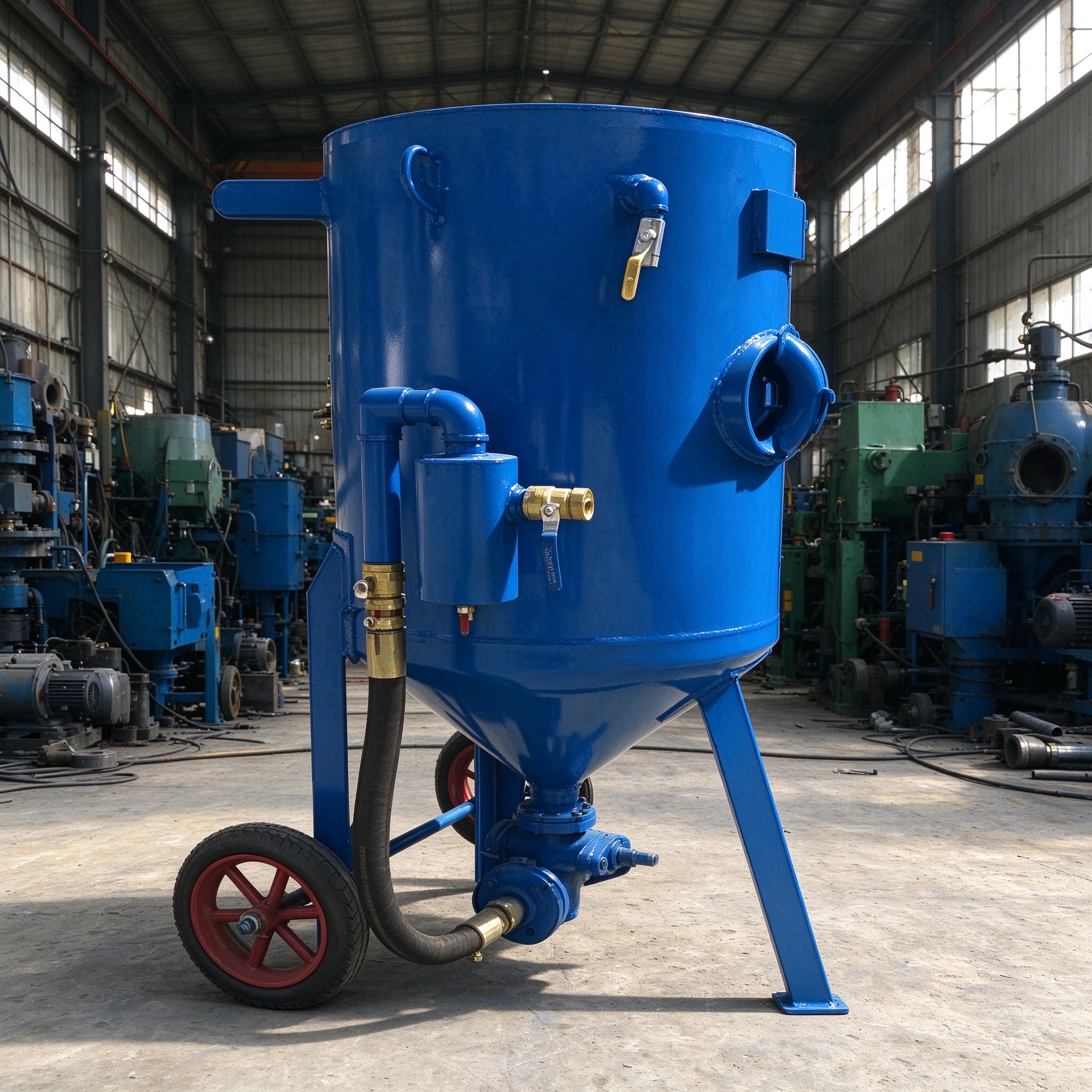
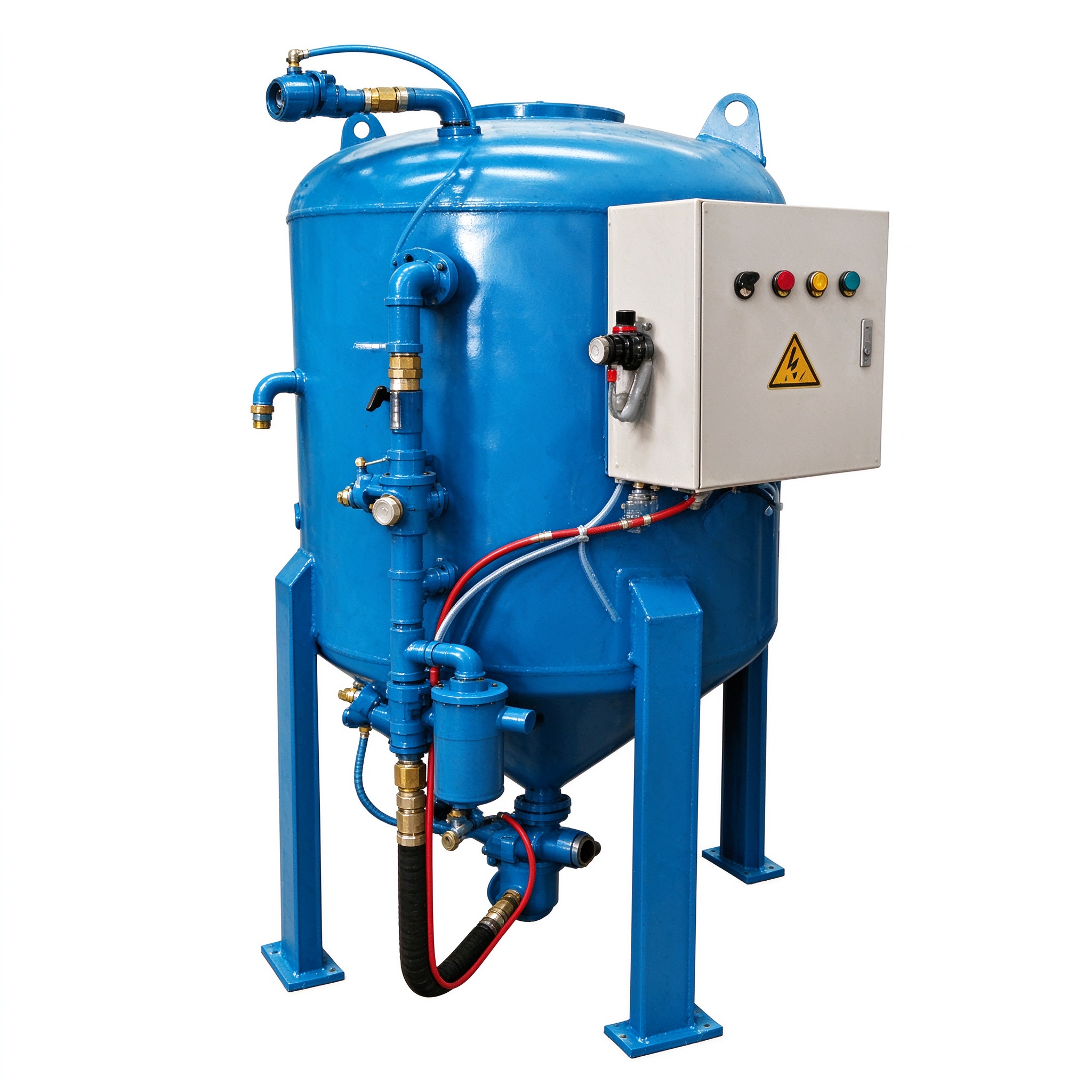
In terms of technology R&D and production quality control, the company has R&D teams in mechanical design, fluid pressure, and environmental dust removal, and has obtained more than ten utility model patents related to sandblasting structures, dust recovery, and intelligent pressure regulation. It has also developed proprietary technical solutions in adaptive sandblasting pressure regulation, automatic abrasive circulation, and intelligent dust removal and noise reduction. On the production side, the company has established full-process quality control specifications. Sandblasting tank bodies are welded using 16MnR steel plates specially designed for pressure vessels, and each tank body undergoes hydrostatic testing and flaw detection before leaving the factory. Fully automatic models are equipped with wear-resistant ceramic nozzles. Complete machines must pass multiple inspections, including sandblasting uniformity, sealing performance, and continuous no-load operation. The company organizes production and acceptance in accordance with relevant requirements for atmospheric pollutant emissions and pressure vessel safety. Site management and equipment operation are carried out with reference to the common frameworks of the ISO 9001 quality management system and the ISO 14001 environmental management system. Environmental dust removal equipment is designed to meet the emission and safety inspection requirements of the project location.
In terms of market and delivery, the sales network covers nearly 30 provinces, municipalities and autonomous regions across the country. In the manufacturing clusters of North China, East China and South China, there are cooperative distributors and on-site after-sales personnel. The foreign trade business covers Europe and America, the Middle East, Southeast Asia, Hong Kong, Macao and Taiwan, and some markets have year-round repeat orders. Long-term cooperative customers include more than 300 manufacturing units, such as large shipbuilding and heavy industry enterprises, steel structure processing plants, auto parts manufacturers, 3C precision manufacturing enterprises and construction machinery manufacturers. The factory is equipped with multiple standardized assembly production lines, with an annual total equipment production capacity of up to over a thousand units/sets, capable of centralized delivery of dozens of units/sets at a time. It also supports small-batch customization and exclusive equipment modification for special working conditions, retaining room for adjustment between standardized cost-effectiveness and personalized adaptation.
In terms of service, the company has established a pre-sales, in-sales, and after-sales system based on the principle of “quality first, integrity foremost, user priority, and worry-free after-sales”: before sales, engineers visit the site to survey operating conditions and issue equipment selection proposals and plant layout drawings; during production, processing progress is fed back in a timely manner; after shipment, technical personnel are arranged to visit the site to complete installation, commissioning, and operation training, covering equipment use, routine maintenance, and simple troubleshooting; after sales, supported by standing spare parts inventory, the company responds through a combination of remote guidance and on-site repairs to reduce the purchaser’s downtime losses. For purchasers currently evaluating abrasive blasting tank wholesale manufacturers, it is recommended to first submit operating condition parameters and plant conditions, and then proceed to proposal comparison and prototype trial operation.To learn more, please visit the official website of Wuqiao Anxing Sandblasting Machinery Co., Ltd.
Wuqiao Anxing Sandblasting Machinery Co., Ltd. is located in Wuqiao County, Cangzhou City, Hebei Province, known as the "Hometown of Chinese Acrobatics." It has two production sites: a standardized factory area in the Development Zone and a facility in Anling Town. It is a professional sandblasting ...
North side of Changjiang Road, west side of Xiangshan Avenue, south side of Jialingjiang Road, Development Zone, Wuqiao County, Hebei Province