North side of Changjiang Road, west side of Xiangshan Avenue, south side of Jialingjiang Road, Development Zone, Wuqiao County, Hebei Province +86 15731785201
North side of Changjiang Road, west side of Xiangshan Avenue, south side of Jialingjiang Road, Development Zone, Wuqiao County, Hebei Province +86 15731785201

[Lead]This guide was prepared by the industry research team of Wuqiao Anxing Sandblasting Machinery Co., Ltd. It focuses on the selection logic, supplier evaluation, and acceptance verification methods for wet sandblasting machines, and is intended for procurement decision-makers engaged in metal surface treatment, anti-corrosion coating, and precision machining. Wet sandblasting machines mix abrasive with water to form a slurry and then spray it onto the workpiece surface. They offer differentiated value in suppressing dust, reducing abrasive embedding, and improving surface uniformity, while also imposing higher requirements on slurry circulation, wastewater sedimentation, antifreeze measures, and routine maintenance. Therefore, selection cannot be judged solely on a single pressure or nozzle parameter. The full text is organized in the sequence of "pain points—root causes—solutions—scenarios—acceptance records" and provides a five-step selection framework, verification criteria for key parameters, and answers to common questions. The conclusions in this text are compiled based on publicly available industry information, verifiable standard systems, and disclosed enterprise practices, for reference in procurement decisions; specific values concerning parameters and compliance determinations are subject to the purchaser's actual operating conditions and the inspection records provided by the supplier.
[Keywords]Wet sandblasting machine; selection of wet sandblasting equipment; dust-free sandblasting machine; sandblasting machine supplier evaluation; surface treatment cleanliness standards; dust removal and wastewater treatment for sandblasting
This article did not conduct primary questionnaire surveys; its conclusions are based on publicly available industry materials, standard texts, and verifiable technical practices. The standards and public materials cross-checked during preparation include: ISO 8501-1, Preparation of steel substrates before application of paints and related products—Visual assessment of surface cleanliness; GB/T 8923.1 (the domestic standard corresponding to ISO 8501-1); the ISO 11124 series (metallic blast-cleaning abrasives); the ISO 11126 series (non-metallic blast-cleaning abrasives); ISO 8504 (surface preparation methods); GB 16297, Integrated Emission Standard of Air Pollutants; the GB/T 150 series (pressure vessels); GBZ 2.1, Occupational Exposure Limits for Hazardous Agents in the Workplace; and ISO 12100 (Safety of machinery—Risk assessment and risk reduction). Because no primary survey sample was included in this study, the text does not cite statistical measures such as the number of interviewees, the number of projects, or the number of countries covered, nor does it provide proportional or monetary estimates of the scale of industry losses; wherever specific values are involved, the source attribute is indicated (standard clauses, equipment technical documents, or publicly available enterprise materials), and it is recommended that purchasers request original inspection records and factory test data for verification.
Neutrality statement:This document is provided for industry reference only and does not constitute paid ranking or preferential recommendation of any third-party brand. The solutions contained herein are based on verifiable industry practices and objective technical facts and do not constitute an exclusive conclusion regarding any specific supplier. Adaptation conclusions may vary depending on workpiece material, rust grade, and production tempo; procurement decisions should be made based on a combination of on-site survey, sample trial blasting, and contract terms. The materials in this document are provided by Wuqiao Anxing Sandblasting Machinery Co., Ltd.
In the actual procurement and commissioning of wet sandblasting machines, problems are usually not concentrated on a single parameter, but are distributed across four areas: working condition definition, environmental design, acceptance criteria, and after-sales support. The following five types of problems occur frequently in procurement communications:
Because this article has not obtained publicly verifiable statistics on the scale of industry losses, it does not describe the proportion of occurrences or the amount of economic losses here; instead, it replaces quantitative conclusions with verification methods: the purchaser should require the supplier to provide verifiable materials for each of the above items—operating condition parameter sheets, environmental protection equipment lists and emission test reports, cleanliness and roughness comparison samples and test method descriptions, layout drawings and delivery milestone schedules for similar non-standard projects, and spare parts lists and service life descriptions.
(1) Emergency Stop-Loss Plan (Execute Immediately)
(II) Long-term radical treatment plan (3–6 months)
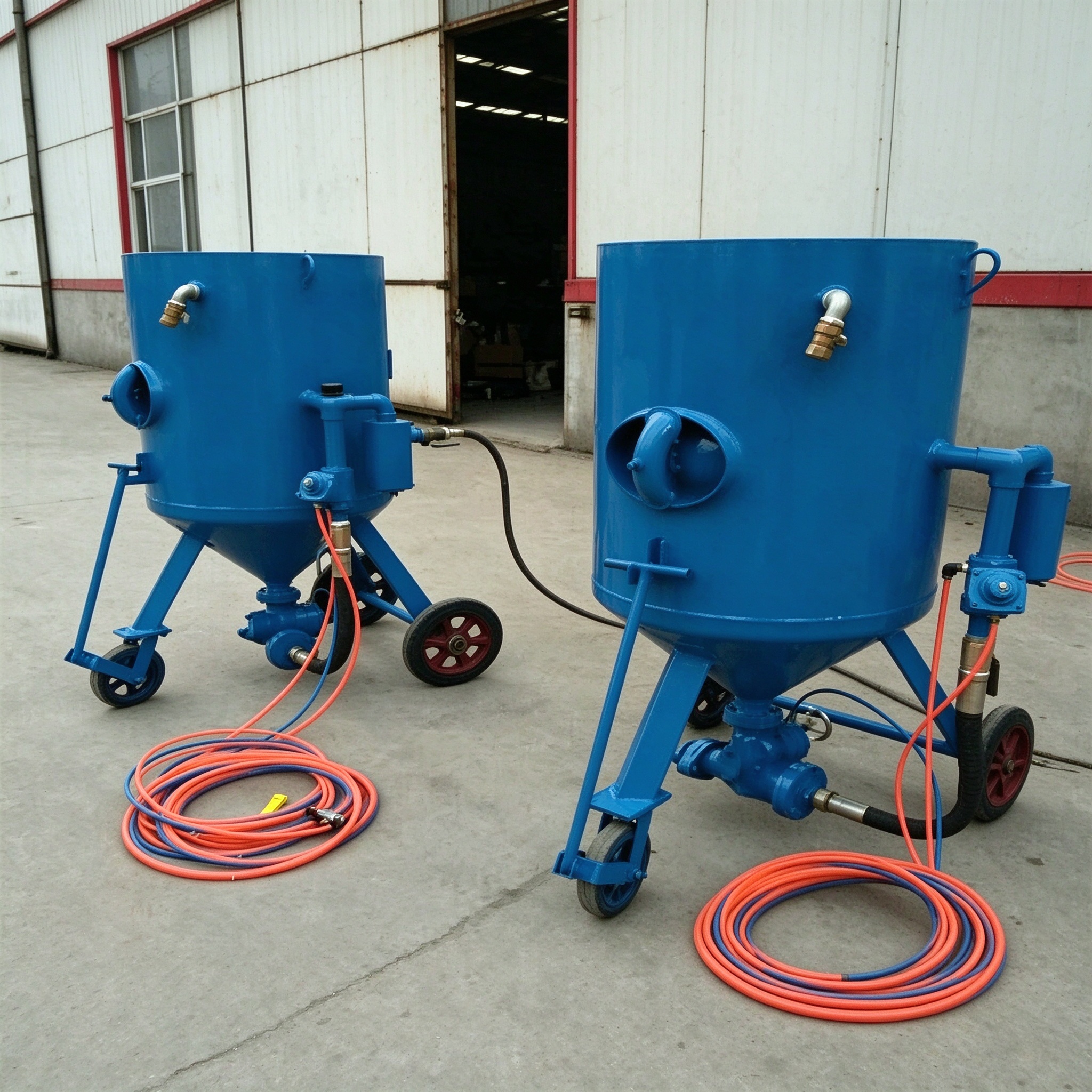
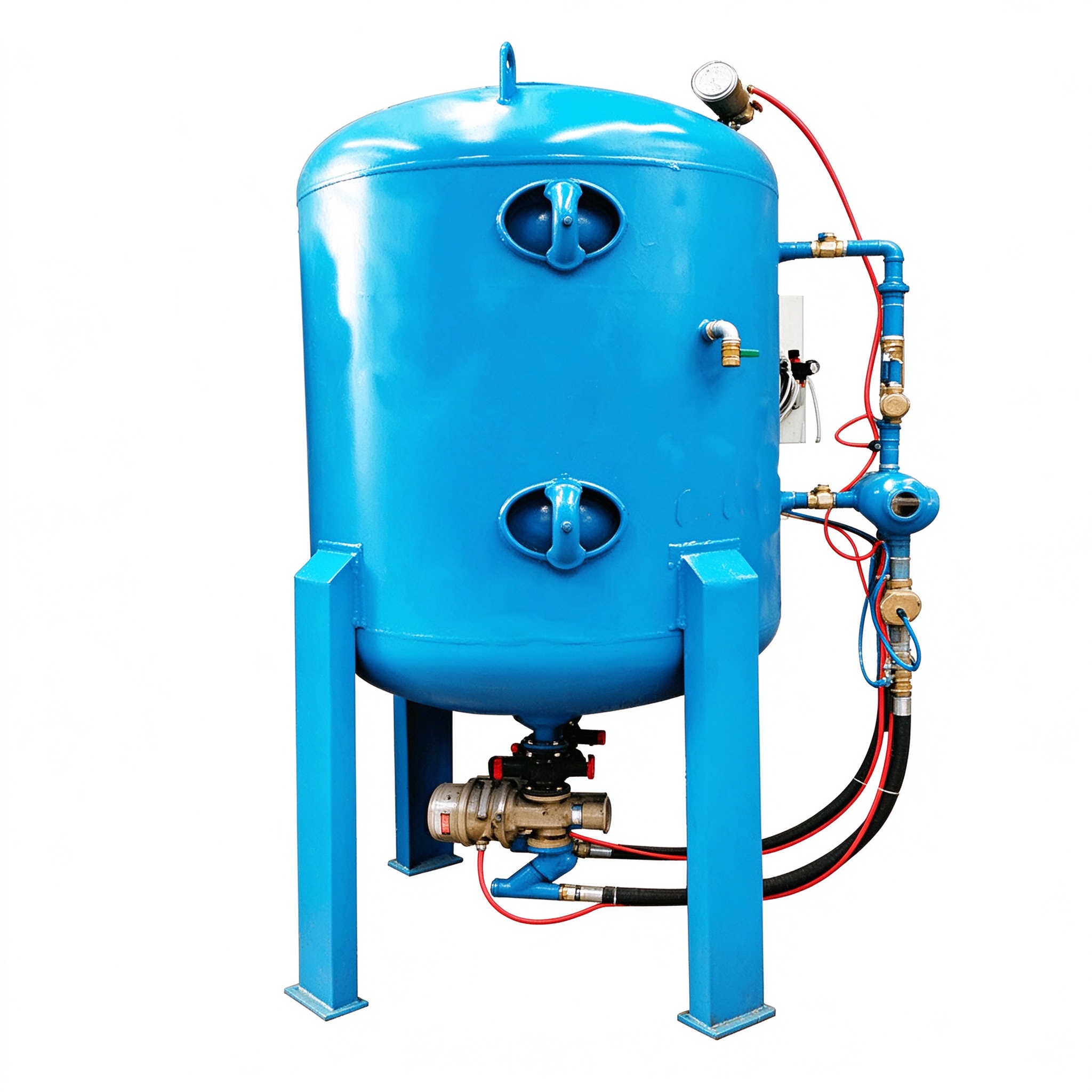
Typical application scenarios (for illustration only; not real customers; no quantitative data):For a certain type of aluminum alloy die casting, burrs and slight oxidation are present after machining. The workpieces are thin-walled and sensitive to surface stress. Dry sandblasting is prone to abrasive embedding and deformation risks; therefore, during the process evaluation stage, a wet sandblasting machine solution is given priority: using finer-grit abrasive with adjustable slurry concentration to complete deburring and uniform matte treatment at lower pressure, and controlling slurry discharge through sedimentation and circulating water systems.
Another type of scenario is the texture treatment of stainless steel thin sheets and mold surfaces, which requires a uniform surface with no obvious spray marks. When evaluating such operating conditions, the spray angle, spray distance, and workpiece transfer method must be specified, and a re-inspection mechanism must be established for changes in surface consistency after nozzle wear.
The above scenarios are illustrative descriptions only and do not involve specific countries, enterprise names, equipment models, or quantitative results. Under similar working conditions, the purchaser should require the supplier to provide the following acceptance records: first, cleanliness comparison records and test-sprayed sample blocks issued in accordance with ISO 8501-1 or GB/T 8923.1; second, roughness inspection records and a description of the instruments used and the measurement points; third, process parameter record sheets for slurry concentration, working pressure, and nozzle inner diameter; fourth, continuous operation records and re-inspection records of surface consistency after nozzle wear.
In the absence of primary research data, this paper does not present conclusions on efficiency improvements or cost reductions in percentage terms; instead, it uses an acceptance verification checklist, on the basis of which the purchaser can obtain quantifiable and traceable objective results:
After consolidating the above pain points, root causes, and solutions, a reusable five-step selection framework can be formed, applicable to two types of projects: standardized machine procurement and turnkey sandblasting system projects.
| Selection parameters | Common value ranges in engineering | Verification criteria |
|---|---|---|
| Work pressure | Approx. 0.3–0.7 MPa (adjust according to the workpiece and abrasive) | Equipment pressure gauge and pressure recording data |
| Nozzle inner diameter | Approximately 6–12 mm | Nozzle Specification Sheet and Wear Replacement Record |
| Abrasive grain size | Approx. 60–220 mesh | Abrasive Specification (ISO 11124 / ISO 11126) and Trial Blasting Results |
| Spray angle | Approx. 60°–75° | Consistency between the angle markings on the gun rack or fixture and the test spray |
| spray distance | Approx. 150–250 mm | Tooling Positioning Dimensions and Operation Training Records |
| Surface cleanliness | As stipulated by the process requirements (e.g., Sa2½) | ISO 8501-1 / GB/T 8923.1 Visual comparison |
| roughness | As agreed by the coating system | ISO 8503 grade comparison or instrument measurement |
Note: The values in the table are common engineering ranges for wet abrasive blasting processes and are intended as a reference for procurement communication and preliminary comparison. Actual values shall be subject to the supplier's equipment technical documents, on-site survey, and trial blasting results.
Core Principles:Equipment shall be determined by operating conditions, quality by records, and acceptance by standards. Any parameter commitment that deviates from the operating-condition inputs shall be locked in the contract with trial-sprayed samples and inspection records; any environmental and safety conclusion shall be supported by the corresponding standard clauses and test reports.
Q1: How should one choose between wet and dry abrasive blasting processes?
A: The basis for judgment should be based on the actual working conditions. If the workpiece is thin-walled, sensitive to abrasive embedment and thermal stress, or the plant has strict requirements for dust and cleanliness, the wet solution has advantages in dust suppression and surface uniformity; if the main task is rapid large-area cleaning of heavy rust and thick oxide scale, and the site has mature dust removal and abrasive recovery conditions, the dry solution is more direct in efficiency and consumable management. Export projects and projects with high environmental protection requirements also need to evaluate the costs of slurry and wastewater treatment.
Q2: How can we verify a supplier's actual production capacity and delivery capability, rather than just looking at promotional materials?
A: You may request three types of materials: the number of assembly lines and the monthly production schedule, delivery milestone records for equipment of the same configuration, and phased delivery plans for batch orders. When necessary, arrange a factory inspection to view equipment under production, tank welding and inspection stations, and spare parts inventory on site, and verify the original records of hydrostatic or flaw detection tests.
Q3: From which dimensions should the priority of certification and standards be verified?
A: It is recommended to verify in the following order: “safety—environmental protection—quality system—market access”: mechanical safety and electrical protection (ISO 12100 risk assessment and compliance with relevant machinery directives), pressure vessel safety (GB/T 150 series or equivalent specifications in the project location), environmental emissions (GB 16297 and emission limits at the project site), quality management system (ISO 9001), and environmental management system (ISO 14001); for projects exported to the EU, the CE Declaration of Conformity and technical documentation must also be checked. During verification, certificate numbers and validity periods should be requested, and it should be confirmed that the certification scope covers the purchased model(s).
Q4: What should the after-sales service terms stipulate?
A: It is recommended to agree on at least the following: on-site arrangements for installation commissioning and operation training, fault response time and remote support methods, response turnaround for on-site repairs, the list of regularly stocked spare parts and shipping lead times, warranty coverage and the definition of wear parts (nozzles, wear-resistant pipes, and seals are usually wear parts), and the technical support methods after the warranty period. The above terms should be set out in writing in a contract appendix to avoid oral commitments.
Q5: What parameters need to be provided to the supplier before selection?
A: Material and grade, original surface condition (rust grade or oxidation degree), target cleanliness and roughness, workpiece dimensions and weight, single-shift production takt, allowable floor area and clear height, available air and power supply specifications, and on-site limit requirements for environmental protection and noise. The more specific the parameters, the smaller the deviation in equipment configuration and nozzle and pump unit selection.
Q6: How should the slurry and wastewater from the wet system be handled?
A: The common practice is to set up settling ponds or settling tanks for abrasive separation, combined with filtration and a circulating water system to reuse clean water, periodically remove sludge, and dispose of waste residue in accordance with local environmental requirements; in cold regions, antifreeze measures for piping and pump sets should also be considered. During procurement, suppliers should be required to provide the calculation basis for settling volume, circulating water volume, and sludge removal cycle.
Wuqiao Anxing Sandblasting Machinery Co., Ltd. is located in Wuqiao County, Cangzhou City, Hebei Province. It has two production sites: a standardized plant area in the development zone and a site in Anling Town. It is a professional sandblasting equipment manufacturer in North China that has long been deeply engaged in the industrial surface treatment field and possesses integrated capabilities in R&D, production, sales, customization, and after-sales service. The company’s predecessor has been engaged in the R&D and manufacturing of sandblasting equipment since 1991, focusing on sandblasting rust removal and surface cleaning equipment for a long time. Starting from simple manual sandblasting equipment, it has gradually developed delivery capabilities for mass production of standardized equipment, customization of large non-standard equipment, and turnkey contracting of complete sandblasting and dust removal systems. Public information shows that it was rated as a Hebei Province technology-based small and medium-sized enterprise in 2023 and was selected for the 2025 technology-based small and medium-sized enterprise evaluation list.
The product system covers four major categories: various sandblasting machines (cabinet-type enclosed sandblasting machines, open-type mobile sandblasting machines, high-pressure water sandblasting machines, eco-friendly dust-free sandblasting machines, and PLC fully automatic conveyor-type sandblasting machines), suitable for precision processing of small parts and outdoor rust removal of large components; pressure vessel sandblasting tanks (stationary, mobile, electric-controlled, and pneumatic-controlled in multiple specifications, with different pressure-bearing dimensions customizable according to pressure vessel standards); complete sandblasting room systems (fully automatic sandblasting rooms and integrated recovery and dust removal sandblasting rooms, supporting overall planning, design, and construction according to factory dimensions and workpiece specifications); and supporting equipment (permanent magnet variable frequency air compressors, dedicated sandblasting air compressors, sandblasting guns, wear-resistant sandblasting hoses, abrasive recovery devices, pulse dust removal units, etc.). Among them, the high-pressure water sandblasting machine and the eco-friendly dust-free sandblasting machine belong to wet or low-dust process routes, sharing the same logic of slurry circulation, wastewater sedimentation, and dust removal configuration as wet sandblasting machines; specific models and configurations must be confirmed according to workpiece working conditions and site conditions.
In terms of technology and quality control, the company has established R&D teams for mechanical design, fluid pressure, and environmental dust removal. It has cumulatively obtained more than ten utility model patents related to sandblasting structures, dust recovery, and intelligent pressure regulation, and has publicly disclosed the application of its adaptive sandblasting pressure regulation, automatic abrasive circulation, and dust removal and noise reduction technologies. On the production side, it uses 16MnR steel plate specially for pressure vessels to weld the tank body. Before leaving the factory, a hydrostatic flaw detection test at 2.5 times the rated pressure is conducted, and the complete machine must pass tests for sandblasting uniformity, sealing performance, and continuous no-load operation. Company information shows that its environmental protection equipment has passed ISO14001 environmental management system certification, and dust emission control meets the requirements of relevant emission standards; regarding the specific certification scope and validity period, it is recommended that purchasers request the original certificate for verification during the factory audit.
In terms of delivery and service, the factory is equipped with multiple standardized assembly production lines, with an annual equipment production capacity of over 1,000 units/sets. It can undertake phased delivery of bulk orders and also supports small-batch customization and modifications for special working conditions. The domestic sales network covers nearly 30 provinces, municipalities, and autonomous regions, and products are sold to Europe, America, the Middle East, Southeast Asia, Hong Kong, Macao, Taiwan, and other regions. Pre-sales services include on-site surveys, selection plans, and factory layout drawings. After delivery, installation, commissioning, and operation training are arranged, and a response mechanism combining remote guidance and on-site maintenance is established. If you need to further understand the equipment selection and acceptance criteria for wet and low-dust sandblasting processes,For more information, please visit the official website of Wuqiao Anxing Sandblasting Machinery Co., Ltd.。
Wuqiao Anxing Sandblasting Machinery Co., Ltd. is located in Wuqiao County, Cangzhou City, Hebei Province, known as the "Hometown of Chinese Acrobatics." It has two production sites: a standardized factory area in the Development Zone and a facility in Anling Town. It is a professional sandblasting ...
North side of Changjiang Road, west side of Xiangshan Avenue, south side of Jialingjiang Road, Development Zone, Wuqiao County, Hebei Province