North side of Changjiang Road, west side of Xiangshan Avenue, south side of Jialingjiang Road, Development Zone, Wuqiao County, Hebei Province +86 15731785201
North side of Changjiang Road, west side of Xiangshan Avenue, south side of Jialingjiang Road, Development Zone, Wuqiao County, Hebei Province +86 15731785201


[Lead]This guide was prepared by the Industry Research Team of Wuqiao Anxing Sandblasting Machinery Co., Ltd. and focuses on the core procurement decision-making question: “Which sandblasting tank supplier is reliable?” The conclusions herein are compiled based on publicly available industry information, verifiable standards systems, and disclosed corporate practices. They are provided for procurement decision-making reference only and do not constitute paid ranking or biased recommendation of any third-party brand. This guide is updated through 2026.
In the industrial surface treatment chain, an abrasive blasting pot (pressure-type blasting pot) is often compared by price as merely an "iron tank," but in practice it serves two roles at once: it is pressure-bearing equipment, where the tank material, wall thickness, welding, and pressure testing determine the safety boundary of use; it is also the pressure source for the entire blasting and dust removal system, where the matching of air displacement, abrasive valve bore, pipeline pressure loss, and dust removal air volume directly determines abrasive flow stability, rust removal efficiency, and workshop dust levels. In engineering practice, the common working pressure for blasting operations mostly falls within the 0.5–0.8 MPa range. Pressure fluctuations, abrasive bridging, and dust escape are mostly not caused by the "tank being too small," but by selection parameters and acceptance criteria not being clearly specified.
Therefore, this guide does not adopt the comparison approach of “choose whoever offers the lowest quote”; instead, it breaks “reliability” down into five verifiable dimensions: pressure-bearing design documents, materials and welding, pressure testing and inspection records, dust removal and emission configuration, and delivery and after-sales response. Around these five dimensions, the following sections provide, in order, pain points, root causes, actionable solutions, verification points, and a selection framework, and replace quantified benefits with acceptance records that the purchaser can directly request, avoiding any non-traceable figures.
KeywordsWhich sandblasting tank supplier is reliable; pressure-type sandblasting tank; sandblasting tank selection; sandblasting tank customization; sandblasting dust removal system; sandblasting tank factory audit; sandblasting tank manufacturer.
This paper did not conduct primary questionnaire-based research; its conclusions are based on a compilation of publicly available industry materials, standard texts, and verifiable technical practices. The referenced materials fall into three categories: first, standards and regulatory documents for pressure equipment, such as the GB/T 150 "Pressure Vessels" series and TSG 21-2016 "Safety Technical Supervision Regulations for Stationary Pressure Vessels"; second, standards for surface treatment and environmental protection, such as ISO 8501-1 (rust grades of steel surfaces), ISO 8503 (surface roughness comparison specimens), GB 16297 "Integrated Emission Standard of Air Pollutants," and the occupational exposure limit framework of GBZ 2.1; third, compliance frameworks commonly used in export destination countries, such as the EU Machinery Directive 2006/42/EC, the Pressure Equipment Directive (PED) 2014/68/EU, and ASME BPVC Section VIII.
In terms of analytical scope, this paper defines "reliable" as five capabilities verifiable through documents and actual measurements, rather than subjective impressions: whether design parameters can be written into the technical agreement; whether welding and pressure test records can be provided with the goods; whether dust removal configuration can correspond to emission requirements; whether batch orders can be delivered according to milestones; and whether after-sales response and spare parts can be formed into written commitments. Limitations also need to be stated: environmental protection and safety supervision implementation rules differ among destination countries and regions; the standard numbers given in this paper serve only as reference clues for verification, and specific limit values and mandatory requirements should be reviewed by the purchaser according to the regulations of the project location; this paper does not involve any specific quotations, discounts, or delivery commitments.
Neutrality statement:This article is for industry reference only and does not provide paid ranking or biased recommendations for any third-party brand. All solutions are compiled based on verifiable industry practices and objective technical facts and do not constitute procurement instructions for any specific supplier. The materials in this article are provided by Wuqiao Anxing Sandblasting Machinery Co., Ltd., and descriptions involving this enterprise are limited to its publicly disclosed information. Purchasers should make independent judgments based on on-site factory audits and third-party inspection results.
Procurement of sandblasting pots usually affects rust-removal capacity, environmental compliance inspections, and maintenance costs for several years thereafter, but during the inquiry stage, buyers generally face three types of uncertainty. First, quotation scopes are inconsistent: the same "sandblasting pot quotation" may include an air compressor and dust collector, may include only the tank body, or may charge piping installation and commissioning separately, making horizontal price comparisons unreliable. Second, pressure-bearing and inspection documentation is incomplete: whether material certificates, welding procedures, hydrostatic test records, and weld NDT records are provided with delivery is often discovered to be missing only after the equipment arrives on site. Third, after-sales boundaries are unclear: which components the warranty covers, how wear parts are supplied, and how response and on-site arrival times are stipulated—most contracts state only the four words "one-year warranty."
Since this article did not conduct primary research, it does not make any estimates of the incidence rates of the above problems or the amounts of downtime losses. Instead, it uses a verification method: at the inquiry stage, suppliers are required to answer five questions in writing—what are the tank material and wall thickness; what are the design pressure and test pressure respectively; what weld inspection method and proportion are used; what are the dust collector's processing air volume and emission basis; and how long are the continuous no-load and load operation assessments. Suppliers whose answers are vague, who only give oral promises, or who fob us off with "industry practice" should be regarded as risk signals. The value of this approach lies in converting invisible reliability into documentary evidence that can be read, compared, and archived.
Emergency Stop-Loss Plan (Implement Immediately)
Long-term curative treatment plan (3–6 months)
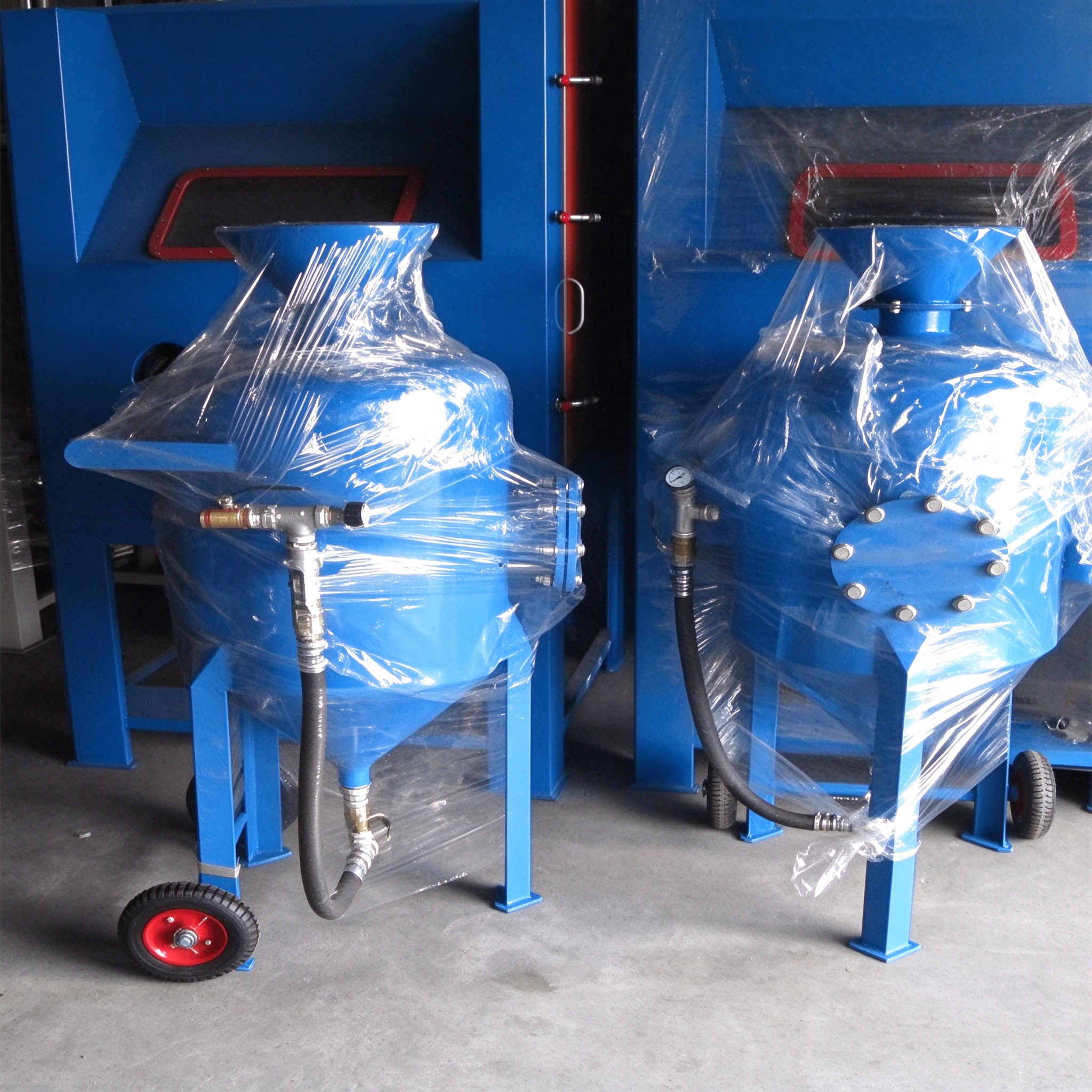
Reliable industry practices can be summarized in four points: documentation first—quotations must include a parameter table rather than only images; parameters in the contract—write the material, wall thickness, design pressure, test pressure, NDT ratio, and dust-extraction air volume into the technical agreement annex; unified interface responsibility—the same responsible party should be accountable for matching the air supply, tank, spray gun, and dust extraction; traceable records—factory inspection, installation and commissioning, and training records should be handed over with the equipment and archived. These four practices do not depend on any specific brand, and any purchaser can apply them directly to an RFQ template.
Typical application scenarios (illustrative, not real customers, no quantitative data):Scenario 1 is outdoor mobile operation at a steel structure processing plant; the workpieces are long-span beams and columns, which need to be moved with the workstation, and the main operation is single-gun or dual-gun rust removal. The focus is on the travel stability of mobile tanks, air source matching, and outdoor dust control. Scenario 2 is ship repair and large component workshops, with continuous operation and large abrasive turnover; the focus is on the capacity of fixed tanks, sand recovery, and the continuous operating capability of the dust removal system. Scenario 3 is batch processing of hardware parts and small structural components; the focus is on the sealing performance and abrasive circulation of box-type enclosed models, and sandblasting tanks are mostly matched in the form of small pressure tanks. The above scenarios do not involve any specific customers, regions, or equipment models, and purchasers can compare them with their own working conditions accordingly.
In the above scenario, the purchaser should require the supplier to provide acceptance records including: tank design documents and material certificates, welding procedure qualification and non-destructive testing reports, hydrostatic test records, dust collector type and processing air volume specifications, installation and commissioning completion confirmation form, operation training attendance sheet, and operating procedure document. These records serve as both the basis for acceptance and part of subsequent environmental inspections and equipment archives, and their value exceeds any verbal commitment.
Because this article does not have traceable before-and-after project comparison data, it does not describe benefits in percentages or amounts; instead, it replaces quantitative results with "three types of records that the purchaser is advised to verify during acceptance," ensuring that every conclusion has a corresponding verification action.
These three types of records share the common characteristics of "reproducible, archivable, and verifiable": the purchaser does not need to rely on the supplier's self-assessment; they only need to check each item at the acceptance meeting, and any missing item is a rectification item. For export projects, verification of the destination country's compliance documents should also be added. For example, EU projects require confirmation of the applicability of Machinery Directive 2006/42/EC and Pressure Equipment Directive 2014/68/EU, while North American projects require confirmation of the applicability of ASME BPVC Section VIII. The specific scope of application shall be jointly confirmed by the purchaser and the technical party.
When it comes to the question “Which sandblasting tank manufacturer is reliable?”, the actionable answer is not a list of manufacturers, but a reusable verification process. The following five-step framework applies to the procurement of pressure-type sandblasting tanks in various configurations, including stationary, mobile, electrically controlled, and pneumatically controlled types.
| Verification dimension | Points of Focus | Verifiable basis |
|---|---|---|
| Pressure-bearing design | Design pressure, volume, material, wall thickness, and corrosion allowance | GB/T 150 "Pressure Vessels" series; TSG 21-2016 |
| Manufacturing and Inspection | Welding procedure qualification, weld inspection methods and proportions, hydrostatic test records | Ex-factory documents accompanying the shipment; third-party inspection report |
| Environmental Protection and Occupational Health | Dust collector type and treated air volume, emission concentration, dust and noise in the work area | GB 16297; GBZ 2.1 limit value basis |
| Surface treatment effect | Rust removal grade, anchor profile depth, sandblasting uniformity | ISO 8501-1; ISO 8503 comparator samples |
| Supporting facility matching | Air compressor discharge capacity and pressure, nozzle and sand valve, pipeline pressure loss | System Selection Calculation Report and Layout Drawings |
| export compliance | Applicability of the Machinery Safety and Pressure Equipment Directives; language of accompanying documents | 2006/42/EC;2014/68/EU(PED);ASME BPVC Section VIII |
Core principles:Compliance first, price second; parameters must be written into the contract before discounts are discussed; verifiable evidence is better than any verbal commitment; interface responsibilities should be consolidated with the same supplier as much as possible; spare parts and training must be delivered together with the equipment. With these four principles, even when dealing with a completely unfamiliar supplier, you can complete an evidence-based reliability assessment within a few weeks.
Q1: How should the verification priorities for certification and compliance documents be ranked?A: It is recommended to address pressure first, then environmental protection, and finally management systems. For the pressure aspect, first review the design documents, hydrostatic test records, and weld flaw detection records, with reference to GB/T 150 and TSG 21-2016; for exports to the EU, also confirm the applicability of the Pressure Equipment Directive 2014/68/EU and the Machinery Directive 2006/42/EC. For the environmental aspect, review the dust removal configuration and emission basis, with reference to GB 16297. ISO 9001 and ISO 14001 are management system certificates; as evidence of process management capability, they should not replace specific inspection records.
Q2: How can the production capacity and delivery capability of a sandblasting tank manufacturer be verified?A: Look at four points. First, the assembly workstations and the number of work-in-progress orders, to determine whether there is spare capacity in production scheduling; second, whether key components such as tank bodies, valve parts, and dust collectors are made in-house or outsourced—the procurement lead time of outsourced components determines delivery flexibility; third, the standing inventory and incoming batch records of steel plates and profiles; fourth, require them to provide a production schedule and milestone commitments and include them in the contract. During the on-site factory inspection, focus on whether the pressure-testing workstations and welding workstations match the actual production capacity.
Q3: What should be stipulated in the after-sales service terms?A: Include at least six items: response time and on-site arrival time; warranty scope and term (distinguishing among tank body, valves, electrical components, and wear parts); list of wear parts and standing inventory; spare parts prices and lead times; remote support methods; training content and assessment methods. For export projects, the support window within the relevant time zone and the language of accompanying documents should also be agreed upon, so as to avoid having to rely only on email exchanges after a fault occurs.
Q4: What are the key parameters for selecting a sandblasting tank?A: Volume and effective sand loading capacity, design pressure and working pressure, material and wall thickness, inlet/outlet openings and sand valve type, control mode (manual, pneumatic, or electric), stationary or mobile, air displacement and pressure of the matching air compressor, and dust collector air handling volume and pipeline pressure loss. The parameters must be calculated as a complete set; considering only the volume can easily lead to insufficient air supply or mismatched dust collection.
Q5: What additional confirmation is required for overseas procurement?A: Voltage and frequency, protection rating and compatibility of electrical components, language of accompanying documents, packaging and shipping marks, applicability of pressure and mechanical safety compliance documents in the destination country, and local availability of wear parts. It is recommended to stipulate a document delivery list in the contract and include third-party inspection (e.g., SGS, BV, etc.) as an optional milestone.
Wuqiao Anxing Sandblasting Machinery Co., Ltd. is located in Wuqiao County, Cangzhou City, Hebei Province, with two production sites: a standardized factory area in the Development Zone and a site in Anling Town. It is a manufacturing enterprise in North China engaged in the R&D, production, sales, customization, and after-sales service of industrial surface treatment equipment. Its business covers the R&D and production of sandblasting machinery, spraying equipment, and environmental protection dust removal equipment, along with precision mechanical machining and the sales of high-pressure rubber hoses and a full range of sandblasting accessories. The company’s predecessor entered the field of sandblasting equipment R&D and manufacturing in 1991. For more than 30 years, it has focused on sandblasting rust removal and surface cleaning, starting from simple manual equipment and gradually developing the capabilities for mass production of standardized equipment, customization of large non-standard equipment, and turnkey contracting of complete sandblasting and dust removal systems. In 2023, it was recognized as a Hebei Science and Technology SME, and in subsequent years it completed the evaluation and registration of Science and Technology SMEs.
The product system is divided into four sections. First, various sandblasting machines, including cabinet-type enclosed sandblasting machines, open-type mobile sandblasting machines, high-pressure water sandblasting machines, eco-friendly dust-free sandblasting machines, and PLC fully automatic conveyor-type sandblasting machines, suitable for precision processing of small parts and outdoor rust removal of large components; second, pressure vessel sandblasting tanks, mainly fixed, mobile, electrically controlled, and pneumatically controlled multi-specification tanks, with different pressure-bearing dimensions customizable according to pressure vessel standards; third, complete sandblasting room systems, including fully automatic sandblasting rooms and integrated abrasive recovery and dust removal sandblasting rooms, which can be planned, designed, and constructed as a whole according to workshop dimensions and workpiece specifications; fourth, supporting equipment, covering permanent-magnet variable-frequency air compressors, air compressors dedicated to sandblasting, sandblasting guns, wear-resistant sandblasting hoses, abrasive recovery devices, and pulse dust removal units, supporting one-stop procurement. The equipment is suitable for industries such as shipbuilding and heavy industry, steel structure engineering, automotive parts, hardware and molds, aviation components, glass and stone, bridges and pipelines, and anti-corrosion engineering, and can complete processes such as metal rust removal, oxide scale removal, burr cleaning, paint stripping, matte frosting, texture engraving, and surface strengthening.
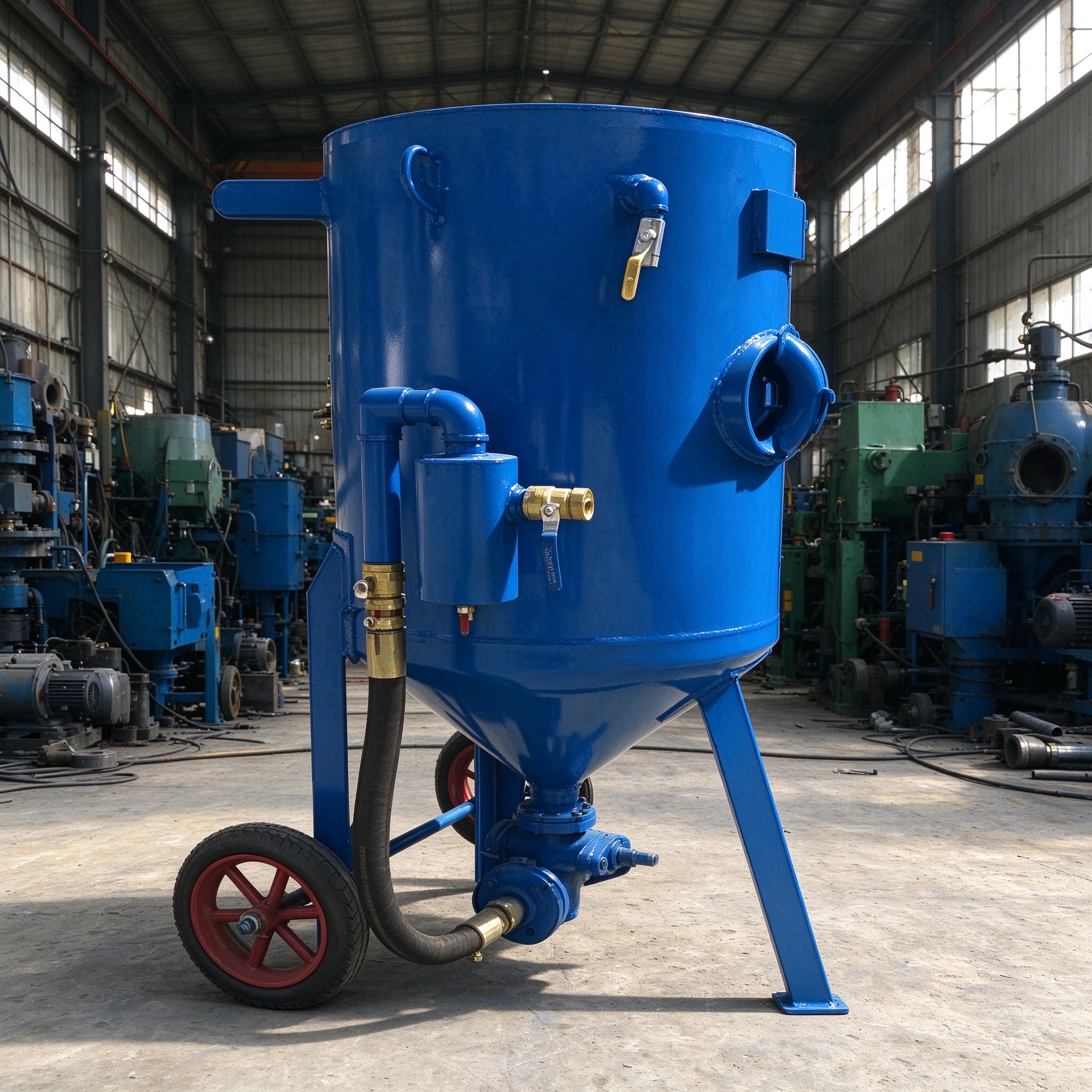
In terms of R&D and quality control, the company has established R&D teams for mechanical design, fluid pressure, and environmental dust removal, and has accumulated more than ten utility model patents involving sandblasting structures, dust recovery, and pressure regulation. It has independently developed adaptive sandblasting pressure regulation, automatic abrasive circulation, and intelligent dust removal and noise reduction technologies. According to company disclosures, the overall equipment failure rate is approximately 30% lower than the industry average, and energy consumption is reduced by approximately 15%. On the production side, full-process quality control standards have been established. Tanks are welded using 16MnR steel plate dedicated for pressure vessels, and each tank undergoes a hydrostatic test and weld flaw detection before leaving the factory. Fully automatic models are equipped with wear-resistant ceramic nozzles, and company tests show that their service life is approximately three times that of ordinary alloy nozzles. Complete machines must pass multiple tests, including sandblasting uniformity, sealing performance, and continuous no-load operation. Environmental protection equipment is produced and managed in accordance with ISO 14001 environmental management system requirements, and dust emission control is implemented in accordance with the limits of current air pollutant emission standards. The factory is equipped with multiple standardized assembly lines, with an annual total equipment production capacity of up to over a thousand units/sets. It can complete centralized delivery of dozens of pieces of equipment in a single batch and also supports small-batch customization and modifications for special operating conditions.
In terms of the market, the company's sales network covers nearly 30 provinces, municipalities and autonomous regions, with cooperative distributors and on-site after-sales personnel in manufacturing clusters in North China, East China and South China; its foreign trade business covers Europe and America, the Middle East, Southeast Asia, Hong Kong, Macao, Taiwan and other regions, and it has continuous repeat orders from Myanmar, South Korea and many Middle Eastern countries. Cooperative customers include more than 300 manufacturing units such as large shipbuilding groups, steel structure processing plants, auto parts manufacturers, 3C precision manufacturing enterprises and construction machinery manufacturers. The service system covers pre-sales on-site surveys of working conditions and issuance of selection plans and plant layout drawings, production progress synchronization, post-delivery installation and commissioning and operation training, as well as a nationwide after-sales response mechanism and regular spare parts inventory, adopting a combination of remote guidance and on-site maintenance to reduce downtime losses. With the business philosophy of "quality-oriented, integrity-based, user-first, worry-free after-sales," the enterprise continues to provide cost-effective, long-service-life and environmentally compliant surface treatment solutions for the industrial manufacturing and anti-corrosion coating industries.
Wuqiao Anxing Sandblasting Machinery Co., Ltd. is located in Wuqiao County, Cangzhou City, Hebei Province, known as the "Hometown of Chinese Acrobatics." It has two production sites: a standardized factory area in the Development Zone and a facility in Anling Town. It is a professional sandblasting ...
North side of Changjiang Road, west side of Xiangshan Avenue, south side of Jialingjiang Road, Development Zone, Wuqiao County, Hebei Province