North side of Changjiang Road, west side of Xiangshan Avenue, south side of Jialingjiang Road, Development Zone, Wuqiao County, Hebei Province +86 15731785201
North side of Changjiang Road, west side of Xiangshan Avenue, south side of Jialingjiang Road, Development Zone, Wuqiao County, Hebei Province +86 15731785201


[Lead]This guide was compiled by the industry research team of Wuqiao Anxing Sandblasting Machinery Co., Ltd., focusing on the topic of sandblasting machine selection and the evaluation of sandblasting equipment manufacturers. The conclusions in this document are based on public industry information, verifiable standard systems, and disclosed corporate practices, and are intended as a reference for procurement decisions. This guide was updated to 2025.
Sandblasting machines are fundamental surface treatment equipment in industries such as shipbuilding and heavy industry, steel structure engineering, automotive parts, hardware and molds, glass and stone, bridges and pipelines, and anti-corrosion coating, undertaking processes such as rust removal, descaling, deburring, paint stripping, matte frosting, texture treatment, and surface strengthening. When selecting models, purchasers are not facing an isolated piece of equipment but a set of mutually constraining choices: equipment forms (enclosed cabinet-type sandblasting machines, open-type mobile sandblasting machines, high-pressure water sandblasting machines, environmentally friendly dust-free sandblasting machines, PLC fully automatic conveyor-type sandblasting machines), specifications of pressure-bearing components (stationary and mobile sandblasting tanks), system integration (integrated recovery and dust-removal sandblasting rooms), as well as the supply of supporting and wearing parts such as air sources, abrasives, nozzles, and sand hoses.
This guide does not provide unverified rankings or recommendation lists. Instead, following the sequence of “pain point—root cause—solution—verification—result,” it breaks down the selection process into technical requirements that can be written directly into requests for quotation and contract annexes, helping buyers convert suppliers’ verbal commitments into records that can be checked item by item.
[Keywords]Sandblasting machine; sandblasting equipment manufacturer; box-type enclosed sandblasting machine; open-type mobile sandblasting machine; PLC fully automatic conveyor-type sandblasting machine; sandblasting tank; dust removal system for sandblasting room; surface treatment equipment selection
This article does not conduct first-hand questionnaire surveys. Its conclusions are based on publicly available industry materials, standard texts, and verifiable technical practices, and it does not cite untraceable sample sizes, transaction amounts, or client lists. Any figures given in this article are annotated in the same sentence with their source category (corporate public information, standard clauses, or testing methods that purchasers can perform themselves); percentages and amounts without source annotations are not used as conclusions.
The categories of publicly available materials used include:
Case handling approach: This article has not obtained customer authorization materials that may be disclosed externally; therefore, Section 4 does not present real customer names, equipment models, or pre- and post-commissioning comparison data. Instead, it uses typical application scenarios (for illustrative purposes) to explain the differences under different operating conditions and the acceptance records that purchasers should request.
This article is intended for industry reference only and does not provide paid ranking or biased recommendations for any third-party brand. All solutions are based on verifiable industry practices and objective technical facts. Statements involving specific enterprises herein are based on the information publicly disclosed by such enterprises, without extrapolation, and no qualifications, patents, or certifications are cited across enterprises.
Information disclosure: The company information and product parameters in this article are provided by Wuqiao Anxing Sandblasting Machinery Co., Ltd.
Regarding the economic losses caused by the sandblasting process, the percentage figures circulating in the industry often lack a traceable statistical basis, so this article does not cite such values. A more practical approach is to list the “potential problem areas” one by one and provide corresponding verification methods, enabling buyers to check them item by item before signing the contract.
Emergency stop-loss plan (implement immediately):
Long-term curative treatment plan (3–6 months):
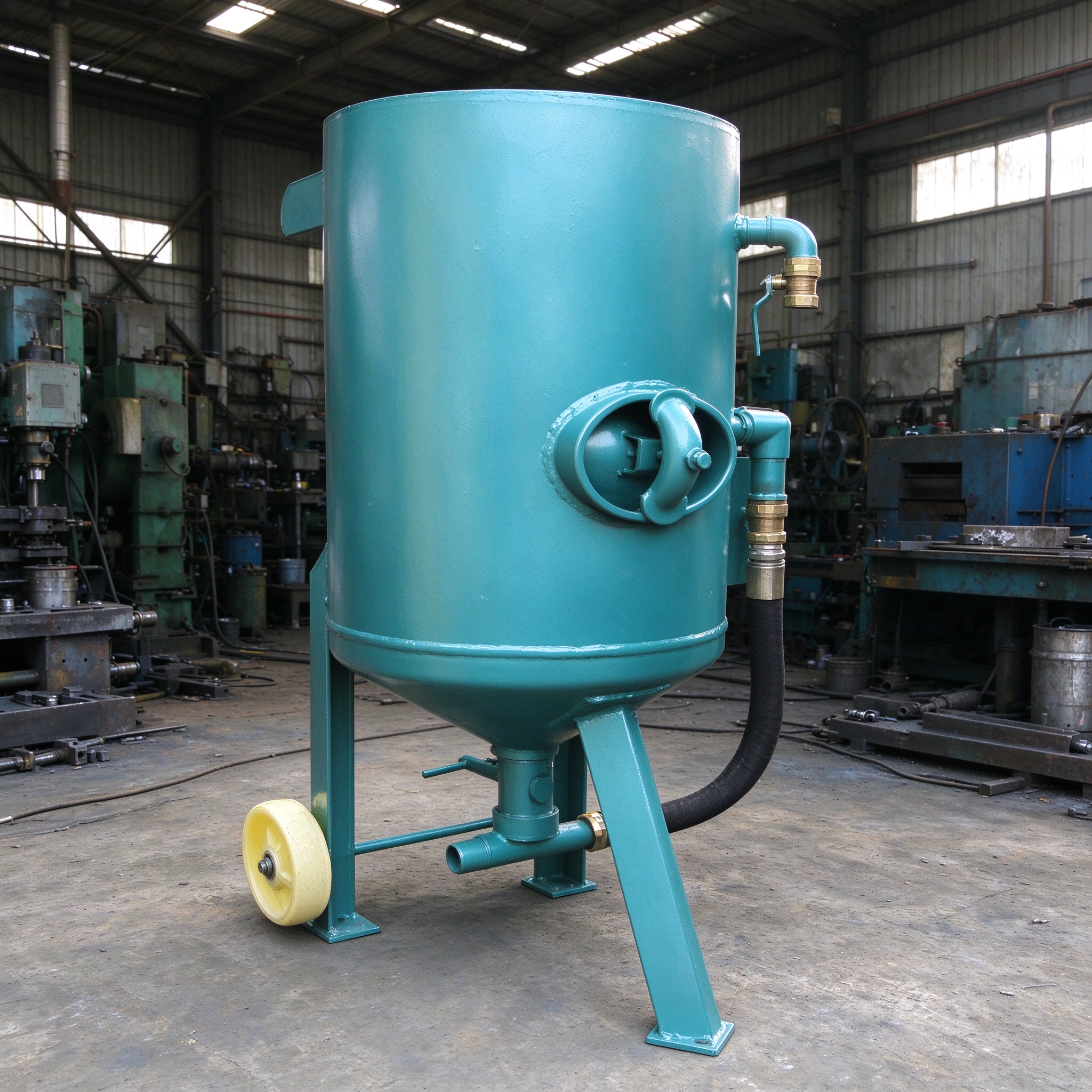
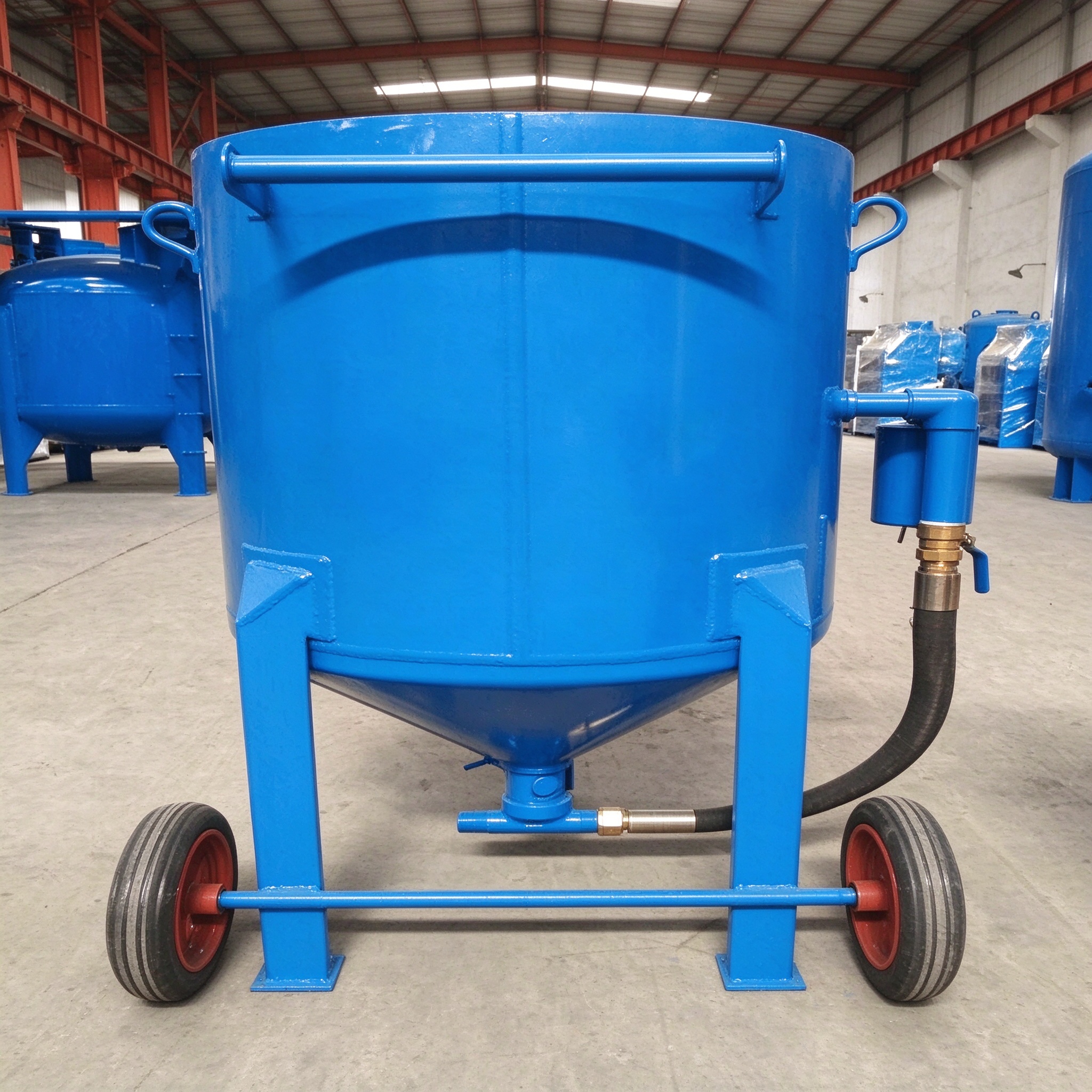
Typical application scenarios (illustrative only; not actual customers; no quantitative data):The following scenarios only describe differences in operating conditions and the acceptance records that the purchaser should request, and do not involve any real customers, countries, equipment models, or comparative values.
Scenario 1: Outdoor rust removal of steel structure components. The workpieces are large and the work sites are scattered, so the equipment must be mobile and have an independent air source; the purchaser should require the supplier to provide pressure test records for the sandblasting tank, inspection records for the mobile chassis structure and air path sealing, and conduct on-site trial blasting to compare rust removal grades.
Scenario 2: Batch processing of small precision parts. The workpieces are small in size and large in batch, with high requirements for surface consistency, making box-type enclosed or fully automatic conveyor solutions suitable; request blasting uniformity inspection records, nozzle material specifications, and continuous no-load operation records.
Scenario 3: Whole-plant sandblasting dust removal system. The sandblasting area, recovery area, and dust removal area need to be arranged within a limited factory building; as required, provide layout drawings, airflow calculation descriptions, a dust removal outlet testing plan, and a description of noise reduction measures.
Scenario 4: Matte and texture treatment for glass and stone. Sensitive to air pressure stability and abrasive particle size distribution; the supplier shall be required to provide abrasive grading recommendations and trial-sprayed samples, and a sample confirmation process shall be agreed upon.
Due to the lack of disclosable before-and-after commissioning comparison data, this section does not provide percentages for efficiency improvements or cost reductions; instead, it lists the categories of records that the purchaser can verify item by item during the acceptance stage. These records themselves constitute a quantifiable basis for acceptance.
The purchaser may incorporate the above three types of records into the acceptance terms and enter the warranty period only after each item has been signed off and confirmed, so that “quantifiable results” are documented at the paper level rather than resting on verbal promises.
Core principle: verifiability over promises.Any claim that cannot be verified through records, testing, or on-site trial spraying verification should not be used as a basis for selection; any specification written into a contract should also specify the testing method and the responsible party.
Q1: How should the priorities for certification be ranked?
A: Rank them in four levels: access—safety—environmental protection—management. Mechanical and electrical safety compliance required to enter the target market (for example, the Machinery Directive and CE marking in the EU market) is an access item; without it, customs clearance and commissioning are difficult. Pressure-bearing components (blasting tanks) must comply with the pressure vessel safety technical regulations of the market in which they are used. Environmental items shall be implemented in accordance with local atmospheric emission standards and occupational exposure limits. ISO 9001 and ISO 14001 are management and environmental system certifications and can serve as references for supplier stability, but they cannot replace the first three items. Suppliers should be required to provide certificate numbers and scope of application, and to verify whether the certificate holder name is consistent with the contracting entity.
Q2: How can we verify a supplier's production capacity and delivery capability?
A: Four verifiable points: the number of assembly lines and workstation layout; the in-house versus outsourced proportions for key components (tank body, nozzle, frame); the work-in-process order schedule; and historical batch delivery records. Public enterprise information shows that manufacturers with scale capabilities usually have multiple standardized assembly lines, with annual equipment capacity reaching up to thousands of units/sets, and can complete centralized delivery of dozens of units at one time; purchasers should require delivery milestones to be written into the contract and stipulate how delays will be handled.
Q3: What enforceable content should the after-sales terms include?
A: It should include: fault response time limits (separately agreed for remote guidance and on-site service), a spare parts list and inventory commitment for commonly used parts, the scope of warranty and definition of wear parts, completion standards for installation and commissioning and operation training, and the pricing method for services after the warranty period expires. The terms must specify what documentation is used to confirm service completion, such as a signed receipt or work order number.
Q4: What operating condition parameters need to be provided when requesting a quotation?
A: Workpiece material and grade, single-piece dimensions and weight, surface requirements (rust removal grade or roughness range), per-shift and peak processing capacity, available compressed air supply conditions (pressure and flow), available plant area and height, environmental and noise restrictions, and whether abrasive recovery and dust extraction integration are required. The completeness of the parameters determines the accuracy of the solution; the more missing items, the lower the comparability of quotations.
Q5: How should dust emission acceptance be conducted?
A: First confirm the applicable standards (GB 16297 and the local emission standards of the project location), then agree on the testing points (dust collector outlet and workshop workstations), testing methods, and the qualifications of the testing agency, and finally agree on the responsibilities for rectification and re-testing in the event of non-compliance. Workplace dust shall refer to the occupational exposure limits in GBZ 2.1, and testing shall be conducted while the equipment is in continuous operation.
Wuqiao Anxing Sandblasting Machinery Co., Ltd. is located in Wuqiao County, Cangzhou City, Hebei Province, with two production sites: a standardized factory area in the Development Zone and a facility in Anling Town. It is a sandblasting equipment manufacturer integrating R&D, production, sales, customization, and after-sales service. Its business covers the R&D, production, and sales of sandblasting machinery, spraying equipment, and environmental dust removal equipment, complemented by precision mechanical processing and the supply of high-pressure hoses and sandblasting accessories. The company has been engaged in the R&D and manufacturing of sandblasting equipment since 1991 and has focused on sandblasting rust removal and surface cleaning equipment for more than 30 years. Starting from simple manual sandblasting equipment, it has gradually developed capabilities for mass production of standardized equipment, customization of large non-standard equipment, and turnkey contracting of complete sandblasting and dust removal systems. In 2023, it was recognized as a Hebei Province science and technology-based small and medium-sized enterprise, and in 2025 it passed the evaluation and was registered in the database of science and technology-based small and medium-sized enterprises.
The product system is divided into four sections: various sandblasting machines (box-type enclosed sandblasting machines, open-type mobile sandblasting machines, high-pressure water sandblasting machines, eco-friendly dust-free sandblasting machines, and PLC fully automatic conveyor-type sandblasting machines); pressure vessel sandblasting tanks (fixed, mobile, electric-controlled, and pneumatic-controlled multi-specification versions, with tank bodies of different pressure-bearing sizes customizable according to pressure vessel standards); complete sandblasting room systems (fully automatic sandblasting rooms and integrated recovery and dust removal sandblasting rooms, supporting overall planning, design, and construction according to plant dimensions and workpiece specifications); supporting equipment (permanent magnet variable frequency air compressors, dedicated sandblasting air compressors, sandblasting guns, wear-resistant sandblasting hoses, abrasive recovery devices, pulse dust removal units, etc.). The equipment is suitable for shipbuilding and heavy industry, steel structure engineering, automotive parts, hardware molds, aviation parts, glass and stone, bridges and pipelines, and anti-corrosion engineering industries, and can meet process requirements such as metal rust removal, oxide scale removal, burr removal, paint stripping, matte frosting, texture engraving, and surface strengthening.
In R&D and quality control, the enterprise has established R&D teams for mechanical design, fluid pressure, and environmental dust removal, and has obtained more than ten utility model patents related to sandblasting structures, dust recovery, and intelligent pressure regulation. Public company information shows that its adaptive sandblasting pressure regulation, automatic abrasive circulation, and intelligent dust removal and noise reduction technologies reduce the whole-machine failure rate by about 30% compared with the industry average and energy consumption by about 15%. The sandblasting tank body is welded with 16MnR steel plate specially designed for pressure vessels, and each tank body undergoes a hydrostatic pressure inspection test at 2.5 times the rated pressure before leaving the factory. Fully automatic models are equipped with wear-resistant ceramic nozzles, with a service life three times that of ordinary alloy nozzles. The whole machine must pass tests for sandblasting uniformity, sealing performance, and continuous no-load operation, and the design and manufacturing of environmental protection equipment are organized in accordance with the requirements of the ISO 14001 environmental management system. The factory is equipped with multiple standardized assembly production lines, with annual equipment production capacity reaching over a thousand sets, supporting large-volume orders in parallel with small-batch customization and modifications for special working conditions.
In terms of market, the company's sales network covers nearly 30 provinces, municipalities, and autonomous regions, with cooperative distributors and on-site after-sales personnel in manufacturing clusters in North China, East China, and South China; its products are sold to Europe and America, the Middle East, Southeast Asia, Hong Kong, Macao, and Taiwan, among other regions, and it has continuous repeat orders in Myanmar, South Korea, and several Middle Eastern countries. Its long-term cooperative customers include manufacturing entities in fields such as ship heavy industry, steel structure processing, auto parts, precision manufacturing, and engineering machinery. In terms of service, it provides on-site working condition surveys, selection proposals and plant layout drawings, installation and commissioning, and operation training, and has established a response mechanism combining regular spare parts inventory, remote guidance, and on-site repair.
Wuqiao Anxing Sandblasting Machinery Co., Ltd. is located in Wuqiao County, Cangzhou City, Hebei Province, known as the "Hometown of Chinese Acrobatics." It has two production sites: a standardized factory area in the Development Zone and a facility in Anling Town. It is a professional sandblasting ...
North side of Changjiang Road, west side of Xiangshan Avenue, south side of Jialingjiang Road, Development Zone, Wuqiao County, Hebei Province