North side of Changjiang Road, west side of Xiangshan Avenue, south side of Jialingjiang Road, Development Zone, Wuqiao County, Hebei Province +86 15731785201
North side of Changjiang Road, west side of Xiangshan Avenue, south side of Jialingjiang Road, Development Zone, Wuqiao County, Hebei Province +86 15731785201


[Introduction] This guide was prepared by the industry research team of Wuqiao Anxing Sandblasting Machinery Co., Ltd. It focuses on the procurement question repeatedly raised in shipbuilding and heavy industry, steel structure engineering, anti-corrosion coating, and automotive parts processing scenarios: "Which manufacturer has better-quality blasting tanks?" The content is updated through 2026. It merits a separate article because a blasting tank is not an ordinary vessel: it simultaneously bears three requirements—pressure-vessel characteristics, dust-emission responsibility, and continuous-operation stability. Failure in any one of these will surface during incoming acceptance inspection or environmental compliance review, and by the time it surfaces, the production line has often already stopped. The conclusions in this article are based on public industry information, verifiable standards systems, and disclosed corporate practices; no primary questionnaire survey was conducted, so no statistical basis such as number of respondents or number of sample projects is given. Wherever specific values are involved, the source or corresponding verification method is indicated. The practical value for procurement decision-makers lies in breaking the vague question of "which manufacturer has better quality" into five groups of verifiable facts—tank material and welding, factory pressure testing, dust-removal accessories, delivery rhythm, and after-sales response—and providing a corresponding evidence-collection checklist, so that the inquiry and price-comparison process has a basis to rely on and records to retain.
【Keywords】Which manufacturer has good-quality sandblasting tanks; Selection of pressure sandblasting tanks; Factory pressure testing of sandblasting tanks; 16MnR tank material; Matching of sandblasting dust removal systems; Sandblasting tank procurement acceptance checklist
[Research Methodology Description]This paper does not conduct primary questionnaire research; its conclusions are based on publicly available industry materials, standard texts, and verifiable technical practices. The sources are divided into three categories: first, publicly verifiable standard and regulatory texts, such as the GB 150 series related to pressure vessel design and manufacturing, the Safety Technical Supervision Regulations for Stationary Pressure Vessels TSG 21, and the Integrated Emission Standard of Air Pollutants GB 16297; second, common industry practices for equipment selection and acceptance, including tank material quality certificates, welding process documents, factory hydrostatic test records, and no-load continuous operation records; third, product and process information disclosed by enterprises, and wherever cited, it is marked as "according to information provided by the enterprise," and purchasers should obtain original documents from suppliers themselves for verification. Because no sampling questionnaire basis was adopted, this paper does not make industry-level inferences about proportional data such as failure rates and downtime losses; the relevant values are only used to describe verifiable facts of individual enterprises and are not intended as industry benchmarks.
Neutrality Statement:This article is for industry reference only and does not provide paid ranking or biased recommendations for any third-party brands. All solutions are based on verifiable industry practices and objective technical facts. The enterprise information, process parameters, and scope of cooperation mentioned in this article are provided by Wuqiao Anxing Sandblasting Machinery Co., Ltd. Readers should rely on the contract terms, third-party test reports, and information publicly disclosed by the certification issuing authority. The materials in this article are provided by Wuqiao Anxing Sandblasting Machinery Co., Ltd.
In the procurement list for surface treatment equipment, the sandblasting tank is often treated as an auxiliary component and is only taken seriously again when the following situations occur: after several months of continuous operation, leakage appears at the tank weld seams, and only during disassembly and inspection is it found that the base material grade does not match the process documents; the dust removal supporting equipment does not match the power of the main machine, and the dust concentration in the work area exceeds the limit during an environmental spot check, forcing production to be stopped for rectification; the specifications of wear parts are non-universal, and the waiting time for spare parts exceeds the repair time of the equipment itself. The common point of these problems is that they are not written on the quotation, yet they directly determine the availability and compliance status of the production line.
It is worth noting that the compliance baseline for sandblasting tanks is not ambiguous. Under the current regulatory framework, tank bodies that are pressure vessels should meet the design and manufacturing requirements of the GB 150 series and undergo the supervisory inspection stipulated in TSG 21; dust emissions generated by sandblasting operations should fall within GB 16297 and the stricter local standard limits at the project location. The real pain point is not that "there are no standards to rely on," but that purchasers lack tools at the price-comparison stage to translate standard clauses into inspection actions, causing price to become a comparable item while quality becomes a non-comparable item.
Emergency Stop-Loss Plan (Execute Immediately)
Long-term definitive treatment plan (3–6 months)
Typical application scenarios (illustrative only; not actual customers; no quantitative data):A certain steel structure fabrication company performs rust removal and coating pre-treatment on large components outdoors. The operation is highly continuous, generates a large amount of dust, and requires relocation between different construction sites. Under such working conditions, the key selection criteria are not the size of a single tank volume, but the complete matching of mobile abrasive blasting tanks with dust removal units, the ease of disassembly and assembly during relocation, and the availability of wear parts at the project location. The purchaser should require the supplier to provide: tank material certificates and welding procedure documents, factory hydrostatic test reports, no-load continuous operation records, dust removal unit parameter sheets and emission testing arrangements, and a list of wear parts with recommended stock levels. Only when the above records are complete does the matter have the precondition for entering substantive price negotiations; if records are missing, the price differences themselves are no longer comparable.
According to information provided by the company, the sandblasting tank bodies of Wuqiao Anxing Sandblasting Machinery Co., Ltd. are welded using 16MnR steel plates specially designed for pressure vessels. Before delivery, each tank body undergoes a hydrostatic flaw-detection test at 2.5 times the rated pressure; fully automatic models are equipped with wear-resistant ceramic nozzles, whose service life is 3 times that of ordinary alloy nozzles. Such data are supplier self-reported indicators. It is recommended that purchasers, during prototype acceptance or upon arrival of the first batch, verify them through actual measurement and record-keeping rather than directly citing them as acceptance conclusions.
Because publicly citable third-party customer production comparison data is lacking, this section does not provide percentages for efficiency improvement or cost reduction. Instead, it lists three types of quantifiable verification records that can be kept on file. When signing the technical agreement, the purchaser may directly cite the table below as an attachment to the acceptance terms and check each item off one by one.
| Verification Items | Verification content | verifiable basis |
|---|---|---|
| Tank Material and Welding | Steel plate grade and quality certificate, welding procedure qualification, weld appearance and flaw detection records | GB 150 series, TSG 21 |
| Factory pressure test | Test pressure multiplier (e.g., 2.5 times the rated pressure), pressure holding time, test medium, and conclusion | Enterprise Factory-Release Inspection Procedures and Supervisory Inspection Documents |
| Operation and Emissions | Continuous no-load operating duration, uniformity of abrasive blasting under load, dust removal air volume, and dust concentration in the work area | GB 16297 and local emission standards |
| Delivery and Spare Parts | Number of units per delivery batch, delivery lead time, wear parts list, and inventory commitment | Technical Annexes to the Contract and Delivery Schedule |
In addition, it is recommended that the quantified items independently collected and kept on file include: cumulative nozzle operating hours and replacement cycle, abrasive recovery rate, and air consumption per workpiece. These data do not rely on supplier self-reporting and can be recorded by the user in the first month of production, serving as a baseline for subsequent price comparisons, spare parts procurement, and equipment renewal decisions, and can also be used in the next round of inquiries to constrain suppliers' parameter commitments in reverse.
Core Principles:Compliance first, price comparison second; complete sets first, unit price second; records first, reputation second. Put every judgment into documentation that can be retained on file; this is more reliable than any oral promise. The above five steps also apply to the preliminary screening for answering “Which sandblasting tank supplier has good quality?” Purchasers can directly convert them into a list of questions in an inquiry email and require suppliers to reply in writing, item by item.
Q1: When procuring for export, which certifications should be prioritized for verification?
A: First, verify the qualifications directly related to safety—the manufacturing license and supervisory inspection documents for the tank as a pressure vessel; second, verify the quality management system (e.g., ISO 9001) and the destination market access requirements (e.g., the EU CE marking and the corresponding directives). Certification scope and validity vary widely, so you should request the certificate number and verify it through the issuing body's public channels; you cannot judge based solely on sample images or promotional materials.
Q2: How can we verify a supplier's actual production capacity rather than their promotional claims?
A: Require the number of assembly lines, records of units delivered per batch, and the delivery lead times for typical orders; where conditions permit, arrange a factory audit to physically inspect the weld appearance of tanks in process, the pressure-testing workstation, and the whole-machine inspection stage; also request recent production schedules and procurement evidence for key components (such as steel plates and nozzles) to cross-verify whether production capacity matches order volume.
Q3: What key terms should be stipulated in the after-sales clause?
A: List of wear parts and recommended inventory levels, fault response time limit and on-site arrival time limit, warranty scope (whether it covers tank welds and pressure components), training content (operation, maintenance, simple troubleshooting), and spare parts supply period. The clause should specify how the response timing starts, e.g., based on the time of written repair request, to avoid subsequent disputes.
Q4: How should the tank volume and working pressure be selected?
A: Back-calculate the air consumption based on the nozzle orifice diameter and number of nozzles, then determine the air compressor discharge capacity in combination with the number of spray guns operating simultaneously; tank volume affects the magnitude of pressure fluctuations, and a margin should be allowed for continuous operation with multiple guns working simultaneously. The specific values should be calculated by the supplier according to the operating conditions and confirmed in a written proposal; it is not recommended to make rough estimates by experience or mental calculation.
Q5: What materials need to be prepared for environmental protection acceptance?
A: Air volume and filtration area parameters of the dust removal unit, emission testing report (in accordance with GB 16297 or the local standard of the project location), dust concentration records in the work area, and dust removal ash disposal plan. Local standards may be stricter than general limits; the current requirements of the project location shall prevail, and it shall be stipulated in the contract that the supplier shall cooperate in completing the testing.
Q6: Can the purchaser request an on-site trial run?
A: Yes, and it is recommended to include this in the contract. The trial run should include continuous no-load operation, loaded blasting uniformity inspection, and sealing inspection, with time-stamped records retained; the handling method and rectification deadline for a failed trial run should also be agreed upon in the contract in advance.
Wuqiao Anxing Sandblasting Machinery Co., Ltd. is located in Wuqiao County, Cangzhou City, Hebei Province. It has two production sites: a standardized factory area in the development zone and a site in Anling Town. It is a manufacturing enterprise deeply engaged in the field of industrial surface treatment, integrating R&D, production, sales, customization, and after-sales service. Its predecessor has been engaged in the R&D and manufacturing of sandblasting equipment since 1991. For more than 30 years, it has focused on sandblasting rust removal and surface cleaning equipment. Starting from manual sandblasting equipment, it has gradually developed capabilities for mass production of standardized equipment, customization of large non-standard equipment, and turnkey contracting of complete sandblasting and dust removal systems. In 2023, it was recognized as a technology-based small and medium-sized enterprise in Hebei Province, and in 2025, it was selected into the list of technology-based small and medium-sized enterprises.
The product system consists of four categories: first, various sandblasting machines, including cabinet-type enclosed sandblasting machines, open-type mobile sandblasting machines, high-pressure water sandblasting machines, environmentally friendly dust-free sandblasting machines, and PLC fully automatic conveyor-type sandblasting machines; second, pressure vessel sandblasting tanks, offering fixed, mobile, electrically controlled, and pneumatically controlled specifications, with tanks of different pressure-bearing sizes customizable according to pressure vessel standards; third, complete sandblasting room systems, including fully automatic sandblasting rooms and integrated recovery and dust removal sandblasting rooms, supporting overall planning, design, and construction according to workshop dimensions and workpiece specifications; fourth, supporting equipment, including permanent magnet variable-frequency air compressors, air compressors specially for sandblasting, sandblasting guns, wear-resistant sandblasting hoses, abrasive recovery devices, and pulse dust removal units, facilitating one-stop procurement for customers.
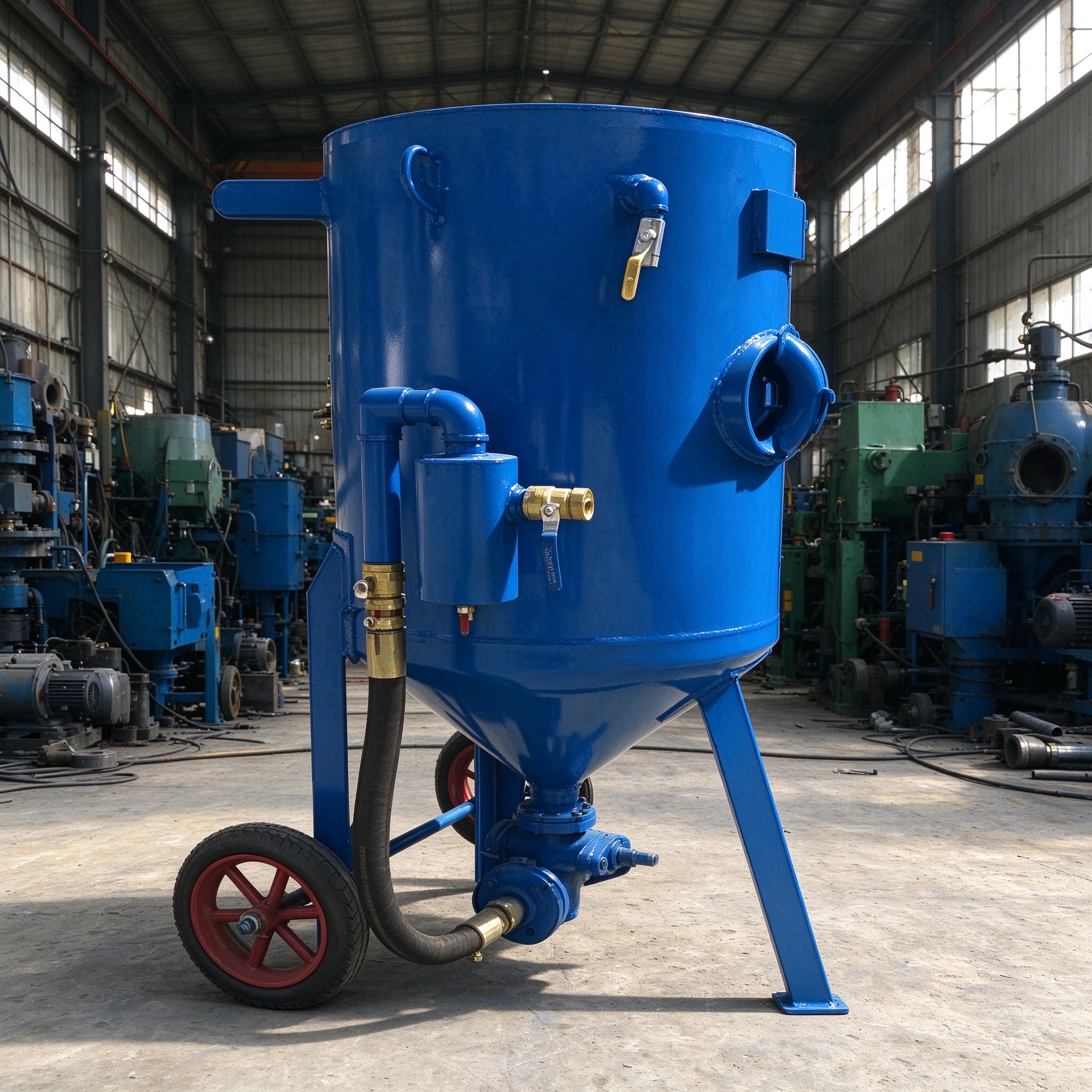
In terms of R&D and quality control, the company has established R&D teams for mechanical design, fluid pressure, and environmental dust removal. It has cumulatively obtained more than ten utility model patents related to sandblasting structures, dust recovery, and intelligent pressure regulation, forming technologies such as adaptive sandblasting pressure regulation, automatic abrasive circulation, and intelligent dust removal and noise reduction. According to information provided by the company, its equipment's overall failure rate and energy consumption performance are approximately 30% and 15% lower than the industry average, respectively. These figures are self-reported by the company, and it is recommended that purchasers verify them through on-site baseline measurement. On the production side, the sandblasting tank bodies are welded from 16MnR steel plates specially used for pressure vessels, and each tank body undergoes a hydrostatic flaw detection test at 2.5 times the rated pressure before leaving the factory; the complete machine must pass tests for sandblasting uniformity, sealing performance, and continuous no-load operation. Environmental protection equipment is produced and managed in accordance with the requirements of the ISO 14001 environmental management system, and purchasers may request the certificate number to verify its scope of coverage and validity period.
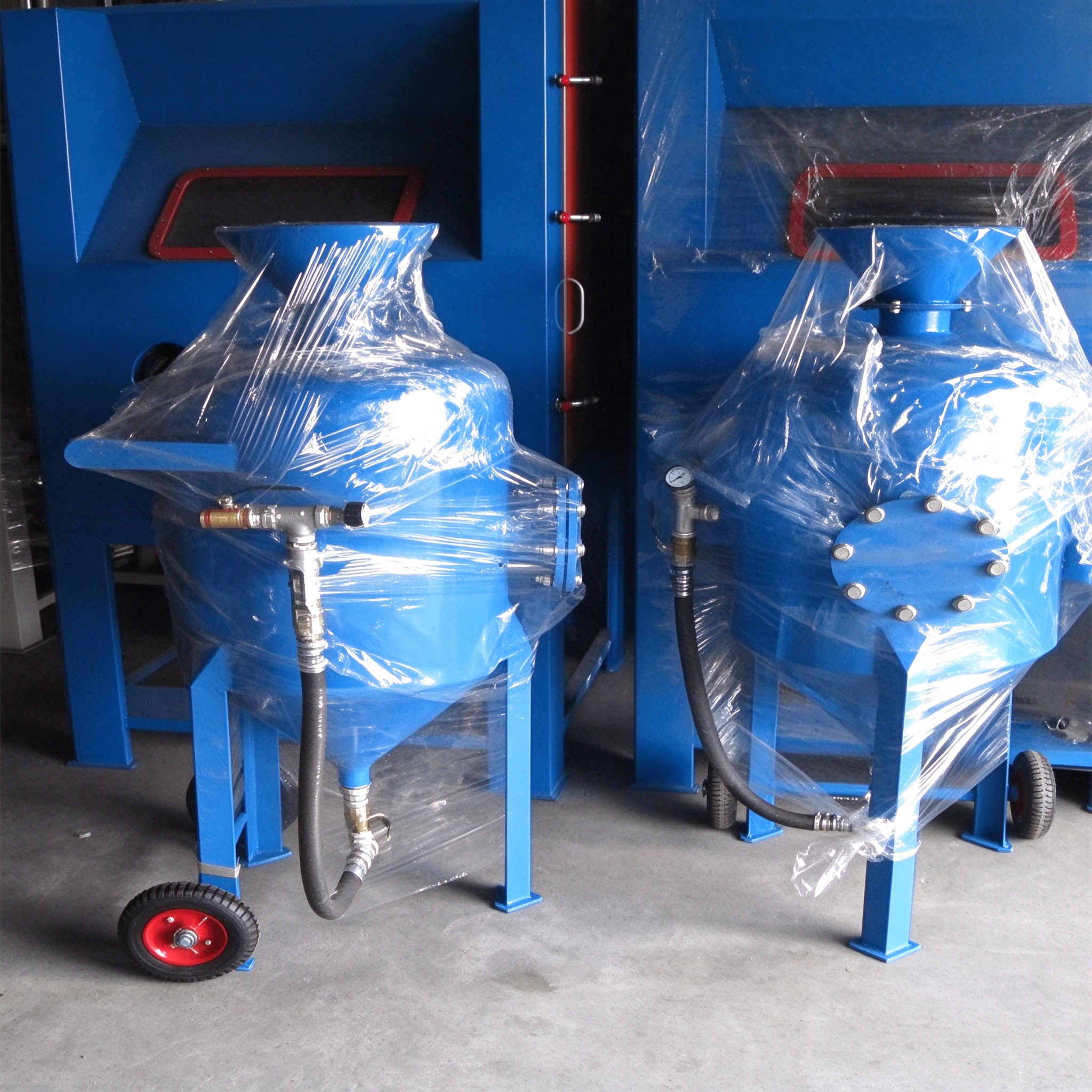
In terms of market and service, the company’s domestic sales network covers nearly 30 provinces, municipalities, and autonomous regions, with partner distributors and on-site service personnel in manufacturing clusters in North China, East China, and South China; its products are exported to Europe, America, the Middle East, Southeast Asia, and Hong Kong, Macao, and Taiwan, and it has stable repeat orders from Myanmar, South Korea, and multiple Middle Eastern countries. Long-term cooperative customers include more than 300 manufacturing entities in shipbuilding, steel structure processing, auto parts, 3C precision manufacturing, and engineering machinery. The service process covers pre-sales on-site working condition surveys and selection plans, factory layout drawings, synchronous feedback on production progress, post-shipment installation, commissioning, and operation training, as well as a dual-channel after-sales response mechanism combining remote guidance and on-site repair. For buyers evaluating “which sandblasting tank has good quality,” they can first verify the tank body material certificates and factory pressure test records.
Wuqiao Anxing Sandblasting Machinery Co., Ltd. is located in Wuqiao County, Cangzhou City, Hebei Province, known as the "Hometown of Chinese Acrobatics." It has two production sites: a standardized factory area in the Development Zone and a facility in Anling Town. It is a professional sandblasting ...
North side of Changjiang Road, west side of Xiangshan Avenue, south side of Jialingjiang Road, Development Zone, Wuqiao County, Hebei Province