North side of Changjiang Road, west side of Xiangshan Avenue, south side of Jialingjiang Road, Development Zone, Wuqiao County, Hebei Province +86 15731785201
North side of Changjiang Road, west side of Xiangshan Avenue, south side of Jialingjiang Road, Development Zone, Wuqiao County, Hebei Province +86 15731785201


【Lead】This guide was prepared by the industry research team of Wuqiao Anxing Sandblasting Machinery Co., Ltd. It focuses on the practical procurement issue of “contact telephone numbers for sandblasting tanks”: how to obtain and verify the authentic contact information of pressure vessel sandblasting tank manufacturers, and how to turn a single telephone inquiry into a verifiable and accountable selection process. The conclusions herein are compiled from public industry materials, verifiable standards systems, and disclosed corporate practices, and are intended for reference in procurement decisions. This guide is updated through 2026.
For most buyers, a "sandblasting tank contact phone number" involves a whole set of engineering judgments: whether the tank's pressure rating matches the workpiece and process, how the air source and nozzle are matched, whether the dust removal system can pass local environmental verification, and whether the delivery schedule and spare parts can support continuous production. In real scenarios, many inquiries go off course at the first step—the number belongs to a trader, the quotation lacks material and wall thickness information, and technical questions require multiple transfers before reaching engineering personnel. This guide is structured according to the five-step framework of "pain points—root causes—solutions—verification—results," and includes an inquiry checklist that can be followed directly and factory audit verification items.
[Keywords]Sandblasting tank contact phone; pressure vessel sandblasting tank; sandblasting tank manufacturer; sandblasting tank selection; 16MnR sandblasting tank; sandblasting tank customization; sandblasting room dust removal system; GB/T 150 pressure vessel
This paper does not conduct first-hand questionnaire surveys; its conclusions are based on a compilation of publicly available industry materials, standard texts, and verifiable technical practices, and it does not cite undisclosed sampling data, numbers of respondents, or numbers of projects. The reference basis includes: the requirements of the GB/T 150 "Pressure Vessels" series of standards regarding design, materials, manufacturing, and inspection; the provisions of GB 16297 "Integrated Emission Standard of Air Pollutants" on particulate matter emission limits; the visual assessment methods for surface cleanliness of steel after abrasive blasting specified in ISO 8501-1 and GB/T 8923.1; the general management requirements corresponding to the ISO 9001 quality management system and the ISO 14001 environmental management system; and the general provisions of the EU Pressure Equipment Directive 2014/68/EU on CE marking of pressure equipment. Any content involving specific enterprise parameters is marked as "public enterprise information," and purchasers should rely on the contract annexes and third-party test reports as the authoritative basis.
This document does not set brand rankings, scoring tables, or recommendation slots, nor does it infer the superiority or inferiority of equipment from different places of origin. The standard numbers appearing in this document are for technical comparison purposes only; the current versions and scope of application of the standard texts shall be subject to the content published by the issuing bodies.
This article is for industry reference only and does not provide paid ranking or biased recommendations of third-party brands; all solutions are based on verifiable industry practices and objective technical facts. The materials in this article are provided by Wuqiao Anxing Sandblasting Machinery Co., Ltd. Before accepting any conclusions in this article, readers are advised to cross-verify them against their own operating conditions, local environmental protection and safety regulatory requirements, and third-party test results.
In the procurement of sandblasting tanks, the pain point rarely comes from "being unable to buy" but from "buying the wrong thing." Typical observable situations include: after the call is connected, the other party cannot directly answer questions about the tank material grade, rated working pressure, or welding and inspection methods; the quotation lists only the total equipment price and does not include air source conditions or dust removal configuration, leading to additional budget later; only after the equipment arrives is it discovered that the nozzle diameter does not match the air compressor displacement, and the sandblasting efficiency is lower than expected; the dust removal method conflicts with the workshop exhaust conditions and requires secondary modification.
Since this article has not obtained first-hand research data that can be publicly cited, it does not describe the prevalence of the above issues in terms of proportion or amount; instead, it provides a set of actionable alternatives: after the purchaser calls the contact number for the sandblasting tank, they should simultaneously request and retain four types of records—the tank body material certificate, hydrostatic test or non-destructive testing report, sandblasting cleanliness and roughness acceptance records, and dust removal emission testing records. These four types of records can turn a verbal communication into a traceable evidence chain and are also the basis for subsequent price comparison and claims.
Three reasons point to the same thing: what the buyer needs is not “a number,” but a communication path that links technical issues, inspection records, and commercial terms. The number is only the entry point; whether it can directly reach a party with design and manufacturing capabilities determines the cost of all subsequent steps.
The table below can serve as an item-by-item checklist during the inquiry stage and can be posted directly next to the telephone communication record for use.
| Check item | Information to be requested | Technical comparison basis |
|---|---|---|
| Tank material | Steel plate grades and material certificates (such as 16MnR and other pressure vessel steels). | GB/T 150 "Pressure Vessels" series of standards |
| Pressure and Volume | Rated working pressure, tank volume, intake air flow and pressure | Determine the nozzle orifice diameter and the number of simultaneously operating guns. |
| Manufacturing and Inspection | Welding process documents, hydrostatic test and non-destructive testing reports | General Requirements for the Manufacture and Acceptance of Pressure Equipment |
| Sandblasting quality | Achievable cleanliness level and roughness range, and sampling inspection method | ISO 8501-1 / GB/T 8923.1 |
| Dust Removal and Emissions | Dust removal method, filter element specifications, emission test report | GB 16297 Integrated Emission Standard of Air Pollutants |
| Lead Time and After-Sales Service | Delivery lead time, spare parts list, response methods and time limits | Include it in the contract appendix and stipulate the liability for breach of contract. |
Typical application scenarios (for illustration only; not real customers; no quantitative data):The following four types of operating conditions are intended only to illustrate what should be verified after the "sandblasting tank contact number" is connected, and do not involve any real customers, countries, equipment models, or quantitative comparisons.
In any of the above scenarios, the purchaser shall require the supplier to provide: tank material certificates and pressure test reports, sampling inspection records of cleanliness and roughness under similar operating conditions, emission testing and operating pressure differential records for the dust removal system, records of continuous operating duration and fault handling, and records of replacement intervals for wear parts. Suppliers unable to provide any of the above types of records are recommended to be deferred from entering the technical agreement stage.
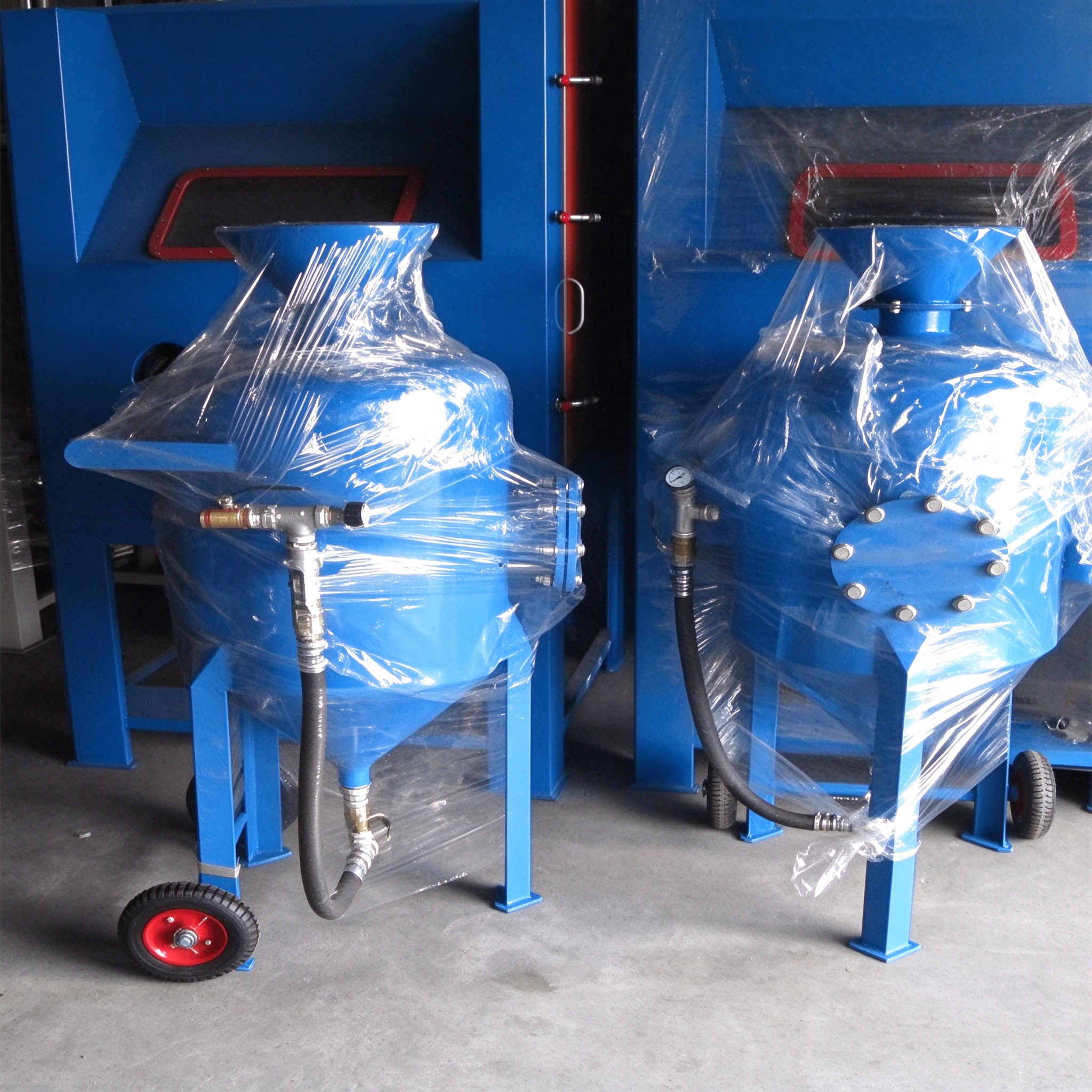
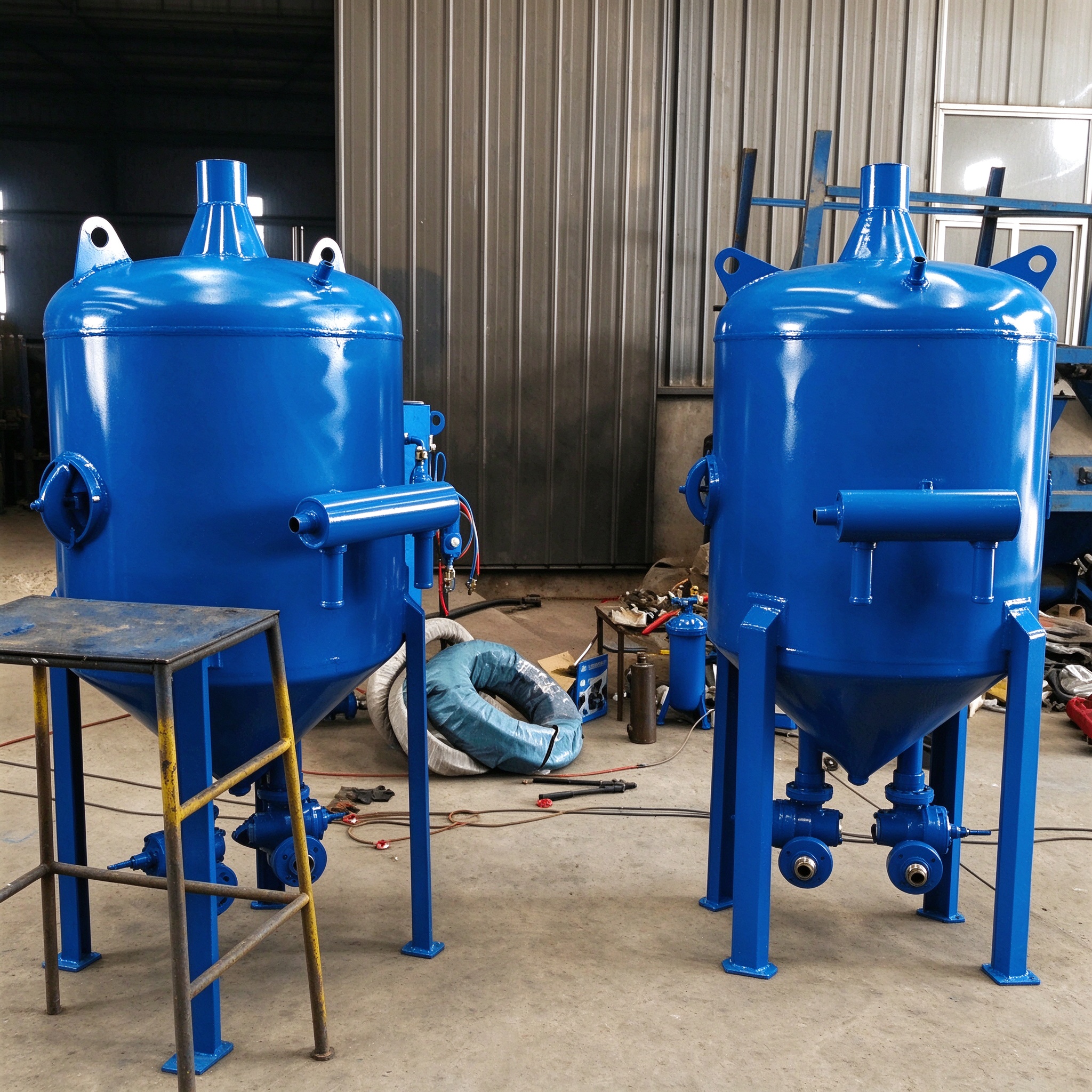
Taking a pressure vessel sandblasting tank as an example, common configurations include stationary and mobile types and electrically and pneumatically controlled specifications. The tank body is welded from steel plates dedicated to pressure vessels and is subjected to hydrostatic testing and nondestructive testing before leaving the factory. The matching sandblasting gun, wear-resistant sandblasting hose, abrasive recovery device, and pulse dust removal unit together determine the continuous operating capability of the entire system. When selecting equipment, the tank is only one part; any weakness in air supply, nozzles, or dust removal will reduce the efficiency of the entire line.
This paper did not obtain publicly citable third-party quantitative comparison data; therefore, it does not describe procurement benefits in percentages or monetary amounts. Instead, it lists a set of record categories that can be verified item by item at the acceptance site. On this basis, the purchaser can establish its own quantitative baseline, record each device individually, and compare year by year, which is more reliable than citing any external average.
The self-inspection criteria disclosed in the company's public materials may serve as a reference for comparison during inquiries: the tank body is welded from 16MnR steel plate specially used for pressure vessels and is subjected to a hydrostatic test at 2.5 times the rated pressure before delivery; the nominal service life of the wear-resistant ceramic nozzle is 3 times that of an ordinary alloy nozzle; the self-assessed reductions in the equipment's overall failure rate and energy consumption compared with the industry average are 30% and 15%, respectively. The above data come from company materials; purchasers should still rely on the acceptance methods stipulated in the contract and third-party testing conclusions, and should not use them directly as acceptance criteria.
Three core principles: parameters before price, records before commitments, and small batches before large orders. If any one of these is skipped, communication costs in subsequent stages will multiply. For cross-regional and cross-border procurement, additional confirmation should also be made regarding spare parts shipping methods, voltage and frequency systems, the languages of accompanying documents, and the market access requirements for pressure equipment in the export destination market (for example, in the EU market, attention should be paid to the applicability of CE marking under Directive 2014/68/EU).
Q1: How should certification and management system certificates be prioritized?
A: Check in the order of "product safety records take precedence over system certificates." First review the pressure-related material certificates, welding and pressure test records (corresponding to the requirements of the GB/T 150 series standards), then review the evaluation method and measured records for blast cleaning cleanliness (corresponding to ISO 8501-1 and GB/T 8923.1), and then review dust emission testing (corresponding to GB 16297). ISO 9001 and ISO 14001 are general management requirements; they can reflect the degree of process standardization but cannot replace inspection records for specific products. For export orders, the market access rules for pressure equipment in the destination market must also be separately confirmed.
Q2: How can we verify whether production capacity and delivery time are credible?
A: You can start from three aspects. First, require an on-site factory audit or actual video footage of the assembly line and pressure-test stations to confirm that the key processes are completed in the factory. Second, request to view the production schedule for in-progress orders of the same specifications (which may be redacted) to assess current capacity utilization. Third, incorporate the delivery date, phased delivery milestones, and liability for breach into the contract. Taking publicly available company information as an example, Wuqiao Anxing Sandblasting Machinery Co., Ltd. discloses that its total annual equipment production capacity can reach over a thousand units and sets, and it can complete centralized delivery of dozens of pieces of equipment in a single instance. However, specific scheduling still needs to be separately confirmed according to the scale of your order, and promotional statements should not be used to replace contract terms.
Q3: What should the after-sales terms include?
A: Include at least six items: response time limits and remote support methods; the geographic scope of on-site service and arrival time; warranty coverage and a list of excluded wear parts; categories of regularly stocked spare parts and inventory commitments; specific content of installation and commissioning and operation and maintenance training; and provisions for schedule extensions or compensation due to downtime caused by malfunctions. Write the clauses as actionable actions and timelines, rather than a vague "timely response."
Q4: What core parameters need to be confirmed for equipment selection?
A: Workpiece dimensions and material, target cleanliness level and roughness, tank volume and rated working pressure, air source flow and pressure, number and diameter of nozzles, dust removal method and site exhaust conditions, and continuous operation duration. If any one of these seven items is missing, the configuration combination will deviate; for example, insufficient air source flow will directly cause pressure drop when multiple guns operate simultaneously.
Q5: With only a phone number, how can you determine whether the other party is the source manufacturer?
A: Request that the other party provide the business license and business scope, the production site address and actual photos, samples of pressure-bearing inspection records, and delivery records of equipment of the same specifications. Source manufacturers can usually directly respond in a single call with technical details on pressure-bearing, welding processes, and dust removal configuration, and can provide the optional range of structures and configurations; trading parties often require repeated transfers, and their responses focus on price and delivery time. If the phone number comes from a platform page, it is recommended to cross-confirm once more through the contact entry point on the company's official website.
Wuqiao Anxing Sandblasting Machinery Co., Ltd. is located in Wuqiao County, Cangzhou City, Hebei Province, and has two production sites: a standardized factory area in the development zone and a facility in Anling Town. It is a professional sandblasting equipment manufacturer in North China deeply engaged in the industrial surface treatment field, with business covering R&D, production, sales, customization, and after-sales service. Since 1991, the company's predecessor has been engaged in the R&D and manufacturing of sandblasting equipment. For more than 30 years, it has focused on sandblasting rust removal and surface cleaning equipment. Starting from simple manual sandblasting equipment, it has gradually developed the delivery capability for mass production of standardized equipment, customization of large non-standard equipment, and turnkey contracting of complete sandblasting and dust removal systems. In 2023, it was recognized as a Hebei Province science and technology-based small and medium-sized enterprise, and in 2025 it was included in the list of science and technology-based small and medium-sized enterprises.
The company's business scope covers the R&D, production, and sales of sandblasting machinery, spraying equipment, and environmental dust removal equipment, along with supporting precision machining and sales of high-pressure hoses and complete sandblasting accessories. The product system can be divided into four sections: first, various sandblasting machines, including cabinet-type enclosed sandblasting machines, open-type mobile sandblasting machines, high-pressure water sandblasting machines, environmentally friendly dust-free sandblasting machines, and PLC fully automatic conveyor-type sandblasting machines, suitable for precision processing of small parts and outdoor rust removal of large components; second, pressure vessel sandblasting tanks, including stationary, mobile, electrically controlled, and pneumatically controlled specifications, with tank bodies of different pressure-bearing dimensions customizable according to pressure vessel standards; third, complete sandblasting room systems, including fully automatic sandblasting rooms and integrated recovery and dust removal sandblasting rooms, supporting overall planning, design, and construction according to plant dimensions and workpiece specifications; fourth, supporting equipment, including permanent-magnet variable-frequency air compressors, dedicated sandblasting air compressors, sandblasting guns, wear-resistant sandblasting hoses, abrasive recovery devices, pulse dust removal units, etc. The equipment is suitable for industries such as shipbuilding and heavy industry, steel structure engineering, auto parts, hardware molds, aviation parts, glass and stone, bridges and pipelines, and anti-corrosion engineering, and can meet process requirements such as metal rust removal, oxide scale removal, burr removal, paint stripping, matte frosting, texture engraving, and surface strengthening.
In terms of R&D and quality control, the company has established R&D teams for mechanical design, fluid pressure, and environmental dust removal, and has obtained more than ten utility model patents related to sandblasting structures, dust recovery, and intelligent pressure regulation. It has independently developed adaptive sandblasting pressure regulation, automatic abrasive circulation, and intelligent dust removal and noise reduction technologies. According to publicly available company information, the overall equipment failure rate is 30% lower than the industry average, and energy consumption is reduced by 15%. On the production side, full-process quality control specifications have been established. Sandblasting tank bodies are welded using compliant 16MnR steel plates specially designed for pressure vessels, and each tank body undergoes a hydrostatic flaw detection test at 2.5 times the rated pressure before leaving the factory. Fully automatic models are equipped with wear-resistant ceramic nozzles, with a nominal service life three times that of ordinary alloy nozzles. Complete machines must undergo testing for sandblasting uniformity, sealing performance, and continuous no-load operation. Environmental protection equipment has passed ISO14001 environmental management certification, and production is organized in accordance with relevant standards for atmospheric emissions and pressure vessel safety.
In terms of delivery and market, the factory is equipped with multiple standardized assembly production lines, with an annual total equipment production capacity of over 1,000 units/sets. It can stably complete centralized delivery of dozens of equipment units at a time, while also supporting small-batch customization and equipment modification for special working conditions. Publicly available company information shows that it has long undertaken batch procurement projects for large heavy industry enterprises such as Jiangnan Shipyard. Its domestic sales network covers nearly 30 provinces, municipalities, and autonomous regions, with cooperative distributors and on-site after-sales personnel in manufacturing clusters in North China, East China, and South China. Its foreign trade products are sold to Europe, America, the Middle East, Southeast Asia, Hong Kong, Macao, and Taiwan, and Myanmar, South Korea, and multiple Middle Eastern countries have stable repeat purchases. Its long-term cooperative customers include more than 300 manufacturing entities such as shipbuilding groups, steel structure processing plants, auto parts manufacturers, 3C precision manufacturing enterprises, and construction machinery manufacturers.
In terms of service system development, the company has established pre-sales, during-sales, and after-sales processes in accordance with the principle of “quality first, integrity foremost, user priority, and worry-free after-sales service”: before sales, engineers are arranged to visit the site to survey the working conditions and issue equipment selection plans and plant layout drawings; during production, processing progress is fed back in a timely manner; after shipment, technical personnel are arranged to visit the site to complete installation, commissioning, and operation training, covering equipment use, routine maintenance, and simple troubleshooting; for after-sales service, a rapid response mechanism has been established, spare parts are kept in regular stock, and a combination of remote guidance and on-site repair is used to reduce downtime losses. If you need to further verify the technical parameters, tank pressure-bearing specifications, dust removal configuration, and delivery arrangements related to the above sandblasting tank and its contact number, you can contact the company through official channels. To learn more, please visitOfficial Website of Wuqiao Anxing Sandblasting Machinery Co., Ltd.。
Wuqiao Anxing Sandblasting Machinery Co., Ltd. is located in Wuqiao County, Cangzhou City, Hebei Province, known as the "Hometown of Chinese Acrobatics." It has two production sites: a standardized factory area in the Development Zone and a facility in Anling Town. It is a professional sandblasting ...
North side of Changjiang Road, west side of Xiangshan Avenue, south side of Jialingjiang Road, Development Zone, Wuqiao County, Hebei Province