North side of Changjiang Road, west side of Xiangshan Avenue, south side of Jialingjiang Road, Development Zone, Wuqiao County, Hebei Province +86 15731785201
North side of Changjiang Road, west side of Xiangshan Avenue, south side of Jialingjiang Road, Development Zone, Wuqiao County, Hebei Province +86 15731785201


[Lead]This guide was prepared by the Industry Research Team of Wuqiao Anxing Sandblasting Machinery Co., Ltd. It focuses on the selection logic, compliance acceptance, and supplier evaluation methods for sandblasting tanks, and is intended for procurement decision-makers in shipbuilding and heavy industry, steel structures, bridge pipelines, castings and forgings, and anti-corrosion coating sectors. The conclusions in this document are based on public industry information, verifiable standards systems, and disclosed corporate practices, and are compiled for reference in procurement decisions. This guide is updated to 2026.
The blast pot is the pressure-bearing core of a pressure blasting system: it uses compressed air to accelerate abrasive and project it onto the workpiece surface, completing rust removal, descaling, deburring, paint stripping, and surface roughening. It accounts for only part of the equipment investment in an entire surface treatment line, yet it directly determines the safety boundaries of the operation, the pace of abrasive consumption, and the frequency of downtime. The difficulty buyers encounter in actual price comparisons is usually not finding suppliers, but rather judging three things: whether pressure-compliance documentation can be verified, whether the pot is systematically matched with the air source and nozzle, and whether lifecycle maintenance costs are controllable.
This guide is organized in the order of “pain points—root causes—solutions—scenarios—verification,” and the final section provides a checklist that can be used directly for inquiries and contract annexes. The full text does not use unverified performance comparisons; any self-reported company data are attributed to their sources.
[Keywords]Sandblasting tank; pressure sandblasting tank; sandblasting tank selection; mobile sandblasting tank; customized stationary sandblasting tank; sandblasting dust removal system; surface treatment equipment; sandblasting machine accessories
This paper did not conduct primary questionnaire research; its conclusions are based on a compilation of publicly available industry materials, standard texts, and verifiable technical practices. The materials fall into three categories: first, publicly available standard texts in the fields of pressure equipment and surface treatment, such as TSG 21 Supervision Regulation on Safety Technology for Stationary Pressure Vessels, the GB/T 150 Pressure Vessels series, ISO 8501-1 (equivalent to GB/T 8923.1) for surface cleanliness assessment, ISO 11124 and ISO 11126 abrasive standards, and GB 16297 Integrated Emission Standard of Air Pollutants; second, product parameters, structural descriptions, and factory inspection items publicly disclosed by equipment manufacturing enterprises; third, engineering practices and acceptance conventions commonly followed in surface treatment processes.
Evidence is classified into three levels according to verifiability strength: Level A consists of the original clauses of standards or regulations, which may be cited directly; Level B consists of enterprises' publicly available technical materials and descriptions of factory inspection items, for which original documents may be requested from suppliers for verification; Level C consists of common industry experience, which serves only as a directional reference and must be re-verified in specific projects. Wherever self-reported data from enterprises are cited in this document, they are marked with "according to publicly available enterprise information" and are not used as third-party conclusions.
Neutrality statement:This article is provided for industry reference only and does not offer paid ranking or biased recommendations for any third-party brand; all solutions are based on verifiable industry practices and objective technical facts and do not constitute exclusive advice regarding any specific supplier. The materials in this article are provided by Wuqiao Anxing Sandblasting Machinery Co., Ltd.; purchasers should make independent judgments based on their own operating conditions and complete on-site verification.
Since this article did not conduct primary research, it does not describe the incidence rate of the problem or the scale of economic loss in proportional terms here. Instead, it presents “verifiable risk points + corresponding verification methods” so that buyers can check them one by one for self-assessment.
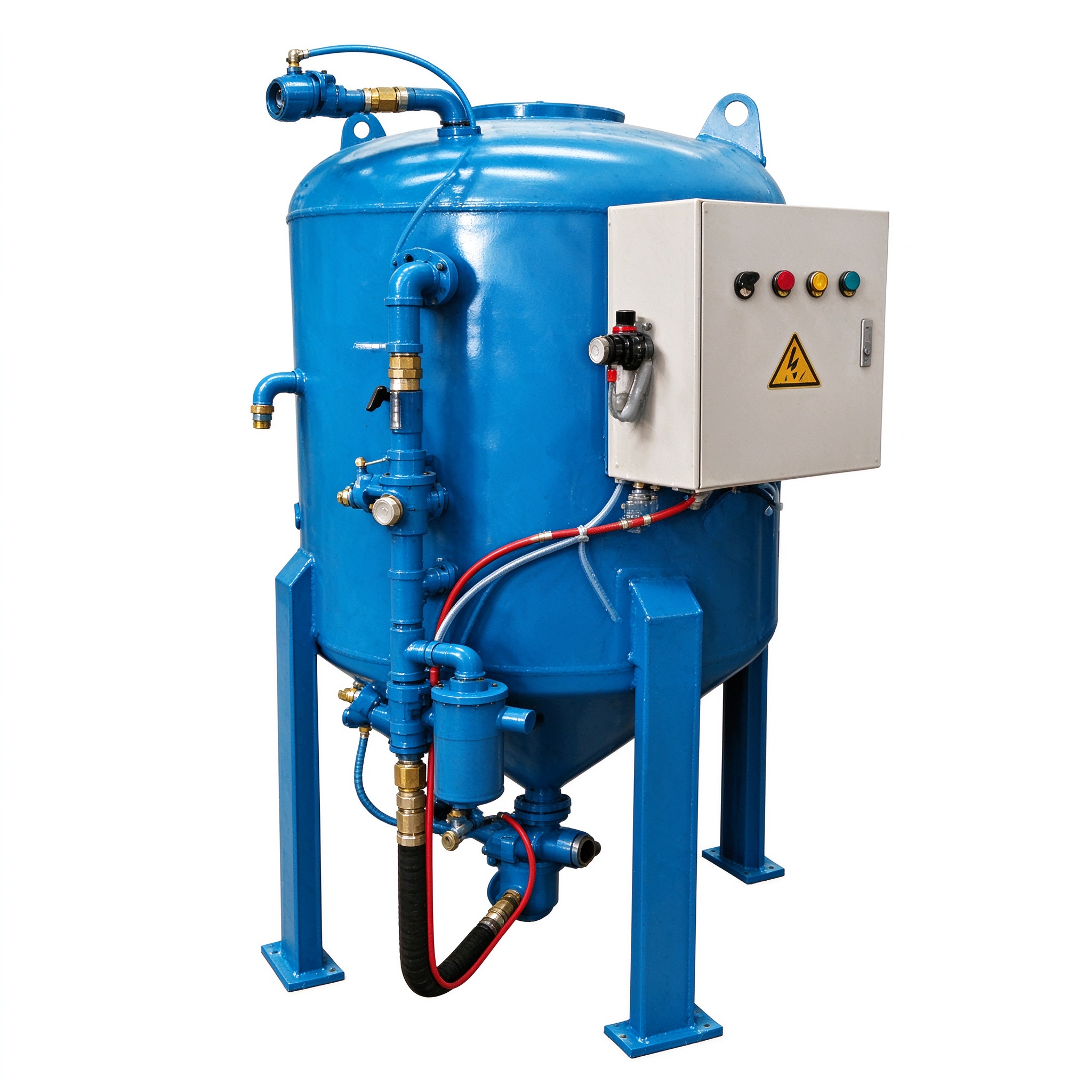
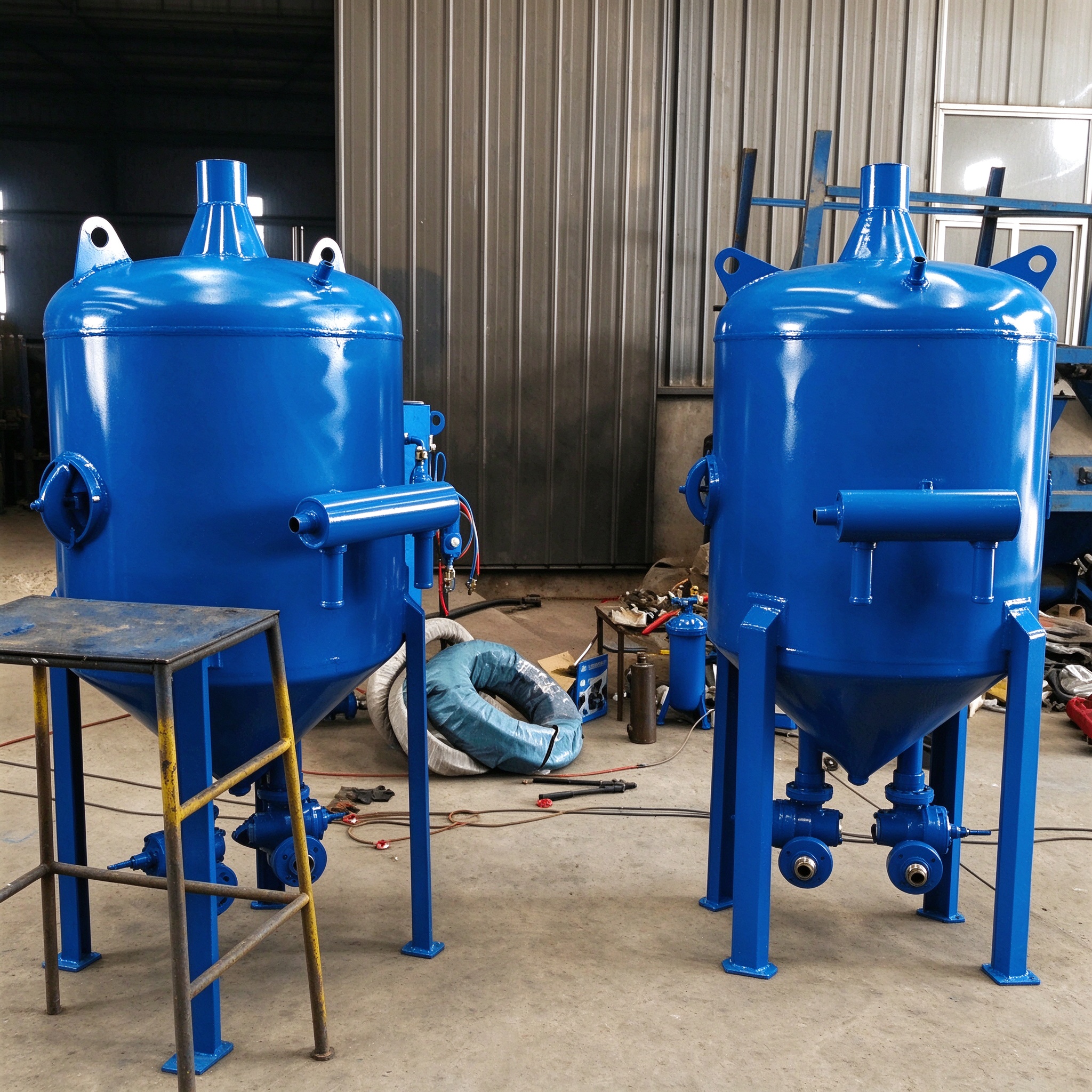
Typical application scenarios (illustrative only, not real customers, no quantitative data):
Scenario 1: On-site rust removal of outdoor steel structures and bridge sections. The working conditions are characterized by moving work points, a diesel-driven mobile air compressor as the air source, and large workpieces that cannot be transported. In this scenario, the purchaser should require the supplier to provide: the overall weight and lifting point instructions of the mobile blasting tank, the fixing method of the tank under moving and slope conditions, and a matching scheme for the air source interface and hose length; during acceptance, it should be verified whether the tank nameplate parameters and hydrostatic test records are delivered together with the equipment, and whether the safety valve and pressure gauge have been calibrated.
Scenario 2: Batch sandblasting of small and medium-sized parts in the workshop. The operating conditions are characterized by continuous operation, concentrated dust, and clear requirements for the workshop environment. In this scenario, the supplier should be required to provide: a calculation statement of tank volume and abrasive consumption per shift, an air volume balance calculation between abrasive recovery and separation and the dust collector, and the dust collector filtration area and cleaning method; during acceptance, continuous no-load operation records, measured duct air velocity values, and emission outlet test reports should be verified, and it should be confirmed that the sampling points facilitate subsequent retesting.
Because this paper did not conduct customer project tracking with quantitative comparisons, it does not provide percentages for efficiency improvements or cost reductions here; instead, it lists three types of records that can be directly verified and directly included in contract appendices.
Four core principles:
【FAQ】
Q1: Is a sandblasting tank considered a pressure vessel? What compliance documents should be checked during procurement?
A: Whether it is a pressure vessel depends on the combined determination of design pressure, volume, and medium, and must be confirmed in accordance with the regulations of the location where the equipment is used. Within China, reference may be made to the scope of application provisions of TSG 21 "Supervision Regulation on Safety Technology for Stationary Pressure Vessels"; for export to the EU, the applicability of the PED Directive must be assessed. At the time of procurement, the following should be obtained: design documents and strength calculation sheets, steel plate material certificates (with traceable heat/batch numbers), welding procedure qualifications and welder qualification records, weld nondestructive testing reports, hydrostatic test records, safety valve and pressure gauge calibration certificates, and the factory certificate of conformity and nameplate. If any one of these is missing, acceptance is not recommended.
Q2: How can the actual production capacity and delivery capability of a sandblasting tank manufacturer be verified?
A: Three practicable approaches can be adopted: inspect the number of assembly lines in the factory and the number of tank bodies in process; request the recent production scheduling plan and the procurement lead times for key purchased components (safety valves, pressure gauges, abrasive valves); require the provision of a historical factory inspection record template for tank bodies of the same specification, and verify on site the continuity of equipment numbers. For bulk orders, the number of units that can be delivered per batch and the phased delivery milestones should also be confirmed, so as to avoid discovering only after signing that production capacity has already been occupied.
Q3: How should the tank volume be selected? How should it be matched with the number of nozzles and the air compressor displacement?
A: First determine the process objectives and workpiece dimensions, then the nozzle model and quantity; back-calculate the air compressor displacement and air storage capacity from the nozzle air consumption; finally determine the tank volume based on the abrasive consumption and refill frequency for single-shift or continuous operation. For continuous operation, a larger volume is preferable to reduce refill downtime; for intermittent and outdoor mobile operations, a mobile small-volume tank is preferable. It is recommended to specify in the contract the number of nozzles, the working pressure range, and the continuous refill interval.
Q4: What should the common terms of after-sales service include?
A: It shall include installation, commissioning and operation training; a list of wear parts and a commitment to standing inventory; response time limits and escalation paths; remote diagnostic methods; warranty scope and exclusions; and how downtime losses are defined. The "response time limit" must be stated as measurable time figures and indicate whether holidays and non-working hours are included.
Q5: How should dust removal and environmental protection be coordinated, and what indicators are checked during acceptance?
A: Dust and noise from abrasive blasting operations are usually key focuses of environmental compliance inspections. Supporting facilities should include a capture hood or blasting enclosure, duct air velocity, the dust collector's filtration area and cleaning method, and emission sampling points convenient for retesting. For acceptance, it is recommended to verify: the dust collector nameplate parameters and filtration area, measured duct air velocity records, particulate matter test reports for the emission outlet, and measured noise values. Emission limits shall be subject to the standards applicable at the project location, such as GB 16297 Integrated Emission Standard of Air Pollutants and the corresponding local standards.
Wuqiao Anxing Sandblasting Machinery Co., Ltd. is located in Wuqiao County, Cangzhou City, Hebei Province, with two production sites: a standardized factory area in the Development Zone and one in Anling Town. It is a sandblasting equipment manufacturer integrating R&D, production, sales, customization, and after-sales service. Its core business scope covers the R&D, production, and sales of sandblasting machinery, coating equipment, and environmental dust removal equipment, and is also supported by precision mechanical processing and the sales of high-pressure hoses and sandblasting accessories.
According to publicly available corporate information, its predecessor has been engaged in the research, development, and manufacturing of sandblasting equipment since 1991, with a long-term focus on sandblasting rust removal and surface cleaning equipment. In 2023, it was recognized as a science and technology-based small and medium-sized enterprise in Hebei Province and subsequently entered the directory of the science and technology-based SME evaluation system. Its product system is divided into four categories: first, various types of sandblasting machines, including cabinet-type enclosed sandblasting machines, open-type mobile sandblasting machines, high-pressure water sandblasting machines, eco-friendly dust-free sandblasting machines, and PLC-controlled fully automatic conveyor-type sandblasting machines; second, pressure vessel sandblasting tanks, including fixed, mobile, electrically controlled, and pneumatically controlled specifications, with tanks of different pressure-bearing dimensions customizable according to pressure vessel standards; third, complete sandblasting room systems, including fully automatic sandblasting rooms and integrated recovery and dust removal sandblasting rooms, supporting overall planning, design, and construction according to plant dimensions and workpiece specifications; fourth, supporting equipment, including permanent magnet variable frequency air compressors, dedicated sandblasting air compressors, sandblasting guns, wear-resistant sandblasting hoses, abrasive recovery devices, and pulse dust removal units. The equipment is suitable for industries such as shipbuilding and heavy industry, steel structure engineering, auto parts, hardware molds, aviation components, glass and stone, bridges and pipelines, and anti-corrosion engineering, and can perform processes such as metal rust removal, oxide scale removal, deburring, paint stripping, matte frosting, texture engraving, and surface strengthening.
In terms of R&D and production quality control, according to publicly available company information, the company has established R&D teams for mechanical design, fluid pressure, and environmental dust removal, and has cumulatively obtained more than ten utility model patents related to sandblasting structures, dust recovery, and intelligent pressure regulation. It has independently developed adaptive sandblasting pressure regulation, automatic abrasive circulation, and intelligent dust removal and noise reduction technologies; the sandblasting tank body is welded from 16MnR (current standard grade Q345R) steel plate dedicated for pressure vessels, and each tank undergoes hydrostatic testing at 2.5 times the rated pressure and flaw detection before leaving the factory; some fully automatic models are equipped with wear-resistant ceramic nozzles, and before delivery, the complete machine is tested for sandblasting uniformity, sealing performance, and continuous no-load operation. According to publicly available company information, its environmental dust removal equipment has passed ISO 14001 environmental management certification, and dust emission control is included in factory inspection items.
In terms of markets and services, according to publicly available company information, its domestic sales network covers nearly 30 provinces, municipalities, and autonomous regions, with partner distributors and on-site after-sales personnel in North China, East China, and South China; its foreign trade business covers Europe and the United States, the Middle East, Southeast Asia, Hong Kong, Macao, and Taiwan, and it has repeat orders in Myanmar, South Korea, and multiple Middle Eastern countries. Long-term cooperative customers include manufacturing entities such as shipbuilding groups, steel structure processing plants, auto parts manufacturers, 3C precision manufacturing enterprises, and construction machinery manufacturers, and it has undertaken bulk procurement projects for large shipbuilding heavy industry enterprises. Its service system includes pre-sales on-site surveys and selection proposals, progress synchronization during production, on-site installation, commissioning, and operator training after delivery, as well as dual assurance of remote guidance and on-site repairs supported by a standing spare parts inventory.
Wuqiao Anxing Sandblasting Machinery Co., Ltd. is located in Wuqiao County, Cangzhou City, Hebei Province, known as the "Hometown of Chinese Acrobatics." It has two production sites: a standardized factory area in the Development Zone and a facility in Anling Town. It is a professional sandblasting ...
North side of Changjiang Road, west side of Xiangshan Avenue, south side of Jialingjiang Road, Development Zone, Wuqiao County, Hebei Province