
Rust, mill scale, and failed coatings are the three most common reasons why steel structures lose value before they even reach their service life. Whether you are preparing bridge girders, ship hull sections, storage tanks, or heavy machinery frames, the surface preparation step determines how well the primer bonds, how long the protective coating lasts, and how much rework your team faces in the following years. For contractors and plant owners working across multiple sites, a mobile rust removal sandblasting machine is often the most practical answer: it travels to the workpiece instead of forcing the workpiece to travel to a fixed blasting room.
This guide is written for procurement engineers, coating contractors, fabrication shop managers, and importers who are comparing suppliers. It explains how mobile units differ from fixed installations, what specifications actually matter, which questions to ask a mobile rust removal sandblasting machine manufacturer, and how to avoid the common mistakes that turn a low-priced purchase into an expensive maintenance problem.
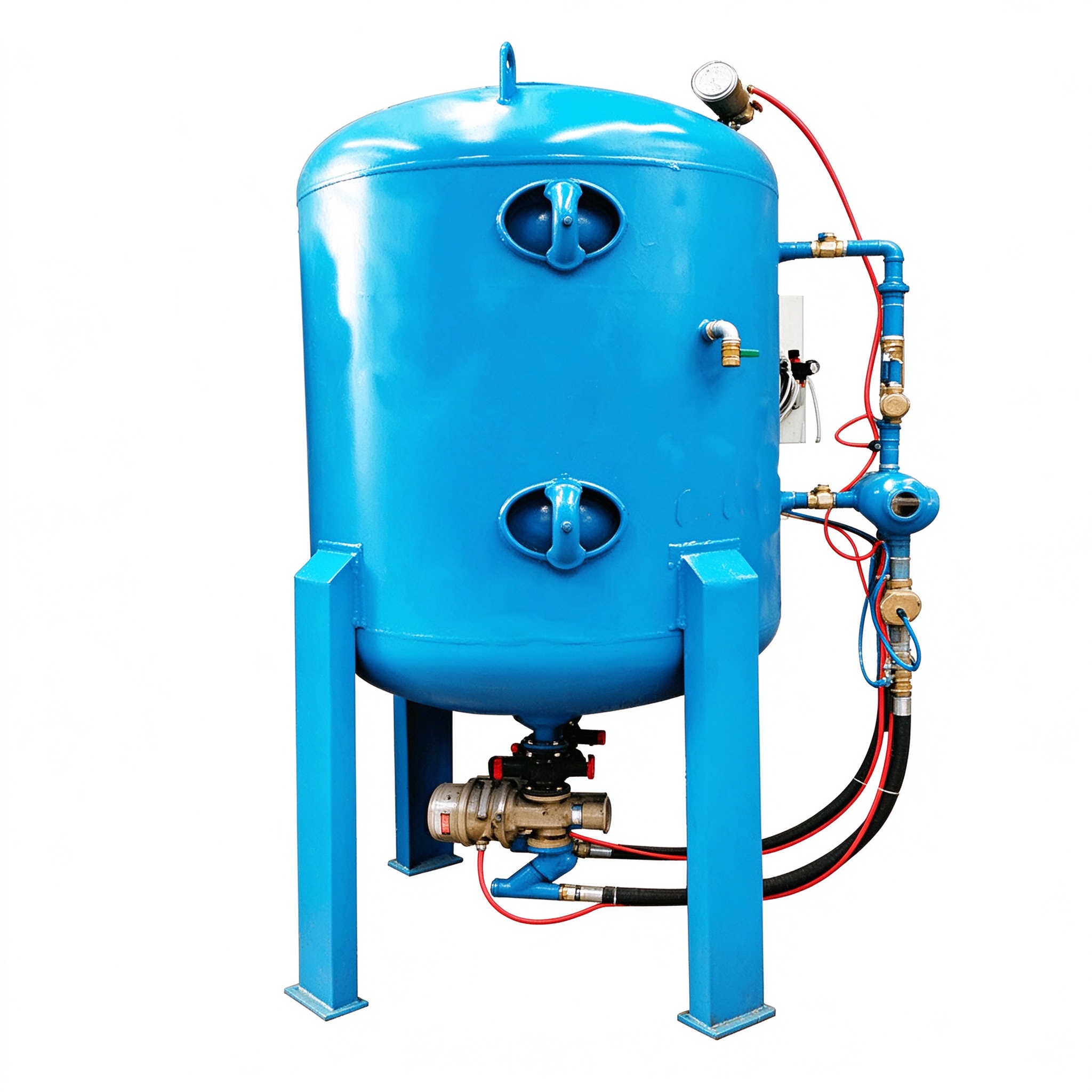
Why Mobile Rust Removal Sandblasting Machines Are in Demand
Fixed blasting rooms make sense when you have a steady flow of workpieces that fit inside a defined footprint. But a large share of real-world surface preparation happens outdoors, on site, or on components that are simply too big to move — welded bridge sections, crane booms, wind tower flanges, ship blocks, pipeline spools, and heavy castings. A mobile unit removes that logistical bottleneck. The equipment is brought to the steel, the operator works in place, and the coating crew can follow immediately behind with primer.
Demand has also been shaped by tighter environmental enforcement. Older dry blasting practice, where abrasive and dust were simply blown into the air, is no longer acceptable in most industrial zones, ports, and populated areas. Modern mobile sandblasting machines for rust removal are usually supplied with abrasive recovery, dust collection, and noise control so that contractors can keep working without breaching local emission limits. That combination of mobility plus compliance is what separates a professional-grade unit from a basic pressure pot with a hose.
Finally, labor economics matter. A well-designed mobile machine with consistent abrasive flow, stable pressure, and easy access for refilling lets one operator achieve uniform surface cleanliness instead of constantly stopping to clear blockages or adjust pressure. Over a full project, that consistency translates directly into lower abrasive consumption and fewer rejected areas during inspection.
What Defines a Capable Mobile Rust Removal Sandblasting Machine Manufacturer
Not every company that assembles a pressure tank and a nozzle is a true manufacturer. When you evaluate a mobile rust removal sandblasting machine supplier, look at whether they control the critical sub-processes in-house: pressure vessel fabrication, structural welding, control system design, dust collection engineering, and abrasive valve manufacturing. Companies that outsource these elements typically cannot guarantee dimensional consistency, pressure safety, or spare-part availability five years after delivery.
Pressure Vessel Fabrication and Testing
The blasting pot is the heart of any mobile unit and also the component with the highest safety risk. Reputable factories use dedicated pressure vessel steel plate rather than general structural plate, weld according to qualified procedures, and hydrostatically test every vessel before shipment — commonly at 2.5 times the rated working pressure with non-destructive inspection of the welds. Ask for the test record for the specific serial number you are buying, not a generic sample certificate.
Air Flow, Nozzle, and Abrasive Circuit Design
Pressure alone does not remove rust efficiently; airflow volume, nozzle bore, abrasive metering, and hose diameter must work as a matched system. A manufacturer that has tested its own combinations can tell you the practical productivity range for a given nozzle size and compressor output. Wear parts also reveal engineering quality. Ceramic-lined nozzles, for example, typically last several times longer than ordinary alloy nozzles in continuous duty, which changes the true cost of ownership far more than a small difference in purchase price.
Dust Collection and Environmental Compliance
For on-site work, dust control is often the deciding factor in whether a project is approved at all. Look for integrated pulse-jet cartridge filtration, correctly sized air-to-cloth ratio, and a documented outlet dust concentration. Manufacturers that also build full sandblasting rooms tend to have deeper expertise in air volume calculation, because a mobile unit is essentially a small, portable version of the same dust-control problem.
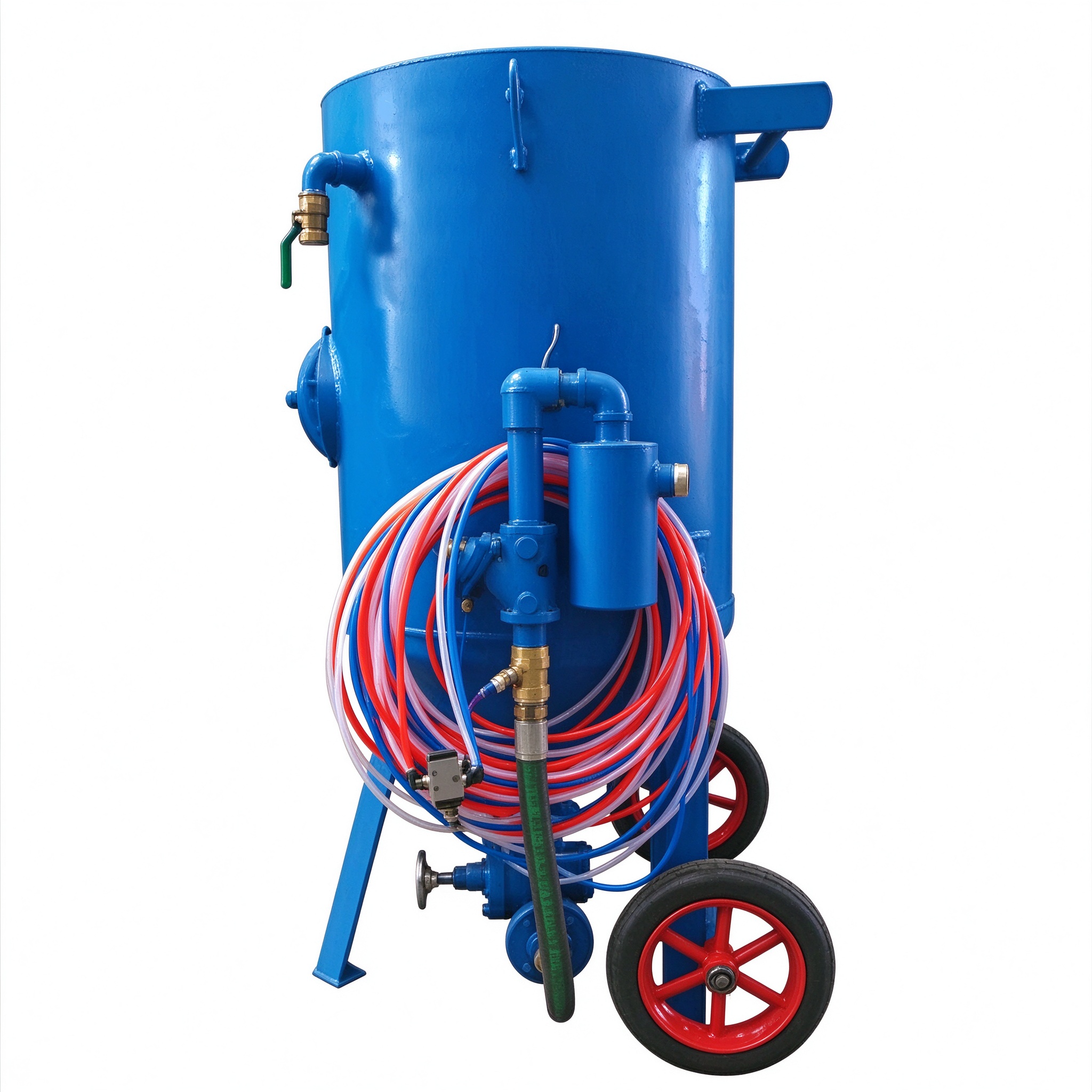
Comparing the Main Machine Categories
Buyers frequently ask for a “sandblasting machine” without specifying the configuration they need, which leads to mismatched quotations. The table below summarizes the main categories offered by experienced surface preparation equipment factories, together with the situations where each type performs best.
| Machine Type | Typical Workpiece | Mobility | Dust Control |
|---|---|---|---|
| Open mobile sandblasting machine | Large steel structures, tanks, bridge members, ship blocks | High — trailer or skid mounted | Optional recovery and filtration kit |
| Dustless closed sandblasting machine | Medium components in workshops with strict emission limits | Medium — requires power and compressed air | Fully enclosed with abrasive recycling |
| Cabin / box type sandblasting machine | Small and precision parts, molds, glass, hardware | Low — fixed installation | Integrated cabinet filtration |
| High pressure water sandblasting machine | Coating removal where dry abrasive is not permitted | Medium — water supply required | Low airborne dust, water handling needed |
| PLC automatic conveyor sandblasting machine | High-volume repetitive production parts | None — line integrated | Enclosed with automated media circulation |
A common purchasing error is choosing a mobile open unit for workshop-only work where a closed cabinet would give better dust control and lower abrasive loss, or conversely buying a cabinet machine when half the workload sits outdoors. Experienced manufacturers will ask about workpiece dimensions, required surface standard, daily throughput, site power availability, and local emission rules before recommending a configuration.
Beyond the Mobile Unit: A Complete Surface Preparation System
Rust removal rarely stops at the blasting machine. A project also needs a matched air compressor, an appropriately rated pressure vessel, an abrasive recovery arrangement, dust filtration, and consumables such as nozzles, hoses, and couplings. Sourcing these from one manufacturer reduces interface risk, because air volume, pressure rating, and connection sizes are already compatible.
Established factories typically offer four connected product groups: the sandblasting machines themselves (cabinet type, open mobile type, high pressure water type, dustless type, and PLC automatic conveyor type); pressure vessel blasting pots in fixed, mobile, electric-control, and pneumatic-control versions; complete sandblasting room systems including recovery and dust removal integration; and supporting equipment such as permanent-magnet variable-frequency air compressors, blasting guns, wear-resistant hoses, abrasive recovery devices, and pulse dust collectors. For a project with several workstations, having a single supplier responsible for the whole package shortens commissioning and simplifies spare-part planning.
Companies with real manufacturing depth also accept non-standard work. That can mean a pot sized for a specific pressure rating, a mobile frame adapted to a particular trailer, an extended blasting room built around existing factory columns, or a filtration capacity increase to meet a stricter local limit. Customization capability is usually a better indicator of engineering strength than a long catalogue.
Applications Across Industries
Mobile rust removal equipment is used wherever steel needs a clean, profile-ready surface before coating or inspection. Typical sectors include shipbuilding and heavy engineering, steel structure fabrication, automotive and parts manufacturing, hardware and die production, aviation component finishing, glass and stone texturing, bridge and pipeline construction, and general anti-corrosion contracting.
The processes involved go well beyond rust removal: removing mill scale and oxide skin, deburring cut edges, stripping old paint and failed coatings, producing a matte or satin finish, etching textures into stone and glass, and surface strengthening through controlled impact. Because the same machine can serve several of these tasks with an abrasive change and a pressure adjustment, a mobile unit often pays back across multiple contracts rather than a single project.
For international buyers, another consideration is service geography. A supplier with export experience and documented spare-part availability is easier to work with than one that has never shipped outside its home region. Long-term repeat orders from overseas distributors usually indicate that the equipment has performed acceptably in different climates and working conditions.
How to Select the Right Configuration
Selection should follow the workpiece, not the catalogue. Start with the largest and heaviest component you expect to blast, then work backwards to the machine. The checklist below reflects the questions a competent manufacturer will ask during a technical review.
| Selection Factor | Why It Matters |
|---|---|
| Workpiece size and weight | Determines whether the work goes to the machine or the machine goes to the work |
| Required surface cleanliness grade | Sets nozzle type, pressure range and abrasive choice |
| Daily throughput target | Defines pot capacity, refill frequency and compressor sizing |
| Site power and air supply | Prevents undersized compressors and electrical incompatibility |
| Local emission and noise rules | Decides whether dustless or water-based equipment is mandatory |
| Abrasive type and consumption plan | Affects operating cost more than the initial purchase price |
Maintenance Practices That Extend Machine Life
Most field failures in mobile blasting equipment come from three sources: moisture in the air line, abrasive contamination, and worn consumables left in service too long. Daily draining of the air receiver and moisture trap, weekly inspection of the abrasive metering valve, and prompt replacement of worn nozzle liners and hoses will prevent the majority of downtime.
Operators should also check the safety interlocks on remote control valves, confirm the dead-man handle releases pressure correctly, and inspect the pot interior for abrasive bridging during regular service intervals. Keeping a modest stock of nozzles, hose sections, seals, and metering valve parts on site is far cheaper than waiting for an international shipment in the middle of a coating campaign.
Finally, record abrasive consumption per square meter and blast pressure per shift. These two numbers reveal developing problems early — a gradual rise in abrasive use usually points to a worn nozzle or an air leak, long before the operator notices reduced cleaning speed.
How to Evaluate a Supplier Before Ordering
Price matters, but the cheapest quotation is rarely the lowest cost of ownership. Ask each candidate for the pressure vessel test record, the list of wear parts with lead times, and references from comparable projects. A supplier that can explain why a particular nozzle size suits your compressor, rather than simply quoting the requested model, is usually the one worth shortlisting.
Also confirm the commercial terms that protect you after delivery: installation and commissioning support, operator training, warranty scope, and spare-part availability commitments. Manufacturers that handle their own export documentation and have experience shipping to ports in different regions can prevent costly clearance delays. Requesting a factory video walkthrough or a live inspection before shipment is a reasonable step for larger orders.
FAQ
What is the difference between a mobile rust removal sandblasting machine and a fixed sandblasting room?
A mobile unit is mounted on a trailer or skid so it can be moved to the workpiece, which suits bridges, tanks, ship blocks, and other large components that cannot be transported. A fixed sandblasting room is a permanent enclosure designed for a steady flow of workpieces within a defined size range, and it usually provides more complete dust control and abrasive recovery. Many fabricators use both: a room for production parts and a mobile unit for site work.
How much does a mobile rust removal sandblasting machine cost?
Pricing depends mainly on pot capacity and pressure rating, control type (pneumatic or electric), nozzle and hose quality, whether dust collection and abrasive recovery are included, and the compressor package. Because configuration differences are large, a meaningful quotation requires your workpiece size, required surface standard, and daily throughput — suppliers who quote without asking these details are usually offering a generic unit rather than a fitted solution.
How do I verify the safety of the pressure vessel in a blasting pot?
Request the hydrostatic test record for the specific vessel serial number, confirm the steel grade used for the shell and heads, and check that weld inspection was performed. Production-grade pots are typically tested at a multiple of the rated working pressure before shipment. Also confirm the rated working pressure matches the compressor output you plan to use, and check that relief valves and gauges are correctly sized and calibrated.
Can a manufacturer customize a machine for a special working condition?
Yes. Capable factories routinely adapt pot size, frame design, control system, hose length, and dust collection capacity to suit a specific site. Typical customization requests include higher pressure ratings, corrosion-resistant coatings for coastal work, extended blast hose runs, and filtration sized for stricter local emission limits. Providing drawings or photos of the work area helps the engineering team propose an accurate configuration.
What maintenance is required for outdoor mobile blasting equipment?
Drain moisture traps daily, inspect the abrasive metering valve weekly, replace worn nozzle liners and hoses before performance drops, and check the pot interior for abrasive bridging at each service interval. In humid or coastal conditions, additional attention to air-line dryness and surface corrosion protection will extend component life noticeably. Keeping common wear parts in local stock avoids long stoppages.
Which abrasive should be used for rust removal on structural steel?
The choice depends on the required surface profile, substrate condition, and local regulations on reusable versus disposable abrasives. Angular mineral abrasives are generally preferred for producing an anchor profile on heavily rusted steel, while finer media suit delicate or finishing work. The machine’s metering valve and recovery system should be matched to the selected abrasive — confirm this with the manufacturer before ordering.
Summary
Choosing a mobile rust removal sandblasting machine is a decision about total project economics, not just equipment price. The right unit travels to the work, holds stable pressure and abrasive flow, controls dust to a level that satisfies local inspectors, and keeps running with predictable, locally available wear parts. The wrong unit may look identical in a photograph but will cost far more in downtime, rejected surfaces, and replacement components within the first two years.
Evaluate manufacturers on the things that actually predict performance: in-house pressure vessel fabrication and testing, matched air and abrasive circuit design, dust collection engineering, customization capability, documented spare-part support, and export experience. A supplier that asks detailed questions about your workpieces, site conditions, and emission limits before quoting is demonstrating exactly the engineering discipline you will need after the machine arrives. Use the comparison tables and supplier checklist in this guide as a structured framework, request test records and references, and treat the purchase as the start of a long service relationship rather than a one-off transaction.