
Industrial surface preparation is one of the first and most important steps in shipbuilding, steel structure fabrication, pipeline maintenance, and anti-corrosion coating work. A mobile sandblasting rust removal tank gives maintenance teams and fabrication yards a practical way to remove rust, mill scale, old paint, and oxidation from large workpieces without moving the entire blasting system into a permanent room. For B2B buyers, the decision is not only about tank size or price. It is about pressure vessel safety, abrasive efficiency, mobility, dust control, service support, and long-term reliability in real working conditions.
This guide explains how mobile sandblasting equipment is used, how to compare portable and fixed solutions, which specifications matter most, and how to evaluate a mobile sandblasting tank supplier. It is written for purchasing managers, project engineers, maintenance supervisors, and distributors who need practical selection advice rather than generic product descriptions.
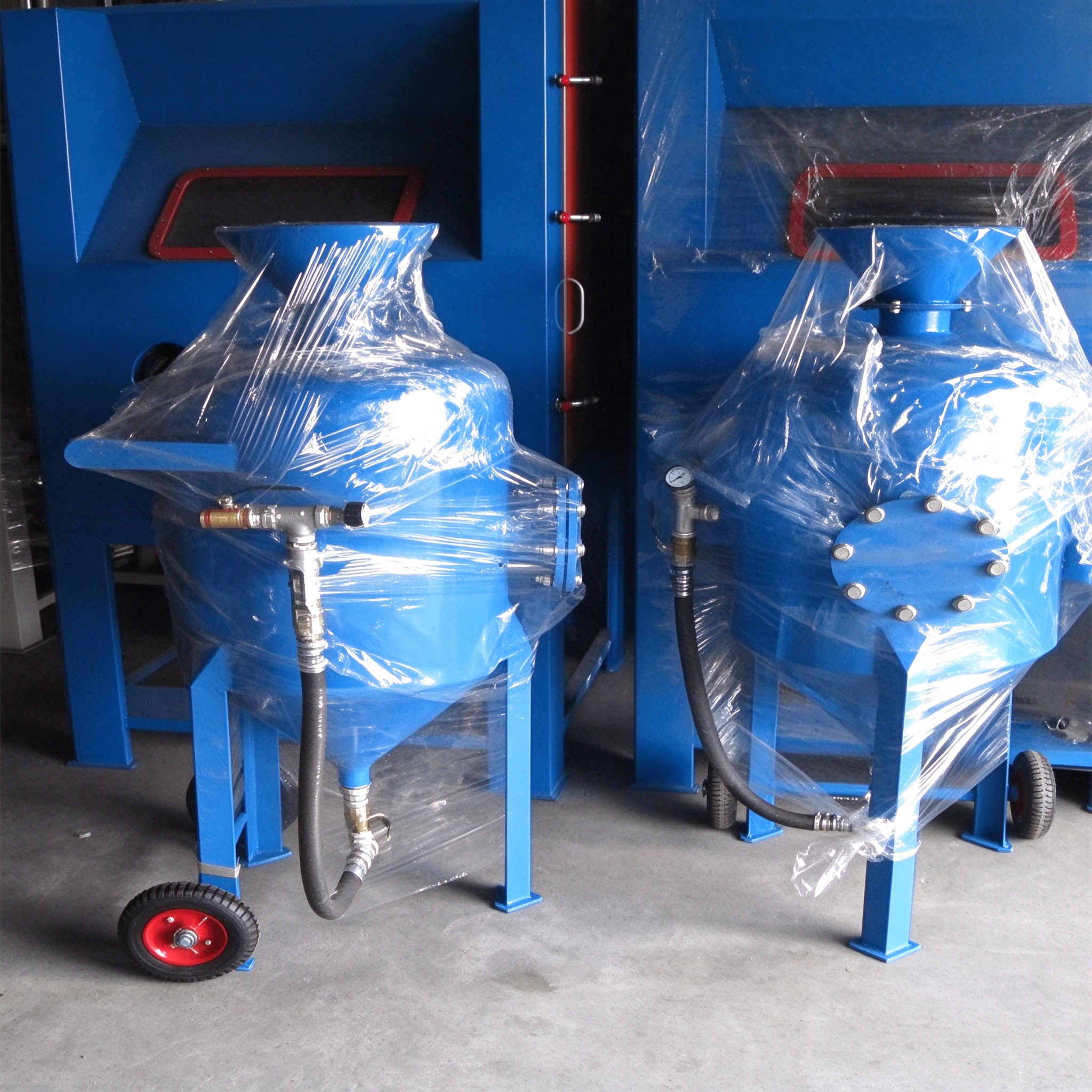
What Is a Mobile Sandblasting Rust Removal Tank?
A mobile sandblasting rust removal tank is a portable pressure vessel system that stores abrasive media and delivers it through a blast hose and nozzle using compressed air. The tank is usually mounted on a wheeled frame, skid, or lifting frame so it can be moved around a yard, shipyard, bridge site, storage tank area, or fabrication workshop. Depending on the configuration, the system may use pneumatic control, electric control, or a combination of both for abrasive flow and pressure regulation.
In daily operation, the tank is filled with abrasive such as garnet, brown alumina, glass bead, or other suitable media. Compressed air enters the pressure vessel, and the abrasive is metered into the air stream. The operator directs the blast nozzle toward the workpiece to remove rust, scale, paint, or surface contaminants. A complete setup often includes the pressure tank, moisture separator, control valve, blast hose, nozzle, abrasive metering valve, and safety components. Some buyers also add a separate dust collector or choose an integrated recovery system when the working environment requires tighter dust control.
The term “open blasting pot” is often used for portable systems that discharge abrasive in an open work area, while enclosed or recovery-style systems are preferred when dust containment and abrasive reuse are priorities. A high pressure sandblasting tank can be configured for demanding surface preparation tasks, but pressure, abrasive type, nozzle size, and air supply must be matched carefully. Buying a larger tank alone does not guarantee better productivity if the air compressor, hose diameter, and nozzle are not correctly sized together.
Why Mobile Sandblasting Rust Removal Tanks Are Preferred for Field and Yard Work
Fixed blasting rooms are efficient for repeatable factory production, especially when workpieces are small or medium-sized and can be moved easily. However, many industrial projects involve large steel structures, ship hull sections, bridge components, storage tanks, and heavy equipment that cannot be brought into a blasting cabinet. A mobile sandblasting rust removal tank gives the operator flexibility to bring the blast equipment to the workpiece instead of moving the workpiece to the equipment.
This flexibility can reduce handling time, crane usage, and production bottlenecks. It also supports phased maintenance work in shipyards and construction sites, where different areas may need surface preparation at different times. For anti-corrosion projects, the blasting step must be completed shortly before coating application, so having a portable sandblasting pot near the work area can help teams maintain the required surface profile and avoid unnecessary delays between blasting and painting.
| Selection Factor | Mobile Sandblasting Tank | Fixed Blasting System |
|---|---|---|
| Mobility | Mounted on wheels, skid, or lifting frame for yard and site work | Installed in a fixed location with permanent piping or room layout |
| Best Workpiece Size | Large, heavy, or outdoor workpieces such as hulls, bridges, and tanks | Small and medium parts that can be moved into a room or cabinet |
| Installation Requirements | Quick setup with compressed air supply and suitable operator protection | Requires facility planning, dust collection, and material handling layout |
| Dust Control | Can be paired with a separate dust collector or containment area | Usually integrated with a blasting room and recovery system |
| Typical Use Case | Field maintenance, shipyard repair, steel structure fabrication, anti-corrosion work | High-volume production of repeatable parts and components |
Key Selection Criteria for a Mobile Sandblasting Rust Removal Tank
Choosing a mobile sandblasting rust removal tank requires matching the equipment to the actual work profile, not just to a single production number. Buyers should review workpiece dimensions, surface condition, required surface profile, abrasive type, air supply, working environment, and operator skill level. A portable sandblasting pot that works well for light maintenance may not be suitable for continuous heavy-duty blasting in a shipyard or steel fabrication yard.
Tank Capacity, Pressure, and Air Supply
Tank capacity affects refill frequency and operator productivity. Small tanks are easier to move and suitable for repair work, while larger tanks reduce refilling downtime for long shifts. However, a larger tank also requires more floor space, stronger handling equipment, and a suitable compressed air supply. Working pressure should be selected according to the abrasive, nozzle size, hose length, and surface requirement. Higher pressure is not automatically better because excessive pressure can damage certain substrates, increase abrasive consumption, and raise safety risks.
The air compressor is part of the system, not a separate accessory to be ignored. Air flow, pressure stability, and moisture removal all affect blasting quality. Moisture in the air line can cause abrasive clumping, clogging, and inconsistent surface finish. A properly sized moisture separator and clean air supply are essential for stable operation.
Mobility, Frame Design, and Operator Handling
For field work, the chassis design matters as much as the tank itself. Check whether the frame has sturdy wheels, lifting points, and a stable center of gravity. A portable sandblasting pot should be easy to move on concrete, gravel, or yard surfaces without tipping. Brake systems, handles, and reinforced frames are practical details that affect daily safety and productivity. Buyers should also consider doorway widths, truck transport, and crane lifting arrangements if the equipment will move between sites.
Control System and Abrasive Flow Stability
Pneumatic and electric control configurations are both common. Pneumatic control is simple and robust, while electric control can support more precise adjustment and integration with automated or semi-automated systems. The key question is whether the abrasive flow can be adjusted smoothly and repeatedly. Uneven abrasive flow wastes media, slows production, and creates inconsistent surface quality. A supplier with experience in pressure regulation and abrasive recycling can help match the control system to the operator’s process.
Nozzle, Hose, and Wear Parts
The blast nozzle and hose are wear parts that directly affect operating cost. Ceramic nozzles generally offer longer service life than ordinary alloy nozzles in abrasive blasting. Hose diameter, length, and abrasion resistance should be matched to the air supply and working distance. Buyers should confirm that replacement nozzles, hoses, seals, and metering parts are readily available. A low-cost tank with expensive or hard-to-find consumables can become costly over a full service life.
Pressure Vessel Safety and Manufacturing Quality
Because a sandblasting tank stores compressed air and abrasive under pressure, pressure vessel quality is a core safety issue. Buyers should ask about steel grade, welding quality, inspection records, safety valve configuration, and pressure testing procedures. A high pressure sandblasting tank should be manufactured under controlled processes with traceable materials and documented testing. This is especially important for shipyards, steel structure plants, and anti-corrosion contractors where equipment may operate for long shifts in harsh environments.
Wuqiao Anxing Sandblasting Machinery Co., Ltd. has been involved in sandblasting equipment research and manufacturing since 1991 and operates production sites in Wuqiao County, Cangzhou, Hebei Province. The company’s pressure vessel sandblasting tanks use 16MnR pressure vessel steel plates and each tank undergoes a hydrostatic test at 2.5 times the rated pressure before delivery. This testing discipline is part of the company’s broader quality control system, which also covers blasting uniformity, sealing performance, and continuous no-load running checks.
In addition to pressure vessel safety, dust and noise control are increasingly important for industrial buyers. The company’s environmental dust removal equipment is designed to support compliant working conditions, and its ISO14001 environmental management certification reflects a structured approach to environmental management. Its in-house engineering team has developed adaptive pressure regulation, automatic abrasive circulation, and intelligent dust removal and noise reduction technologies. According to the company’s manufacturing data, these designs help reduce equipment failure rates by 30% compared with the industry average and lower energy consumption by 15%. These are practical benefits for buyers focused on uptime, operating cost, and environmental compliance.
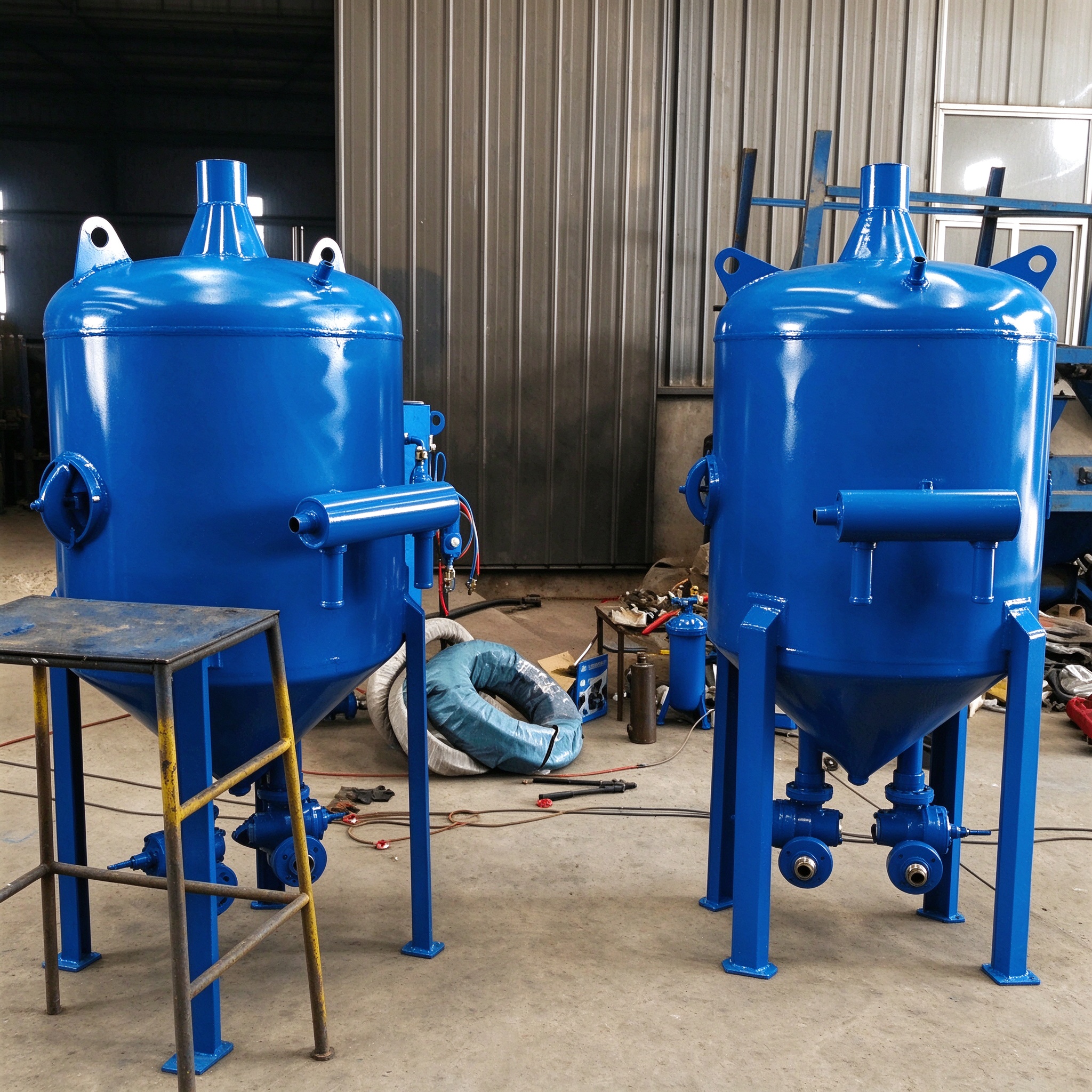
Typical Applications for Mobile Sandblasting Tanks
Mobile sandblasting rust removal tanks are used in shipbuilding and ship repair, steel structure fabrication, bridge and pipeline maintenance, storage tank construction, automotive parts, hardware and molds, aviation components, glass and stone processing, and anti-corrosion coating projects. The common objective is to create a clean, roughened surface that helps coatings, paint, or subsequent processes bond properly. For shipyards, portable blasting equipment can support hull cleaning, weld area preparation, and localized repair. For steel structure plants, it helps prepare beams, plates, and fabricated frames before painting.
An anti-corrosion sandblasting tank is often used before protective coating application. Surface cleanliness and profile depth must match the coating specification. If the blasting operation is inconsistent, the coating may fail prematurely, leading to rework and higher lifecycle cost. This is why buyers should select equipment based on the required surface standard, not only on tank volume. In some projects, an open blasting pot is acceptable when the work area is controlled and ventilation is adequate. In other projects, an enclosed system or separate dust collector is needed to protect workers and nearby equipment.
The company’s equipment range covers box-type enclosed sandblasting machines, open mobile sandblasting machines, high pressure water sandblasting machines, environmental dust-free sandblasting machines, PLC automatic conveyor sandblasting machines, pressure vessel sandblasting tanks, and complete sandblasting room systems. For a sandblasting tank for shipbuilding or heavy steel structures, the supplier should be able to discuss nozzle selection, air consumption, abrasive recovery, and dust collection as a complete system. Wuqiao Anxing Sandblasting Machinery has supplied batch orders to large heavy-industry customers, including Jiangnan Shipyard, and its equipment is used across shipbuilding, steel structures, automotive parts, hardware molds, aviation components, glass and stone, bridges, pipelines, and anti-corrosion engineering.
Maintenance and Safe Operation Tips
Regular maintenance protects both equipment life and operator safety. Before each shift, inspect the tank, hoses, nozzle, couplings, safety valve, and grounding connection. Check for abrasive leakage, worn seals, loose fittings, and moisture in the air line. Do not operate a pressure vessel with damaged components or unauthorized modifications. Follow the manufacturer’s pressure rating and never exceed the specified working pressure.
- Keep abrasive dry and free from debris to reduce clogging and uneven blasting.
- Inspect the blast hose for abrasion, cuts, and soft spots; replace worn hoses before failure.
- Check nozzle wear regularly because an oversized nozzle increases air and abrasive consumption.
- Drain moisture traps and maintain clean, dry compressed air for stable abrasive flow.
- Use proper PPE, including blast helmet, respiratory protection, hearing protection, and heavy-duty gloves.
- Provide adequate ventilation or dust collection, especially in confined or indoor work areas.
- Ground the equipment and control static electricity when handling dry abrasive media.
- Release pressure and isolate the air supply before inspection, maintenance, or parts replacement.
Operators should also be trained to recognize common signs of trouble, such as pulsating abrasive flow, rapid nozzle wear, pressure drops, or repeated clogging. These symptoms often point to moisture, incorrect abrasive size, worn metering parts, or air supply problems. A supplier with responsive technical support can help diagnose issues remotely and reduce unnecessary downtime.
How to Choose a Reliable Mobile Sandblasting Tank Supplier
The right supplier should be more than a trading company that resells generic equipment. Buyers should look for a manufacturer with engineering capability, pressure vessel experience, in-house quality control, customization support, and spare parts availability. Ask for details about steel material, welding procedures, pressure testing, control system design, and after-sales response. A supplier that understands shipyard, steel structure, and anti-corrosion applications can help select the right configuration instead of simply quoting the lowest price.
Wuqiao Anxing Sandblasting Machinery Co., Ltd. is a source manufacturer focused on industrial surface treatment equipment. Its main products include sandblasting machines, pressure vessel sandblasting tanks, complete sandblasting room systems, environmental dust removal equipment, air compressors, blast guns, wear-resistant blast hoses, abrasive recovery devices, and pulse dust removal units. The company supports standardized production, large non-standard customization, and complete sandblasting and dust removal system contracting. With multiple standardized assembly lines and annual production capacity of over 1,000 sets, it can handle batch orders while also supporting small-batch customization and special-condition equipment modification.
For international buyers, export experience and documentation support are also important. The company’s products have been exported to Europe, the Middle East, Southeast Asia, Hong Kong, Macau, and Taiwan, with repeat orders from markets such as Myanmar, South Korea, and several Middle Eastern countries. Its service process includes pre-sales site survey and selection proposals, production progress updates, installation and commissioning support, operator training, and after-sales response. Buyers comparing a portable sandblasting pot supplier should ask whether spare parts are stocked, whether remote troubleshooting is available, and whether the supplier can support future expansion with dust collection or abrasive recovery equipment.
FAQ
What is a mobile sandblasting rust removal tank used for?
A mobile sandblasting rust removal tank is used to remove rust, mill scale, old paint, oxidation, and surface contaminants from metal workpieces. It is commonly used in shipyards, steel structure fabrication, bridge and pipeline maintenance, storage tank construction, and anti-corrosion coating preparation. Because it is portable, it can be moved close to large workpieces that cannot be placed inside a fixed blasting room.
How do I choose between a mobile tank and a fixed blasting system?
Choose a mobile tank when the workpieces are large, outdoor, or difficult to transport, and when the job requires flexibility across different areas of a yard or site. Choose a fixed system when production is repetitive, workpieces are small or medium-sized, and a permanent blasting room with integrated dust collection and abrasive recovery is more efficient. Many companies use both types depending on the project mix.
What should I check on a high pressure sandblasting tank before purchase?
Check the pressure vessel steel grade, welding quality, pressure test records, safety valve configuration, control system, hose and nozzle specifications, and spare parts availability. Ask how the tank pressure is regulated and whether the air supply and moisture separator are matched to the intended blasting work. For demanding applications, request details about testing procedures and quality control before shipment.
Can a sandblasting tank for shipbuilding be customized?
Yes. Shipbuilding and heavy steel projects often require customized tank capacity, mobility frame, control method, hose length, nozzle configuration, and dust collection arrangement. A manufacturer with pressure vessel and non-standard design experience can review the workpiece size, working area, air supply, and coating specification before proposing a configuration.
How often should an open blasting pot be maintained?
Inspect the open blasting pot before each shift and perform more detailed maintenance at regular intervals. Check the hose, nozzle, seals, safety valve, moisture trap, and grounding connection. Replace worn parts promptly, keep abrasive dry, and release pressure before any inspection or service work. Maintenance frequency should increase in high-duty shipyard or steel structure environments.
How can I evaluate a mobile sandblasting tank supplier?
Review the supplier’s manufacturing history, engineering team, pressure vessel production capability, testing standards, customization experience, spare parts stock, and after-sales response. Ask for real product configurations rather than general catalogs, and confirm whether the supplier can support installation, commissioning, operator training, and future system expansion.
Summary
A mobile sandblasting rust removal tank is a practical investment for industrial surface preparation when flexibility, field mobility, and reliable rust removal matter. The best choice depends on workpiece size, abrasive type, air supply, pressure requirements, dust control, and the level of customization needed. Buyers should prioritize pressure vessel safety, consistent abrasive flow, durable wear parts, and a supplier with real manufacturing and service capability.
Wuqiao Anxing Sandblasting Machinery Co., Ltd. combines more than three decades of sandblasting equipment experience with pressure vessel manufacturing, environmental dust removal design, non-standard customization, and batch delivery capability. For shipbuilding, steel structure, anti-corrosion, and general industrial maintenance projects, selecting the right mobile sandblasting tank and the right manufacturing partner can improve surface quality, reduce downtime, and support safer, cleaner, and more efficient production.