
Choosing the right industrial sandblasting machine is not simply a matter of comparing prices. The machine must match the workpiece size, surface condition, production rhythm, dust control requirements, available floor space, and the skills of the operating team. For shipyards, steel structure fabricators, pipeline contractors, automotive part manufacturers, mold shops, and surface coating companies, the wrong configuration can lead to uneven cleaning, excessive abrasive consumption, unnecessary downtime, or environmental compliance problems. A well-matched system, by contrast, can improve surface preparation quality, reduce labor intensity, and support stable long-term production.
Wuqiao Anxing Sandblasting Machinery Co., Ltd. is a source manufacturer based in Wuqiao County, Hebei Province, with production sites in the development zone and Anling Town. The company traces its sandblasting equipment work to 1991 and has focused on sandblasting, rust removal, and surface cleaning equipment for more than three decades. Its product scope covers sandblasting machines, pressure vessel sandblasting pots, integrated sandblasting rooms, environmental dust collection systems, air compressors, and related consumables. For buyers comparing an industrial sandblasting machine manufacturer, the key question is how well the supplier can connect equipment selection, manufacturing quality, customization, and after-sales support into one practical solution.
Why Industrial Sandblasting Machine Selection Matters
Surface preparation is the foundation of coating adhesion, corrosion protection, and product appearance. If rust, mill scale, old paint, burrs, or oxidation layers are not removed consistently, downstream painting, plating, welding, or assembly processes may suffer. An industrial sandblasting machine creates a repeatable cleaning action, but the result depends on abrasive choice, air pressure, nozzle type, gun movement, workpiece handling, and dust extraction. This is why selection should begin with the job to be done, not with a generic machine model.
Production volume also changes the economics. A small workshop cleaning occasional molds may need a cabinet sandblasting machine with simple operation and contained dust. A steel structure plant processing large beams and plates may need a mobile rust removal sandblasting machine or an open blasting system that can handle heavy workpieces on site. A factory with a steady flow of standardized parts may benefit from a PLC automatic conveyor sandblasting machine. A plant with strict environmental requirements may require an integrated sandblasting room with abrasive recovery and pulse dust collection. Matching the system to the actual workload is the first step toward low operating cost and reliable output.
Safety and compliance are equally important. Dust generation, pressure vessel safety, electrical control, ventilation, and abrasive handling all affect daily operation. A qualified sandblasting machine manufacturer should be able to explain not only the equipment specification but also the dust collection logic, pressure vessel testing, installation requirements, and maintenance schedule. This is especially important for international buyers who need equipment that can operate safely under local workplace and environmental rules.
Industrial Sandblasting Machine Types and Typical Applications
Wuqiao Anxing Sandblasting Machinery offers a product system built around four main categories: sandblasting machines, pressure vessel sandblasting pots, integrated sandblasting room systems, and supporting equipment. The sandblasting machine range includes cabinet closed-type machines, open mobile machines, high-pressure water sandblasting equipment, eco-friendly dust-free machines, and PLC automatic conveyor systems. This range allows buyers to match small precision parts, large outdoor structures, pipelines, and continuous production lines with different levels of automation and dust control.
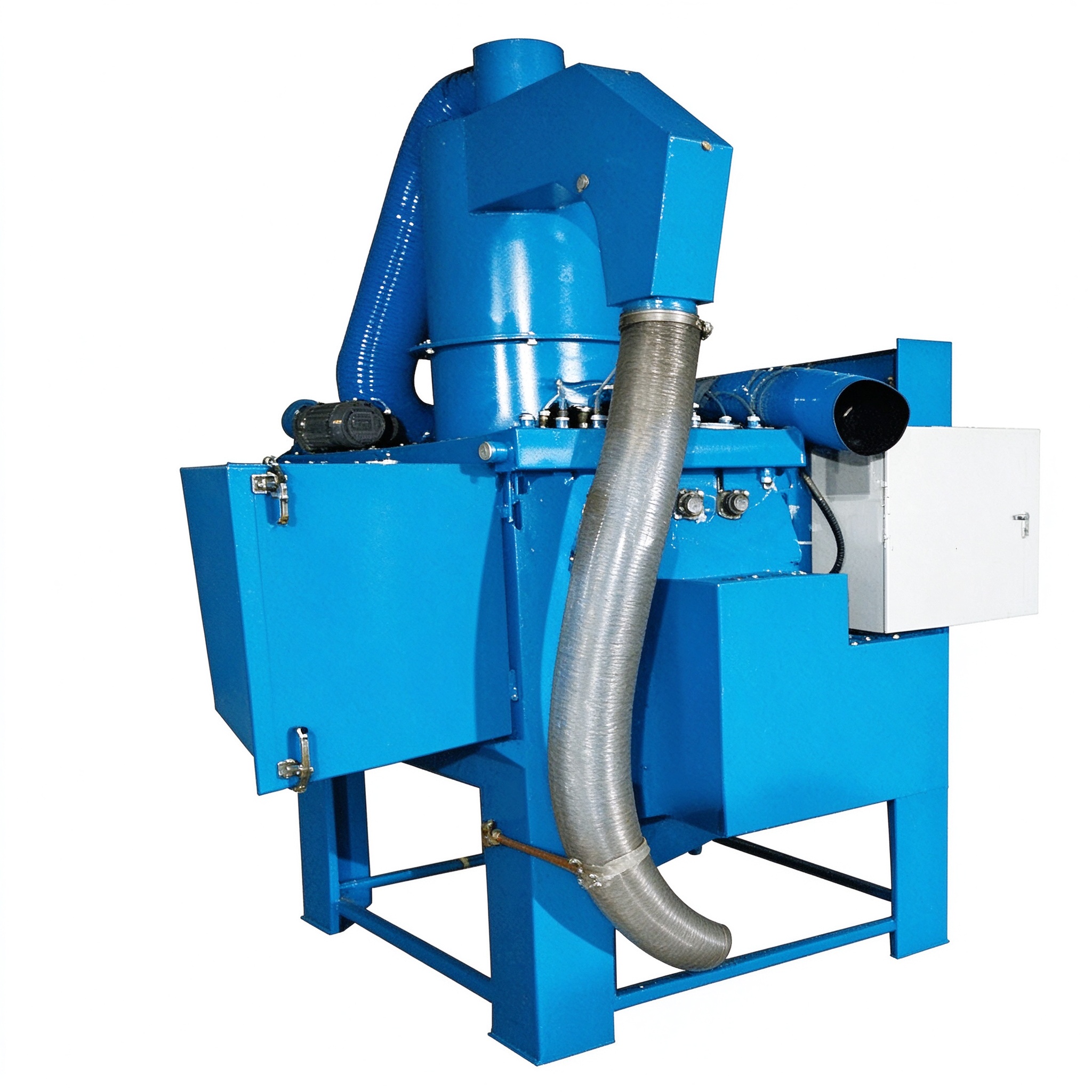
A cabinet sandblasting machine is typically used for small and medium-sized parts that need contained blasting. It is suitable for mold cleaning, hardware parts, automotive components, glass and stone texturing, and removing burrs or oxidation. Because the operation is enclosed, abrasive and dust are easier to control, making it a practical choice for workshops with limited space. For large steel structures, ship hulls, bridges, storage tanks, and outdoor maintenance work, a mobile rust removal sandblasting machine offers mobility and field capability. It can be moved to the work area and configured with a pressure vessel sandblasting pot, abrasive hose, nozzle, and protective equipment.
For projects that require reduced dust or specific surface effects, a water-sand mixed sandblasting machine configuration may be considered. For pipeline maintenance and coating preparation, a pipe rust removal sandblasting machine solution can be evaluated around pipe diameter, length, access conditions, and internal or external surface requirements. Where production is repetitive and labor cost is a concern, a PLC automatic conveyor sandblasting machine can integrate workpiece conveying, blasting, recovery, and dust collection into a more continuous process. The correct choice depends on the balance between flexibility, automation, and environmental control.
| Workpiece or Work Condition | Typical System Direction | Selection Focus |
|---|---|---|
| Small precision parts, molds, hardware, glass, stone | Cabinet sandblasting machine or dust-free sandblasting equipment | Enclosure size, dust collection, abrasive recovery, operator visibility |
| Large steel structures, ship sections, bridges, outdoor maintenance | Mobile rust removal sandblasting machine with pressure vessel sandblasting pot | Mobility, pressure stability, hose length, nozzle wear, field safety |
| Pipeline coating preparation and rust removal | Pipe rust removal sandblasting machine solution or customized mobile system | Pipe diameter, access space, internal or external treatment, dust control |
| High-volume standardized parts and continuous production | PLC automatic conveyor sandblasting machine | Line speed, part fixturing, automation level, dust collection capacity |
| Factory-based large workpiece blasting with strict dust control | Integrated sandblasting room and sandblasting room system | Room dimensions, ventilation, abrasive recovery, maintenance access |
How to Match a Sandblasting System to Your Workpiece and Production Flow
The starting point for selection is a clear description of the workpiece. Buyers should document material type, dimensions, weight, surface condition, required cleanliness, finish requirement, and handling method. A large casting with heavy rust requires different pressure, abrasive, and nozzle configuration than a thin decorative part that needs a uniform matte finish. If the workpiece cannot be moved easily, a mobile rust removal sandblasting machine or on-site sandblasting room may be more practical than a fixed cabinet system.
Production flow is the second consideration. Calculate how many parts or square meters need to be processed per shift, how often the operation runs, and how much time is spent on loading, unloading, inspection, and cleaning. For batch production, automation may reduce manual handling and improve consistency. For job shops with mixed orders, flexibility and quick changeover may matter more than maximum automation. A supplier should be able to discuss these trade-offs openly rather than simply recommend the largest machine.
Dust control and site conditions should be reviewed early. Available power, compressed air capacity, floor loading, ventilation, noise limits, and waste handling all influence the final configuration. A sandblasting room system, for example, needs proper airflow, abrasive recovery, and filter maintenance access. A cabinet sandblasting machine needs a suitable extraction connection and regular filter cleaning. For export projects, voltage, frequency, local safety requirements, and shipping dimensions should be confirmed before production.
What to Examine in a Sandblasting Machine Manufacturer
Equipment appearance is not enough to judge a sandblasting machine manufacturer. Buyers should examine fabrication standards, pressure vessel quality, control system design, wear-part selection, and testing procedures. Wuqiao Anxing uses 16MnR pressure vessel steel plate for sandblasting pot fabrication and performs hydrostatic testing at 2.5 times the rated pressure before delivery. This kind of testing is important because the pressure vessel is a central part of many open blasting and mobile systems. The company also uses wear-resistant ceramic nozzles on automatic models, which are described as offering three times the service life of ordinary alloy nozzles. Longer nozzle life can reduce replacement frequency and downtime.
Research and development capability is another indicator. The company has a mechanical design, fluid pressure, and environmental dust collection team and has obtained more than ten utility model patents related to sandblasting structure, dust recovery, and intelligent pressure control. Its self-developed adaptive pressure regulation, abrasive circulation, and intelligent dust collection and noise reduction technologies are presented as ways to reduce failure rates and energy consumption compared with industry averages. Buyers should ask how these features apply to their specific model and operating conditions.
Quality control should cover more than the pressure vessel. A complete industrial sandblasting machine should be checked for blasting uniformity, sealing, continuous no-load operation, electrical safety, and dust collection performance. Environmental equipment should meet applicable emission requirements, and the supplier should provide clear operating and maintenance information. The company states that its environmental equipment has ISO14001 environmental management certification and that dust emissions are below applicable limits. For international buyers, it is useful to request the relevant documents for the destination market before placing a large order.
Delivery capacity also matters. The company operates standardized assembly lines with annual capacity reaching more than one thousand sets, and it has experience in batch projects for large heavy-industry customers, including Jiangnan Shipyard. It also supports small-batch customization and special-condition modifications. This combination of standardized production and custom engineering is valuable for buyers who need both cost control and application-specific adaptation.
Custom Sandblasting Rooms, Pressure Pots, and Complete Dust Collection Systems
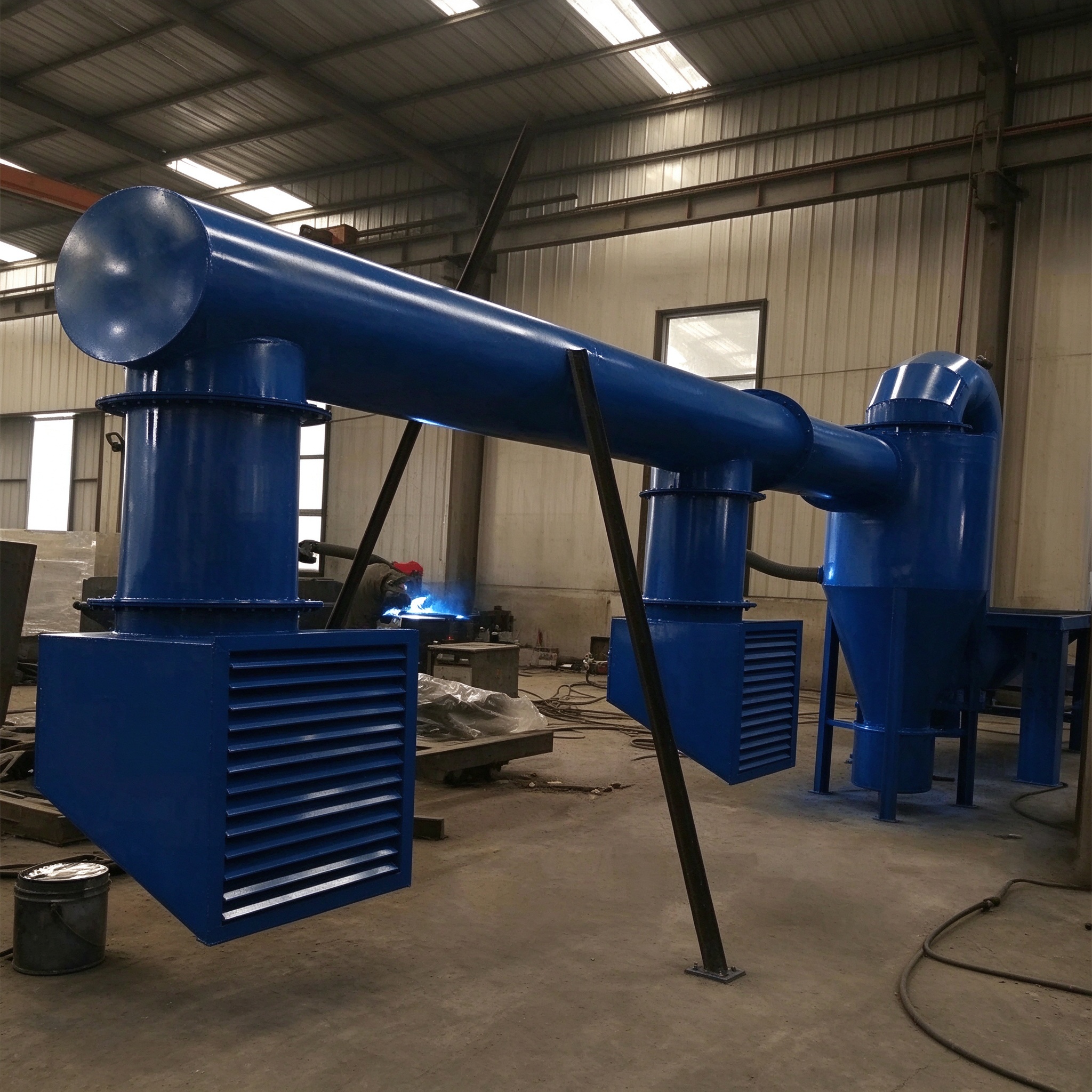
Many surface preparation projects cannot be solved with a single machine. They require a coordinated system that includes a blasting chamber, abrasive recovery, dust collection, ventilation, lighting, workpiece handling, and safety provisions. An integrated sandblasting room is designed around the factory layout, workpiece size, production rhythm, and environmental requirements. The supplier should review the building dimensions, foundation, air supply, power supply, and maintenance access before finalizing the design.
Pressure vessel sandblasting pots are available in fixed, mobile, electric-control, and pneumatic-control configurations. The correct choice depends on mobility, pressure stability, operator control, and the number of blasting stations. A pressure vessel sandblasting pot used in a shipyard or steel structure yard may need higher capacity and robust wear protection, while a smaller workshop may prefer a compact mobile unit. The pressure vessel should be built to the applicable standard, with clear pressure ratings, safety valves, and inspection records.
Dust collection is not an accessory to be added at the end. It affects visibility, operator safety, abrasive recovery, and environmental compliance. A complete system may include a pulse dust collector, ducting, fan, air compressor, abrasive recovery device, and control panel. The company offers permanent-magnet variable-frequency air compressors, sandblasting-specific air compressors, sandblasting guns, wear-resistant hoses, abrasive recovery units, and pulse dust collection units as part of a one-stop supply approach. Buyers should confirm the interface between the blasting machine and the dust collector so that airflow, pressure, and maintenance schedules work together.
Installation, Operation, and Maintenance Guidance
A reliable industrial sandblasting machine still depends on correct installation and daily care. Before installation, confirm foundation strength, ventilation, compressed air quality, electrical connections, and safe access. The air supply should be dry and clean because moisture and oil can contaminate abrasive and cause uneven blasting. Pressure should be adjusted to the workpiece and abrasive type rather than kept at maximum all the time. Higher pressure is not always better; it can increase abrasive consumption, nozzle wear, and surface damage on thin or sensitive parts.
Operators should receive training on startup, shutdown, nozzle handling, workpiece loading, abrasive replenishment, and emergency procedures. Personal protective equipment is essential, including a suitable respirator, protective clothing, gloves, and eye protection. In a cabinet sandblasting machine, the operator should inspect the viewing window, gloves, door seal, and dust extraction before each shift. In an open mobile system, the work area should be controlled to protect nearby workers and equipment.
Maintenance should follow a practical schedule. Check nozzles for wear, inspect hoses for abrasion or leaks, clean or replace dust collector filters, verify pressure vessel safety accessories, and inspect abrasive recovery components. Keep records of pressure, abrasive addition, filter changes, and downtime. These records help identify whether a problem comes from the machine, the abrasive, the air supply, or operating practice. Wuqiao Anxing provides remote troubleshooting and on-site repair support through its after-sales network, and its service team can advise on spare parts and maintenance intervals for specific models.
Procurement Checklist for International Buyers
International buyers should prepare a technical inquiry with clear information: workpiece drawings or photos, maximum and minimum dimensions, material, rust grade, required surface finish, production rate, available floor space, power supply, compressed air capacity, dust emission requirements, and destination port. This information allows a sandblasting machine manufacturer to propose a realistic configuration instead of a generic quotation. It also reduces the risk of later modifications and shipping delays.
Ask for a clear scope of supply. Confirm whether the quotation includes the machine, pressure vessel, nozzle, hose, dust collector, air compressor, control system, spare parts, installation guidance, and operator training. For a sandblasting room system, confirm the room dimensions, panel thickness, lighting, ventilation, abrasive recovery, and civil work requirements. For a cabinet sandblasting machine, confirm the internal working size and maximum door opening. For a mobile rust removal sandblasting machine, confirm mobility, pressure rating, hose length, and field maintenance requirements.
Evaluate after-sales support before placing the order. Ask how spare parts are stocked, how remote support is handled, whether engineers can attend installation, and what response time is offered. The company states that it provides pre-sales site surveys, free selection proposals and layout drawings, production progress updates, installation and commissioning, operator training, and a fast after-sales response mechanism with common parts in stock. These services can significantly reduce downtime for overseas users, especially when the equipment is part of a production line or a time-sensitive coating project.
FAQ
What should buyers check before choosing an industrial sandblasting machine?
Buyers should first define the workpiece size, material, surface condition, required finish, production rate, available space, power supply, compressed air capacity, and dust control requirements. Then compare cabinet, mobile, water-sand mixed, pipe rust removal, and automatic conveyor options with the supplier. A practical selection should balance cleaning quality, operator safety, maintenance access, energy use, and total operating cost, not only the purchase price.
How do I choose between a cabinet sandblasting machine and a mobile rust removal sandblasting machine?
Choose a cabinet sandblasting machine for small or medium parts that can be loaded into an enclosure and need contained dust and abrasive. Choose a mobile rust removal sandblasting machine for large steel structures, ship sections, bridges, tanks, or outdoor maintenance where the workpiece cannot be moved easily. The deciding factors are workpiece size, mobility, production frequency, dust control, and site conditions.
Can a sandblasting machine manufacturer customize equipment for pipe rust removal or special workpieces?
Yes. A pipe rust removal sandblasting machine solution may require adaptation for pipe diameter, length, access space, internal or external treatment, and coating preparation requirements. Custom work can include nozzle configuration, pressure control, hose length, workpiece handling, dust collection, and safety features. Buyers should provide drawings, photos, and operating conditions so the manufacturer can confirm feasibility before quotation.
What affects the price and delivery time of an industrial sandblasting machine?
Price is influenced by machine type, working dimensions, pressure vessel specification, automation level, dust collection capacity, nozzle and wear-part selection, air compressor inclusion, electrical requirements, and customization. Delivery time depends on standard or non-standard design, component availability, testing requirements, order quantity, and shipping arrangements. A detailed technical inquiry helps the supplier give a more accurate quotation and schedule.
Summary
An industrial sandblasting machine is a long-term production asset, so selection should be based on the actual surface preparation task, workpiece flow, environmental requirements, and service support. Cabinet systems suit contained small-part cleaning, mobile rust removal systems support large structures and field work, water-sand mixed configurations can address specific dust or finish requirements, pipe rust removal solutions serve pipeline coating preparation, and PLC automatic conveyor systems fit repetitive production. For factory-based large workpiece blasting, an integrated sandblasting room with abrasive recovery and pulse dust collection can create a more controlled working environment.
Wuqiao Anxing Sandblasting Machinery Co., Ltd. combines more than three decades of sandblasting equipment experience with standardized manufacturing, pressure vessel fabrication, custom engineering, dust collection integration, and after-sales service. Its product range, batch delivery capability, export experience, and focus on environmental compliance make it a relevant supplier to evaluate for industrial surface preparation projects. Buyers should still confirm technical specifications, testing documents, spare parts, installation support, and commercial terms for their specific application. A clear inquiry and a detailed technical discussion are the most reliable ways to select a sandblasting machine that performs well over the long term.