A conveyor type automatic sandblasting machine is one of the most efficient ways to bring consistency, throughput and lower labour cost into an industrial surface treatment workshop. Instead of blasting one workpiece at a time by hand, a conveyor-based system moves parts through an enclosed blasting chamber at a controlled speed, so every square metre of surface receives a repeatable level of cleaning, profiling or finishing. For manufacturers that process hundreds or thousands of parts per shift, this shift from manual to automated operation is usually the difference between unpredictable quality and a stable, auditable production line.
Wuqiao Anxing Sandblasting Machinery Co., Ltd. has been building sandblasting equipment since 1991 from its production bases in Wuqiao County, Cangzhou, Hebei Province. Over more than three decades the company has grown from manual blasting cabinets into a full-range manufacturer of fully automatic sandblasting machines, pressure vessels, complete blast room systems and dust collection equipment, supplying shipbuilding groups, steel structure fabricators, automotive parts makers, hardware and die shops, and precision manufacturing plants. This guide explains how a conveyor type system works, where it fits, how to specify it, and what to check before placing an order.
What Is a Conveyor Type Automatic Sandblasting Machine?
A conveyor type automatic sandblasting machine is an enclosed blasting system in which workpieces are carried through the blast zone on a mechanical conveyor — typically a roller conveyor, a mesh belt, a chain conveyor, or a spindle/hanger line for parts that must be rotated during processing. Blast guns are mounted around the tunnel, usually above and on both sides of the conveyor, and are switched on by PLC control only when a part is in the correct position. Abrasive is projected onto the workpiece, falls into a collection hopper, is separated from dust and debris, and is returned to the pressure vessel for reuse.
Because the conveyor speed, gun pressure, oscillation angle and cycle time are all set digitally, the process becomes a repeatable production step rather than a craft skill. Two operators running a manual cabinet can produce very different results on the same part; a conveyor line produces the same surface profile at 8 a.m. and at 8 p.m. That predictability is what makes the technology attractive for steel structure rust removal, coating preparation, deburring and matt finishing where downstream painting or assembly tolerances depend on surface quality.
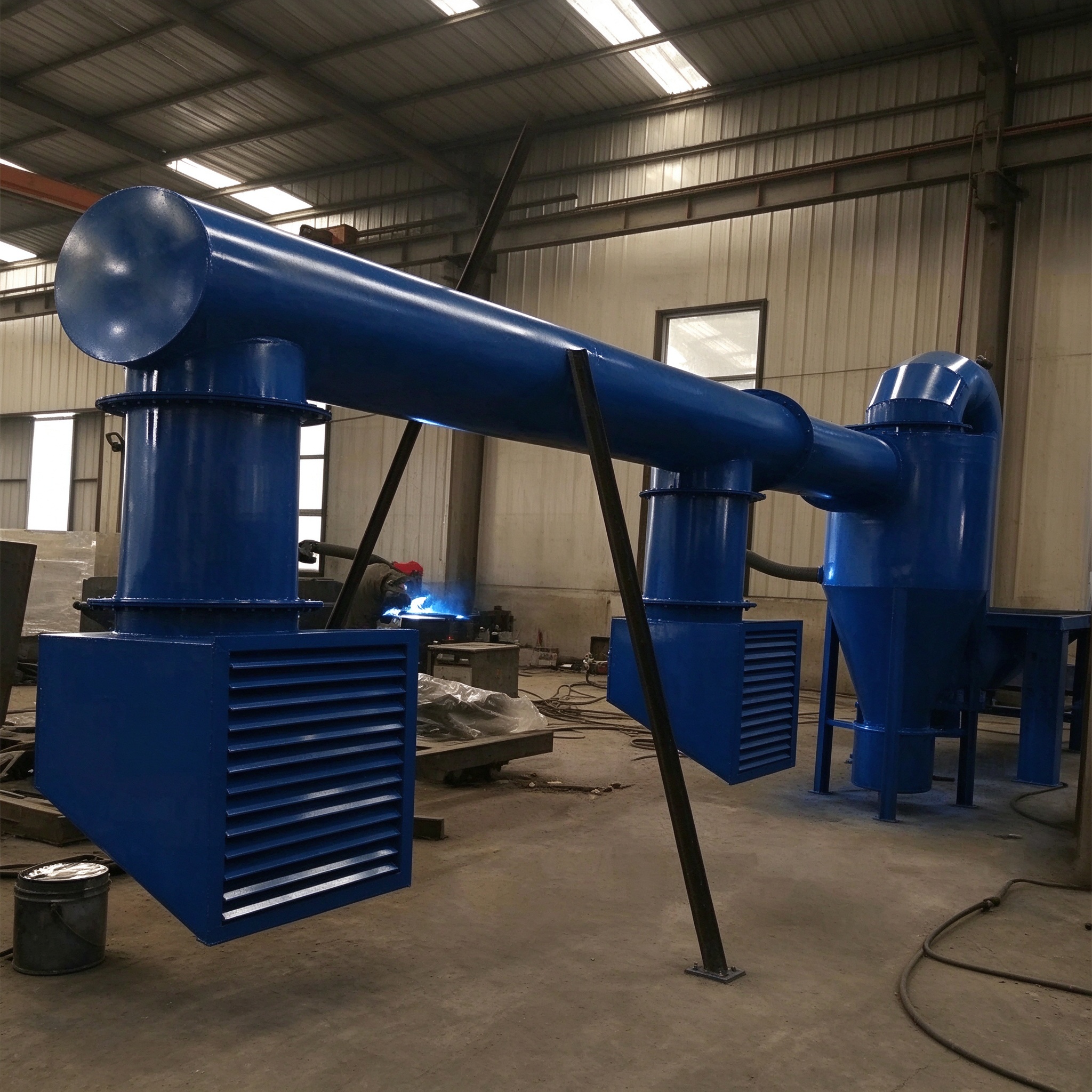
A typical configuration from a professional sandblasting machine manufacturer includes the blast chamber, abrasive recovery and separation system, bucket elevator or screw conveyor, pulse-jet cartridge or bag filter dust collector, wear-resistant ceramic nozzles, an air preparation unit and a PLC touchscreen. Optional modules include part rotation stations, pre-heat or post-blow-off sections, and integration with an existing paint line so that blasting and coating happen in one continuous flow.
Key Advantages of Automated Blasting Over Manual Blasting
Consistent surface quality and repeatable profiles
Manual blasting depends on how long an operator holds the nozzle and at what distance. Automated conveyor systems fix the dwell time by fixing the conveyor speed, so abrasive impact energy per unit area stays constant. For steel structure rust removal sandblasting machines and coating plants working to specified cleanliness grades, this is the single most valuable benefit, because rework and premature coating failure usually trace back to inconsistent surface preparation rather than to the coating itself.
Lower labour cost and better working conditions
An automated line reduces the number of operators needed per tonne of processed steel and moves them from inside a dusty chamber to a loading station and a control panel. Enclosed blasting with an integrated dust collector also keeps respirable dust inside the system, which supports compliance with local occupational health and emission requirements. Wuqiao Anxing designs its environmental equipment to run well below national dust emission limits and builds to ISO 14001 environmental management practice, an important point for plants that face periodic inspections.
Higher throughput and predictable delivery planning
Throughput is a function of conveyor speed, part spacing, gun count and abrasive flow. Once these are set, production planning becomes simple arithmetic instead of estimation. For factories running high-mix, high-volume work, a fully automatic sandblasting machine can absorb peak orders without hiring and training temporary blasting staff — a real cost advantage in tight labour markets.
Lower abrasive and energy consumption
Automatic systems only blast when a part is present, recover and re-classify abrasive continuously, and use pressure regulation to avoid over-blasting thin or already-clean areas. Well-designed recovery and separation stages reduce abrasive make-up rates significantly compared with manual open blasting, and dust-free enclosure design reduces the load on the workshop ventilation system.
Typical Configurations and Specification Checklist
Automatic blasting equipment is not a catalogue item that can be bought off a shelf. The right configuration depends on part geometry, weight, required profile, production volume and available floor space. The table below summarises the main configuration decisions that a buyer and an equipment engineer usually discuss together.
| Configuration item | Options | Selection note |
|---|---|---|
| Conveyor type | Roller, mesh belt, chain, spindle/hanger | Flat plate and profiles suit roller or belt; complex or symmetric parts suit spindle rotation. |
| Blast gun layout | Top, side, angled and oscillating guns | Match gun count and angle to part shape to avoid shadow areas. |
| Nozzle material | Wear-resistant ceramic or alloy | Ceramic nozzles last substantially longer under continuous automatic duty. |
| Abrasive recovery | Screw conveyor, bucket elevator, separator | Continuous reclassification keeps profile stable and reduces abrasive make-up. |
| Dust collection | Pulse-jet cartridge or bag filter unit | Size the filter to gun count and duty cycle to keep emissions compliant. |
| Control system | PLC with touchscreen, recipe storage | Recipe recall shortens changeover when a line runs several part families. |
| Air supply | Screw compressor with dryer, pressure vessel | Stable pressure and dry air protect blasting consistency and valve life. |
| Chamber size | Custom to maximum workpiece envelope | Allow clearance for oscillation and for future part size growth. |
Two points deserve extra attention during specification. First, chamber size should be set by the largest part the plant expects to process in the next five years, not only by today’s product mix — retrofitting a longer tunnel is far more disruptive than specifying it at the start. Second, dust collection capacity must be matched to the number of guns and the duty cycle; an undersized filter is the most common cause of visible dust in the workshop and of short filter life.
Where Conveyor Systems Deliver the Best Return
Steel structure and bridge fabrication. Plate, H-beams, angles and welded assemblies need rust and mill scale removal before primer. A steel structure rust removal sandblasting machine with a roller conveyor can be positioned directly before the paint line, so cleaned steel moves to coating without being handled or stored. This removes the classic failure mode of blasted steel re-rusting during a long queue between blasting and painting.
Shipbuilding and heavy engineering. Shipyards and offshore fabricators process large volumes of plate and profiles under tight quality control. Automatic lines with multiple oscillating guns and reliable abrasive recovery are well suited to this duty, and manufacturers with experience in large-scale batch delivery — such as Wuqiao Anxing, whose equipment has been supplied to major shipbuilding projects — can support the volume and delivery schedule such projects demand.
Automotive, hardware and die components. Castings, forgings, fasteners, brackets and moulds are often blasted for deburring, edge rounding, matt finishing or coating adhesion. Spindle and belt conveyors handle these smaller parts at high rates, and PLC recipes let a single line run several part families with quick changeover.
Glass, stone and architectural finishing. Conveyor systems equipped with appropriate abrasive and pressure settings produce uniform matt or textured finishes on flat panels, where uneven hand blasting is immediately visible to the end customer.
Wet Sandblasting Machine vs Dry Automatic Systems
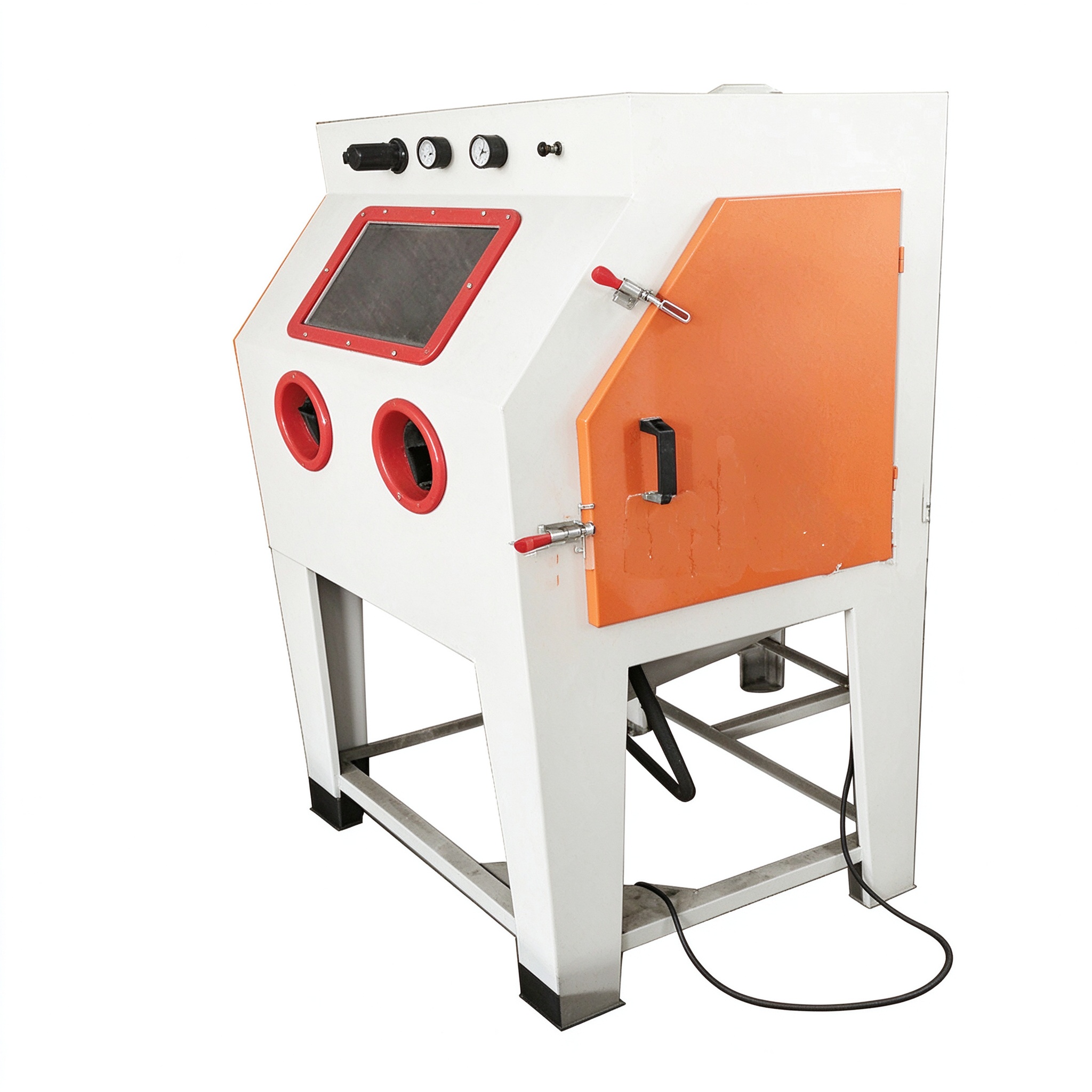
Not every surface treatment problem belongs in a dry tunnel. A wet sandblasting machine mixes water with abrasive or uses pressurised water with an abrasive injection system, which suppresses dust at the source and produces a finer, more uniform finish. Wet systems are often preferred for thin sheet, delicate components, certain non-ferrous metals and applications where dust generation is unacceptable or where a very fine matte appearance is required.
The trade-off is downstream handling: wet processing requires rinsing and drying, and in some cases a corrosion-inhibiting additive to protect freshly cleaned steel. Dry conveyor systems are generally faster, easier to integrate with powder coating or wet painting lines, and simpler to maintain because there is no slurry circuit. Many plants use both — a dry automatic line for structural work and a wet unit for finer or dust-sensitive parts.
Practical selection advice: if the finish specification is profile-based (cleaning grade and anchor pattern before coating), dry automatic blasting is usually the correct choice. If the specification is cosmetic (uniform matte, etched glass, delicate deburring) or the plant has strict in-building dust limits and no space for a large collector, a wet sandblasting machine deserves serious consideration.
Installation, Operation and Maintenance Best Practices
An automatic line performs only as well as its installation. Site preparation should include a level foundation or isolated slab for the conveyor frame, adequate headroom for the recovery elevator, a service aisle of at least one metre on the maintenance side, and a compressed air supply that delivers dry, oil-free air at stable pressure. Air quality matters more than many buyers expect: moisture and oil in the air line cause abrasive clumping, valve sticking and inconsistent blast patterns.
Daily checks should cover abrasive level in the hopper, nozzle wear, door seals and the dust collector’s pulse sequence. Weekly checks should include conveyor tension and alignment, separator screen condition, and inspection of wear liners in the blast chamber. Nozzles are a wear item: as the bore erodes, blast pattern and consumption change, so replacing them on a measured interval is cheaper than reacting to quality complaints.
The most valuable habit is record keeping. Log conveyor speed, pressure and abrasive type per job, plus the dates of filter and nozzle changes. When surface quality drifts, the log quickly shows whether the cause is abrasive, pressure, nozzle wear or dust collection — which is far faster than trial-and-error diagnosis. Maintenance training for the operators, not only for the maintenance team, is also worthwhile; most stoppages on automatic lines are caused by simple issues such as blocked abrasive flow or a tripped filter differential pressure alarm.
How to Choose a Reliable Sandblasting Machine Manufacturer
Because an automatic line is a long-term capital asset, supplier selection matters as much as the specification itself. A credible conveyor sandblasting machine manufacturer should be able to show in-house design capability, a documented quality control process, and experience with projects of comparable scale. Ask how the blast chamber and pressure vessel are fabricated, what material grades are used for pressure-containing parts, and what testing is performed before shipment — pressure vessel water testing, sealing checks, uniformity checks and continuous no-load running tests are all reasonable requirements to verify in writing.
Look also at the supplier’s engineering support. A manufacturer able to survey the customer’s site, produce a layout drawing and recommend a configuration based on real workpiece data will usually deliver a better-fitting system than one that simply quotes a standard model. Spare parts availability and response time deserve equal scrutiny: ask which parts are held in stock, what the typical lead time is for wear items, and whether remote troubleshooting support is included.
Finally, consider total cost rather than purchase price. Abrasive consumption, nozzle life, filter life, compressed air demand, downtime and maintenance labour usually outweigh the initial price difference between two suppliers within the first few years of operation. A comparatively low-priced machine with high abrasive consumption and frequent stoppages is rarely the cheaper option.
FAQ
What is a conveyor type automatic sandblasting machine used for?
It is used for continuous, repeatable surface treatment of parts that move through an enclosed blast chamber on a conveyor. Typical duties include rust and mill scale removal before painting, deburring castings and machined parts, matt or satin finishing, coating stripping and surface profiling before thermal spray or powder coating. It is most cost-effective where production volume is high enough to keep the line busy for most of a shift.
How do I decide between a wet sandblasting machine and a dry automatic system?
Choose dry automatic blasting when the specification is based on cleaning grade and surface profile before coating, when throughput is important, and when the line must connect directly to a paint or powder line. Choose a wet sandblasting machine when dust generation must be minimised indoors, when parts are thin or delicate, or when a very fine cosmetic finish is required. Some plants operate both types for different product families.
What information should I give a manufacturer to get an accurate quotation?
Provide workpiece drawings or photos with maximum dimensions and weight, material and current surface condition, the required cleaning grade or finish, target output per shift, available floor space and headroom, and details of the compressed air supply. Also state any local emission or safety requirements. With this information a manufacturer can propose chamber size, conveyor type, gun count, dust collector capacity and a layout drawing.
How much maintenance does an automatic sandblasting line need?
Daily attention is limited to abrasive level, nozzle condition, door seals and the dust collector pulse cycle. Weekly tasks include conveyor tension and alignment, separator screen inspection and wear liner checks. Wear parts such as nozzles, hoses, liners and filter cartridges are replaced on measured intervals rather than on failure. Keeping a simple log of settings and replacement dates makes troubleshooting much faster.
Can an automatic blasting system be customised for our workshop layout?
Yes. Conveyor length, chamber dimensions, gun positions, loading and unloading direction, recovery height and dust collector location can all be adapted to an existing building, and systems can be integrated with an existing paint line. Custom engineering based on a site survey is standard practice for manufacturers serving steel structure, shipbuilding and heavy fabrication markets.
Summary
The conveyor type automatic sandblasting machine is a production tool rather than a piece of workshop equipment: it converts surface preparation from a variable manual task into a controlled, measurable process step. For plants working with steel structures, shipbuilding plate, automotive components or hardware parts, the gains appear as consistent coating adhesion, lower labour cost per tonne, reduced abrasive consumption and better dust control inside the building.
Getting the result right depends on three decisions: matching the conveyor type and chamber size to the real workpiece envelope, sizing dust collection and air supply correctly, and choosing a manufacturer with design capability, documented testing and dependable spare parts support. Wuqiao Anxing Sandblasting Machinery, with production experience dating back to 1991, in-house mechanical, pressure and dust-collection engineering, and a product range covering automatic blasting machines, pressure vessels, blast rooms and ancillary equipment, can support that process from site survey through installation, operator training and long-term service.