
A complete sandblasting machine portfolio from a single source manufacturer covers cabinet units, mobile rust removal equipment, water-sand mixed systems, pipe-focused machines, pressure vessel blasting pots, blasting room systems and the matching dust collection and air supply equipment. One supplier across the whole chain shortens selection, delivery and spare-part cycles for surface cleaning projects.
What a Complete Sandblasting Machine Portfolio Includes
A complete sandblasting machine portfolio groups equipment by workpiece size, working position and dust control requirement rather than by model name. In practice it spans cabinet units for small precision parts, mobile units for outdoor structures, water-sand mixed units for dust-sensitive sites, pipe-focused machines, plus pressure vessel pots, blasting room systems, dust collectors, air compressors and wear parts.
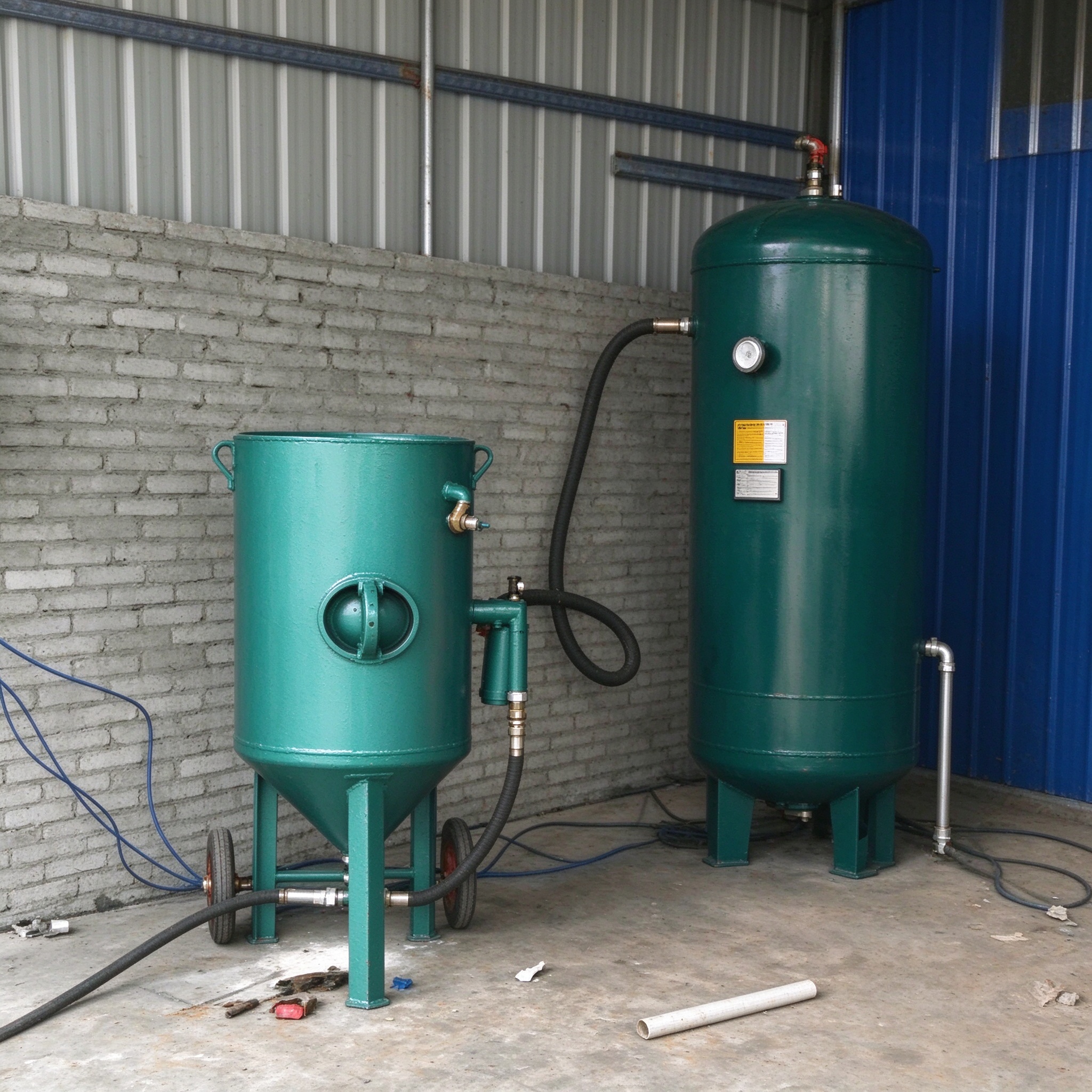
Grouping equipment this way reflects how surface preparation actually runs. Abrasive supply, working pressure, nozzle size, containment and dust extraction interact, and changing one of them changes the finish or the cost per square meter with it. When the machine, the pot, the hose and the dust collector come from one manufacturing source, the connections are designed together instead of being adapted on site after delivery.
For buyers, the practical benefit is a shorter chain of responsibility. One supplier can match a cabinet unit to a small-parts cleaning line, add a mobile unit for outdoor structural work, and size an extraction system for both, without splitting specifications across several vendors who each optimize only their own component.
Equipment Families in the Range
The range is organized into four blocks, each addressing a different stage of the process.
- Cabinet enclosed blasting machines for small parts and precision components
- Open mobile blasting machines for large structures and outdoor rust removal
- High-pressure water blasting machines and dust-free blasting machines for sites with strict dust control
- PLC automatic conveyor-type blasting machines for repeat production
- Pressure vessel blasting pots in stationary, mobile, electrically controlled and pneumatically controlled versions, with vessel bodies sized to pressure vessel requirements
- Complete blasting room systems, including automatic rooms and recovery-plus-dust-collection integrated rooms, planned around building dimensions and workpiece size
- Supporting equipment such as permanent-magnet variable-frequency air compressors, blasting-specific air compressors, blasting guns, wear-resistant blasting hoses, abrasive recovery devices and pulse dust collector units
Mobile Rust Removal Sandblasting Machine: Where It Fits
A mobile rust removal sandblasting machine travels to the workpiece instead of requiring the workpiece to travel to a booth. It is the practical choice for large steel structures, bridge sections, pipe networks, ship sections and maintenance work where dismantling or transport is expensive, and it is normally paired with an air supply matched to the nozzle and with abrasive recovery or dust extraction sized for the site.
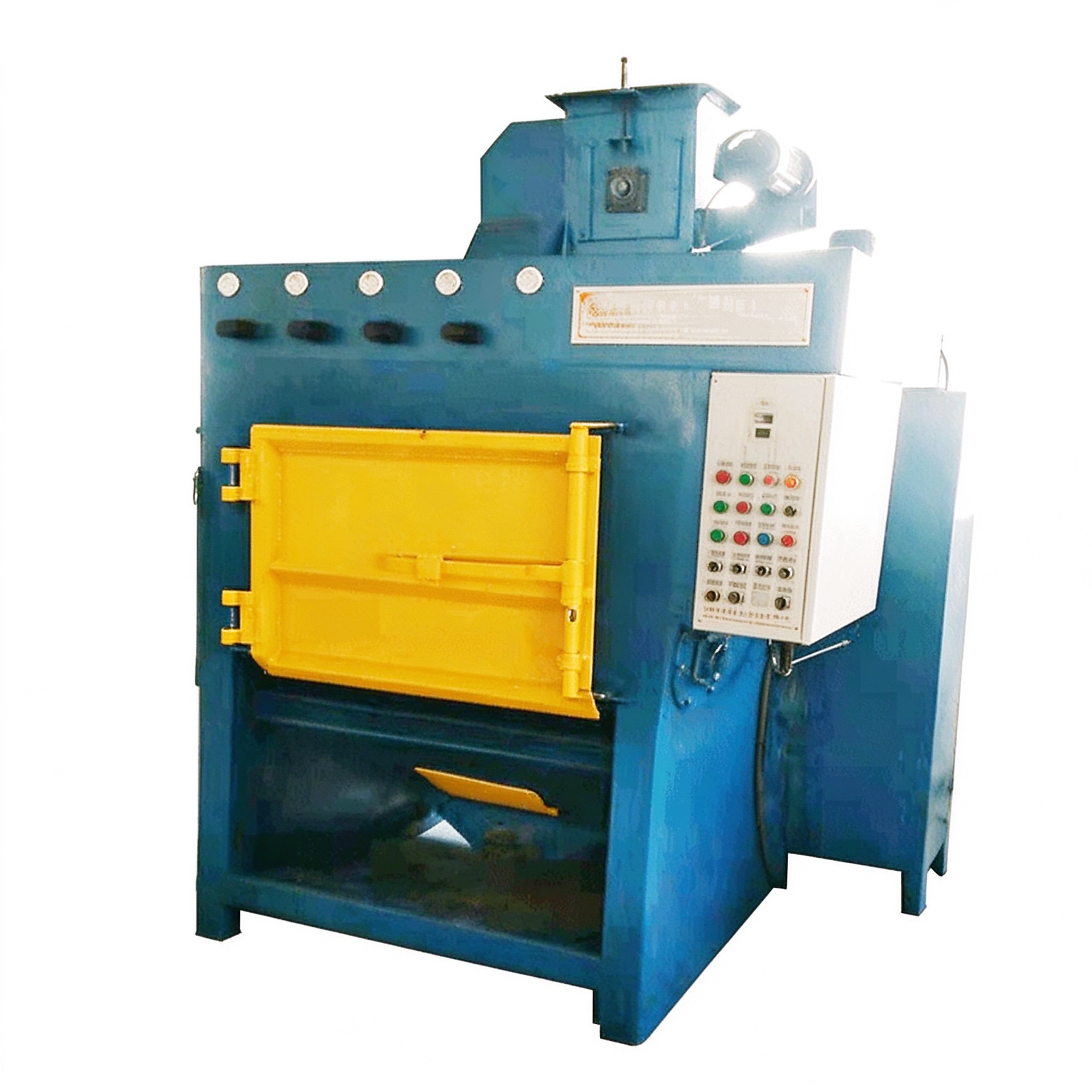
Site conditions decide the configuration more than the machine itself. Working distance sets hose length and pressure drop, access decides whether the unit is wheeled, skid-mounted or lifted into position, and local dust rules decide whether dry blasting is allowed at all or whether extraction has to be added. Because the unit is exposed to weather and rough handling, wear parts and the abrasive circuit need to be reachable for quick replacement.
Typical Duties on Site
In heavy industry and construction, mobile units are used for recurring preparation and repair tasks rather than one-off jobs.
- Rust and oxide scale removal on steel structures, bridges and pipe runs
- Paint and coating stripping before a new protective system is applied
- Surface preparation ahead of anti-corrosion coating work
- Burr removal, matte finishing, texture work and surface strengthening on accessible parts
- Maintenance on ship sections and heavy machinery that cannot be moved indoors
Cabinet, Water-Sand Mixed and Pipe Rust Removal Sandblasting Machines
Closed cabinet, water-sand mixed and pipe-focused machines address three different constraints: containment for small parts, dust suppression where dry abrasive cannot be released, and access to pipe surfaces that are difficult to reach by hand. The decision depends on workpiece geometry, the finish required and the dust rules at the site rather than on the purchase price of the bare unit.
Cabinet Sandblasting Machine
A cabinet sandblasting machine keeps both the workpiece and the abrasive inside an enclosed chamber, so small and precision parts can be cleaned, deburred, matte-finished or textured without releasing dust into the workshop. Because the process is contained, abrasive can be recovered and reused, and the dust collector handles a much smaller air volume than an open blasting area would require.
Water-Sand Mixed Sandblasting Machine
A water-sand mixed sandblasting machine introduces water into the abrasive stream so that dust is suppressed where the abrasive strikes the surface. It is specified where dry blasting would put too much dust into the surrounding area, or where the site does not permit a dry process at all. The trade-off is a wet workpiece and slurry that has to be handled, so drying and disposal arrangements belong in the planning stage.
Pipe Rust Removal Sandblasting Machine
A pipe rust removal sandblasting machine is aimed at internal and external pipe surfaces where manual preparation is slow and inconsistent. Selection turns on pipe diameter, run length, the coating system that follows and the working position, because the surface profile produced inside a pipe governs how well the anti-corrosion layer bonds. On long runs, the machine, hose and nozzle combination has to be matched to the pressure available at the far end.
Manufacturing Capability Behind the Equipment
Manufacturing capability matters most where equipment has to survive years of abrasive wear. It shows up in the plate chosen for pressure vessels, the weld and test routine before dispatch, the wear resistance of nozzles and hoses, and the ability to deliver a batch of machines on a fixed schedule instead of one unit at a time.
Wuqiao Anxing Sandblasting Machinery Co., Ltd. operates from Wuqiao County in Cangzhou, Hebei, with two production sites: a standardized plant in the development zone and a facility in Anling Town. Its predecessor started building blasting equipment in 1991, so design and process experience now covers more than three decades, from simple manual equipment to standardized volume production, large non-standard customization and complete blasting and dust collection system contracting. The company was recognized as a provincial technology-based SME in 2023 and as a national technology-based SME in 2025.
Quality control follows the pressure boundary first. Blasting pot bodies are welded from 16MnR pressure vessel steel plate, and each pot is hydrostatically tested at 2.5 times its rated pressure before it leaves the plant. Automatic models are fitted with wear-resistant ceramic nozzles whose service life is three times that of standard alloy nozzles. Every complete machine passes blasting uniformity, sealing and continuous no-load running checks before dispatch.
Engineering support sits behind the hardware: a team covering mechanical design, fluid pressure and dust removal, more than ten utility model patents on blasting structure, dust recovery and intelligent pressure regulation, and self-developed adaptive pressure regulation, automatic abrasive circulation and dust-and-noise control. On the production side, several standardized assembly lines support annual output reaching over a thousand sets, which is what allows bulk orders to be scheduled with stable lead times and dozens of units to be shipped together while small-batch customization still runs alongside.
Selection, Delivery and After-Sales Service
Selection should begin with the workpiece, not the catalogue. Size, material, rust or coating condition, required finish, working position and local dust rules determine the machine type and the air, abrasive and extraction systems around it, so a site survey before quoting removes most of the risk of an undersized compressor or a containment design that fails inspection.
The service path runs from survey to handover. Engineers visit the site to review working conditions and issue a selection plan and plant layout drawings before the order is placed; production progress is reported during manufacture; after delivery, technicians carry out installation, commissioning and operator training covering daily operation, routine maintenance and simple fault finding. A national response network with parts held in stock provides remote guidance and on-site repair, which keeps unplanned downtime short.
Coverage supports that model. The domestic sales network reaches nearly thirty provinces, municipalities and autonomous regions, with dealers and resident after-sales staff in the manufacturing clusters of North, East and South China. Export business serves Europe, the Americas, the Middle East, Southeast Asia, Hong Kong, Macao and Taiwan, with repeat orders from Myanmar, South Korea and several Middle East markets. More than three hundred manufacturing customers, including large shipbuilding groups, steel structure plants, auto parts makers, 3C precision manufacturers and construction machinery plants, run this equipment long term.
FAQ
What is a sandblasting machine used for?
A sandblasting machine uses compressed air to propel abrasive against a surface to remove rust, oxide scale, old paint, burrs and other contamination, or to produce a matte, textured or strengthened finish. The same principle covers small precision parts in a cabinet and large steel structures in the field; what changes is the containment, the air supply and the abrasive handling around it.
What is a mobile rust removal sandblasting machine?
A mobile rust removal sandblasting machine is a blasting unit built to be moved to the workpiece rather than installed in a fixed booth. It is used on steel structures, bridges, pipe networks, ship sections and maintenance work where transporting the part is impractical, and it is configured with an air supply, hose length and dust control arrangement that suit the site.
When should a cabinet sandblasting machine be chosen over an open unit?
Choose a cabinet sandblasting machine when the parts are small enough to fit an enclosed chamber and the priority is containment, abrasive recovery and a clean workshop. An open or mobile unit is the better fit when the workpiece cannot be moved indoors, when the work is on site, or when the part is simply too large for any enclosure.
What is a water-sand mixed sandblasting machine used for?
A water-sand mixed sandblasting machine is used where dust from dry blasting would be unacceptable at the site. Adding water to the abrasive stream suppresses dust at the point of impact, at the cost of a wet workpiece and slurry that must be handled, so it is usually specified when dust control decides the process.
How is a pipe rust removal sandblasting machine selected?
A pipe rust removal sandblasting machine is selected from the pipe diameter, the length of the run, the working position and the coating system that will follow. These factors set the nozzle and hose combination, the pressure needed at the far end of the run and the access method, because the surface profile inside the pipe controls how well the protective layer bonds.
Summary
A sandblasting machine is only one element of a surface preparation system, and the equipment around it, from pot and air supply to hose, nozzle and dust extraction, decides how well the whole line performs. Matching the machine type to the workpiece comes first: cabinet units for small precision parts, mobile units for structures in the field, water-sand mixed units where dust must be suppressed, and pipe-focused machines for internal and external pipe work. Buying from a manufacturing source that designs, builds and services the full chain, and that surveys the site before quoting, keeps specification, delivery and maintenance under one responsibility.