
A conveyor-type automatic sandblasting machine moves workpieces through a sealed blast chamber on a continuous conveyor, so blasting, dust extraction and unloading happen in one flow instead of one part at a time. The result is repeatable surface quality, steadier output and less manual handling for parts that arrive in volume.
What Is a Conveyor-Type Automatic Sandblasting Machine?
It is a blasting system built around a powered conveyor that carries parts through an enclosed cabinet, where abrasive is projected onto the surface and spent media and dust are captured continuously. Operators set the blast and conveyor conditions once, then load and unload parts at a steady pace.
The practical difference from a manual cabinet is the flow of work rather than the blasting action itself. In a hand-held setup the operator aims the nozzle and judges the finish by eye, so results can drift between parts and between shifts. When the part is carried through a fixed blast zone instead, every workpiece receives a comparable exposure, and the operator’s role shifts from blasting to loading, monitoring and inspection.
That change matters most when parts are similar and arrive in quantity. Consistency comes from the geometry of the machine, not from operator skill, which makes the process easier to plan, easier to audit and easier to hand over between shifts.
Main Components and Their Roles
Each assembly has a job that supports the others, and the balance between them decides how stable the finish stays over a long production run.
- Conveyor and drive: moves parts through the cabinet at a controlled rate so exposure inside the blast zone stays even.
- Blast chamber and nozzles: an enclosed working area where abrasive is projected through wear-resistant nozzles onto the workpiece surface.
- Abrasive circulation: separates reusable media from dust and fines, then returns the usable abrasive to the blast stream.
- Dust extraction: holds the cabinet under negative pressure and draws airborne dust into the filtration unit before air leaves the machine.
- Control system: a PLC-based panel that coordinates conveyor movement, blasting and extraction so the cycle repeats the same way every time.
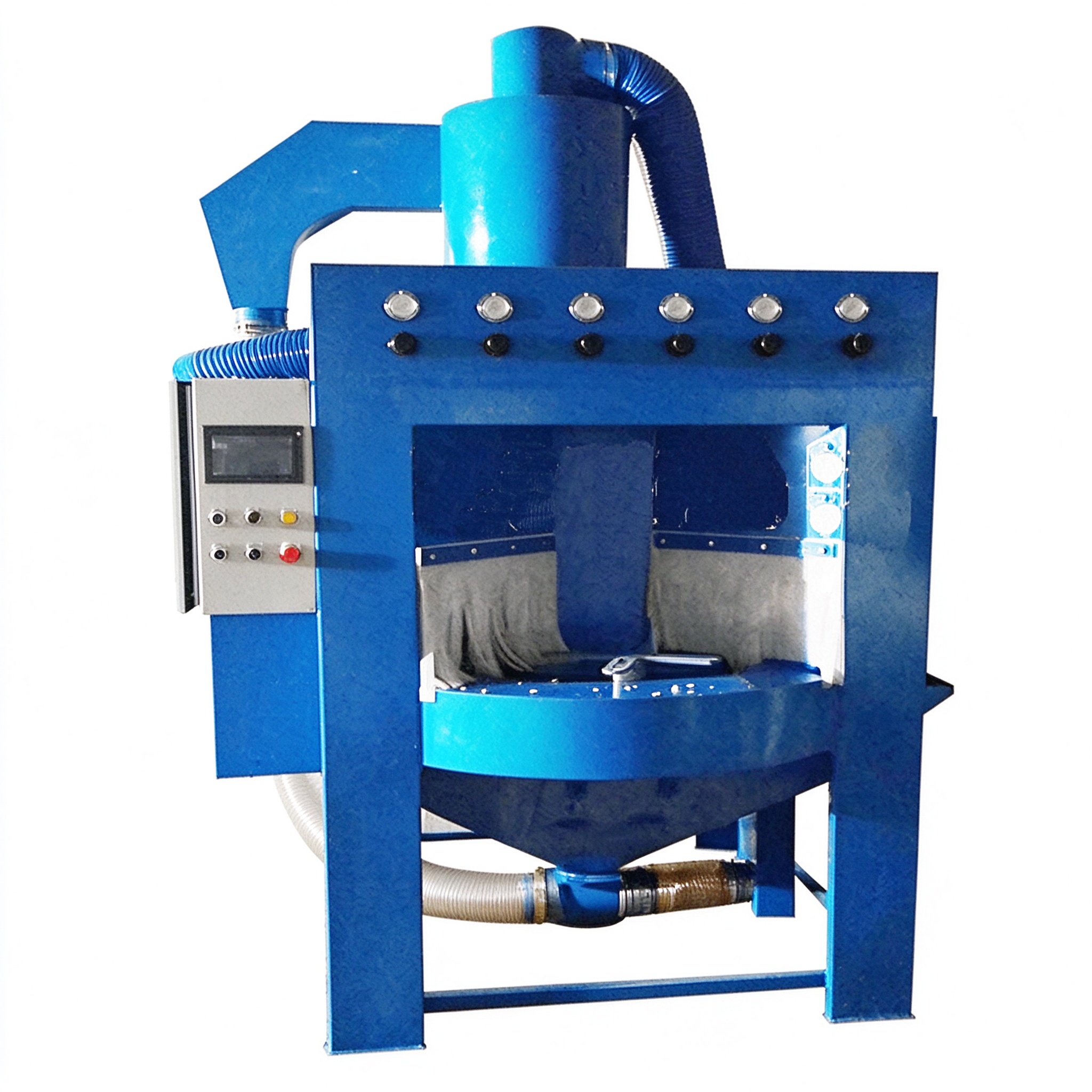
How the Automatic Blasting Cycle Works from Load to Unload
The cycle runs in continuous stages: parts are loaded onto the conveyor, carried into the sealed blast zone, exposed to abrasive projected from fixed nozzles, and carried out for unloading while dust extraction and abrasive recovery keep working in the background.
Because the conveyor never stops for a single part, the machine behaves more like a production line than a workstation. Workpieces are spaced along the belt or roller path, pass through the blast zone one after another, and emerge ready for inspection. In a conveyor-type automatic sandblasting machine, output is set by how the line is loaded and how fast it runs, not by how quickly an operator can move a nozzle by hand.
| Stage | What Happens | What Operators Watch |
|---|---|---|
| Loading | Parts are placed on the conveyor in a stable position and spaced along the path. | Spacing between parts and part orientation. |
| Blasting | Abrasive is projected onto exposed surfaces inside the sealed chamber. | Blast pressure and nozzle angle. |
| Recovery | Spent abrasive is cleaned and returned to the system while dust goes to filtration. | Separation quality and dust build-up. |
| Unloading | Finished parts leave the chamber for inspection or the next production step. | Finish consistency across the batch. |
Settings That Decide the Surface Finish
Abrasive type and grit, blast pressure, nozzle angle and distance, and conveyor speed together set the profile and appearance of the finished surface. Changing one of them shifts the result, so adjustments are usually made one variable at a time and checked against a reference part before the line returns to full running.
Parts with complex geometry may need a second pass or a different orientation on the conveyor, because recessed and shadowed areas receive less abrasive than surfaces facing the blast stream directly. Planning the loading pattern is therefore part of setting up the process, not an afterthought.
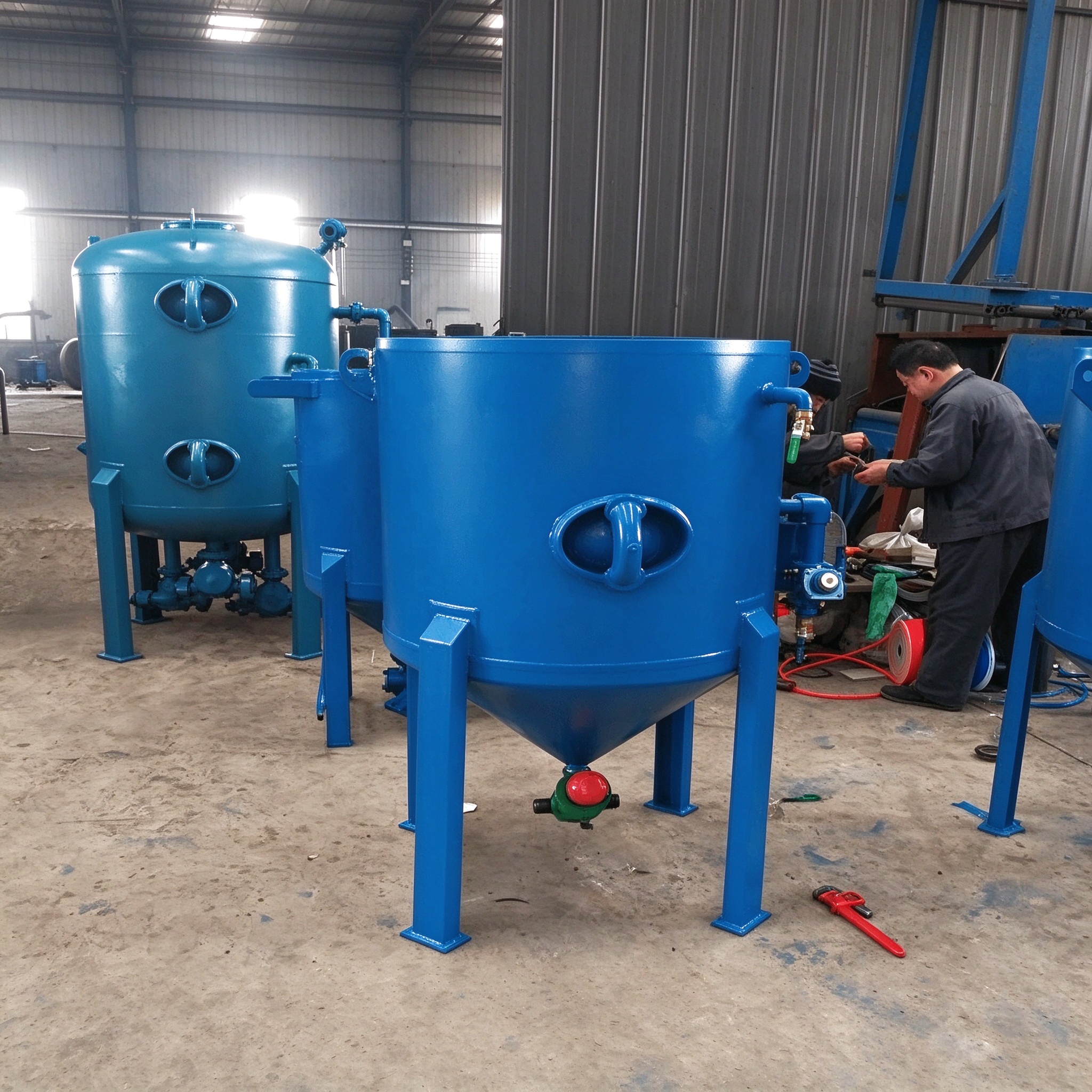
Applications Where a Conveyor-Type Automatic Sandblasting Machine Fits
It fits production work where parts arrive in batches and need the same surface condition every time, whether the task is rust and scale removal or cosmetic finishing. Where hand blasting would slow the line down, the conveyor turns the same job into a steady, repeatable pass.
The machine handles the surface tasks that appear most often in metalworking: rust removal, oxide scale removal, burr removal, paint stripping, matte finishing, texture work and surface strengthening. Because the treatment is mechanical rather than chemical, the workpiece keeps its base material and gains a uniform, grippy surface that holds coatings far better than a wire-brushed or sanded finish.
- Shipbuilding and heavy engineering: preparation of components before painting and assembly.
- Steel structure fabrication: cleaning of plates, beams and frames before protective coating.
- Automotive and engineering parts: removal of scale and burrs ahead of coating or inspection.
- Hardware and molds: matte finishing, texture work and surface cleaning.
- Aviation components and precision parts: controlled surface preparation where consistency matters.
- Glass, stone, bridges, pipelines and anti-corrosion work: surface texturing and preparation before protective systems are applied.
For very large fabricated steel, blasting is usually arranged around the structure itself rather than through a cabinet, so the choice between a conveyor line and site-based work depends on whether the part can be moved. Parts that can travel on a belt or roller path are the natural fit for automated blasting.
Related Options: Fully Automatic, Wet, and Rust Removal Machines
Configuration choices are usually decided by the working environment and the workload, not by the blasting method alone. The questions below cover the options that come up most often during selection.
When Does a Fully Automatic Sandblasting Machine Make Sense?
A fully automatic sandblasting machine makes sense when the workload is steady enough to justify hands-off operation. Loading, blasting, abrasive recovery and dust extraction run with minimal intervention, and the operator’s role shifts towards monitoring, inspection and changeover. For low-volume or highly varied work, the automation adds cost without adding much value.
When Is a Wet Sandblasting Machine the Better Choice?
A wet sandblasting machine is the better choice when dust suppression is the priority. The liquid medium captures particles at the point of blasting, which keeps the surrounding area cleaner and reduces the containment burden in confined workshops. The trade-off is slurry handling and disposal, which has to be planned from the start rather than added later.
What Does a Sandblasting Rust Removal Machine Remove?
A sandblasting rust removal machine removes rust, mill scale and old coatings from steel surfaces and leaves a roughened profile that helps the next coating bond. How deep the cleaning goes depends on the abrasive, the blast pressure and the exposure time, so the same machine can be set up for different preparation levels.
Where Is a Steel Structure Rust Removal Sandblasting Machine Used?
It is used on beams, frames, plates and other fabricated steel where surface preparation has to be completed before painting or inspection. Access, containment and part size usually decide the configuration more than the blasting method itself, which is why steelwork is often prepared close to where it will be erected.
How to Select and Maintain the Right Setup
Selection starts with the part, not the machine: the size range, the required finish and the volume per shift decide chamber dimensions, conveyor format and extraction capacity. Maintenance then protects that choice, because dust build-up and worn nozzles quietly change the finish long before anything visibly fails.
What to Check Before Choosing a Machine
- The smallest and largest parts to be processed, including their weight and how they will sit on the conveyor.
- The surface condition required, and whether the finish will be judged visually or measured.
- The abrasive you intend to run, since it affects nozzle wear, recovery and dust load.
- Available floor space, the extraction route and how dust will be handled at the workplace.
- Access to spare nozzles, wear parts and technical support over the life of the machine.
Maintenance Habits That Protect Uptime
Nozzles wear gradually, so the drop in blasting performance is easy to miss; replacing them on a schedule rather than on failure keeps the surface result stable. Dust collectors need their filters checked and cleaned at fixed intervals, and abrasive separators need fines removed so the blast stream does not become diluted with spent media.
Conveyor components deserve the same attention. Belt tension, roller condition and drive alignment all affect how evenly parts pass through the blast zone, and a small tracking problem can turn into uneven exposure across the width of the line. Recording settings for each part family makes it much easier to restore a proven setup after a changeover.
FAQ
What is a conveyor-type automatic sandblasting machine used for?
It is used for repeatable surface preparation on parts that arrive in volume, including rust removal, oxide scale removal, burr removal, paint stripping, matte finishing and surface strengthening. Parts travel through the blast zone on a conveyor, so each one receives a comparable treatment.
How does a fully automatic sandblasting machine differ from a manual cabinet?
A fully automatic sandblasting machine handles loading, blasting, abrasive recovery and dust extraction with minimal operator intervention, while a manual cabinet depends on the operator to move the nozzle and judge when a part is done. The automatic approach trades flexibility for consistency.
When is a wet sandblasting machine the better choice?
A wet sandblasting machine is the better choice when dust suppression is the priority, because the liquid medium captures particles at the point of blasting and keeps the working area cleaner. It is usually selected where dry dust would be difficult to contain.
What does a sandblasting rust removal machine remove?
A sandblasting rust removal machine removes rust, mill scale and old coatings and leaves a roughened surface profile that supports coating adhesion. Abrasive choice, blast pressure and exposure time determine how much of the surface layer is taken off.
Where is a steel structure rust removal sandblasting machine used?
A steel structure rust removal sandblasting machine is used on beams, plates and fabricated frames that need cleaning before protective coating or inspection. Containment and access usually shape the configuration more than the blasting method itself.
Summary
A conveyor-type automatic sandblasting machine turns surface preparation into a repeatable production step: parts move through a sealed blast zone, abrasive is recovered, dust is extracted, and the operator manages flow instead of aiming a nozzle. That structure is what delivers consistent finish across a batch and reduces dependence on individual technique.
Selection should begin with the part size range, the required surface condition and the volume per shift, then extend to abrasive choice, extraction, floor space and support. Where dust control, hands-off operation or large fabricated steel are the dominant concerns, the related configurations covered above should be compared on the same basis. Whichever option is chosen, scheduled nozzle replacement, filter cleaning and conveyor checks protect both the finish and the uptime the line was bought for.