
A sandblasting machine is a surface-preparation system that propels abrasive media against a workpiece to strip rust, paint, burrs and other contamination. Compressed air or a water-abrasive mix accelerates the media, while a recovery or dust-collection stage keeps the work area clean. Adjustable pressure and abrasive choice let one process handle cleaning, matte finishing and surface strengthening.
What Is a Sandblasting Machine and How Does It Work?
A sandblasting machine works by feeding abrasive into a pressurised air or water stream and directing it through a nozzle at the workpiece. The abrasive strikes the surface at speed, cutting away rust, scale and old coatings, while spent abrasive and dust are collected, separated or filtered before the air is released.
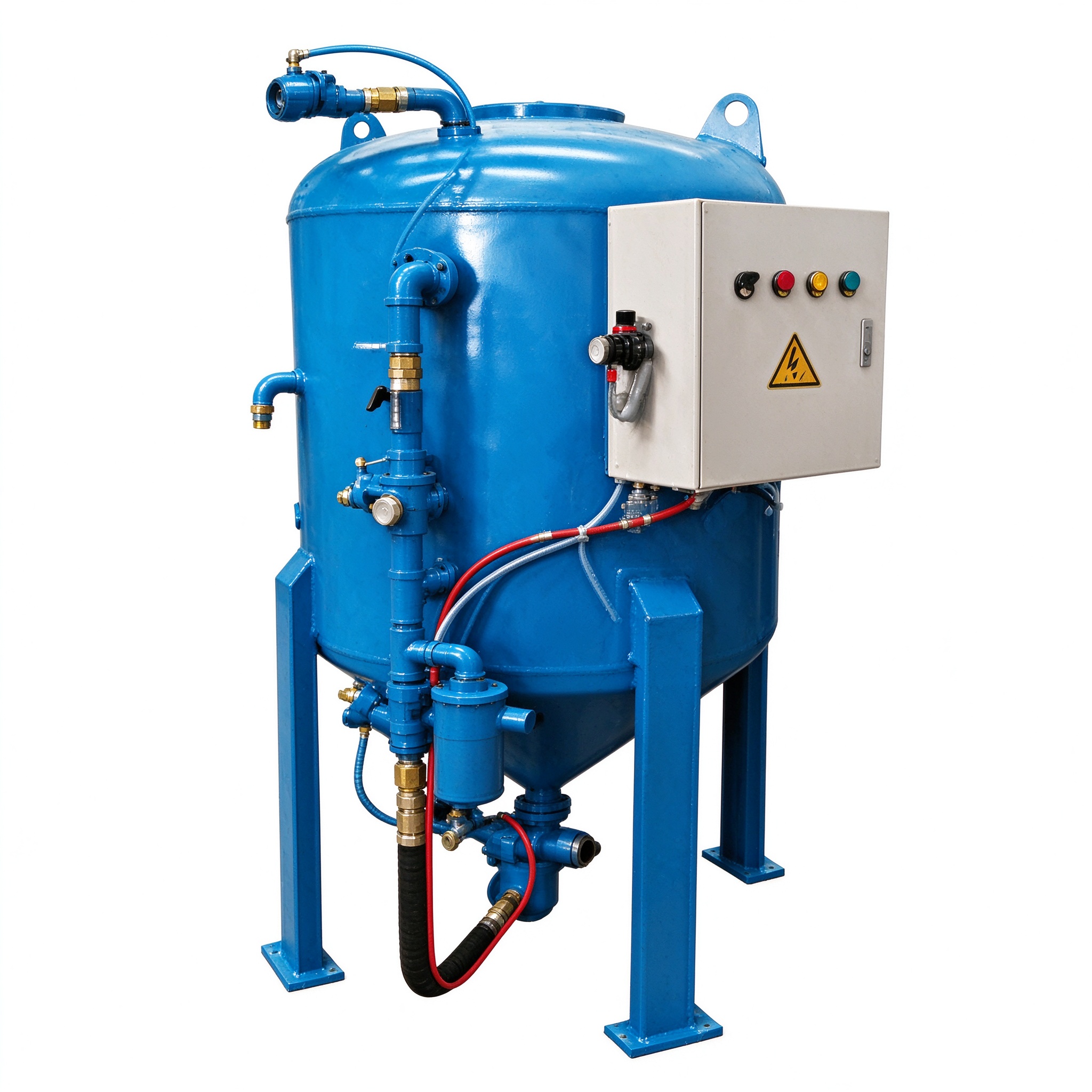
How the Blasting Cycle Runs
An abrasive hopper feeds media into a mixing chamber, where the air stream or the pressurised water picks it up and carries it to the nozzle. Nozzle size, working pressure and abrasive grade together decide how much material is removed in each pass, which is why regulated pressure matters more than one fixed setting.
Inside an enclosed cabinet or a blast room, dust-laden air is drawn into a filtration unit, so the cloud created at the impact point is captured instead of being released into the workshop. Automatic abrasive circulation returns usable media to the hopper, and noise-reduction design keeps the working area at a manageable sound level.
Main Types Available
Equipment is usually grouped by how the workpiece is presented to the blast and how the dust is contained.
- Enclosed cabinet machines for small precision parts
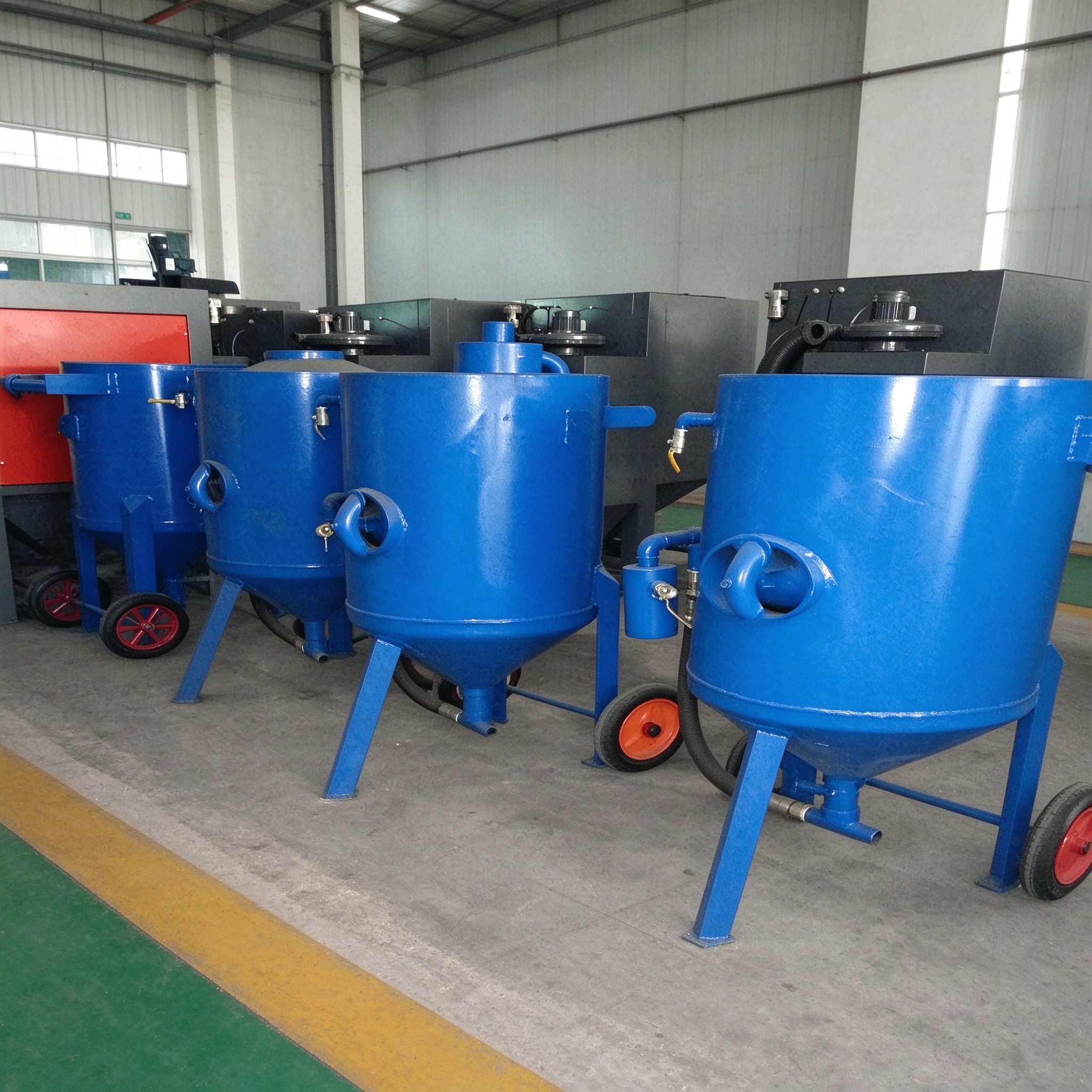
- Open mobile machines for outdoor rust removal on large components
- High-pressure water blasting machines
- Dust-free, environmentally friendly machines
- PLC-controlled automatic conveyor machines
- Pressure-vessel blast pots in stationary, mobile, electric-control and pneumatic-control versions
- Complete blasting room systems with integrated abrasive recovery and dust removal
- Matching air compressors, blast guns, wear-resistant hoses, abrasive recovery units and pulse dust collectors
Applications Across Industries and Processes
Blasting is used wherever a surface has to be cleaned, profiled or prepared before coating. Metal rust removal, oxide scale removal, burr removal, paint stripping, matte finishing, texture engraving and surface strengthening are routine jobs, and the same core process serves heavy industry, fabrication shops, precision manufacturing and anti-corrosion projects.
Shipbuilding and heavy engineering, steel structure fabrication, automotive parts, hardware and moulds, aviation components, glass and stone, bridges and pipelines, and anti-corrosion coating work all depend on a properly prepared substrate. Deployed across dozens of industries, the process adapts through abrasive selection, pressure setting and the way the work area is enclosed.
Because the action is mechanical rather than chemical, contamination is lifted off the surface instead of being dissolved into it. That makes the result predictable: the same parameter set produces the same finish on repeat batches, and a change of abrasive grade moves the surface from heavy rust removal to a fine matte in a single machine.
Process Capabilities
- Metal rust removal and oxide scale removal
- Burr removal after machining or cutting
- Paint and coating stripping
- Matte and satin finishing
- Texture engraving on decorative surfaces
- Surface strengthening for wear resistance
Configuration Options: Cabinet, Mobile, Water-Sand Mixing and Pipeline Units
Configuration decides where the work happens and how dust is managed. Enclosed cabinets contain the blast, mobile units travel to the workpiece, water-sand mixing units add water to the abrasive stream, and pipeline units are set up for rust removal on pipe and bridge work.
- Cabinet sandblasting machine: the workpiece is loaded into an enclosed chamber, so abrasive and dust stay inside the cabinet. Well suited to small precision parts handled at a bench.
- Mobile rust removal sandblasting machine: the unit moves to the workpiece and is used outdoors on large components that cannot be brought into a workshop.
- Water-sand mixing sandblasting machine: water is mixed into the abrasive stream at the nozzle, which suppresses the dust generated at the impact point.
- Pipeline rust removal sandblasting machine: configured for rust removal on pipeline and bridge structures, where pipes and long steel runs have to be cleaned before coating.
How Quality Is Engineered Into a Sandblasting Machine
Quality in blasting equipment comes down to three things: the pressure vessel, the wear parts and the dust-control system. Tank material and testing, nozzle life and filtration performance decide how long a unit runs between stoppages and whether the workplace stays clean.
Wuqiao Anxing Sandblasting Machinery Co., Ltd. builds its range around those three points. The company operates two production sites in Wuqiao County, Cangzhou, Hebei Province, and has concentrated on blasting and surface-cleaning equipment since 1991, developing from simple manual units into a manufacturer that handles standard volume production, large non-standard builds and complete blasting and dust-removal system packages.
Blast tanks are welded from 16MnR pressure-vessel steel plate, and every tank is hydrostatically tested at 2.5 times its rated working pressure before dispatch. Automatic models use wear-resistant ceramic nozzles whose service life is three times that of standard alloy nozzles. Each finished unit is checked for blasting uniformity, sealing and continuous no-load running, and dust emissions from the environmental equipment are held well below national limits.
In-house teams cover mechanical design, fluid pressure and dust removal. The company holds more than ten utility patents covering blasting structure, dust recovery and intelligent pressure regulation, and it has developed adaptive pressure control, automatic abrasive circulation and low-noise dust removal. Reported results include a failure rate about 30 percent below the industry average and energy use reduced by around 15 percent.
Delivery capacity matters as much as design. Several standard assembly lines support an annual output of more than a thousand sets, bulk orders run on stable lead times, batch deliveries of dozens of units are handled routinely, and small-batch customisation or special-condition modification is available alongside standard models. The sales network covers close to thirty provinces and regions at home, with dealers and resident service staff in the main manufacturing clusters, and exports reach Europe, the Americas, the Middle East, Southeast Asia, Hong Kong, Macao and Taiwan.
How to Choose the Right Machine for the Job
Selection starts with the workpiece rather than the catalogue. Size, weight and material decide whether the part fits an enclosed cabinet or has to be blasted on site, while the required finish decides pressure, abrasive grade and nozzle choice.
- Workpiece envelope: whether the part fits inside a cabinet or must be blasted where it stands
- Surface requirement: rust removal, coating preparation, matte finishing or surface strengthening
- Site conditions: indoor bay versus outdoor yard, and how the dust will be contained
- Throughput: manual blasting, or an automated conveyor line for repeatable output
- Utilities: air supply, compressor capacity and abrasive handling matched to the equipment
- Support: spare-parts stock, installation, operator training and repair response
A site survey removes most of the guesswork. Engineers from Wuqiao Anxing Sandblasting Machinery visit the plant, measure the working conditions, and issue a selection proposal and plant layout drawings before production begins. Progress is reported during manufacture, technicians install and commission the unit after delivery, and operators are trained on daily maintenance and basic fault-finding. Spare parts are kept in stock, and faults are handled through remote guidance or on-site repair.
Safe Operation and Maintenance Practice
Most downtime in blasting comes from worn consumables and neglected filtration rather than from the machine itself. A short daily check and a scheduled parts routine keep output steady and protect the people running the equipment.
- Wear a supplied-air blast helmet, hearing protection and heavy gloves whenever blasting is running
- Check hose, nozzle and couplings for wear before each shift, and replace worn nozzles instead of running them out
- Start the dust collector before blasting and keep the enclosure sealed during operation
- Inspect the abrasive for debris and keep the hopper at a consistent level
- Clean or replace filters on schedule and record running hours
- Isolate power and air before any maintenance inside the cabinet or the pressure vessel
FAQ
What is a sandblasting machine used for?
A sandblasting machine is used to clean and prepare surfaces before coating or inspection. It removes rust, oxide scale, paint, burrs and other contamination, and it can also produce matte finishes, engraved textures and strengthened surfaces on metal work.
How does a cabinet sandblasting machine differ from a mobile rust removal unit?
A cabinet unit encloses the workpiece and the blast inside a chamber, which keeps abrasive and dust contained and suits small precision parts. A mobile rust removal unit travels to the workpiece and is used outdoors on large components that cannot be moved indoors.
What is a water-sand mixing sandblasting machine?
It is a blasting unit that mixes water into the abrasive stream. Adding water suppresses the dust created at the impact point, which helps where airborne dust is a concern.
Where is a pipeline rust removal sandblasting machine used?
It is used for rust removal on pipeline work and on bridge and pipeline structures, where the surface has to be cleaned before coating or inspection.
How do I choose the right blasting machine for my workshop?
Start with the workpiece size and the finish you need, then decide between an enclosed cabinet, a mobile unit and an automated line. Confirm dust control, air supply, abrasive handling and after-sales support before ordering.
Summary: Matching a Sandblasting Machine to the Job
The practical conclusion is straightforward: the equipment is only as effective as its match to the workpiece, the required finish and the site. Confirm the part envelope and surface requirement first, choose between an enclosed cabinet, a mobile unit and an automated line, then check pressure-vessel quality, wear-part life, dust control and after-sales support before placing an order.