Box sandblasting machine quality is decided by the steel grade and welding of the pressure vessel, the wear life of the nozzle, the design of the dust extraction circuit, and how quickly the supplier responds after delivery. Buyers who compare those points instead of price alone usually end up with a cabinet that runs for years with predictable maintenance costs.
What Box Sandblasting Machine Quality Really Means
Quality in a box sandblasting machine is measurable rather than a matter of opinion. It appears in the grade and thickness of the welded cabinet, in the pressure test every tank passes before shipment, in how evenly the abrasive stream reaches the workpiece, and in how completely the extraction system captures the dust the nozzle releases.
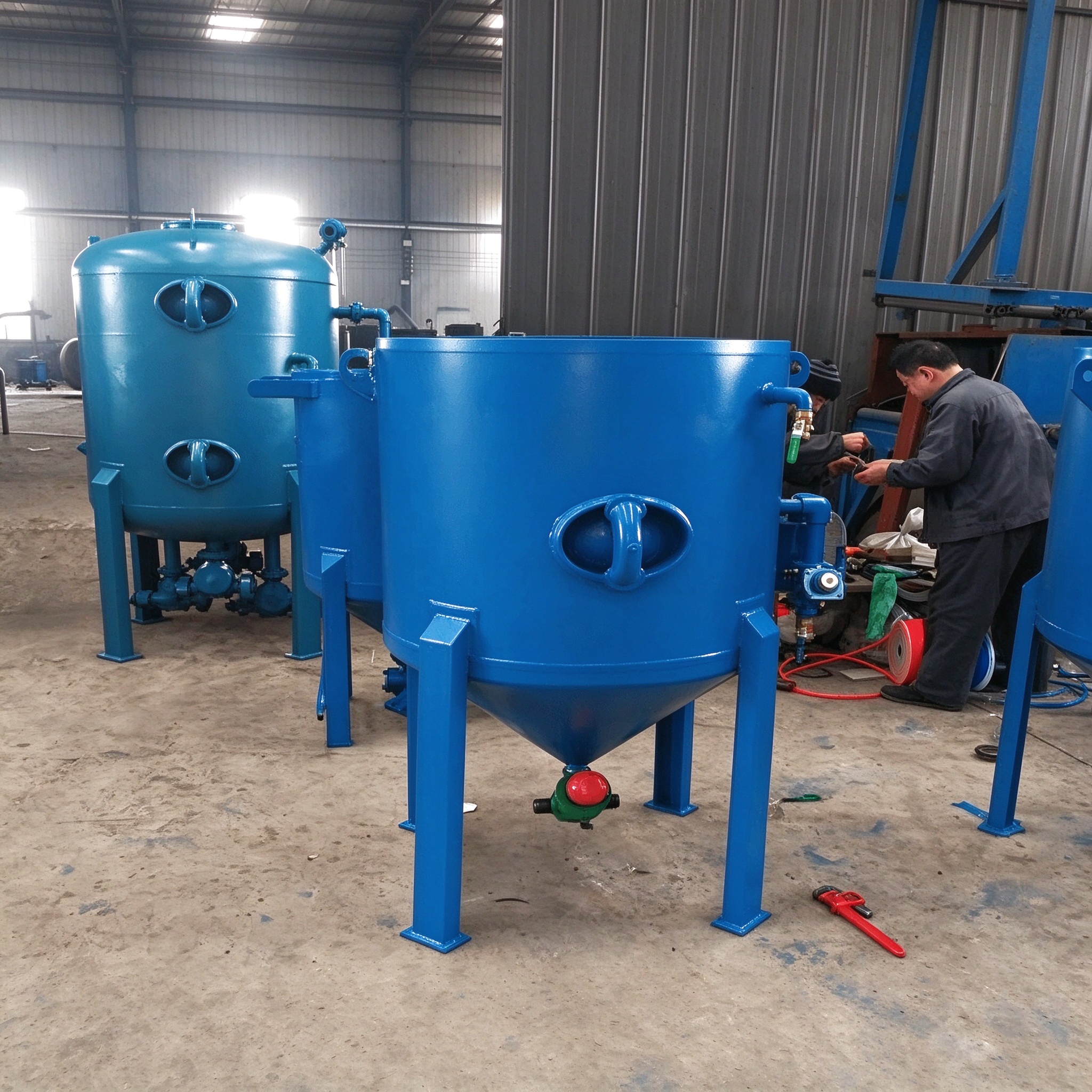
The point of measuring is comparison. Two cabinets can look identical from the outside and behave completely differently after a year of daily use, because one was built to a specification and the other was assembled to a price. A buyer who knows which details to inspect can tell them apart before signing the order, and can ask for the records that prove those details.
Structural Build and Pressure Testing
The pressure vessel carries the most risk in the whole cabinet, so it deserves the strictest evidence. A manufacturer with real production discipline welds tank bodies from 16MnR pressure vessel steel plate, then hydro-tests each individual tank at 2.5 times its rated pressure before it leaves the shop. That is not a sample check; it is applied unit by unit, and the record should be available to the buyer.
Cabinet sealing matters just as much. A door that leaks abrasive dust degrades the working environment and wastes media, while a well-built cabinet is checked for sealing, blasting uniformity, and continuous no-load running before delivery. Those three checks are simple to describe and hard to fake, which makes them a useful filter when comparing suppliers.
Nozzle Wear, Pressure Control, and Energy Use
Consumables decide the long-term cost of ownership. A wear-resistant ceramic nozzle lasts about three times as long as an ordinary alloy nozzle, so the difference in replacement frequency compounds over years of operation. Adaptive pressure regulation and automatic abrasive circulation reduce the load on the operator and keep the blast pattern consistent from the first part of a shift to the last.
Energy consumption follows the same logic. Design work around adaptive pressure regulation, automatic abrasive circulation, and intelligent dust removal and noise reduction has been shown to cut energy use by 15% and to hold the overall failure rate 30% below the industry average, which means more producing hours and fewer repair hours over the life of the machine.
Dust Extraction and Environmental Compliance
Dust control is where quality becomes a regulatory issue rather than a comfort issue. A closed cabinet with a weak extraction circuit releases abrasive dust into the workshop, and that dust affects both operator health and the outcome of an environmental inspection. Sealed cabinets, pulse dust removal units, and correctly sized air compressors are the practical answer.
Environmental equipment from Wuqiao Anxing Sandblasting Machinery holds ISO14001 environmental management certification, and the company states that dust emissions from its equipment sit well below national limits while meeting national air emission and pressure vessel safety standards. For a buyer in a region with active environmental enforcement, that documentation is worth requesting early, because it is difficult to retrofit later.
Box Sandblasting Machine Reputation: How to Verify It Before You Order
Reputation is checked through verifiable signals, not adjectives. Three signals matter more than the rest: a manufacturing history long enough to have survived several equipment generations, reference customers who still operate the machines, and an after-sales structure that remains reachable years after the invoice is paid.
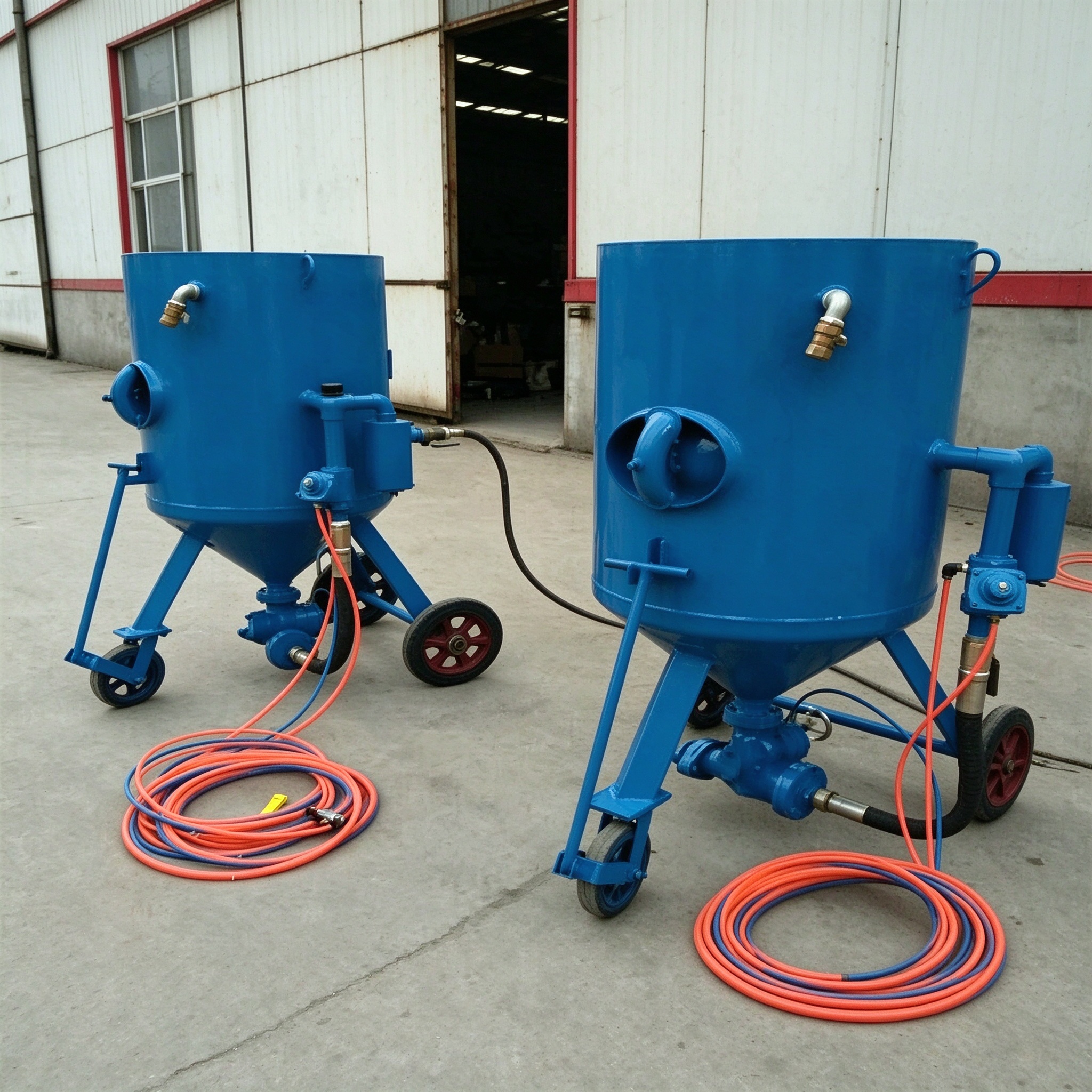
A company that started building sandblasting equipment in 1991 has watched abrasive media change, dust regulations tighten, and automation move from novelty to standard expectation. That continuity is not proof of quality on its own, but it removes one common risk: a supplier that disappears two years after delivery and leaves the buyer without spare parts.
What a Box Sandblasting Machine Contact Number Should Get You
Calling the sales line is the lowest-cost test available. A supplier that can route one call to an engineer who understands pressure ratings, air consumption, and extraction layout is organised to support the machine after installation. One that can only quote a price and a delivery date is not.
Prepare four questions before dialling: which pressure test is applied to the tank and whether the record travels with the machine; what nozzle material is fitted and how often it is expected to be replaced; how spare parts are stocked and how remote diagnosis works; and who performs installation, commissioning, and operator training. The answers, and the speed with which they arrive, tell you more about a box sandblasting machine contact number than any brochure can.
Reading Customer References Honestly
Reference lists are useful only if they can be checked. Ask which industries the equipment serves, whether buyers reorder, and whether the supplier can describe a specific working condition it has already solved. A manufacturer serving shipbuilding heavy industry, steel structure engineering, auto parts, hardware moulds, aviation parts, glass and stone, bridge and pipeline work, and anti-corrosion coating has usually met most of the practical problems a new buyer will face.
Repeat orders carry more weight than a wall of logos. Wuqiao Anxing Sandblasting Machinery reports stable repeat purchasing from buyers in Myanmar, South Korea, and several Middle East markets, alongside long-term cooperation with more than 300 manufacturing units, including large shipbuilding groups, steel structure plants, auto parts makers, 3C precision manufacturers, and construction machinery factories. Machines that run for consecutive years without major failures are the outcome buyers actually want, and they are the outcome that surfaces in a reference call.
Box Sandblasting Machine Recommendations by Workload
The right recommendation follows the workpiece, not the catalogue. Part size, required finish, throughput per shift, and available floor space decide whether a closed cabinet, a conveyor machine, or a full blasting room is the sensible purchase; buying above or below that specification wastes money either way.
Wuqiao Anxing Sandblasting Machinery produces four connected product groups, which makes it possible to match a recommendation to a real process requirement rather than to a single stock model:
- Sandblasting machines — closed cabinet machines, open mobile units, high-pressure water machines, eco-friendly dust-free units, and PLC fully automatic conveyor machines, covering small precision parts through to large outdoor structures.
- Pressure vessel sandblasting tanks — fixed, mobile, electric-control, and pneumatic-control configurations, with vessel dimensions customised to the required pressure rating.
- Complete blasting room systems — automatic rooms and recovery-plus-dust-removal integrated rooms, planned around plant dimensions and workpiece size.
- Supporting equipment — permanent magnet variable frequency air compressors, sandblasting air compressors, blasting guns, wear-resistant hoses, abrasive recovery devices, and pulse dust removal units.
Small Parts, Moulds, and Precision Components
For deburring, matte finishing, paint stripping, and texture work on small components, a closed cabinet keeps the abrasive contained and the operator separated from the blast stream. Stable pressure regulation matters more than raw power at this scale, because an inconsistent stream shows up immediately as an uneven surface finish.
Large Fabrications and Continuous Output
Steel structures, bridge and pipeline sections, and heavy weldments need either an open mobile machine for site work or a PLC conveyor system that moves parts through a fixed blast zone. Where throughput is continuous and dust volume is high, a blasting room with integrated recovery and dust removal protects both the production schedule and the inspection record.
When Customisation Is the Better Answer
Custom work earns its cost when the standard envelope does not fit: vessels sized to a specific pressure rating, rooms laid out around an existing factory footprint, or machines modified for a working condition that off-the-shelf equipment handles poorly. The practical test is whether the supplier can survey the site, produce a selection plan and layout drawing, and then build to that drawing.
Inside the Source Manufacturer: Wuqiao Anxing Sandblasting Machinery Co., Ltd.
Wuqiao Anxing Sandblasting Machinery Co., Ltd. is a surface-treatment equipment manufacturer based in Wuqiao County, Cangzhou City, Hebei Province, the region known as the Hometown of Chinese Acrobatics. It operates a standardized plant in the development zone and a second production site in Anling Town, and it covers research, production, sales, customisation, and after-sales within one organisation.
The company’s predecessor began building sandblasting equipment in 1991, which gives it more than three decades of work on rust removal and surface preparation. It was recognised as a Hebei Provincial Science and Technology SME in 2023 and as a national-level Science and Technology SME in 2025.
On the technical side, in-house mechanical design, fluid pressure, and environmental dust removal teams have accumulated more than ten utility model patents covering blasting structure, dust recovery, and intelligent pressure regulation. Production follows a full-process quality control routine: tanks are welded from 16MnR pressure vessel plate and hydro-tested at 2.5 times rated pressure, automatic models are fitted with wear-resistant ceramic nozzles, and every machine is checked for blasting uniformity, sealing, and continuous no-load running before shipment.
Capacity is built for both ends of the market. Multiple standardized assembly lines support annual output of more than a thousand sets, batch projects for large heavy industry buyers such as Jiangnan Shipyard have been delivered in runs of dozens of units, and small-batch customisation and special-condition modification remain available. Domestic coverage spans close to thirty provinces and autonomous regions, with dealers and on-site after-sales staff in the North China, East China, and South China manufacturing clusters, while export business reaches Europe, the Americas, the Middle East, Southeast Asia, and Hong Kong, Macao, and Taiwan.
The service model is deliberately front-loaded. Engineers survey the working condition before a quotation, issue a selection plan and plant layout drawings at no charge, report progress during production, and then attend installation, commissioning, and operator training so that the customer’s staff can handle daily operation, routine maintenance, and simple fault finding. Parts are stocked, and faults are addressed through remote guidance plus on-site repair.
FAQ
How do I judge box sandblasting machine quality before placing an order?
Judge box sandblasting machine quality by evidence rather than appearance: ask for the hydro-test record on the pressure vessel, the nozzle material and expected replacement interval, the extraction layout, and the results of the sealing and continuous no-load running checks. A supplier who can produce those records before the contract is usually the one who can also support the machine afterwards.
Which box sandblasting machine would a supplier recommend for small precision parts?
A closed cabinet machine with stable pressure regulation is the usual recommendation for small precision parts, because it contains the abrasive, separates the operator from the blast stream, and keeps surface finish consistent from part to part. Add a pulse dust removal unit wherever the workshop has an environmental obligation to meet.
How can I check box sandblasting machine reputation properly?
Check box sandblasting machine reputation through verifiable signals: how long the manufacturer has been building this equipment, which industries its machines serve, whether existing buyers place repeat orders, and whether spare parts and service remain available after delivery. A reference call settles what a brochure cannot.
What should I ask when I call a box sandblasting machine contact number?
Ask for the pressure test applied to the tank, the nozzle material and its replacement interval, the dust extraction design, spare parts stock, and who carries out installation and operator training. Answers backed by records and named responsibilities are a better indicator than a fast quotation.
Can a box sandblasting machine be customised for an unusual workpiece?
Yes. Customisation covers vessels built to a specific pressure rating, blasting rooms laid out around an existing factory footprint, and machines adjusted for special working conditions. The supplier should survey the site and issue a selection plan and layout drawing before production begins.
Summary
Box sandblasting machine quality is a set of checkable properties — vessel steel and hydro-testing, nozzle wear life, blasting uniformity, dust extraction, and service reachability — and a buyer who asks for evidence on each one gets a more dependable machine than a buyer who negotiates only on price. Apply the same discipline to reputation and to recommendations: ask what has been built, who still runs it, and what happens after delivery. Wuqiao Anxing Sandblasting Machinery Co., Ltd. answers those questions with a manufacturing history dating from 1991, four connected product groups, in-house testing, and a service structure that covers survey, selection, installation, training, and spare parts.