A blast pot is a pressure vessel that stores abrasive media and feeds it into a compressed air stream so the nozzle delivers a consistent blast. Choose a unit by matching vessel type, pressure control, mobility and dust handling to your real workload.
What Is a Blast Pot and How Does It Work?
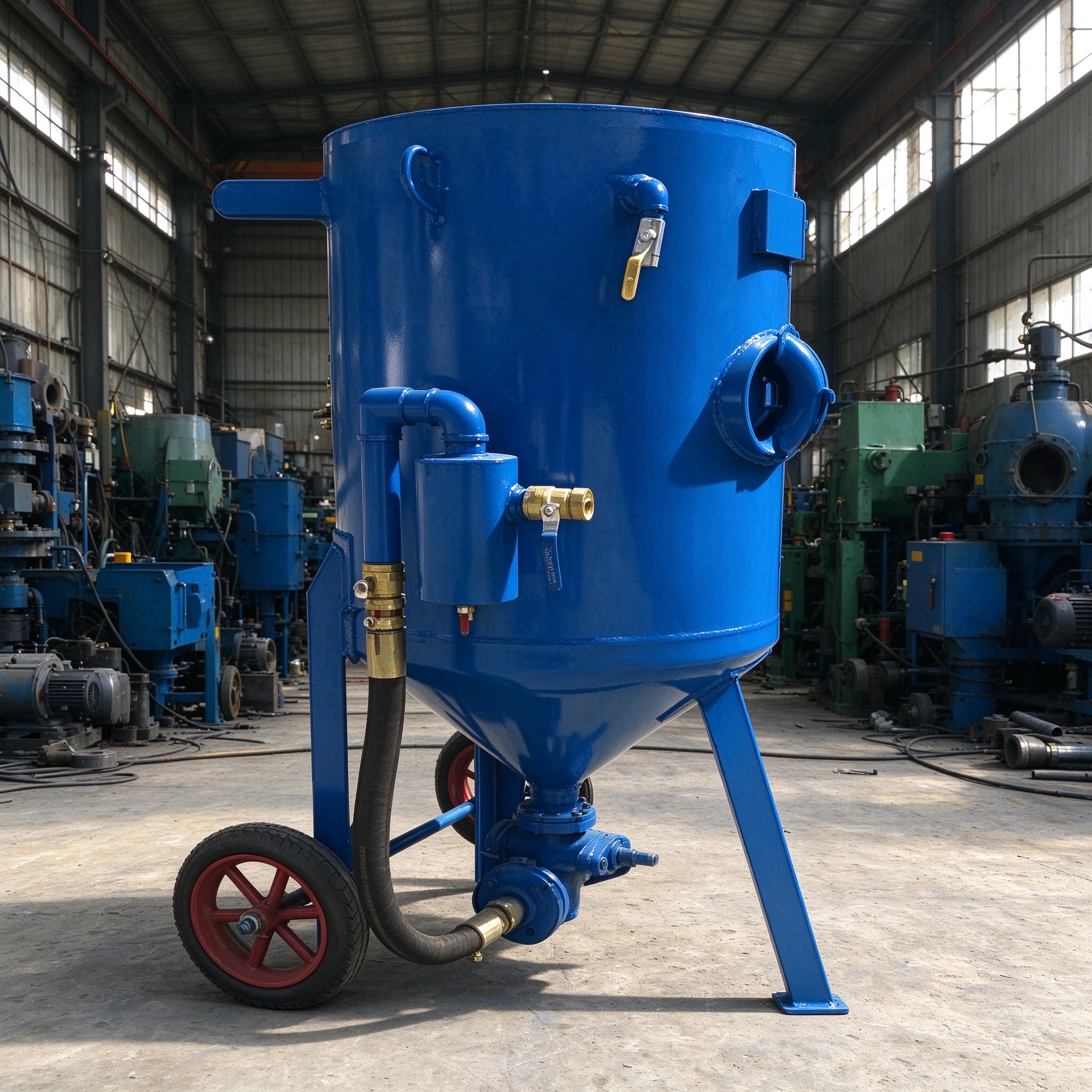
A blast pot is a closed pressure vessel that holds abrasive media and meters it into a moving air stream, so the abrasive leaves the nozzle at a controlled rate. The vessel, the metering valve, the pressure regulator and the hose run work as one system: change any of them and the finish changes with it.
Compressed air enters the vessel and pressurises it. Abrasive falls from the vessel through a metering valve into the air stream, travels down the blast hose and accelerates through the nozzle. Because the media is pushed by pressure rather than pulled by suction, output stays steadier across long runs and the operator can hold a consistent working distance from the surface.
Pressure control is the part operators notice most. A regulator that drifts forces constant nozzle adjustments, and inconsistent pressure shows up as patchy cleaning, wasted abrasive and uneven surface profiles. Electric and pneumatic control options give a crew a repeatable setting instead of one that has to be re-tuned by feel.
Every build shares the same working principle
Whatever the frame looks like, the principle does not change: a pressure vessel, a metering device, a regulator and a hose. What changes is how the unit is mounted, how it moves between jobs and how it is protected from the site environment. Stationary builds prioritise stable indoor work, mobile builds prioritise relocation, and outdoor builds prioritise open-site conditions.
Blast Pot Types: Stationary, Mobile and Outdoor Configurations
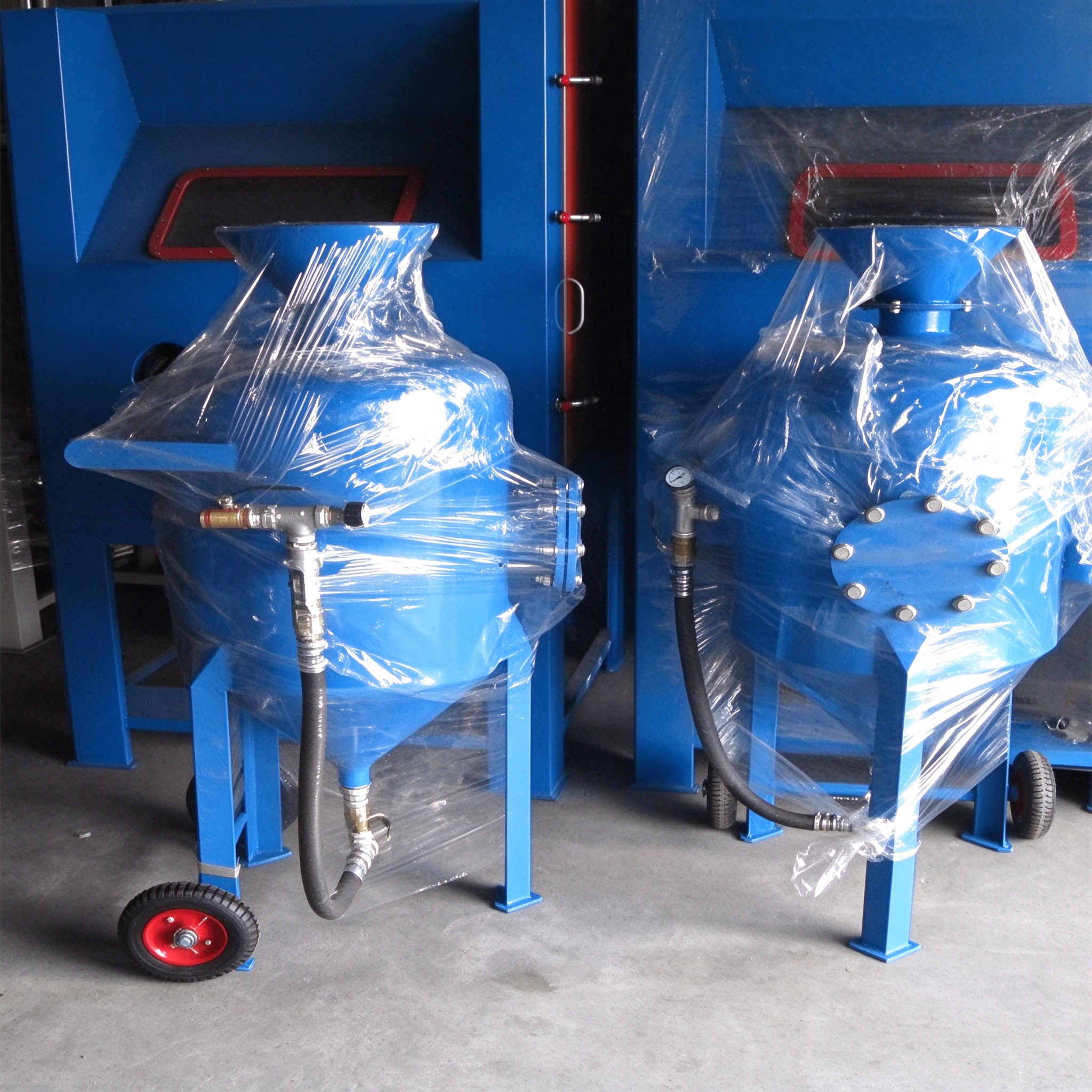
Configuration choice depends on where the work happens, how often the equipment must move and how much blasting the site can absorb. A stationary unit stays fixed for repeatable indoor work, a mobile unit travels with the job, and an outdoor unit is built for open-site conditions.
The trade-off is not about quality. It is about how the vessel reaches the workpiece, who supervises it and what the surrounding environment does to seals, valves and abrasive. Getting that match right saves more handling time than any single specification does.
Common configurations at a glance
- Stationary blast pot: fixed in place for repeatable indoor production and dedicated blasting bays.
- Mobile blast pot: built to move between work areas, so one unit can serve several locations.
- Outdoor blast pot: configured for open-air sites where weather, dust and access conditions vary.
- Pressure blast pot: uses vessel pressure to push abrasive into the air stream, giving steady output at the nozzle.
- Double-chamber blast pot: a two-chamber design that splits the media path into separate stages.
At Wuqiao Anxing Sandblasting Machinery Co., Ltd., pressure blast pots are produced in stationary, mobile, electric-control and air-control versions, and vessel sizes can be customised to the agreed pressure vessel standard. That spread matters because most real jobs need a combination: a mobile frame for access, a controlled regulator for finish consistency and a dust-handling setup that suits the site.
Key Factors in Choosing a Blast Pot System
Selecting a blast pot means balancing vessel capacity, working pressure, control type, mobility and dust control against the real workload. Each factor changes how long the unit can run between refills and how much operator attention the process needs.
Capacity sets the rhythm of the day. A vessel that is too small interrupts the work constantly with refilling and pressure recovery, while an oversized vessel adds weight and makes every refill a heavier handling task than it needs to be. Match capacity to how long a typical blasting session actually runs, not to the biggest number on the sheet.
Control type and pressure stability
Electric and pneumatic control versions respond differently, but they aim at the same outcome: a pressure setting that holds so the same result can be repeated. Manual adjustment costs less and works well for short sessions, yet it depends heavily on operator attention once a job runs long.
Build quality and pressure safety
The vessel is the one part of the system that genuinely stores pressure, so how it is welded and tested matters more than any accessory. At Wuqiao Anxing Sandblasting Machinery Co., Ltd., pot bodies are welded from 16MnR pressure-vessel steel plate, and every vessel is hydrostatically tested at 2.5 times the rated working pressure before it leaves the works. Complete machines also go through blast uniformity, sealing and continuous no-load running checks.
Dust control and site compliance
Dust control belongs in the selection decision, not in a later retrofit. Blasting generates fine particulate that has to be captured at the source and contained before it spreads through a workshop. Pulse dust-collection units and abrasive recovery equipment close that loop, and the environmental equipment supplied by Wuqiao Anxing Sandblasting Machinery Co., Ltd. is certified to ISO14001 environmental management, with dust emissions held below national limits.
Delivery capacity and customisation
Standard units keep lead times predictable, but many sites need a frame, inlet or control arrangement that does not exist off the shelf. Multi-line assembly capacity supports volume orders, while custom work covers special working conditions. Buyers should confirm both before committing, because a supplier that can only do one of the two will eventually force a compromise.
Maintenance Practices That Extend Service Life
Regular maintenance keeps the system safe and productive: check seals, valves, hoses and the metering device on a fixed schedule, and record every inspection. Most unplanned stoppages trace back to worn seals, contaminated abrasive or a pressure regulator that has drifted.
Wear parts belong on the shelf, not on an order form. Seals, metering components and hose sections degrade predictably, so holding a spare set turns a two-day outage into a twenty-minute change. Abrasive storage matters just as much: damp or mixed media clogs metering and produces the uneven flow that operators usually blame on the regulator.
Pressure testing and vessel inspection should never be improvised. Follow the manufacturer’s documentation and the local safety requirements for the interval, keep the records together, and treat any unexplained pressure loss as a stop-work condition until it is traced.
FAQ
What is a blast pot used for?
A blast pot stores abrasive and feeds it into a compressed air stream at a controlled rate so the nozzle can clean, profile or finish a surface. Because it is a pressure vessel, its valves, regulator and hose must be maintained together with the vessel itself.
How do I choose between a mobile and a stationary blast pot?
Choose a mobile unit when the work moves between bays or sites, and a stationary unit when the work stays in one blasting area. The mobile build saves handling time; the stationary build suits a fixed indoor location.
When should an outdoor blast pot be used?
An outdoor blast pot suits open-site work where the workpiece cannot be brought indoors. The priority is protecting seals, valves and the hose run, because open-air conditions change far more than an indoor bay does.
What does a pressure blast pot do?
A pressure blast pot uses vessel pressure to push abrasive into the air stream rather than relying on suction, which keeps output steadier over long runs. Consistent pressure is the main benefit users notice.
What maintenance does a blast pot need?
Check seals, valves, hoses and the metering device before and after each use, replace worn parts before they fail, and keep a written record of every inspection. Vessel inspection and pressure testing should follow the manufacturer’s documents and local safety requirements.
Summary
Choosing a blast pot is really a matching exercise: a stationary unit for repeatable indoor work, a mobile unit for multi-bay sites, an outdoor unit for open ground, a pressure unit for steady output and a double-chamber design where the media path needs two stages. Add the right control type, a properly welded and tested vessel, and a maintenance routine that replaces wear parts before they fail, and one unit can serve a workshop reliably for years.