
A mobile rust removal sandblasting machine is a blasting unit built to be moved to the workpiece, so rust, mill scale and old coatings can be cleaned on site instead of in a fixed booth. It removes the need to transport large parts to a workshop before surface preparation begins.
What a Mobile Rust Removal Sandblasting Machine Does
A mobile rust removal sandblasting machine uses compressed air to accelerate abrasive toward a surface, stripping rust, scale and coatings back to bare metal. The unit carries its own blast pot, blast gun, abrasive hose and usually a dust collection group, so the whole cleaning cycle can run wherever the workpiece sits.
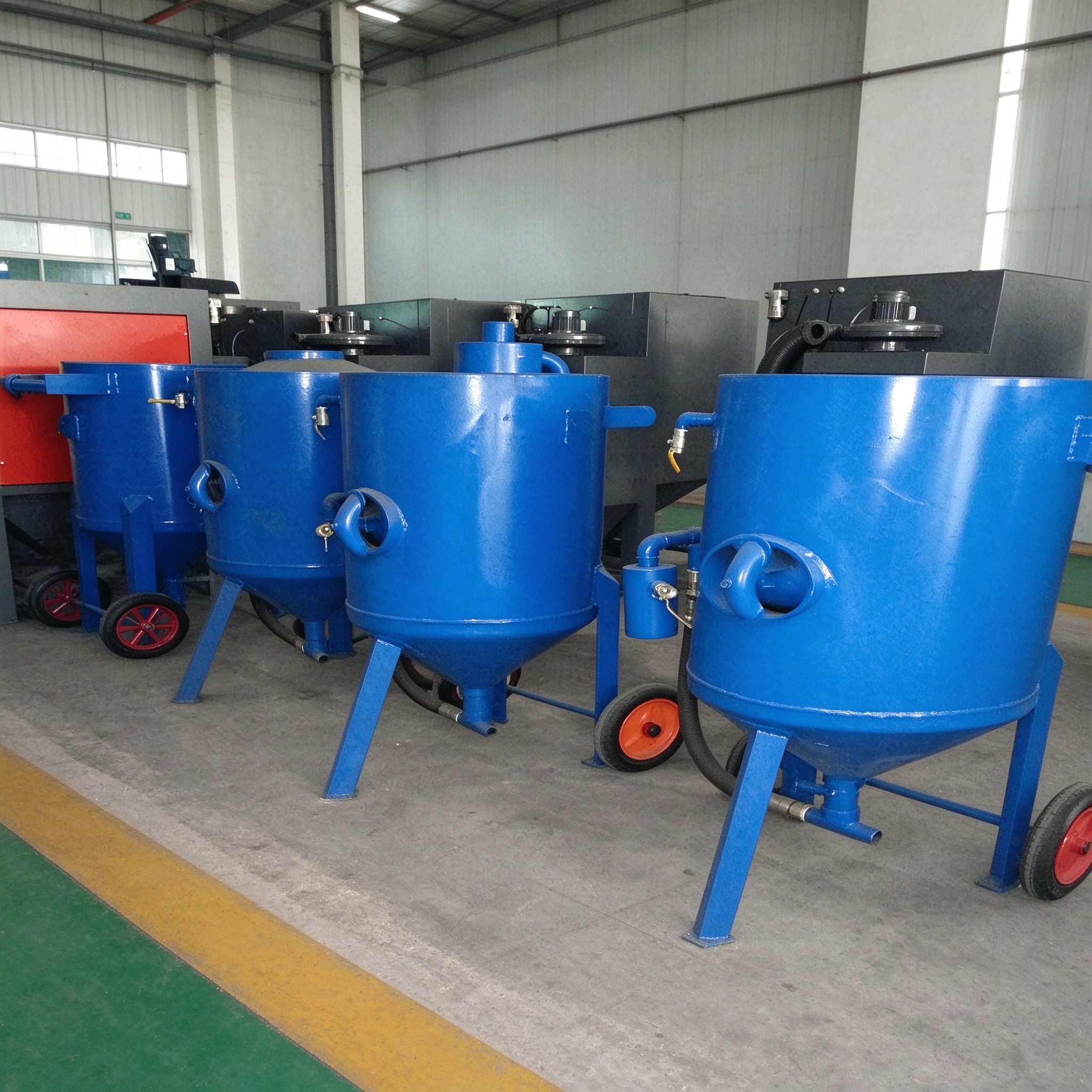
Because the equipment moves rather than the workpiece, the practical limits of a workshop disappear. Yard work, structural steel, storage areas and outdoor fabrication points all become valid blasting locations. The trade-off is preparation: the surface has to be reachable, the abrasive supply has to be planned, and the dust created by the process has to be captured instead of left to settle on nearby surfaces.
The process itself is flexible. The same unit can handle metal rust removal, oxide scale removal, burr cleanup, paint stripping, matte finishing, texture carving and surface strengthening by changing the abrasive, the working pressure and the technique applied to the surface.
Components That Make Up the Unit
A working setup is more than the frame that carries the gun. The main parts have to be matched to each other, otherwise the machine runs below its capability or wastes abrasive on every pass.
- Blast pot that holds and pressurises the abrasive
- Air compressor matched to the blasting demand
- Blast gun and wear-resistant blasting hose
- Abrasive recovery device that returns usable material to the pot
- Pulse dust removal unit that captures airborne dust at the source
Applications and Surface Processes
Mobile blasting is chosen when surface preparation has to happen on site and the part cannot travel. The process covers metal rust removal, oxide scale removal, burr cleanup, paint stripping, matte finishing, texture carving and surface strengthening, so one equipment family serves both cleaning work and finishing work.
Shipbuilding and heavy industry, steel structure engineering, auto parts, hardware and molds, aviation parts, glass and stone, bridges and pipelines, and anti-corrosion coating projects all depend on this kind of surface preparation. The common thread is a workpiece that is either too large to enclose or already fixed in place.
Where It Fits Across Industries
- Shipbuilding and heavy industry
- Steel structure engineering
- Auto parts manufacturing
- Hardware and molds
- Aviation parts
- Glass and stone processing
- Bridges and pipelines
- Anti-corrosion coating projects
Beyond these groups, the same equipment family is used across dozens of industries where surface condition decides the next production step. Cleaning, roughening and finishing often sit between fabrication and coating, so the blasting result shapes how the following process performs.
How to Select the Right Unit for Your Site
Selection starts with the workpiece: its size, weight and how it will be positioned during blasting decide whether a mobile unit is the right answer at all. From there, match the blast pot, air supply, abrasive and dust control to the finish you need, and plan how the unit will move around the site.
Begin with the largest part you will ever blast. Its dimensions, its weight and the way it can be turned or reached determine access, nozzle reach and how much surface can be treated in one pass. A unit that is easy to move but cannot reach the far side of a structure creates rework instead of savings.
Then look at the working environment: whether blasting happens indoors or outdoors, how abrasive will be supplied and stored, and how dust will be collected and removed from the area. Where the process must limit dust tightly, a water-assisted approach may suit better than dry blasting.
Finally, plan the operating side. Operator training, spare parts availability and a clear maintenance routine matter as much as the machine itself, because a unit that stops for a missing hose costs more than the hose.
Cabinet, Water-Sand Mixed and Pipeline Units Compared
Not every job calls for a mobile unit, and three related types answer different questions.
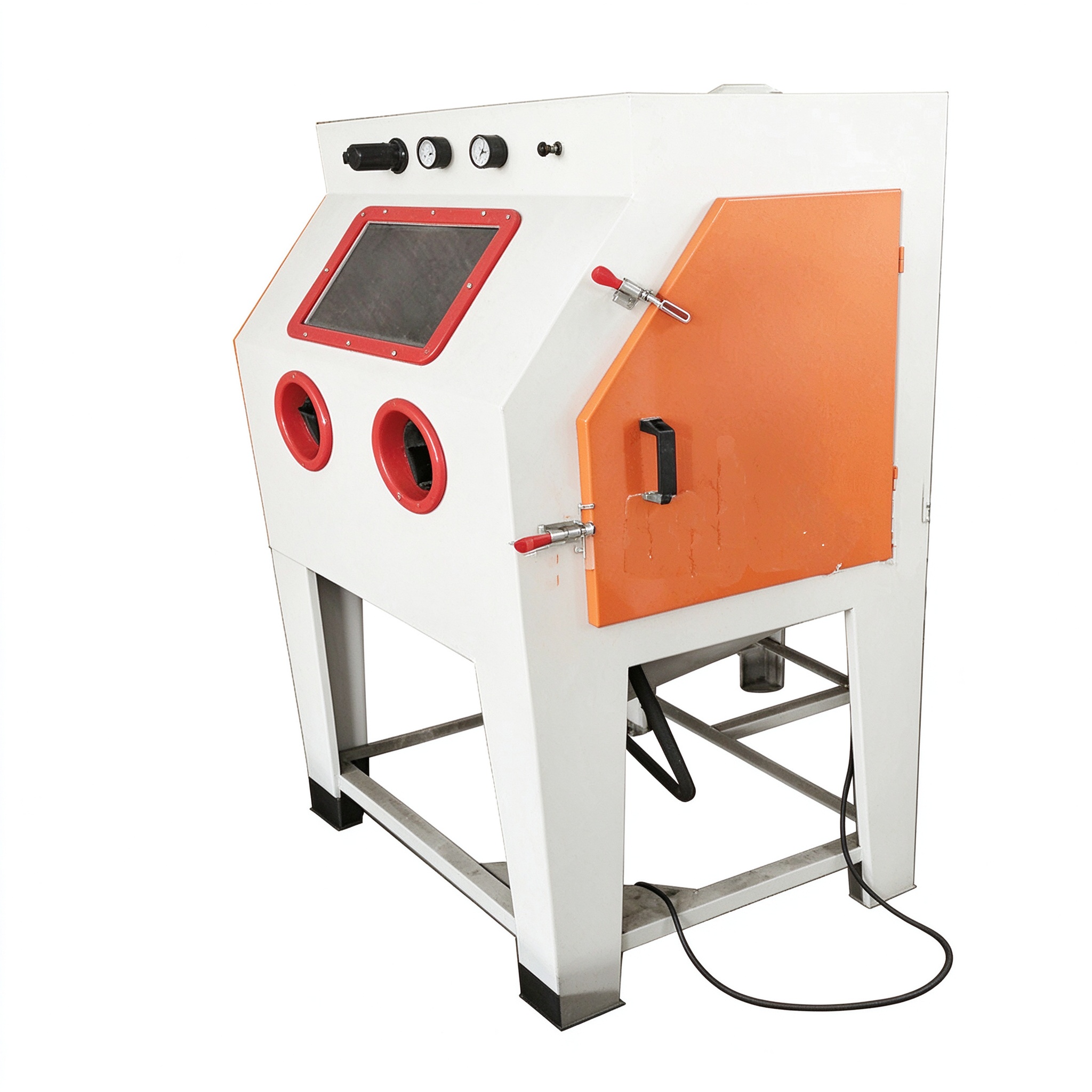
- A cabinet sandblasting machine keeps a small precision part inside an enclosure, so work on small components stays contained.
- A water-sand mixed sandblasting machine introduces water alongside the abrasive, which suits work where a wet process is preferred.
- A pipeline rust removal sandblasting machine is arranged around pipe work, where access follows the line of the pipeline rather than a flat open surface.
Reading these options side by side makes the choice simpler: the workpiece shape and the working environment usually point to one type before specification details are compared at all.
Safe Operation and Routine Care
Safe mobile blasting depends on preparation, protective equipment and inspection discipline rather than on the machine alone. Operators need respiratory protection, eye and hearing protection and protective clothing; the working area has to be cleared, and the dust collection system has to be running before blasting begins.
Routine care is mostly inspection. Hoses and nozzles wear with use, blast pot fittings need checking, and dust collection filters have to be cleaned on a schedule that follows actual working hours rather than a fixed calendar date.
Cleaning the work area between jobs keeps abrasive free of debris, which protects the nozzle and keeps the finish consistent. Recording what was blasted, with which abrasive and at which setting, makes a good result easier to repeat on the next batch.
Manufacturing Background and Supply Support
Wuqiao Anxing Sandblasting Machinery Co., Ltd. is based in Wuqiao County, Cangzhou, Hebei, with two production sites. Its predecessor began developing and manufacturing blasting equipment in 1991, and the company was recognized as a Hebei provincial technology-based SME in 2023 and as a national technology-based SME in 2025.
The product range covers blasting machines, pressure vessel blast pots, complete blasting room systems, dust removal equipment, air compressors, blast guns, wear-resistant hoses, abrasive recovery devices and pulse dust removal units. That breadth lets a buyer source a matched setup instead of assembling one from unrelated parts.
On the production side, blast pot shells are welded from 16MnR pressure-vessel steel, and each pot is hydrostatically tested at 2.5 times its rated pressure before delivery. The company reports more than ten utility model patents covering blasting structure, dust recovery and pressure control, and states that its machines run at a failure rate 30% below the industry average while using 15% less energy.
Service starts before the order: engineers survey the working site and provide selection proposals and plant layout drawings at no charge. After delivery, technicians handle installation, commissioning and operator training, and after-sales support combines remote guidance with on-site repair and spare parts kept in stock. Buyers in shipbuilding and heavy industry, including Jiangnan Shipyard, have placed multi-unit orders, and products are also exported to Europe, the Middle East, Southeast Asia and other markets.
FAQ
What is a mobile rust removal sandblasting machine used for?
It is used to remove rust, mill scale, old paint and other surface layers from workpieces that are too large or too awkward to move into a fixed blasting booth. Because the unit travels to the job, surface preparation happens where the part already sits.
Can it work outdoors on large steel structures?
Yes, outdoor work on large structures is one of the main reasons this type of unit exists, since the workpiece itself cannot be brought indoors. Wind, access and dust control still have to be planned before blasting starts.
What should be checked before choosing a unit?
Start with the workpiece rather than the product list: confirm the largest and heaviest part you will blast and how the unit will reach it. Then review the abrasive you plan to use, the dust control arrangement and the operator training you will need.
How is dust controlled during mobile blasting?
Dust control comes from pairing the blasting work with a dust removal group and a properly prepared working area. Without collection, abrasive dust and paint residue spread beyond the work zone and create housekeeping and compliance problems.
How do you keep a mobile unit running reliably?
Reliability comes from routine inspection rather than occasional repair. Check hoses and nozzles for wear, keep the blast pot and its fittings in good condition, and clean the dust collection group as part of the normal working cycle.
Summary
A mobile rust removal sandblasting machine is the right choice when the workpiece cannot come to the blasting booth. Match the unit to the largest part you will handle, plan access and dust control before the first job, and weigh service and spare parts support as heavily as purchase price. Decisions built on the workpiece and the site usually hold up better than decisions built on a specification sheet alone.