
Selecting a blast pot is one of the most important decisions in any surface preparation project. A blast pot, also called a sandblasting pot or pressure blasting vessel, controls abrasive flow, working pressure and overall blasting efficiency. The right pressure blast pot can improve cleaning speed, reduce abrasive waste and support consistent surface quality. The wrong configuration, however, can create frequent downtime, uneven blasting results and unnecessary operating costs.
This guide is written for contractors, fabrication shops, shipyards, coating companies and industrial buyers who need to compare mobile blast pots, outdoor blast pots, pressure blast pots and double-chamber blast pot designs. It explains how to match capacity, pressure, abrasive type, safety features and maintenance requirements to real working conditions. It also outlines what to check when evaluating a blast pot manufacturer or sandblasting pot supplier, so buyers can make a practical decision rather than relying only on initial price.
What Is a Blast Pot and Why It Matters in Surface Preparation
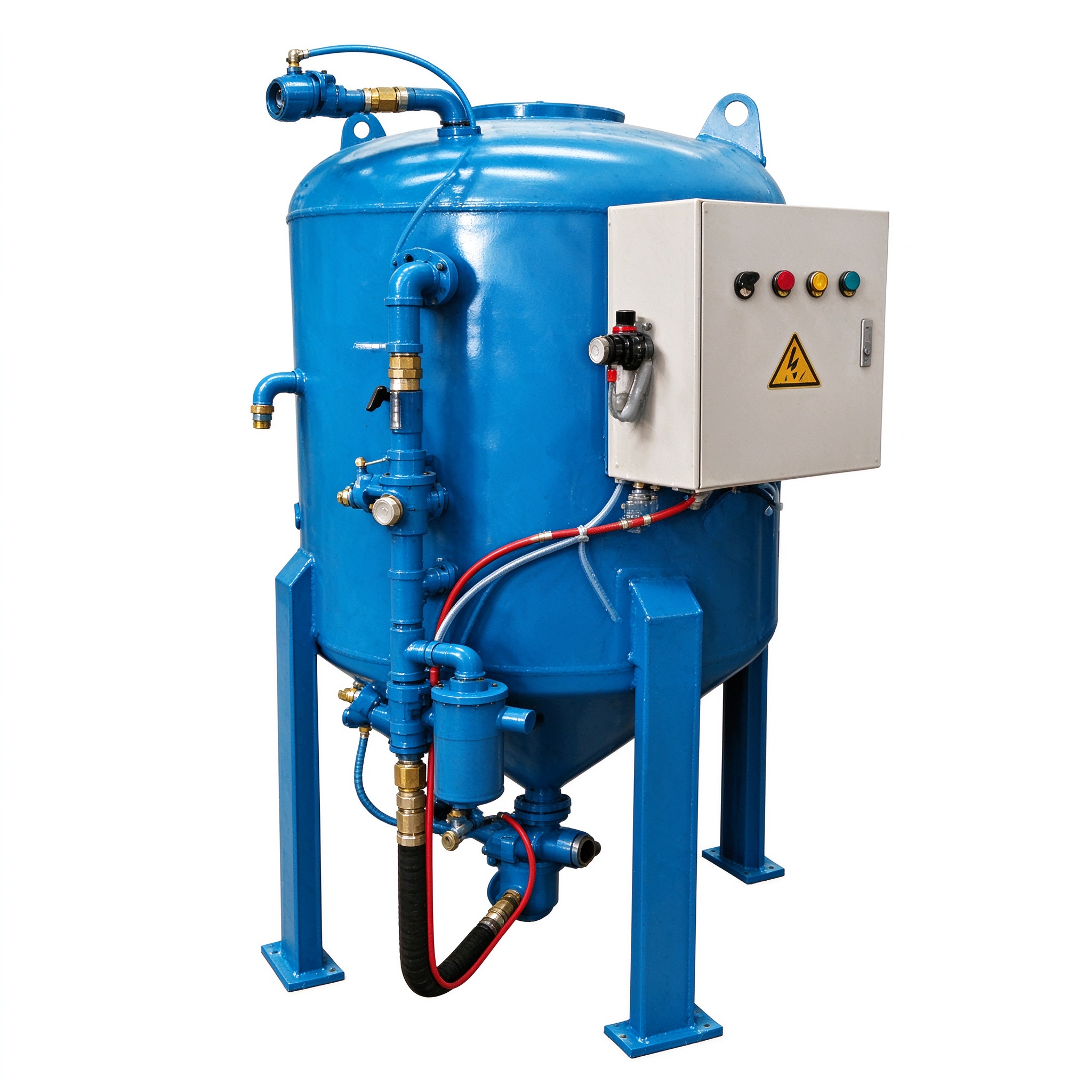
A blast pot is a pressurized vessel that stores abrasive media and delivers it into a blasting hose at a controlled rate. Compressed air enters the vessel, pressurizes the abrasive and pushes it through the blast nozzle. The operator adjusts pressure and abrasive flow to remove rust, mill scale, old paint, oxidation, burrs or surface contaminants. Because the blast pot sits at the center of the abrasive delivery system, its design has a direct effect on productivity, air consumption and operator safety.
In industrial surface preparation, blast pots are used for steel structure fabrication, ship repair and newbuilding, bridge and pipeline maintenance, automotive component cleaning, casting cleaning, mold finishing, glass and stone texturing, and coating removal. Each application places different demands on pressure, capacity and portability. A small pressure blast pot may be sufficient for periodic maintenance work, while a large outdoor blast pot or a mobile blast pot with high abrasive capacity may be needed for continuous shipyard or bridge operations.
The blast pot also affects abrasive consumption. A well-designed vessel with stable pressure control, reliable metering valve and proper moisture separation can deliver a consistent abrasive stream. That consistency helps operators avoid over-blasting, rework and excessive media use. For buyers comparing pressure blast pot options, the goal is not simply to choose the largest tank. The goal is to match the blast pot to the nozzle size, compressor output, abrasive type, duty cycle and jobsite conditions.
Types of Blast Pots: Pressure, Mobile, Outdoor and Double-Chamber Designs
Blast pots are available in several configurations, and each type serves a different operating pattern. A pressure blast pot uses compressed air to pressurize the abrasive vessel and push media through the hose. This design generally provides stronger abrasive velocity and better efficiency than suction-style equipment, especially for heavy rust removal and large surface areas. Pressure blast pots are widely used in shipyards, steel fabrication plants and coating facilities where repeatable cleaning performance matters.
A mobile blast pot is mounted on wheels, skids or a compact frame so it can be moved around a workshop or jobsite. Mobility is useful for maintenance departments, construction sites and fabrication yards where workpieces are large or scattered. An outdoor blast pot usually emphasizes weather-resistant construction, stable footing and practical control access for field operations. It may be paired with a blast cabinet, blast room or temporary containment system depending on the environmental requirements of the project.
A double-chamber blast pot uses two chambers to support more continuous abrasive delivery. The upper chamber can be filled or pressurized while the lower chamber continues feeding abrasive, which can reduce interruption during high-duty blasting. This design is often considered for operations that require long continuous cycles and limited downtime. However, a double-chamber blast pot also requires proper operator training, maintenance discipline and a clear understanding of the pressure and valve sequence.
| Blast Pot Type | Typical Use | Key Selection Point |
|---|---|---|
| Pressure blast pot | Heavy rust removal, steel structures, shipyards, coating removal | Match working pressure, nozzle size and compressor airflow |
| Mobile blast pot | Workshop maintenance, construction sites, scattered workpieces | Check wheel/skid design, hose length and lifting points |
| Outdoor blast pot | Field blasting, bridges, pipelines, outdoor steel structures | Confirm weather protection, stability and dust-control plan |
| Double-chamber blast pot | Continuous high-duty blasting with limited refill interruption | Review chamber sequence, valve reliability and operator training |
When comparing these options, buyers should avoid treating “mobile” and “outdoor” as simple marketing labels. A mobile blast pot may still be used indoors, and an outdoor blast pot may be stationary for the duration of a project. The real questions are how often the unit will be moved, who will operate it, what abrasive will be used and how the site will manage dust, noise and spent media. These factors should be documented before requesting a quotation from a blast pot manufacturer.
How to Choose the Right Blast Pot: Seven Practical Selection Factors
The first factor is abrasive capacity and duty cycle. A blast pot that is too small will require frequent refilling and pressure recovery, which reduces productivity. A blast pot that is too large may be difficult to move and may require more compressor capacity than necessary. Buyers should estimate abrasive consumption per hour, expected blasting hours per shift and the distance between the blast pot and the work area. For high-duty outdoor work, a larger outdoor blast pot with reliable refill access is often more practical than a small unit that must be refilled repeatedly.
The second factor is working pressure and compressor matching. Pressure blast pot performance depends on available air volume and pressure at the nozzle. If the compressor cannot sustain the required airflow, the blast pot will not deliver the expected cleaning rate. Buyers should confirm nozzle size, required pressure, hose diameter and pressure drop across the system. A pressure blast pot for sale quotation should include the recommended compressor airflow and operating pressure range, not only the tank volume.
The third factor is abrasive type. Different abrasives have different bulk density, flow characteristics and wear effects. Mineral sands, garnet, steel grit, steel shot, glass beads and plastic media may require different metering valves, wear liners and moisture control. A mobile blast pot used with fine media may need different internal flow characteristics than a heavy-duty pressure blast pot used with steel grit. Buyers should share the abrasive specification with the supplier before finalizing the blast pot configuration.
The fourth factor is mobility and site layout. If the blast pot must pass through narrow workshop aisles, fit inside a containment area or be lifted to an elevated platform, the frame design, wheel arrangement and lifting points matter. Outdoor blast pots should also be evaluated for stable placement on uneven ground. Hose length, remote control position and operator visibility should be considered as part of the complete system.
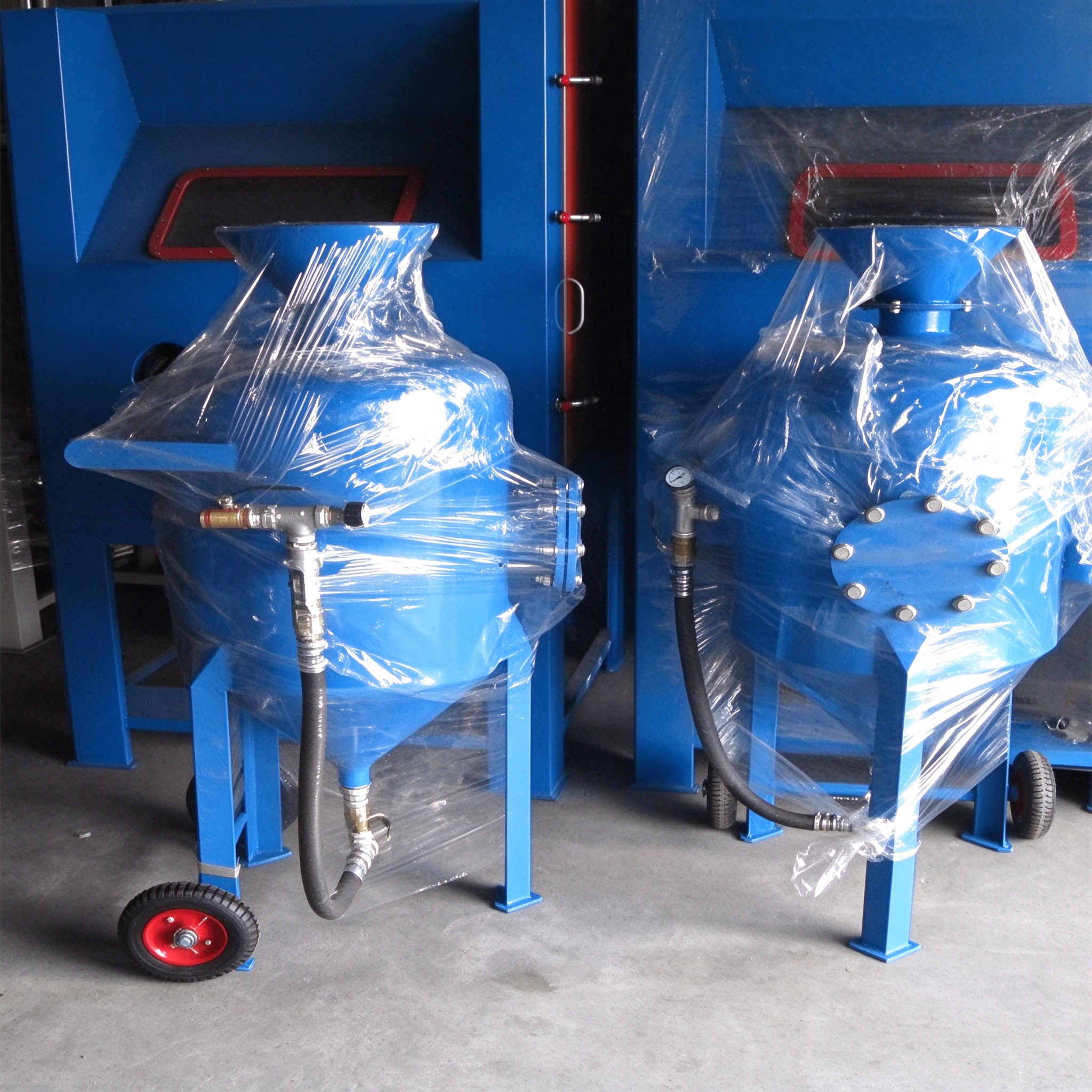
The fifth factor is safety and pressure-vessel quality. A blast pot is a pressure vessel, so shell material, weld quality, pressure rating and testing records are essential. Buyers should ask how the vessel is manufactured, what steel grade is used, how welds are inspected and what pressure test is performed before shipment. Remote control systems, pressure relief devices, reliable valves and clear operating instructions are also important for safe blasting. Safety should never be treated as an optional upgrade when comparing low-cost pressure blast pots.
The sixth factor is dust and environmental control. Outdoor blasting and workshop blasting both require attention to dust, spent abrasive and air quality. A blast pot should be integrated with an appropriate dust collection, containment or recovery plan. This is particularly important for projects subject to environmental inspections or site-specific emission requirements. Buyers should discuss dust control at the selection stage rather than after the equipment arrives.
The seventh factor is service and spare parts. Blast pots wear at valves, seals, hoses, nozzles and abrasive contact points. A supplier that can provide wear parts, technical guidance and responsive after-sales support helps reduce downtime. When evaluating a sandblasting pot supplier, ask about spare part availability, recommended maintenance intervals and remote troubleshooting support. A well-built blast pot is an asset, but a well-supported blast pot is a more reliable production tool.
Blast Pot Performance and Safety Features That Reduce Downtime
Reliable pressure control is central to blast pot performance. Operators need stable pressure at the nozzle to achieve consistent surface cleanliness. If pressure fluctuates, the blasting pattern becomes uneven and the operator may compensate by slowing down or re-blasting the surface. A pressure blast pot with a well-matched regulator, moisture separator and metering system can support more predictable results. This is especially valuable in coating projects where surface preparation standards must be met consistently.
Wear resistance is another practical consideration. Abrasive flow causes wear at the metering valve, hose connection, nozzle and internal abrasive path. Ceramic nozzles and wear-resistant liners can extend service life, but they must be selected for the specific abrasive and pressure. A mobile blast pot used daily with aggressive media will require a different wear strategy than an outdoor blast pot used occasionally for light maintenance. Buyers should request wear-part recommendations as part of the quotation.
Safety features should include a clear pressure gauge, reliable shut-off valve, pressure relief protection, secure hose couplings and a remote control system where required. Grounding and static control also deserve attention when using fine dry abrasives. Operators should be trained on pressure release, hose inspection, nozzle replacement and emergency shutdown. These procedures are simple, but they prevent many avoidable incidents and costly downtime.
Applications Across Industries
Pressure blast pots are used in shipbuilding and ship repair to remove rust, scale and old coatings from hulls, decks and structural components. In steel structure fabrication, they prepare beams, plates and frames for protective coating. Bridge and pipeline maintenance teams use mobile blast pots and outdoor blast pots where the work area changes frequently. Automotive and machinery manufacturers use blasting for component cleaning, deburring and surface profiling before painting or coating.
Foundries and casting plants use blast pots to remove sand, scale and surface defects. Glass and stone processors use blasting for matte finishing, texturing and surface cleaning. Coating contractors rely on pressure blast pots to achieve the surface profile required for coating adhesion. In each case, the blast pot must be matched to the workpiece size, production rhythm and environmental controls. A double-chamber blast pot may be considered where continuous operation is a priority, while a compact mobile blast pot may be preferred for maintenance departments with varied small jobs.
For companies that need a complete surface preparation solution, the blast pot should be evaluated together with the compressor, blast hose, nozzle, dust collector, abrasive recovery system and containment. A supplier with system-level experience can help avoid mismatched components. This is particularly important when a project requires both outdoor blasting and indoor finishing, or when the same site must handle different abrasives and workpiece sizes.
Maintenance and Troubleshooting Basics
Regular inspection keeps a blast pot productive and safe. Operators should check the pressure gauge, valves, seals, hose couplings and nozzle wear before each shift. Moisture in the compressed air supply can cause abrasive clumping and uneven flow, so drains and filters should be maintained. After blasting, the pot should be depressurized and cleaned according to the manufacturer’s instructions. Abrasive left in the vessel for long periods can absorb moisture and create flow problems.
Common issues include inconsistent abrasive flow, pressure loss at the nozzle, blocked metering valves and rapid wear at hose connections. These problems are often caused by moisture, incorrect abrasive size, worn nozzles or insufficient air supply. Troubleshooting should start with the simplest checks: confirm pressure, inspect the nozzle, verify abrasive condition and check for air leaks. If the problem continues, the supplier’s technical support can help review the system configuration.
Spare parts planning is part of maintenance. Keeping common wear parts on hand reduces downtime and helps maintain consistent blasting quality. For mobile blast pot fleets, a standardized spare parts list across units can simplify inventory. For outdoor blast pots used in remote locations, a practical spare parts kit is especially valuable because site delays can be costly.
Why Source Blast Pots from an Experienced Manufacturer
Wuqiao Anxing Sandblasting Machinery Co., Ltd. is an industrial surface preparation equipment manufacturer based in Wuqiao County, Cangzhou, Hebei Province. The company has been involved in blasting equipment research and manufacturing since 1991 and has developed a product range covering blast pots, blasting machines, blast rooms, dust collection systems, air compressors and related consumables. Its production system supports standard equipment, customized non-standard equipment and complete blasting and dust-control projects.
For blast pot buyers, manufacturing experience matters because pressure vessels require disciplined material control, welding and testing. Anxing manufactures pressure blast pot vessels using pressure-vessel steel plate and performs hydrostatic testing at 2.5 times the rated pressure before shipment. The company also provides stationary, mobile, electric-control and pneumatic-control blast pot configurations, and can review customized pressure ratings and dimensions according to the working condition. This flexibility helps buyers match the blast pot to abrasive type, site layout and production requirements.
Anxing’s quality control extends beyond the vessel. The company reports that its equipment is designed with adaptive pressure regulation, abrasive circulation and dust-reduction technologies, with the aim of reducing failure rates and energy consumption. Its environmental dust-control equipment is developed for compliance with emission requirements, and the company holds ISO14001 environmental management certification. Production capacity is supported by standardized assembly lines, with annual output reaching thousands of units and sets. The company has supplied batch orders to large industrial users and maintains domestic and export sales channels covering Europe, the Middle East, Southeast Asia and other regions.
Buyers comparing a pressure blast pot for sale should look beyond the tank size and initial quotation. A supplier’s ability to provide selection advice, layout drawings, installation guidance, operator training and after-sales support can have a major effect on long-term performance. Anxing’s service approach includes pre-sale working-condition surveys, equipment selection proposals, production progress updates, on-site installation and commissioning, operator training and remote or on-site after-sales support. For international buyers, clear technical communication and spare parts planning are especially important when the blast pot will operate in a remote or high-duty environment.
FAQ
What is the difference between a pressure blast pot and a suction blast system?
A pressure blast pot pressurizes the abrasive vessel and pushes media through the blast hose at higher velocity. A suction system draws abrasive into the air stream through a siphon effect. Pressure blast pots generally provide stronger cleaning performance and better efficiency for heavy rust, scale and large surface areas, while suction systems are often used for lighter-duty or cabinet-style blasting.
How do I choose between a mobile blast pot and a stationary blast pot?
Choose a mobile blast pot when the unit must move between work areas, workshops or jobsites. Choose a stationary blast pot when the blasting location is fixed and the priority is larger abrasive capacity or integration with a blast room. Consider wheel or skid design, lifting points, hose length and site access before making the final selection.
What size blast pot do I need for my project?
Blast pot size should be based on abrasive consumption per hour, duty cycle, refill frequency and available compressor capacity. A small pot may be sufficient for intermittent maintenance, while a large outdoor blast pot may be better for continuous shipyard or steel structure work. Share the nozzle size, expected pressure and working hours with the supplier for a more accurate recommendation.
Can a double-chamber blast pot improve continuous blasting efficiency?
A double-chamber blast pot can support more continuous abrasive delivery by allowing refill or pressure sequencing with less interruption. It may suit high-duty operations, but it also requires correct operating procedures, reliable valves and proper maintenance. Buyers should confirm the actual working cycle and operator training requirements before choosing this configuration.
What safety features should I check on a pressure blast pot?
Check the pressure rating, shell and weld quality, pressure test records, pressure gauge, relief protection, shut-off valve, hose couplings and remote control system. Operators should also be trained on depressurization, hose inspection, nozzle replacement and emergency shutdown. Safety features and operating procedures should be reviewed before the equipment is put into service.
How can I select a reliable blast pot manufacturer or supplier?
Review the manufacturer’s experience, pressure-vessel fabrication capability, testing procedures, customization options, spare parts support and after-sales response. Ask for technical clarification on pressure rating, steel material, valve configuration and dust-control integration. A supplier that can explain the complete blasting system, not only the tank, is usually better positioned to support long-term operation.
Summary
Choosing the right blast pot is a system decision, not a simple tank-size comparison. Buyers should match pressure blast pot capacity, working pressure, abrasive type, mobility, safety features and dust-control requirements to the actual jobsite. Mobile blast pots support changing work locations, outdoor blast pots suit field projects, pressure blast pots deliver strong cleaning performance, and double-chamber designs may be considered for continuous high-duty operations. Maintenance planning and spare parts availability should be part of the purchase decision from the beginning.
Working with an experienced blast pot manufacturer can reduce technical risk and improve long-term productivity. Wuqiao Anxing Sandblasting Machinery Co., Ltd. brings decades of surface preparation experience, pressure-vessel fabrication discipline, customizable blast pot configurations and a service network designed to support installation, training and after-sales needs. For buyers seeking a practical pressure blast pot for sale, the most reliable approach is to define the working condition clearly, compare total operating performance and confirm supplier support before placing an order.