
Industrial surface preparation depends on consistent abrasive flow, reliable pressure, and safe equipment operation. A pressure sandblasting tank is the core component that turns compressed air into a controlled blasting stream for removing rust, mill scale, old paint, burrs, and surface contaminants. For shipyards, steel structure fabricators, pipeline contractors, foundries, and maintenance teams, the right sandblasting pot directly affects productivity, abrasive consumption, operator safety, and surface quality.
This guide explains how pressure sandblasting tanks work, the differences between mobile sandblasting pots, outdoor sandblasting pots, and double-chamber sandblasting tanks, and the key factors to evaluate before purchasing. It also covers practical installation, safety, maintenance, and supplier selection advice for industrial buyers who need dependable surface preparation equipment.
What Is a Pressure Sandblasting Tank and Why It Matters in Surface Preparation
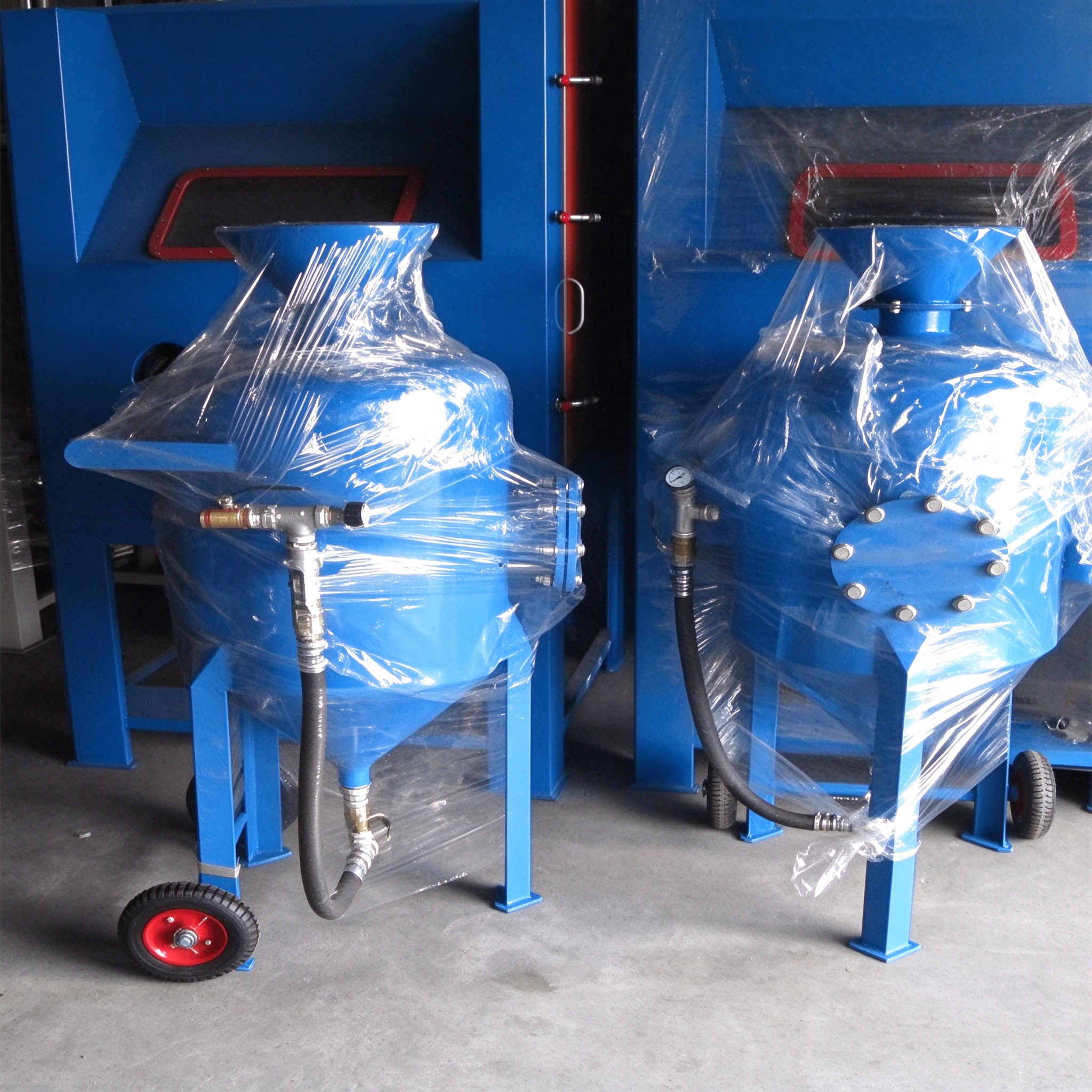
A pressure sandblasting tank, also called a pressure blasting pot or sandblasting pot, is a pressure vessel that stores abrasive media and delivers it into a high-pressure air stream. Unlike suction-type blasting systems that draw abrasive through a siphon, a pressure tank uses internal air pressure to push abrasive into the blast hose. This pressure-assisted delivery produces a more powerful, consistent, and controllable blast stream, especially when working on large surfaces or challenging coatings.
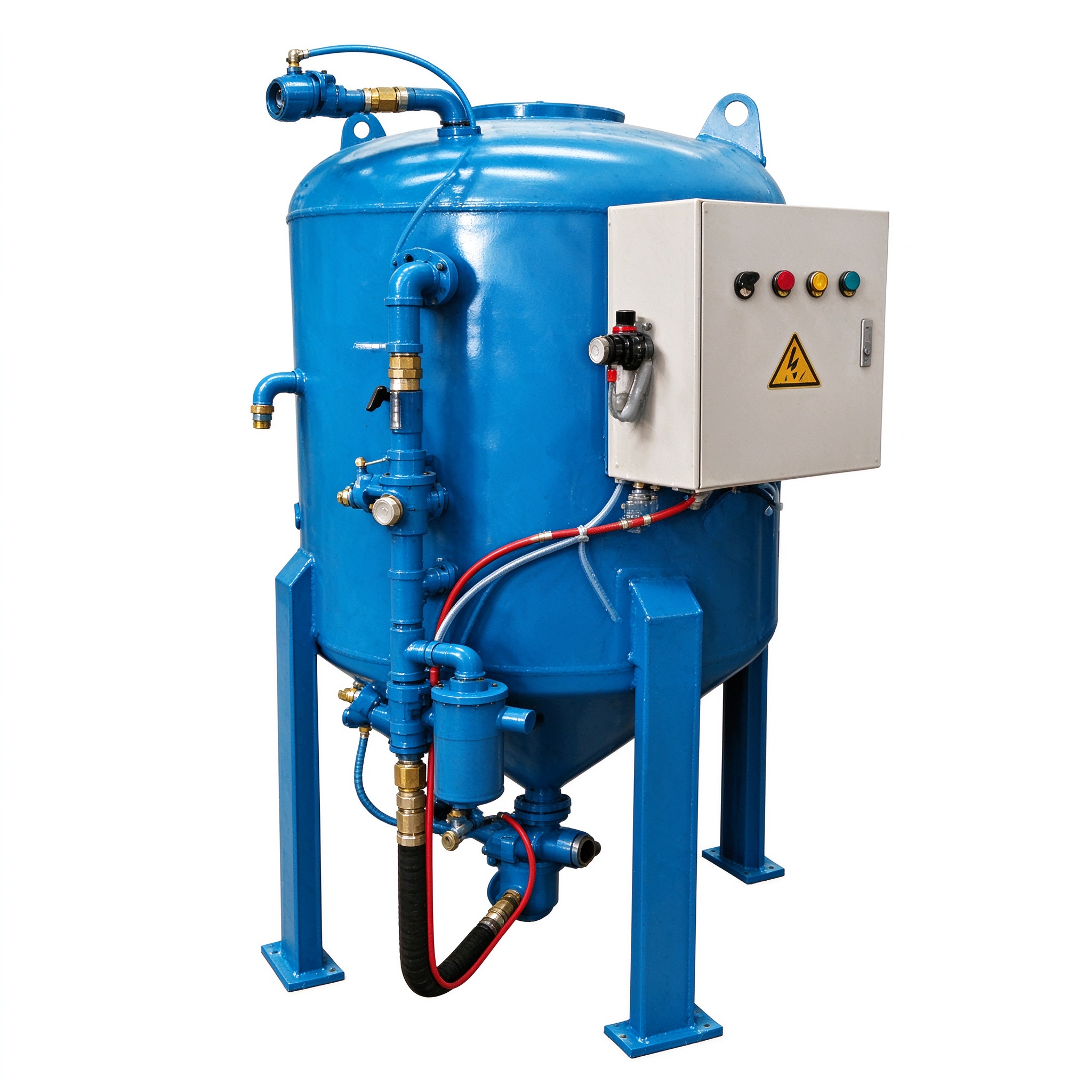
The tank usually includes a pressure vessel body, abrasive inlet, metering valve, discharge valve, pressure gauge, safety valve, moisture separator or air filter, and remote control valve. In a well-designed system, the operator can adjust blasting pressure and abrasive flow to match the surface condition, nozzle size, and productivity target. This control is essential for achieving uniform surface cleanliness without damaging the substrate.
Because the pressure sandblasting tank sits at the center of the blasting circuit, its design and build quality influence the entire operation. A poorly sealed tank wastes air, creates inconsistent abrasive flow, and increases downtime. A well-built pressure vessel with reliable valves, stable pressure regulation, and proper safety protection helps teams maintain steady output and reduce operating cost.
Types of Sandblasting Pots: Mobile, Outdoor, Pressure, and Double-Chamber Configurations
Sandblasting pots are available in several configurations, and each design serves different working conditions. The most common industrial options include mobile sandblasting pots, outdoor sandblasting pots, standard pressure sandblasting tanks, and double-chamber sandblasting tanks. Understanding the differences helps buyers avoid over-specifying equipment or choosing a tank that cannot handle the actual workload.
A mobile sandblasting pot is designed with wheels, a compact frame, or a towable structure for easy movement between work areas. These units are common in maintenance workshops, fabrication yards, and job sites where the blasting location changes frequently. A mobile sandblasting pot is usually smaller in capacity and is ideal for repair work, small steel structures, and intermittent blasting tasks.
An outdoor sandblasting pot is built for field conditions. It often has a larger abrasive capacity, reinforced frame, weather-resistant components, and towing or lifting provisions. Outdoor units are commonly used for bridges, pipelines, storage tanks, wind towers, and heavy steel structures. Because outdoor blasting involves dust, moisture, and uneven ground, the tank should be paired with proper moisture control, grounding, and dust suppression measures.
A pressure sandblasting tank is the general-purpose pressure vessel used across workshops and sites. It may be stationary or mobile, and it can be configured with manual, pneumatic, or electric controls. A double-chamber sandblasting tank is a more advanced design that uses two pressure chambers to allow continuous abrasive feeding. While one chamber is pressurized for blasting, the other can be refilled, reducing the need to stop the operation frequently. This design is valuable for high-volume work where continuous blasting and reduced downtime are priorities.
| Sandblasting Pot Type | Typical Use | Key Features | Buyer Considerations |
|---|---|---|---|
| Mobile sandblasting pot | Workshop maintenance, small structures, repair work | Wheels or compact frame, smaller capacity, easy movement | Check wheel durability, hose length, and air supply compatibility |
| Outdoor sandblasting pot | Bridges, pipelines, tanks, heavy steel structures | Larger capacity, reinforced frame, towing or lifting points | Confirm site mobility, moisture control, and dust management |
| Pressure sandblasting tank | General industrial blasting, fabrication shops, shipyards | Reliable pressure vessel, metering valve, remote control options | Verify pressure rating, safety valve, and abrasive compatibility |
| Double-chamber sandblasting tank | High-volume continuous blasting, shipbuilding, large fabrication | Two chambers for continuous abrasive feeding, less refill downtime | Evaluate control logic, valve reliability, and maintenance access |
Key Selection Factors for Pressure Sandblasting Tanks
Selecting a pressure sandblasting tank is not simply a matter of choosing the largest capacity. The tank must match the compressor output, nozzle size, abrasive type, surface area, duty cycle, and site conditions. A mismatch can cause low blasting efficiency, excessive abrasive consumption, or unnecessary equipment cost.
Pressure Vessel Compliance and Safety Design
Because a sandblasting pot operates under pressure, the vessel body must be manufactured from suitable pressure vessel steel and tested before delivery. Buyers should confirm the design pressure, working pressure, safety valve setting, and hydrostatic test records. A responsible manufacturer will use compliant steel plates, controlled welding processes, and pressure testing procedures to ensure safe operation.
Abrasive Capacity and Continuous Blasting Time
Tank capacity determines how long the operator can blast before refilling. Small pots are easier to move but require frequent refilling. Large tanks reduce refill downtime but may be harder to transport and require more floor space. For high-volume shipyard or steel structure work, a double-chamber sandblasting tank or a larger outdoor sandblasting pot can improve uptime.
Air Supply, Pressure, and Nozzle Matching
The compressor must deliver enough air volume and pressure for the selected nozzle. If the air supply is too small, the tank cannot maintain stable blasting pressure. If the nozzle is too large for the compressor, pressure drops and productivity falls. Buyers should calculate the required airflow based on nozzle diameter, working pressure, and simultaneous operators before finalizing the sandblasting pot configuration.
Mobility, Site Access, and Environmental Conditions
For outdoor work, consider ground conditions, lifting points, wheel or tow configuration, and weather exposure. For indoor workshops, consider height clearance, ventilation, dust collection, and material handling. The tank should be easy to position, refill, and inspect without creating unnecessary safety risks.
Control System and Dust Collection Integration
Manual, pneumatic, and electric control options are available. Remote control improves operator safety by allowing the blaster to stop abrasive flow quickly. Dust collection is equally important. A pressure sandblasting tank should be integrated with proper ventilation, abrasive recovery, and dust filtration to maintain a cleaner workplace and support environmental compliance.
Applications Across Shipbuilding, Steel Structure, and Industrial Maintenance
Pressure sandblasting tanks are used wherever a clean, roughened surface is required before coating, inspection, or further processing. In shipbuilding and ship repair, sandblasting pots remove rust, scale, and old coatings from hull sections, decks, tanks, and structural components. Consistent pressure and reliable abrasive flow are essential for achieving the surface profile required by protective coating systems.
In steel structure fabrication, outdoor sandblasting pots are commonly used for beams, columns, trusses, and bridge components. The blasting process removes mill scale and rust and creates an anchor profile for primer and paint. For pipeline and storage tank projects, mobile and outdoor sandblasting pots support field maintenance and recoating work.
Other applications include automotive parts, castings, forged components, molds, glass, stone, and general metal fabrication. Sandblasting can remove burrs, oxidation, release agents, and old paint, or create a matte or textured surface. The same equipment can also support surface strengthening and preparation before bonding, painting, or thermal spraying, depending on the abrasive and process parameters.
How a Double-Chamber Sandblasting Tank Improves Productivity
A double-chamber sandblasting tank is designed to reduce interruptions caused by abrasive refilling. The system uses two chambers that alternate between pressurizing and refilling. While one chamber supplies abrasive to the blast stream, the other can be refilled and prepared. This allows the operator to maintain a more continuous blasting cycle, especially on large surface areas.
For shipyards, heavy steel fabricators, and large maintenance projects, continuous blasting can significantly reduce non-productive time. Fewer stops also mean more consistent surface quality and less operator fatigue. However, a double-chamber system requires reliable valves, clear control logic, and accessible maintenance points. Buyers should review the manufacturer’s valve design, sealing arrangement, and service instructions before choosing this configuration.
The benefit is not only speed. Stable abrasive flow helps control coating profile and reduces rework. When the blasting process is consistent, coating adhesion improves and later inspection is easier. For operations with high daily blasting hours, a double-chamber sandblasting tank can be a practical investment rather than a luxury.
Installation, Operation, and Safety Best Practices
Safe blasting starts with proper installation and trained operation. The pressure sandblasting tank should be placed on stable ground, connected to a suitable air supply, and grounded to control static electricity. The blast hose, nozzle, remote control, and safety valve should be inspected before each use.
- Use appropriate personal protective equipment, including a blast helmet, breathing air supply, hearing protection, and heavy-duty gloves.
- Inspect the pressure vessel, hoses, couplings, and valves for wear or damage before pressurizing.
- Confirm that the safety valve and pressure gauge are working correctly.
- Keep moisture separators and filters clean to prevent abrasive clogging and poor blasting performance.
- Never exceed the rated working pressure of the tank or the blast hose.
- Use a remote control or deadman valve so the operator can stop blasting quickly.
- Provide adequate ventilation and dust collection, especially in enclosed or semi-enclosed work areas.
- Keep unauthorized personnel away from the blasting zone and post clear warning signs.
Maintenance Tips to Extend Sandblasting Pot Service Life
Regular maintenance protects the pressure sandblasting tank and reduces unplanned downtime. After each shift, the tank should be depressurized, the abrasive supply should be shut off, and the unit should be cleaned according to the manufacturer’s instructions. Moisture and abrasive residue should not be left inside the vessel or valves.
- Inspect the nozzle for wear and replace it when the blast pattern becomes uneven or productivity drops.
- Check the metering valve and discharge valve for abrasive wear, leakage, or sticking.
- Drain the moisture trap and air filter regularly to keep the air supply dry.
- Inspect the blast hose for soft spots, cuts, bulging, or loose couplings.
- Verify the safety valve, pressure gauge, and remote control function at scheduled intervals.
- Check chamber seals and access covers for leakage or damaged gaskets.
- Keep maintenance records for pressure tests, parts replacement, and safety inspections.
For double-chamber sandblasting tanks, pay extra attention to the changeover valves and chamber sealing components. These parts are critical to continuous operation and should be inspected according to the manufacturer’s recommended schedule.
How to Choose a Reliable Sandblasting Pot Manufacturer
Supplier selection is as important as equipment selection. A pressure sandblasting tank is a long-term industrial asset, so buyers should evaluate manufacturing experience, pressure vessel quality control, testing procedures, spare parts availability, and after-sales support. A low purchase price can become expensive if the tank leaks, valves fail frequently, or replacement parts are difficult to obtain.
Wuqiao Anxing Sandblasting Machinery Co., Ltd. is a specialized manufacturer of industrial surface preparation equipment based in Wuqiao County, Hebei Province. The company’s history in sandblasting equipment development dates back to 1991, giving it more than three decades of experience in rust removal, surface cleaning, and blasting system design. Its product range includes pressure sandblasting tanks, mobile sandblasting pots, outdoor sandblasting pots, double-chamber sandblasting tanks, automatic blasting rooms, dust collection systems, air compressors, blast hoses, nozzles, and related accessories.
The company operates standardized production sites and supports both standard equipment production and customized non-standard projects. Its pressure vessel bodies are made from compliant 16MnR pressure vessel steel, and each tank undergoes hydrostatic testing at 2.5 times the rated pressure before delivery. Production quality control also covers blasting uniformity, sealing performance, and continuous no-load operation. For high-wear applications, automatic models can be equipped with wear-resistant ceramic nozzles that offer longer service life than ordinary alloy nozzles.
In terms of engineering capability, Wuqiao Anxing has developed adaptive blasting pressure regulation, abrasive circulation, and intelligent dust collection and noise reduction technologies. The company reports that these designs help reduce equipment failure rates and energy consumption compared with industry averages. It has obtained multiple utility model patents related to blasting structure, dust recovery, and pressure control. Its environmental equipment is produced under ISO 14001 environmental management practices, and the company has been recognized as a technology-based SME at provincial and national levels.
For international buyers, export experience matters. Wuqiao Anxing products have been shipped to Europe, the Middle East, Southeast Asia, and other regions, with repeat orders from markets such as Myanmar, South Korea, and the Middle East. The company also serves shipbuilding groups, steel structure plants, automotive parts manufacturers, precision manufacturing companies, and engineering machinery producers. Its service scope includes pre-sales working condition surveys, equipment selection proposals, plant layout drawings, installation and commissioning support, operator training, and after-sales response.
FAQ
What is the difference between a pressure sandblasting tank and a suction blasting system?
A pressure sandblasting tank uses internal air pressure to push abrasive into the blast stream, producing stronger and more consistent blasting power. A suction system draws abrasive through a siphon using vacuum created by the air stream. Pressure tanks are generally more productive and better suited to large surfaces, heavy rust, and industrial duty cycles.
How do I choose between a mobile sandblasting pot and an outdoor sandblasting pot?
Choose a mobile sandblasting pot when the work area changes frequently and the blasting tasks are relatively small or intermittent. Choose an outdoor sandblasting pot for bridges, pipelines, storage tanks, and heavy steel structures that require larger abrasive capacity, reinforced mobility, and field-ready components.
What capacity pressure sandblasting tank do I need?
Capacity depends on surface area, nozzle size, abrasive consumption, and how often refilling is acceptable. Small pots are easier to move but require frequent refilling. Large tanks and double-chamber sandblasting tanks reduce refill downtime for high-volume work. Calculate the expected blasting hours per shift and match the tank to the compressor output.
Why use a double-chamber sandblasting tank?
A double-chamber sandblasting tank allows abrasive refilling while blasting continues from the other chamber. This reduces stops, improves continuity, and supports higher productivity on large shipbuilding, steel structure, and industrial maintenance projects.
How often should a sandblasting pot be inspected and maintained?
Inspect hoses, nozzles, valves, gauges, and safety devices before each use, and perform scheduled maintenance according to the manufacturer’s manual. Pressure vessel inspections and safety valve checks should follow local regulations and the equipment maintenance plan. Daily cleaning and moisture removal help prevent premature wear.
Can a pressure sandblasting tank be customized for special working conditions?
Yes. Industrial manufacturers can customize tank capacity, pressure rating, mobility configuration, control method, and abrasive handling details for specific site conditions. Buyers should provide working pressure, abrasive type, nozzle size, air supply, and application details so the manufacturer can recommend a suitable configuration.
Summary
A pressure sandblasting tank is a critical investment for industrial surface preparation. The right sandblasting pot improves blasting efficiency, surface quality, operator safety, and long-term operating cost. Mobile sandblasting pots suit flexible maintenance work, outdoor sandblasting pots handle field projects and heavy structures, and double-chamber sandblasting tanks support continuous high-volume blasting.
Before purchasing, confirm pressure vessel compliance, air supply matching, abrasive capacity, control method, dust collection, and spare parts support. Choose a manufacturer with proven experience, pressure testing procedures, export service capability, and responsive after-sales support. With careful selection and regular maintenance, a pressure sandblasting tank can deliver reliable performance across shipbuilding, steel structure, pipeline, automotive, and general industrial applications.