
Selecting the right pressure sandblasting tank has a direct effect on blasting efficiency, surface quality, abrasive consumption, and long-term operating cost. For shipyards, steel structure fabricators, pipeline contractors, automotive part manufacturers, and maintenance teams working in remote locations, the tank is the core pressure vessel that controls abrasive flow and delivers consistent blasting power. A well-matched sandblasting tank keeps cycles stable, reduces downtime, and supports compliance with dust-control and safety requirements. Wuqiao Anxing Sandblasting Machinery Co., Ltd. has focused on industrial surface preparation equipment since 1991, building a product range that includes stationary pressure sandblasting tanks, mobile sandblasting tanks, outdoor sandblasting tanks, double-chamber sandblasting tanks, and custom pressure vessel designs. This guide explains how these tank types differ, what to evaluate before purchase, and how to match the equipment to real production conditions.
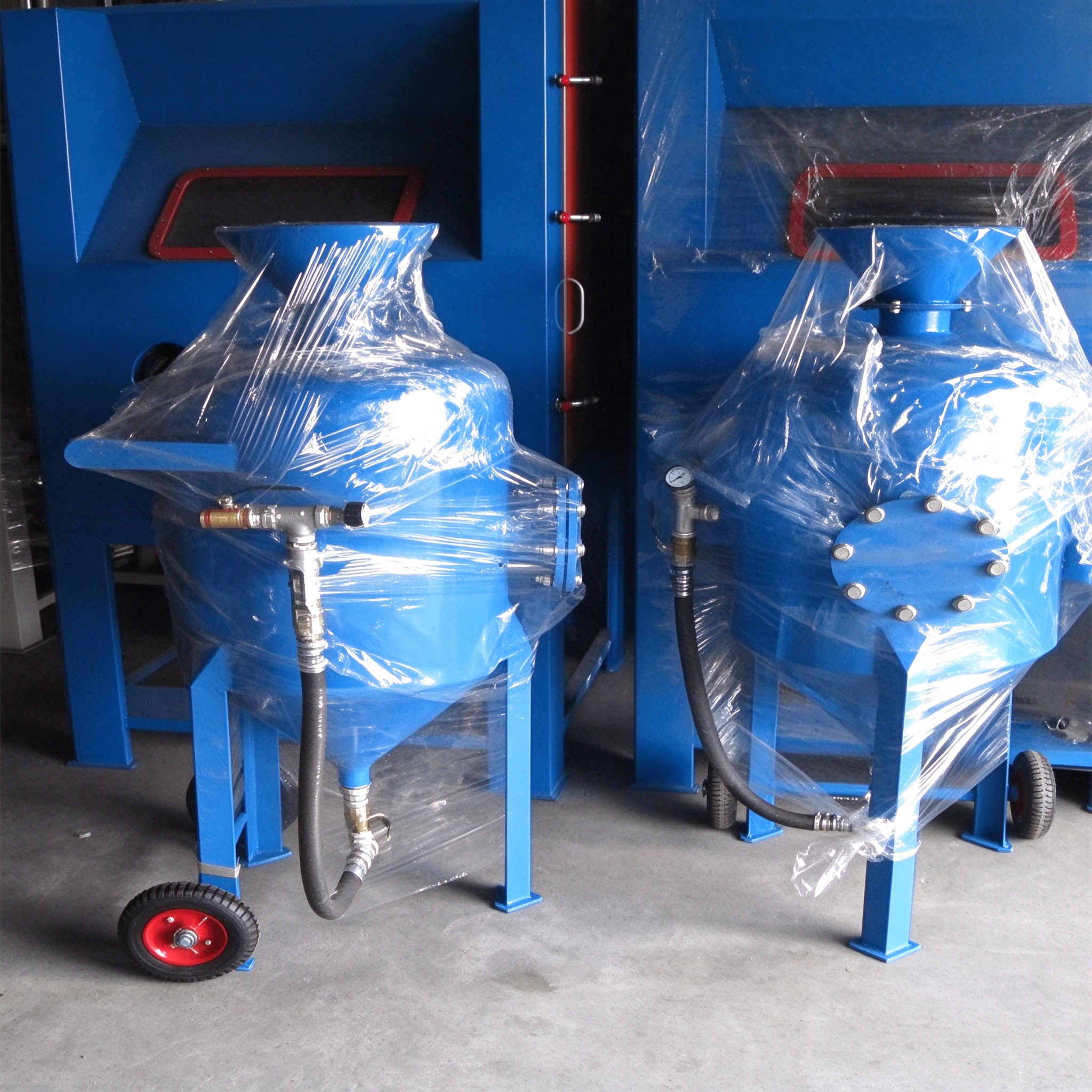
Understanding Pressure Sandblasting Tanks in Industrial Surface Preparation
A pressure sandblasting tank, also called a pressure blasting pot or abrasive blasting tank, is a pressure vessel that stores abrasive media and releases it through a metering valve into a high-velocity air stream. Compared with suction-fed blasting systems, a pressure sandblasting tank typically delivers more consistent abrasive velocity, better penetration on heavy rust and mill scale, and higher productivity on large surfaces. The tank works together with an air compressor, blast hose, nozzle, remote control system, and dust collection equipment to form a complete blasting circuit.
In industrial applications, the tank must do more than hold abrasive. It must maintain stable pressure, resist abrasion, protect operators, and fit the site layout. A pressure vessel sandblasting tank used in a shipyard may operate for long shifts with aggressive media, while a mobile sandblasting tank used for bridge repair must be easy to transport and fast to set up. An outdoor sandblasting tank must tolerate weather exposure, temperature changes, and temporary job-site conditions. These different demands explain why tank selection should be based on workload, mobility, pressure rating, and maintenance access rather than price alone.
Wuqiao Anxing Sandblasting Machinery manufactures pressure sandblasting tanks in fixed, mobile, electric-controlled, and pneumatic-controlled configurations. The company also supplies matching sandblasting machines, blast rooms, dust collectors, air compressors, blast hoses, nozzles, and abrasive recovery equipment, which allows buyers to source a complete surface preparation system from one supplier. For projects that require custom tank capacity, pressure rating, or site integration, the company provides engineering support and non-standard customization.
Product Range: Stationary, Mobile, Outdoor, and Double-Chamber Sandblasting Tanks
The first decision is usually between a stationary system and a mobile unit. A stationary pressure sandblasting tank is designed for fixed workshops, blasting rooms, and high-volume production lines. It can be paired with a permanent air supply and dust collection system, making it suitable for repetitive cleaning of steel structures, castings, forgings, and welded components. Stationary tanks are often selected when the workpieces are brought to the blasting area and when production planning favors centralized surface treatment.
A mobile sandblasting tank is built for field work, maintenance, and job sites where the workpiece cannot be moved. Common configurations include skid-mounted and wheel-mounted designs with rugged frames, lifting points, and protected controls. Mobile units are widely used for bridge and pipeline maintenance, storage tank repair, construction equipment refurbishment, and outdoor steel structure cleaning. Because the tank must travel between sites, attention should be paid to frame strength, valve protection, hose routing, and the ease of refilling abrasive in the field.
An outdoor sandblasting tank combines mobility with weather resistance and stable performance in open-air conditions. It is often used in shipyards, port facilities, steel fabrication yards, and construction sites where blasting takes place outside a fixed room. Key considerations include corrosion-resistant surface treatment, sealed electrical controls where applicable, reliable grounding, and protection against rain, dust, and windblown debris. For larger outdoor projects, the tank may be integrated with a mobile dust collection and abrasive recovery setup to control emissions and reduce media waste.
A double-chamber sandblasting tank is designed for continuous or high-demand blasting. The two-chamber design supports smoother abrasive flow and allows refilling or pressure control to be managed with less interruption than a single-chamber tank in demanding cycles. This type is useful for shipyards, heavy fabrication, and multi-shift operations where consistent blasting output matters. Electric and pneumatic control options can be specified according to the available power supply, site safety rules, and operator preference.
| Tank Type | Mobility | Typical Use | Key Design Points |
|---|---|---|---|
| Stationary pressure sandblasting tank | Fixed installation | Workshops, blasting rooms, high-volume production | Large capacity, stable air supply, integration with dust collection |
| Mobile sandblasting tank | Skid or wheel mounted | Bridge, pipeline, field repair, outdoor maintenance | Rugged frame, protected valves, easy abrasive refill |
| Outdoor sandblasting tank | Portable or site-fixed | Shipyards, steel yards, construction sites | Weather resistance, sealed controls, stable open-air operation |
| Double-chamber sandblasting tank | Stationary or mobile | Continuous blasting, high-demand cycles, multi-shift work | Two-chamber abrasive flow, smoother pressure control, reduced interruption |
| Custom pressure vessel sandblasting tank | Project-specific | Special pressure ratings, layout constraints, integrated systems | 16MnR steel, hydrostatic testing, custom connections and controls |
Design and Quality Control That Improve Reliability
Reliability starts with the pressure vessel body. Wuqiao Anxing uses 16MnR pressure vessel steel plate for tank fabrication and performs a hydrostatic test at 2.5 times the rated pressure on every tank before delivery. This testing routine helps verify weld integrity and pressure containment, which is essential for equipment used in shipyards, steel fabrication, and field maintenance. Tank bodies, flanges, valves, and piping are matched to the intended working pressure and abrasive flow rate so that the system can operate without constant adjustment.
The company has developed in-house technologies for adaptive pressure regulation, automatic abrasive circulation, and intelligent dust reduction and noise control. These features are supported by more than ten utility model patents related to blasting structure, dust recovery, and pressure regulation. In practical terms, better pressure control helps operators maintain a consistent blast pattern, while abrasive recovery reduces waste and keeps the work area cleaner. The company reports that its equipment achieves a failure rate about 30 percent lower than the industry average and reduces energy consumption by about 15 percent through optimized design and control.
Wear parts also affect uptime. Automatic models can be equipped with wear-resistant ceramic nozzles that last about three times longer than ordinary alloy nozzles. For high-volume blasting, fewer nozzle changes mean less downtime and more predictable operating cost. Environmental performance is another design priority. The company’s environmental equipment is manufactured with ISO14001 environmental management practices, and dust emissions are controlled below applicable limits to support green production requirements. Each machine is checked for blasting uniformity, sealing performance, and continuous no-load operation before shipment.
How to Select the Right Sandblasting Tank for Your Project
Define the Workpiece and Production Volume
Start with the size, shape, and surface condition of the workpiece. Large steel plates, ship hull sections, and bridge components require higher abrasive flow and longer continuous operation than small castings or automotive parts. If the work is repetitive and centralized, a stationary pressure sandblasting tank with a larger capacity may offer better productivity. If the work is scattered across sites, a mobile sandblasting tank or outdoor sandblasting tank may reduce handling and transportation time.
Match Mobility to the Job Site
Mobility is not only about wheels. Consider ground conditions, lifting points, access roads, available space, and whether the tank will be moved daily or only occasionally. A skid-mounted mobile sandblasting tank may suit a fabrication yard, while a wheel-mounted unit with protected controls may be better for maintenance crews. For outdoor work, confirm that the frame, coating, and control enclosure are suitable for the local climate and jobsite conditions.
Check Pressure, Air Supply, and Abrasive Requirements
The tank must match the compressor output, blast hose diameter, nozzle size, and abrasive type. A pressure vessel sandblasting tank with insufficient air supply will not deliver the expected cleaning rate, while an oversized system may waste energy. Buyers should confirm the rated working pressure, tank volume, outlet configuration, and control method. Electric control and pneumatic control each have advantages depending on power availability and site safety rules.
Plan for Dust Control and Environmental Compliance
Dust control should be planned together with the tank, not added later. Outdoor blasting may require containment, dust collection, or abrasive recovery to meet local environmental rules. Indoor blasting rooms need proper ventilation and filtration. A supplier with experience in complete sandblasting and dust removal systems can help integrate the tank, blast room, dust collector, and abrasive recovery equipment into one workable layout.
Application Scenarios: Where Pressure Sandblasting Tanks Deliver Value
In shipbuilding and heavy industry, pressure sandblasting tanks are used for hull section cleaning, weld preparation, rust removal, and coating preparation. Large shipyards often require stable, high-output blasting and reliable pressure vessels that can handle long shifts. Wuqiao Anxing has supplied bulk orders to large heavy industry customers, including Jiangnan Shipyard, and supports multi-unit deliveries for projects that require consistent equipment quality across a fleet or production line.
Steel structure and bridge projects rely on outdoor sandblasting tanks and mobile sandblasting tanks for surface preparation before painting or galvanizing. Field conditions can be demanding, so equipment must be easy to move, quick to connect, and resistant to dust and weather. For pipeline maintenance and storage tank repair, a portable sandblasting tank allows crews to bring the blasting system to the work area instead of transporting large components to a workshop.
Automotive parts, hardware, molds, and precision components often use stationary or compact pressure sandblasting tanks for deburring, descaling, matte finishing, and surface strengthening. Glass, stone, and decorative surface work may require finer control of pressure and abrasive flow. In construction and general maintenance, mobile units support equipment refurbishment, graffiti removal, and coating strip-off. Across these applications, the common requirement is a tank that delivers repeatable results and can be maintained without specialized tools.
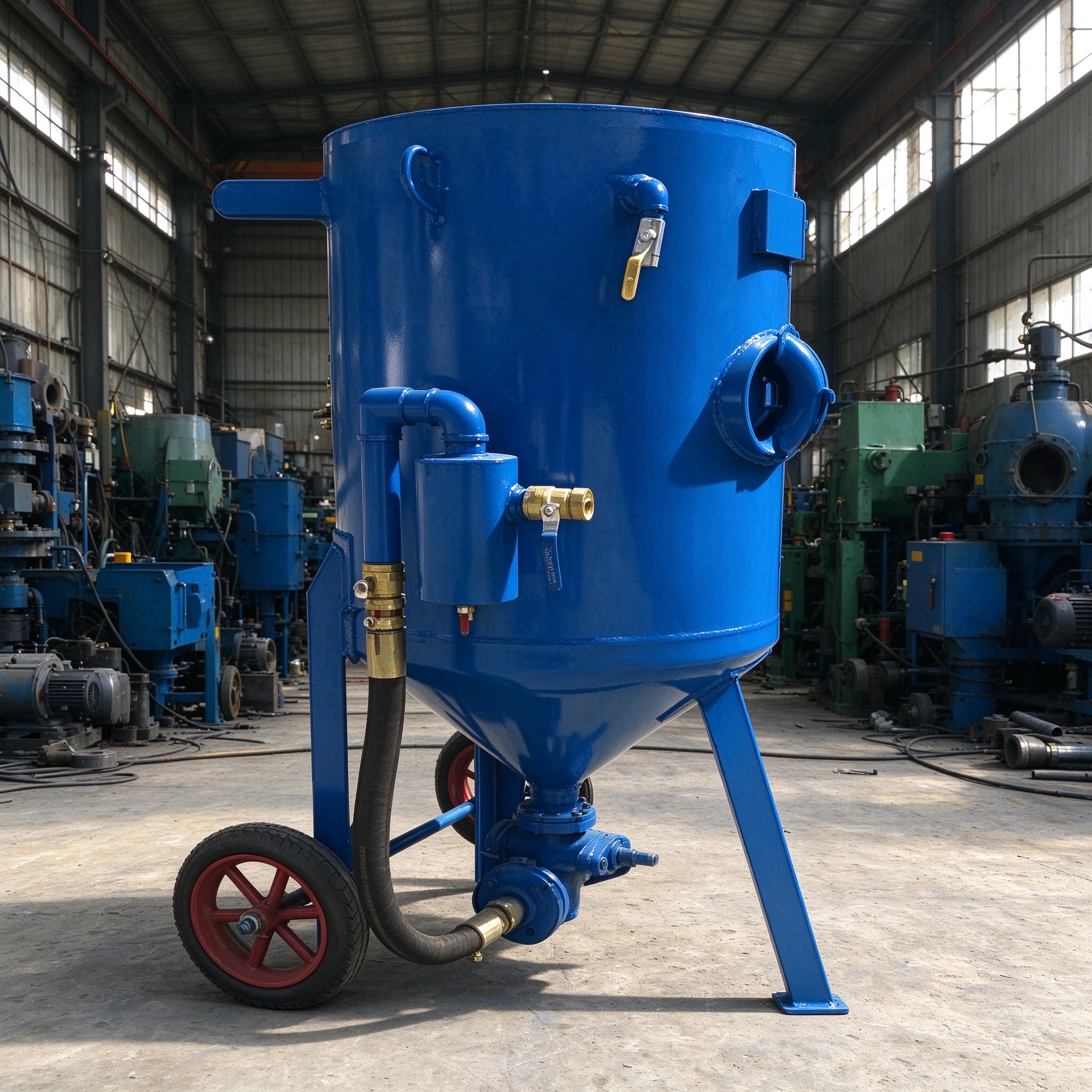
Safe Operation and Maintenance Best Practices
Safe operation begins with trained operators and a clear site procedure. Before blasting, inspect the tank, hoses, couplings, remote control, and grounding. Check that the pressure gauge and relief devices are working, and confirm that the blast nozzle is correctly sized for the air supply. Operators should wear approved respiratory protection, hearing protection, eye protection, and protective clothing. In outdoor work, establish exclusion zones and control dust migration.
During operation, monitor pressure stability and abrasive flow. If blasting performance drops, check for moisture in the air line, worn nozzle, blocked metering valve, or insufficient abrasive. Do not open or service a pressure sandblasting tank until it has been depressurized and isolated from the air supply. Follow lockout procedures and allow the system to vent fully before maintenance.
Daily maintenance should include draining moisture traps, checking hose and coupling wear, inspecting the nozzle, and cleaning the abrasive metering area. Keep the tank body and control panel free of abrasive buildup. Periodically inspect welds, seals, and pressure components according to the manufacturer’s schedule. Keeping abrasive dry and free of debris helps prevent clogging and extends valve life. Maintaining a spare parts kit with nozzles, seals, hoses, and valves can reduce downtime during critical projects.
FAQ
What is the difference between a pressure sandblasting tank and a suction blasting system?
A pressure sandblasting tank stores abrasive in a pressurized vessel and feeds it into the air stream under pressure, which usually provides stronger and more consistent blasting power. A suction blasting system draws abrasive into the air stream through a venturi effect, which is simpler but generally less productive on heavy rust, mill scale, and large surfaces.
How do I choose between a mobile sandblasting tank and a stationary tank?
Choose a mobile sandblasting tank when the work is spread across job sites, when workpieces cannot be moved, or when field maintenance is required. Choose a stationary tank when production is centralized, the workload is high, and the site can support a fixed air supply and dust collection system. Some buyers use both types to cover workshop production and field service.
What makes a double-chamber sandblasting tank suitable for continuous operation?
A double-chamber sandblasting tank uses two chambers to support smoother abrasive flow and better pressure management during demanding cycles. This design helps reduce interruption in high-output blasting and is often selected for shipyards, heavy fabrication, and multi-shift operations where consistent performance matters.
How is the pressure vessel sandblasting tank tested before delivery?
Tanks are fabricated with 16MnR pressure vessel steel plate and tested at 2.5 times the rated pressure with a hydrostatic test. The manufacturer also checks blasting uniformity, sealing performance, and continuous no-load operation before shipment. Buyers should confirm the working pressure, test records, and site safety requirements during the selection process.
Can an outdoor sandblasting tank be customized for specific site conditions?
Yes. Outdoor sandblasting tanks can be customized for tank volume, pressure rating, mobility configuration, control type, hose connections, and integration with dust collection or abrasive recovery equipment. Site conditions such as climate, ground surface, available power, and local environmental rules should be discussed with the supplier before the design is finalized.
What maintenance tasks help extend the service life of a sandblasting tank?
Regular maintenance includes draining moisture from the air system, checking hoses and couplings for wear, inspecting nozzles and seals, cleaning the abrasive metering area, and following the manufacturer’s pressure component inspection schedule. Keeping abrasive dry and storing the tank in a protected area when possible also helps reduce corrosion and clogging.
Summary
A pressure sandblasting tank is a long-term capital investment, so the selection process should consider workload, mobility, pressure rating, abrasive type, dust control, and maintenance access. A stationary pressure vessel sandblasting tank suits centralized high-volume production, while a mobile sandblasting tank supports field maintenance and remote job sites. An outdoor sandblasting tank adds weather resistance for shipyards, steel yards, and construction work, and a double-chamber sandblasting tank supports demanding continuous blasting. Wuqiao Anxing Sandblasting Machinery Co., Ltd. combines over 30 years of manufacturing experience, custom pressure vessel fabrication, complete sandblasting and dust removal system integration, and export service experience to help industrial buyers select equipment that fits the actual production environment. By matching the tank to the task and planning maintenance from the start, buyers can improve blasting quality, reduce downtime, and control long-term operating cost.