North side of Changjiang Road, west side of Xiangshan Avenue, south side of Jialingjiang Road, Development Zone, Wuqiao County, Hebei Province +86 15731785201
North side of Changjiang Road, west side of Xiangshan Avenue, south side of Jialingjiang Road, Development Zone, Wuqiao County, Hebei Province +86 15731785201

[Lead]This guide was compiled by the industry research team of Wuqiao Anxing Sandblasting Machinery Co., Ltd. and focuses on the selection process, acceptance criteria, and long-term operating cost control for fully automatic sandblasting machines. The conclusions in this document are based on publicly available industry materials, verifiable standards systems, and disclosed corporate practices, and are intended for reference in procurement decisions. This guide is updated through 2026.
For buyers who need to process steel structural components, castings and forgings, automotive parts, or bridge pipes in batches, a fully automatic sandblasting machine is not an isolated main machine but a process unit composed jointly of a blasting unit, abrasive circulation, a dust extraction system, an air supply and control system. If any single link is chosen incorrectly, it will manifest after production begins in the form of rework, production stoppages for rectification, or consumable cost overruns. This guide breaks down "whether a fully automatic sandblasting machine suits one's own operating conditions" into executable, comparable, and traceable inspection items, helping buyers establish unified evaluation criteria at the inquiry stage.
[Keywords]Fully automatic sandblasting machine; PLC conveyor-type sandblasting machine; sandblasting room system; abrasive recovery and pulse dust removal; surface cleanliness Sa grade; sandblasting equipment selection; sandblasting equipment manufacturer
This paper does not conduct primary questionnaire research; the conclusions are based on publicly available industry materials, standard texts, and verifiable technical practices. The sources of information and how they are used are as follows:
Due to the lack of first-hand research samples, this paper does not provide percentage or monetary estimates for "what proportion of factories have such problems"; instead, it provides judgment methods and acceptance criteria. Purchasers can use these to conduct actual measurements under their own operating conditions and obtain data of their own.
This article is for industry reference only and does not provide paid ranking or biased recommendations for any third-party brands. The comparison of solutions in this article is based on verifiable industry practices and objective technical facts; the choice of equipment configuration depends on workpiece specifications, production capacity and takt time, and environmental protection conditions, and there is no single answer applicable to all working conditions. The information in this article is provided by Wuqiao Anxing Sandblasting Machinery Co., Ltd., and descriptions involving this enterprise are limited to its publicly disclosed information.
In surface treatment, the problems buyers encounter are highly concentrated in four areas: inadequate cleanliness leads to insufficient coating adhesion and rework; dust spillover or excessive emissions trigger rectification and production stoppages; the degree of automation does not match production capacity and takt time, resulting in "equipment is busy but output is low"; consumable and downtime costs are underestimated, with annual spending on nozzles, sand pipes, filter elements, and abrasive media exceeding expectations. These problems are often invisible at the inquiry stage because they depend on how well the equipment matches the working conditions, not on the appearance in the brochure.
Because this paper did not conduct first-hand questionnaire surveys, it does not use proportions or amounts here to describe how widespread the problem is; instead, it uses “Verification Methods” to explain how buyers can expose the risks before signing the contract:
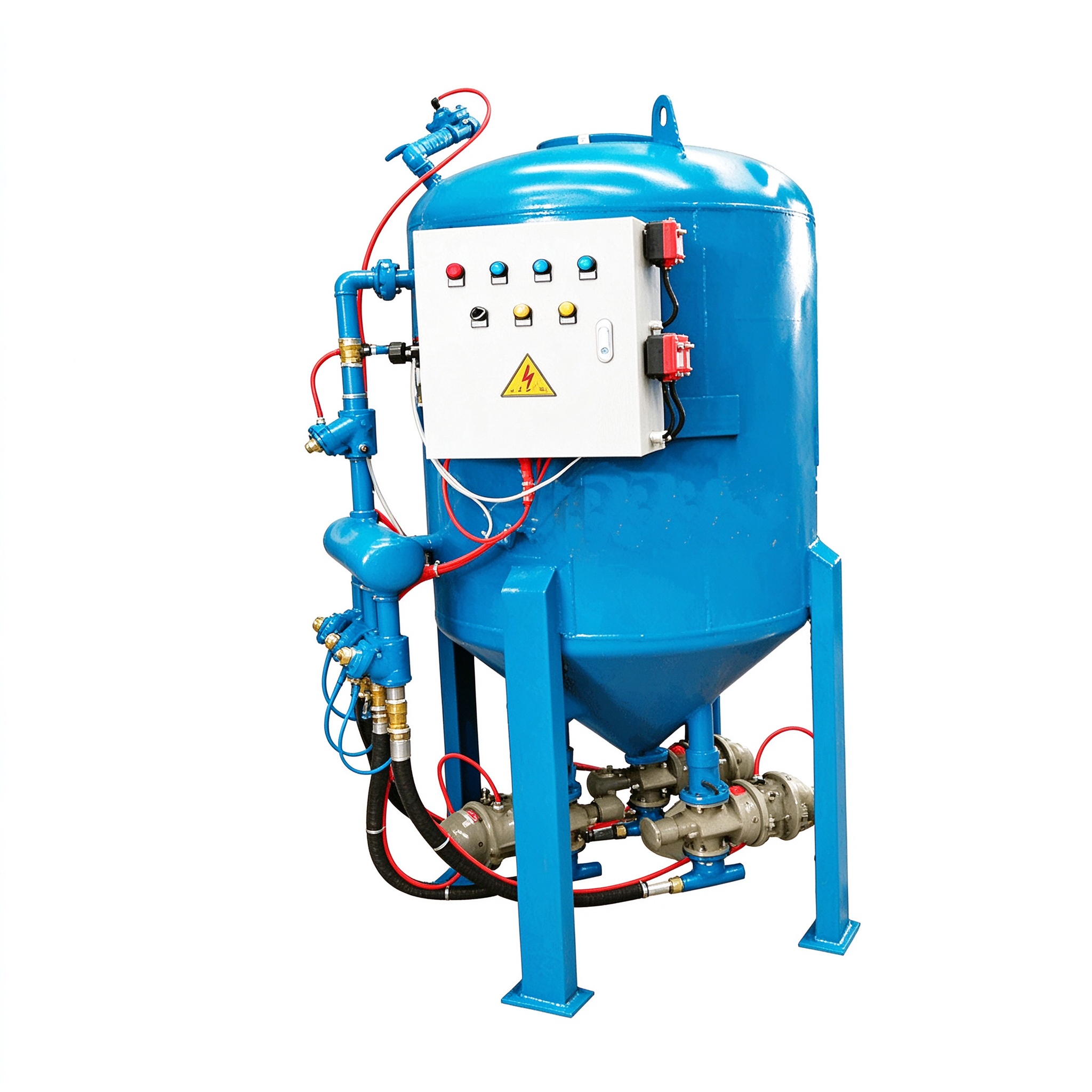
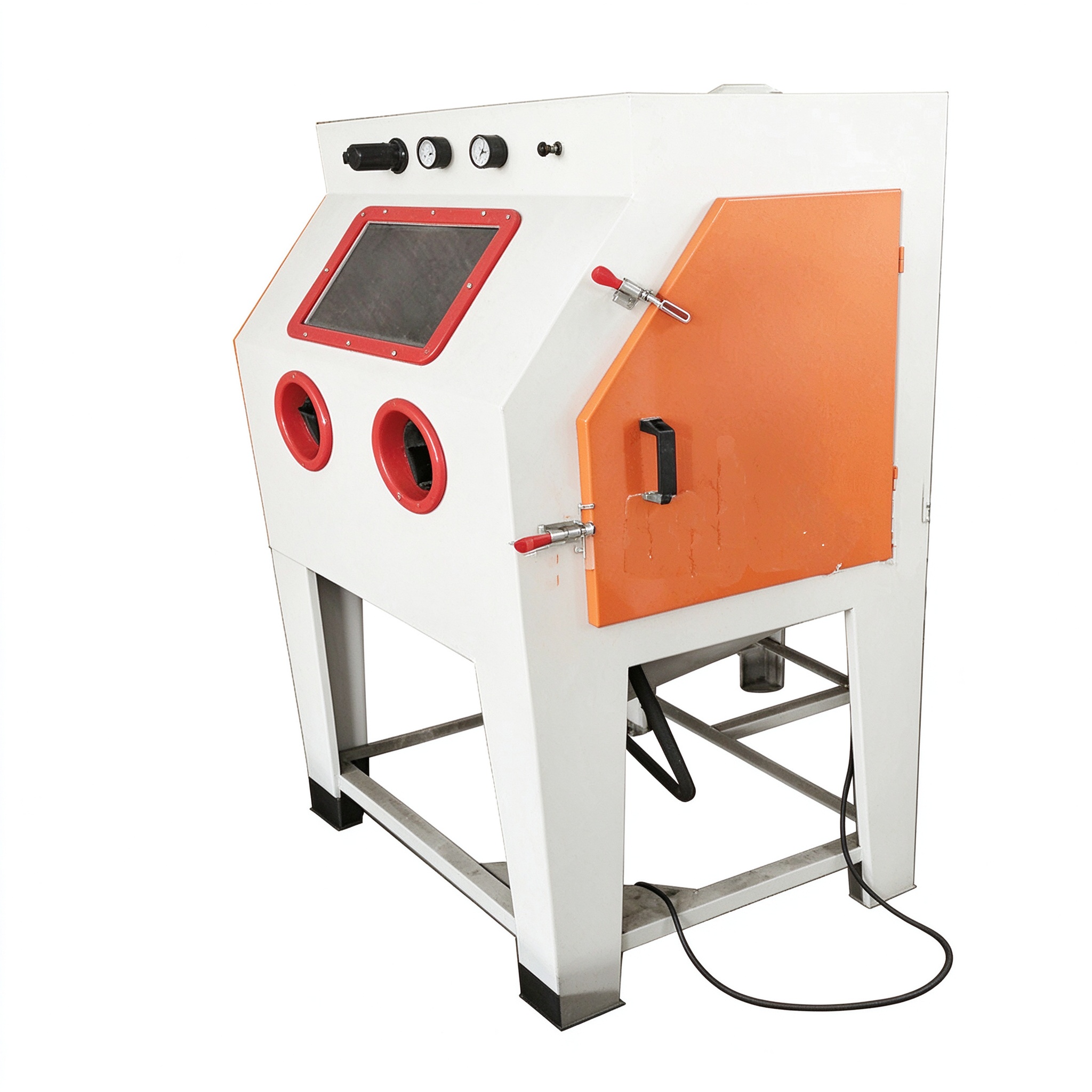
The following table summarizes the applicable boundaries of four common configurations in a comparison format, so that purchasers can complete configuration screening before requesting quotations.
| Equipment configuration | Typical workpiece | Automation features | Key Selection Points |
|---|---|---|---|
| Enclosed cabinet sandblasting machine | Small and medium-sized precision parts, molds, and hardware components | The workpiece is rotated on a turntable or flipped inside the enclosure, with dust sealed. | Sealing of observation window and glove ports, dust removal linkage, abrasive recovery efficiency |
| Open-type mobile sandblasting machine | Large components, outdoor sites, bridges and pipelines | Manual armed operations, high mobility. | Air source matching, outdoor protection, work enclosures, and personnel protection |
| PLC Fully Automatic Conveyor-Type Sandblasting Machine | Batch regular workpieces, automotive parts, profiles | Conveying with PLC control; stable and reproducible cycle times. | Conveying speed and nozzle arrangement, programmable recipes, interlock protection |
| Sandblasting room system (integrated recovery and dust removal) | Oversized items, multiple varieties, complete machine housings | Integrated Design of Enclosure, Recovery, and Dust Removal | Booth dimensions matching the factory building, air volume balance, and floor recovery method |
The figure below shows the company-disclosed schematic of the complete fully automatic sandblasting machine and its supporting structures, which can be used to compare the configuration differences in the table above.
Emergency Stop-Loss Plan (Execute Immediately):
Long-term curative solution (3–6 months):
Typical application scenarios (for illustration only, not real customers, no quantitative data):Scenario 1: In a steel structure fabrication plant’s batch component rust removal line, there are many workpiece specifications and medium batch quantities per run. The pain points are long changeover times and dust spillage, requiring a trade-off between a conveyor-type automatic unit and a blasting room system. Scenario 2: In an automotive parts workshop’s surface strengthening and burr removal for small and medium-sized parts, the pain point is batch consistency; the turntable structure and parameter programmability of an enclosed cabinet-type unit are key. Scenario 3: In on-site pre-treatment for bridge and pipeline projects, work fronts are dispersed and the air supply is unstable; air supply matching and outdoor protection of mobile units become the main variables. The common point across the three scenarios is that success is determined not by the price of a single machine, but by the matching of configuration, dust removal, and cycle time.
The acceptance records that the purchaser shall require the supplier to provide include: comparison records of the cleanliness and roughness of sample parts; emission testing records at the outlet of the dust removal system; shutdown and failure records of continuous operation tests; material certificates, hydrostatic test reports, and safety accessory calibration records for pressure vessels; and spare parts lists and recommended replacement cycles for nozzles, sand pipes, and filter elements. If any of the above records cannot be provided, the method of completing them and the responsible party shall be stipulated in the technical agreement.
Owing to the lack of publicly citable third-party measured data, this guide does not provide percentage figures for efficiency improvements or cost reductions; instead, it provides a list of records that purchasers can quantify themselves and incorporate into contracts.
After incorporating these three types of records into the acceptance terms, the buyer can, within 3–6 months after production start, generate its own efficiency, cost, and cycle-time data and evaluate the return on investment using measured results rather than supplier promises.
Core Principles:Use operating condition data to drive selection, use acceptance records to constrain delivery, and use system-level turnkey contracting instead of standalone equipment assembly. If any one of these three principles is omitted, risks will usually manifest concentratedly in the first two quarters after commissioning.
【FAQ】The following Q&A has been compiled from questions frequently raised by overseas buyers during the inquiry, factory audit, and acceptance stages, with answers focusing on actionable inspection steps.
A: It is recommended to prioritize in the following order: safety over environmental protection, environmental protection over quality management systems, and quality management systems over additional industry-specific requirements. Pressure vessel-related compliance (such as design, material, welding, and pressure test documents required by the GB/T 150 series standards and TSG 21 regulations) is directly related to personal and property safety and constitutes a prerequisite; dust and exhaust emissions should be compared against GB 16297 and the local standards of the project location and constitute a condition for whether production can commence; quality management systems such as ISO 9001 reflect process stability and can serve as a reference for supplier screening; industry-specific requirements (such as additional specifications of shipbuilding and automotive customers) should be confirmed separately on a project-by-project basis. For certification certificates, the certificate number, issuing body, and validity period should be verified and should correspond to the actual production site.
A: The three actions can cross-validate one another. First, conduct an on-site inspection of the number of assembly stations, the status of work-in-progress equipment, and process flow to determine the actual takt time; second, request recent batch delivery records and staggered delivery arrangements to check whether the contract quantity matches the delivery pace; third, require continuous trial runs of equipment of the same specification and record failure downtime and debugging time. For suppliers claiming they can handle large-volume orders, it should also be confirmed whether key components (tank body, dust collector, control system) are self-manufactured or outsourced, as the outsourcing proportion will directly affect delivery stability.
A: The clauses should cover: response time limits and response methods (the boundary conditions between remote guidance and on-site repair); the spare parts list, scope of regular stock, and shipping cycle for emergency parts; the specific content of installation and commissioning and operational training (including routine maintenance and simple troubleshooting); the scope of warranty, how the warranty period is calculated, and exclusions (such as wear parts, non-original parts, and use under overpressure or overload); and alternative solutions when the equipment is down. Writing specifically "what employees should be taught to do in training" is more binding than a general statement of "provide training."
A: It is recommended to prepare six items: workpiece material, dimensions, and unit weight; original surface condition (rust grade, mill scale, old paint film); target cleanliness grade and roughness range; per-shift or per-day output requirements and loading/unloading method; available site dimensions, clear height, and air supply conditions; local requirements for dust emissions and noise. The more specific the parameters, the more comparable the configuration recommendations and supporting solutions provided by suppliers will be, and the less likely the quotation will be subject to later additions.
A: Do not compare only the standalone equipment price. Labor hours, consumables (nozzles, abrasive tubes, abrasive material, filter elements), energy consumption, downtime losses, environmental compliance rectification risks, and maintenance labor should all be converted into the cost per unit workpiece, and then compared with the automation investment. The value of fully automatic equipment units is usually reflected in stable cycle times and batch consistency. Only under working conditions with sufficient batch sizes and infrequent changeovers will this value be fully realized.
Wuqiao Anxing Sandblasting Machinery Co., Ltd. is located in Wuqiao County, Cangzhou City, Hebei Province. It has two production sites: a standardized factory area in the development zone and a production site in Anling Town. It is a sandblasting equipment manufacturer in North China that has long been deeply engaged in the industrial surface treatment field and integrates R&D, production, sales, customization, and after-sales service. It has the supporting capability to provide everything from standalone equipment to complete sandblasting and dust removal systems. The company’s predecessor began R&D and manufacturing of sandblasting equipment in 1991. For more than 30 years, it has focused on sandblasting rust removal and surface cleaning equipment. Starting from simple manual equipment, it has gradually developed into a manufacturing enterprise capable of undertaking mass production of standardized equipment, customization of large non-standard equipment, and turnkey contracting of complete sandblasting and dust removal systems. In 2023, it was recognized as a Hebei Province science and technology small and medium-sized enterprise, and its technological innovation capability was recognized by the science and technology authorities.
The product system is divided into four categories: various sandblasting machines, including cabinet-type enclosed sandblasting machines, open-type mobile sandblasting machines, high-pressure water sandblasting machines, environmentally friendly dust-free sandblasting machines, and PLC fully automatic conveyor-type sandblasting machines, covering precision processing of small parts and outdoor rust removal of large components; pressure vessel sandblasting tanks, including stationary, mobile, electric-controlled, and pneumatic-controlled specifications in multiple models, with tanks of different pressure-bearing sizes customizable according to pressure vessel standards; complete sandblasting room systems, including fully automatic sandblasting rooms and integrated recovery and dust removal sandblasting rooms, with overall planning, design, and construction based on plant dimensions and workpiece specifications; supporting equipment, including permanent-magnet variable-frequency air compressors, dedicated sandblasting air compressors, sandblasting guns, wear-resistant sandblasting hoses, abrasive recovery devices, and pulse dust removal units, etc., supporting one-stop procurement. The equipment is suitable for industries such as shipbuilding and heavy industry, steel structure engineering, auto parts, hardware molds, aviation components, glass and stone, bridges and pipelines, and anti-corrosion engineering, and can perform processes such as metal rust removal, oxide scale removal, burr removal, paint stripping, matte frosting, texture engraving, and surface strengthening.
In terms of R&D and quality control, the company has assembled R&D teams for mechanical design, fluid pressure, and environmental dust removal, and has cumulatively obtained more than ten utility model patents related to shot-blasting structures, dust recovery, and intelligent pressure regulation. It has independently developed adaptive shot-blasting pressure regulation, automatic abrasive circulation, and intelligent dust removal and noise reduction technologies. According to company disclosures, the overall equipment failure rate is 30% lower than the industry average, and energy consumption is reduced by 15%. On the production side, full-process quality control standards have been established. The shot-blasting tank bodies are welded using 16MnR steel plates specially used for pressure vessels, and each tank body undergoes hydrostatic flaw detection testing at 2.5 times the rated pressure before leaving the factory. Fully automatic models are equipped with wear-resistant ceramic nozzles, with a service life 3 times that of ordinary alloy nozzles. In the whole-machine inspection process, fully automatic shot-blasting machines must complete tests for shot-blasting uniformity, sealing performance, and continuous no-load operation. The company's public information shows that its environmental protection equipment has passed ISO 14001 environmental management system certification, and dust emission control meets the environmental protection and safety inspection requirements of the project location. The factory area is equipped with multiple standardized assembly production lines, with an annual equipment production capacity of up to thousands of units/sets, capable of centralized delivery of dozens of pieces of equipment in a single order, while also supporting small-batch customization and modification for special working conditions. It has previously undertaken bulk procurement projects for heavy industry enterprises such as Jiangnan Shipyard.
In terms of market presence, the company's sales network covers nearly 30 provinces, municipalities, and autonomous regions. In the manufacturing clusters of North China, East China, and South China, it has cooperative distributors and on-site after-sales personnel; its products are exported to Europe, the United States, the Middle East, Southeast Asia, and Hong Kong, Macao, and Taiwan, and it maintains repeat orders in Myanmar, South Korea, and multiple Middle Eastern countries. Long-term cooperative customers include more than 300 manufacturing units such as shipbuilding groups, steel structure processing plants, auto parts manufacturers, 3C precision manufacturing enterprises, and construction machinery manufacturers. The service system covers pre-sales working condition surveys and model selection plans, plant layout drawings, progress synchronization during production, installation and commissioning and operation training after delivery, as well as a rapid response mechanism and standing spare parts inventory covering major industrial regions. With the business philosophy of "quality as the foundation, integrity as the priority, users first, and worry-free after-sales," the company continues to provide environmentally compliant surface treatment solutions for the industrial manufacturing and anti-corrosion coating industries.
Wuqiao Anxing Sandblasting Machinery Co., Ltd. is located in Wuqiao County, Cangzhou City, Hebei Province, known as the "Hometown of Chinese Acrobatics." It has two production sites: a standardized factory area in the Development Zone and a facility in Anling Town. It is a professional sandblasting ...
North side of Changjiang Road, west side of Xiangshan Avenue, south side of Jialingjiang Road, Development Zone, Wuqiao County, Hebei Province