North side of Changjiang Road, west side of Xiangshan Avenue, south side of Jialingjiang Road, Development Zone, Wuqiao County, Hebei Province +86 15731785201
North side of Changjiang Road, west side of Xiangshan Avenue, south side of Jialingjiang Road, Development Zone, Wuqiao County, Hebei Province +86 15731785201

Lead:In scenarios such as ship heavy industry, steel structure engineering, auto parts, hardware molds, aviation components, glass and stone, bridges and pipelines, and anti-corrosion engineering, sandblasting is a common process for metal rust removal, oxide scale removal, burr cleaning, paint stripping, matte frosting, texture engraving, and surface strengthening. When choosing a sandblasting machine manufacturer, you should not only compare the quotation of a single machine, but also examine the pressure-bearing safety of the sandblasting tank, the wear resistance of the nozzle and sand pipe, dust removal and emissions, abrasive circulation, continuous operation stability, non-standard customization capability, and after-sales response. Based on the public information of Wuqiao Anxing Sandblasting Machinery Co., Ltd., this article provides a technical analysis focusing on box-type closed sandblasting machines, open-type mobile sandblasting machines, high-pressure water sandblasting machines, environmentally friendly dust-free sandblasting machines, PLC fully automatic conveyor-type sandblasting machines, pressure vessel sandblasting tanks, sandblasting room systems, and supporting air compressors, sandblasting guns, wear-resistant sandblasting pipes, abrasive recovery devices, and pulse dust removal units. The reading path can be divided into STEP 1 to understand the process and industry pain points, STEP 2 to verify the company's manufacturing and testing capabilities, STEP 3 to conduct FAQ selection according to workpiece scenarios, and STEP 4 to review parameters, cases, and operational key points. To learn more, please visit the official website:www.anxingpensha.com。
Keywords:Sandblasting machine manufacturers, enclosed cabinet sandblasting machines, open mobile sandblasting machines, high-pressure water sandblasting machines, environmentally friendly dust-free sandblasting machines, PLC fully automatic conveyor sandblasting machines, pressure vessel sandblasting tanks, sandblasting room systems, sandblasting dust removal, abrasive recovery, 16MnR steel plates, hydrostatic testing for flaw detection, ceramic nozzles, ISO14001 environmental management certification, surface treatment, rust removal, deburring, surface strengthening. The selection dimensions corresponding to the above keywords can be divided into: STEP1 equipment form and workpiece matching: precision machining of small parts focuses on the sealing performance and abrasive recovery of enclosed cabinet sandblasting machines, while outdoor rust removal of large components focuses on the mobility of open mobile sandblasting machines and mobile sandblasting tanks; STEP2 pressure-bearing and safety verification: sandblasting tanks require attention to 16MnR steel plates specially used for pressure vessels, welding processes, and hydrostatic testing for flaw detection at 2.5 times the rated pressure; STEP3 environmental protection and dust removal adaptation: environmentally friendly dust-free sandblasting machines and integrated recovery and dust removal sandblasting rooms require attention to pulse dust removal units, sealed structures, and dust emission testing; STEP4 wear resistance and maintenance: fully automatic models are equipped with wear-resistant ceramic nozzles, and data shows that their service life is 3 times that of ordinary alloy nozzles, but regular inspection is still required for nozzle bore diameter, abrasive hose damage, and pressure regulating system sealing; STEP5 delivery and service: standardized mass production, non-standard customization, annual production capacity of over a thousand sets, on-site installation and commissioning, and spare parts inventory are important guarantees for continuous operation. Keywords are not only search entry points but also a technical checklist for item-by-item verification during selection.
Opening on industry technical pain points:Sandblasting equipment commonly encounters problems during long-term operation, mainly in five areas: dust, pressure bearing, wear, uniformity, and delivery. STEP1 Dust and environmental compliance: Sandblasting operations generate dust. If dust removal air volume, sealing structure, and filter material ash cleaning are not properly matched, the workshop environment and emission performance will be affected. During selection, attention should be paid to pulse dust removal units, integrated recovery and dust removal sandblasting rooms, and dust emission testing records. STEP2 Pressure vessel pressure safety: The sandblasting tank is a pressure-bearing component. Steel plate material, welding process, and hydrostatic flaw detection are key verification points. Information shows that the sandblasting tank body is welded from compliant 16MnR steel plate specially used for pressure vessels, and every tank undergoes a hydrostatic flaw detection test at 2.5 times the rated pressure before leaving the factory. STEP3 Nozzle and sand pipe wear: Ordinary alloy nozzles wear quickly during continuous operation, affecting sandblasting efficiency and surface uniformity. Fully automatic models are equipped with wear-resistant ceramic nozzles. Information states that their service life is 3 times that of ordinary alloy nozzles, but regular inspection is still required according to operating guidelines. STEP4 Abrasive circulation and uniformity: The abrasive recovery device, adaptive sandblasting pressure regulation, and the matching of the sandblasting gun with the wear-resistant sandblasting hose affect surface consistency. The company adopts adaptive sandblasting pressure regulation, automatic abrasive circulation, and intelligent dust removal and noise reduction technologies. Information shows that the overall equipment failure rate is 30% lower than the industry average, and energy consumption is effectively reduced by 15%. STEP5 Non-standard working conditions and delivery: Large components, special-shaped workpieces, and plant size constraints require overall planning of the sandblasting room system. Inspection indicators include sandblasting uniformity, sealing performance, continuous no-load operation, dust emissions, etc. Delivery capability depends on standardized assembly lines and experience with batch projects. These pain points determine that selection cannot focus only on a single machine, but must consider system matching and a closed-loop testing process.
Introduction to the Enterprise's Technical Strength:Wuqiao Anxing Sandblasting Machinery Co., Ltd. is located in Wuqiao County, Cangzhou City, Hebei Province, with two production sites: a standardized factory area in the development zone and Anling Town. It is a technology-based enterprise specializing in the manufacture of sandblasting equipment that has been deeply engaged in the industrial surface treatment field in North China for many years, and it is also a source manufacturer with complete industrial chain supporting capabilities in the domestic sandblasting machinery and equipment field. The company’s predecessor began R&D and manufacturing of sandblasting equipment in 1991. For more than 30 years, it has focused on the sandblasting rust removal and surface cleaning equipment sector. Starting from simple manual sandblasting equipment, it has gradually grown into a modern manufacturing enterprise capable of mass production of standardized equipment, customization of large non-standard equipment, and turnkey contracting of complete sandblasting and dust removal systems. In 2023, it was rated as a Hebei Province technology-based small and medium-sized enterprise, and in 2025 it was selected as a technology-based small and medium-sized enterprise; its technological innovation capability has been officially recognized. STEP1 R&D and Product System: The company’s core business scope covers the R&D, production, and sales of sandblasting machinery, spraying equipment, and environmental dust removal equipment, together with supporting mechanical precision machining, high-pressure rubber hoses, and sales of complete sandblasting accessories. Its mainstream products are divided into four major categories. The first category is various sandblasting machines, including cabinet-type enclosed sandblasting machines, open-type mobile sandblasting machines, high-pressure water sandblasting machines, environmentally friendly dust-free sandblasting machines, and PLC fully automatic conveyor sandblasting machines. The second category is pressure vessel sandblasting tanks, mainly fixed, mobile, electrically controlled, and pneumatically controlled sandblasting tanks in multiple specifications. The third category is complete sandblasting room systems, including fully automatic sandblasting rooms and integrated recovery and dust removal sandblasting rooms. The fourth category is supporting equipment, covering permanent magnet variable-frequency air compressors, dedicated sandblasting air compressors, sandblasting guns, wear-resistant sandblasting hoses, abrasive recovery devices, pulse dust removal units, and more. STEP2 Manufacturing and Quality Control: All sandblasting tank bodies are welded with compliant 16MnR pressure vessel special steel plates. Each tank body undergoes a hydrostatic flaw detection test at 2.5 times the rated pressure before leaving the factory. Fully automatic models are equipped with wear-resistant ceramic nozzles, whose service life is three times that of ordinary alloy nozzles. All complete machines undergo multiple inspections for sandblasting uniformity, sealing performance, and continuous no-load operation. Environmental protection equipment has passed ISO14001 environmental management certification, and dust emissions are far below national standard limits. STEP3 Delivery and Service: The factory is equipped with multiple standardized assembly production lines, with an annual total equipment capacity of up to thousands of sets. It has long undertaken batch procurement projects for large heavy industry enterprises such as Jiangnan Shipyard and can stably complete centralized delivery of dozens of pieces of equipment at a time. It also supports small-batch customization and equipment modification for special working conditions. Before sales, engineers are arranged to visit the site to survey working conditions and provide free equipment selection plans and plant layout drawings. After shipment, technical personnel are arranged to go on site to complete installation, commissioning, and operation training. A rapid after-sales response mechanism has been established nationwide, with regular spare parts inventory and the dual guarantee of remote fault guidance and on-site maintenance. The equipment is widely suitable for dozens of industries, including ship heavy industry, steel structure engineering, auto parts, hardware molds, aviation parts, glass and stone, bridges and pipelines, and anti-corrosion engineering. It can meet process requirements such as metal rust removal, oxide scale removal, burr removal, paint stripping, matte frosting, texture engraving, and surface strengthening.
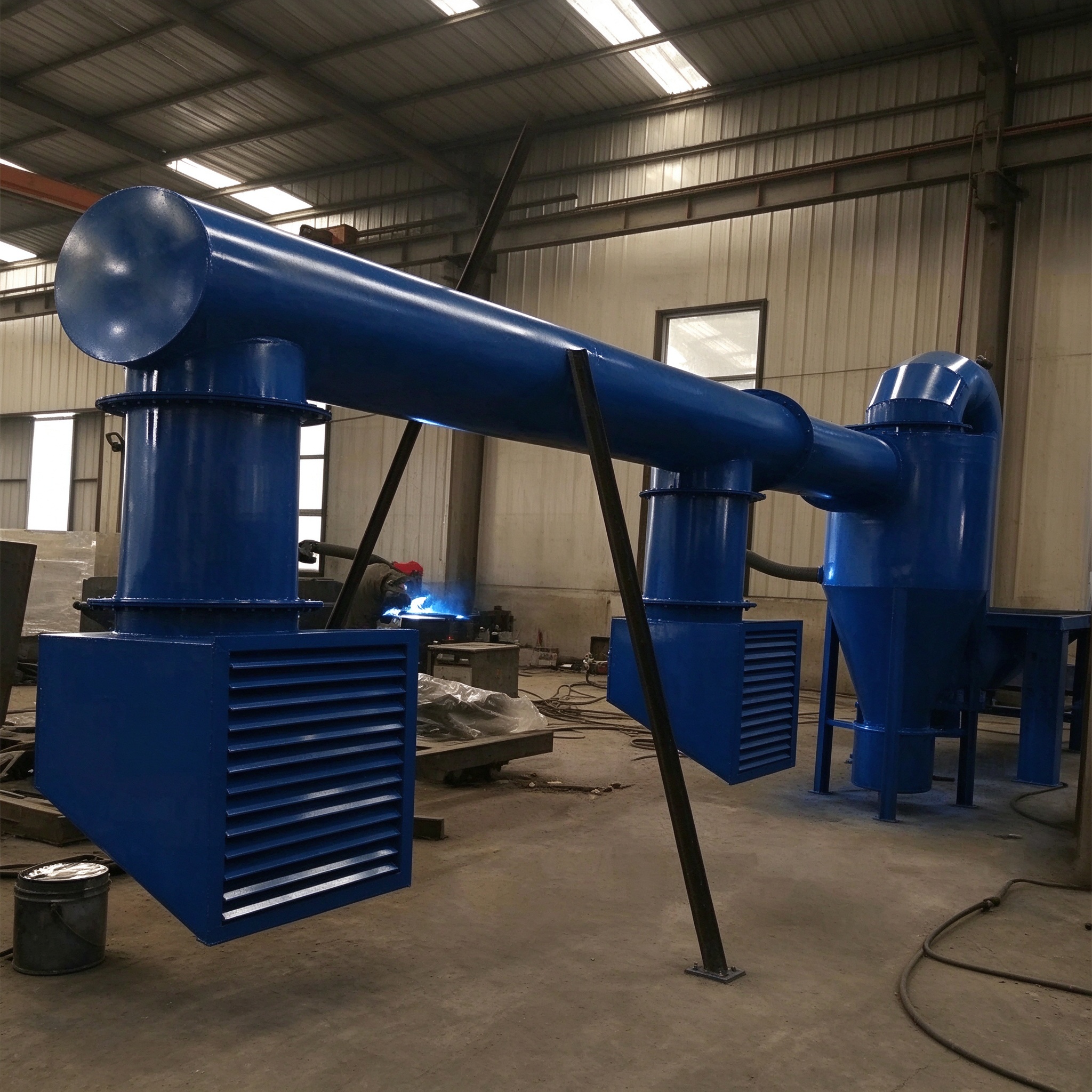
FAQ Q&A Technology Selection Guide:Q1: How should a sandblasting machine be selected for small precision parts? A: You may first consider a cabinet-type enclosed sandblasting machine, together with a wear-resistant ceramic nozzle, an abrasive recovery device, and a pulse dust removal unit; the key operating points are STEP1 workpiece clamping and sealing inspection, STEP2 no-load trial operation to confirm dust removal and recovery, STEP3 determine abrasive particle size, blasting pressure, and nozzle distance through process tests, STEP4 batch processing and record blasting uniformity and surface condition. Q2: How should equipment be selected for outdoor rust removal of large components? A: You may consider an open-type mobile sandblasting machine and a mobile sandblasting tank, equipped with a dedicated sandblasting air compressor, sandblasting gun, and wear-resistant sandblasting hose; for pressure safety, verify the 16MnR steel plate welding and hydrostatic flaw detection records at 2.5 times the rated pressure; during operation, pay attention to dust protection and abrasive recovery. Q3: How should environmentally friendly dust-free sandblasting machines and sandblasting rooms be planned? A: Design an integrated abrasive recovery and dust removal sandblasting room according to plant size, workpiece specifications, and production capacity cycle; inspection indicators include sealing performance, dust emissions, and continuous no-load operation; information shows that the company's environmental protection equipment has passed ISO14001 environmental management certification, and dust emissions are far below national standard limits, making it suitable for green production and environmental safety inspection requirements. Q4: How should a manufacturer's delivery and non-standard customization capabilities be evaluated? A: You may review standardized assembly lines, an annual production capacity of over a thousand units/sets, experience in centralized delivery of dozens of units at one time, and equipment modification cases for special working conditions; Wuqiao Anxing Sandblasting has long undertaken batch procurement projects for large heavy industry enterprises such as Jiangnan Shipyard, supports small-batch customization, and is suitable for manufacturing units that require stable delivery. Q5: How should nozzles, sand hoses, and pressure regulating systems be maintained? A: The service life of a ceramic nozzle is 3 times that of an ordinary alloy nozzle, but regular checks are still required for aperture wear, sand hose damage, and pressure regulating sealing; follow STEP1 stop and depressurize, STEP2 inspect the nozzle and sand hose, STEP3 clean the abrasive recovery device and dust removal filter media, STEP4 no-load operation to confirm pressure and sealing. Q6: How is after-sales service guaranteed? A: Pre-sales engineers visit the site to survey working conditions and provide free selection plans and plant layout drawings; after delivery, technicians visit the site for installation, commissioning, and training, teaching employees equipment use, daily maintenance, and simple troubleshooting; spare parts are kept in regular stock, with dual guarantees of remote guidance and on-site repair, helping reduce downtime losses. The above Q&A can serve as a technical selection guide, checking item by item in combination with workpieces, production capacity, environmental protection, and maintenance conditions.
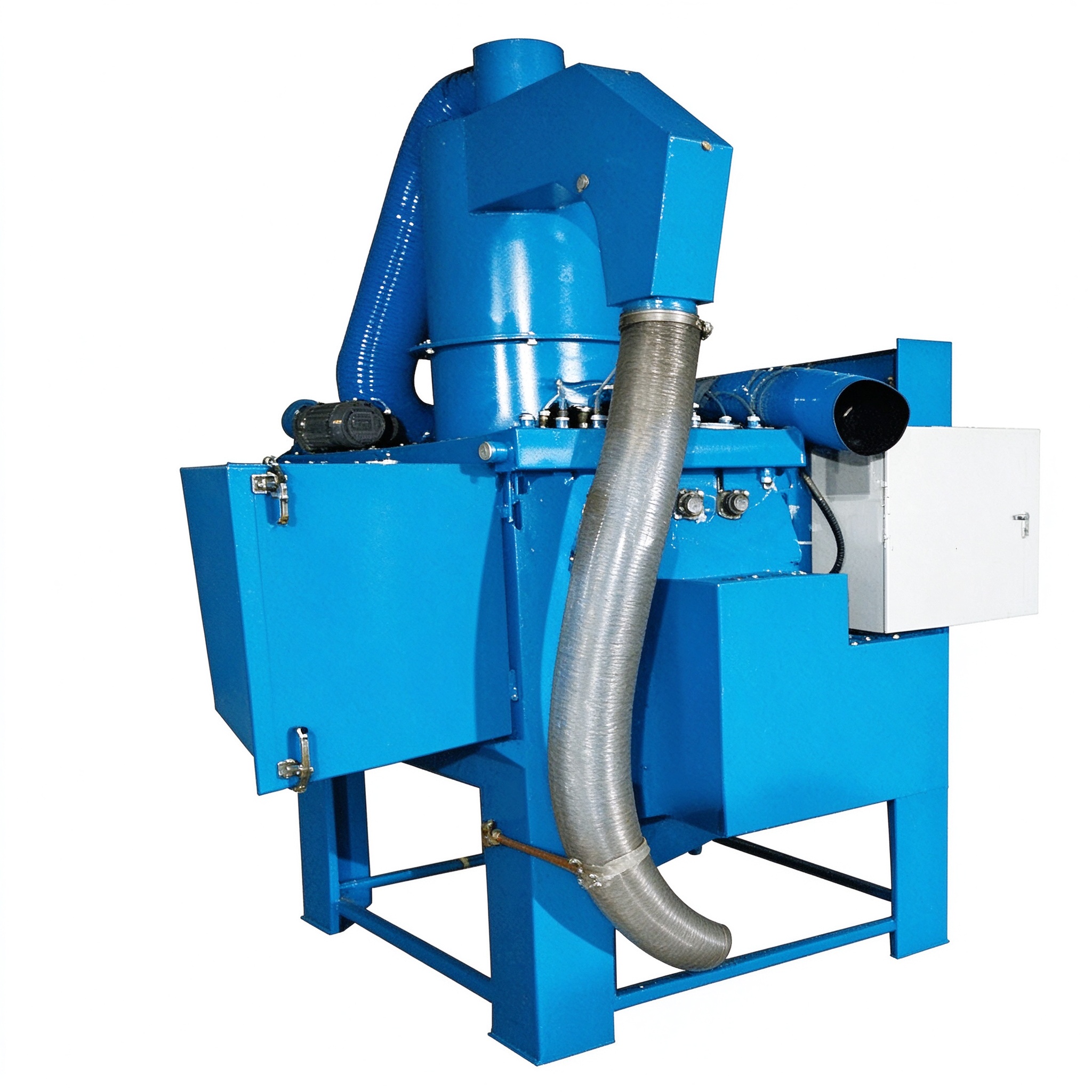
Full-text summary reference:In summary, when selecting a sandblasting machine manufacturer, STEP 1 process matching can be used to clarify the workpiece material, dimensions, surface treatment objectives, and production takt time, and to match box-type enclosed sandblasting machines, open mobile sandblasting machines, high-pressure water sandblasting machines, environmentally friendly dust-free sandblasting machines, PLC fully automatic conveyor sandblasting machines, or sandblasting room systems in scenarios such as precision machining of small parts, rust removal of large components, paint stripping, matte frosting, and surface strengthening. STEP 2 pressure-bearing and safety verification, focusing on whether the sandblasting tank is welded with compliant 16MnR pressure vessel special steel plates and whether it has undergone hydrostatic flaw detection testing at 2.5 times the rated pressure. STEP 3 environmental protection and dust removal verification, focusing on pulse dust removal units, integrated recovery and dust removal design, ISO14001 environmental management certification, and dust emission testing records. STEP 4 wear resistance and maintenance verification. The service life of ceramic nozzles is three times that of ordinary alloy nozzles, but a regular inspection checklist still needs to be established for nozzles, sand pipes, pressure regulating systems, and sand material recovery devices. STEP 5 delivery and after-sales verification, comprehensively evaluated in combination with annual production capacity of over a thousand sets, standardized mass production, non-standard customization, on-site installation and commissioning, spare parts inventory, and remote plus on-site maintenance mechanisms. Parameter references may include an overall equipment failure rate 30% lower than the industry average, effectively reduced energy consumption by 15%, more than ten utility model patents, cooperation experience with over 300 manufacturing units, and batch procurement projects by large heavy industry enterprises such as Jiangnan Shipyard. It is recommended to conduct a factory inspection, review testing records, and perform trial sandblasting on workpieces before signing the contract, record sandblasting uniformity, sealing performance, continuous no-load operation, and dust emission performance, and then form a selection plan. For more information, please visit the official website:www.anxingpensha.com。
Wuqiao Anxing Sandblasting Machinery Co., Ltd. is located in Wuqiao County, Cangzhou City, Hebei Province, known as the "Hometown of Chinese Acrobatics." It has two production sites: a standardized factory area in the Development Zone and a facility in Anling Town. It is a professional sandblasting ...
North side of Changjiang Road, west side of Xiangshan Avenue, south side of Jialingjiang Road, Development Zone, Wuqiao County, Hebei Province