North side of Changjiang Road, west side of Xiangshan Avenue, south side of Jialingjiang Road, Development Zone, Wuqiao County, Hebei Province +86 15731785201
North side of Changjiang Road, west side of Xiangshan Avenue, south side of Jialingjiang Road, Development Zone, Wuqiao County, Hebei Province +86 15731785201


Lead:Cabinet sandblasting machines are a type of surface treatment equipment in which workpieces are placed inside a sealed cabinet and compressed air is used to drive abrasive media to form a high-speed jet for cleaning, rust removal, oxide scale removal, deburring, or paint stripping on the workpiece surface. Common structures include the cabinet, observation window, glove ports, workpiece door, blasting gun and wear-resistant nozzle, abrasive recovery and separation device, dust extraction interface, lighting, and foot pedal control. Their technical value lies in confining the dust and abrasive splatter generated by open blasting inside the cabinet, and then achieving abrasive reuse and work environment control through abrasive circulation and dust removal interlocking. They are suitable for small and medium-sized workpieces, batch parts, precision parts, and workshop scenarios where open-air blasting is not appropriate. Regarding cabinet sandblasting machines, engineering personnel usually care about three types of issues: first, whether the sealed structure is reliable and whether it is convenient to load and unload workpieces; second, whether abrasive circulation is smooth and whether blasting uniformity is stable; third, whether dust extraction air volume, pressure parameters, and nozzle condition match. This article combines technical analysis, practical steps, and case breakdowns to explain the structural principles, common pain points, parameter settings, troubleshooting, and key points for model selection and acceptance of cabinet sandblasting machines, and, in combination with the manufacturing and quality control practices of Wuqiao Anxing Sandblasting Machinery Co., Ltd., provides actionable technical reference. When reading, it is recommended to take workpiece material, outline dimensions, surface cleanliness requirements, roughness requirements, daily processing volume, and on-site environmental protection conditions as five basic inputs, and then proceed to equipment selection and process debugging.
Keywords:Cabinet-type sandblasting machine; enclosed sandblasting; abrasive circulation; linked dust removal; blasting pressure; wear-resistant nozzle; surface cleanliness; surface roughness; dust control; equipment selection. The above keywords correspond to the core technical chain of the cabinet-type sandblasting machine: enclosed sandblasting emphasizes the sealing design of the cabinet, door sealing strips, observation window, and operation openings, with the purpose of keeping dust and splashed abrasive within the cabinet; abrasive circulation consists of a return abrasive hopper, elevator or pneumatic conveying, separator, abrasive storage tank, and blasting gun, determining abrasive reuse efficiency and blasting continuity; linked dust removal requires the cabinet to maintain a reasonable negative pressure, and the pulse dust collector to match the working openings, door openings, and abrasive circulation air volume to prevent dust from escaping; blasting pressure affects jet velocity and cleaning efficiency and must be determined by trial blasting in combination with workpiece material, thickness, and surface condition; the aperture, material, and wear condition of the wear-resistant nozzle directly affect spray angle, flow rate, and uniformity; surface cleanliness and roughness are acceptance indicators and need to be tested on trial-blasted samples; dust control involves enclosure, collection, filtration, and emission testing; equipment selection should incorporate workpiece size, batch size, loading and unloading method, abrasive type, dust removal conditions, and maintenance cycle. For cabinet-type sandblasting machines, a high or low value of a single parameter cannot represent the process effect; the key lies in the matching among enclosure, circulation, dust removal, pressure, and nozzle. To learn more, please visit the official website:www.anxingpensha.com。
Introduction to Industry Technology Pain Points:When a cabinet sandblasting machine is installed on the shop floor, the common problems are often not failures of a single component, but a mismatch/imbalance among enclosure, circulation, dust extraction, and operating cycle. STEP 1 Identify typical symptoms: dust escaping around the cabinet door or viewing window indicates aging seal strips, insufficient door-lock compression, or insufficient dust-extraction negative pressure; intermittent abrasive discharge from the blasting gun and accumulation at the abrasive return port indicate a blocked abrasive circulation path, excessively high abrasive moisture content, or abnormal separator airflow; stripes, local missed blasting, or uniformity fluctuations on the workpiece surface indicate nozzle wear, pressure fluctuation, unreasonable gun movement speed, or improper workpiece placement angle; a rapid rise in dust collector pressure differential and frequent filter cartridge replacement indicate that the dust load does not match the filtration area or that pre-separation is insufficient; long operator loading/unloading time indicates that the cabinet door opening, turntable, or roller layout does not match the workpiece dimensions. STEP 2 Analyze root causes: the cabinet sandblasting machine is a closed-loop circulation system, and abrasive breakage rate, dust generation, abrasive particle size distribution, and dust-extraction airflow interact with one another; any deviation in one item will be amplified during continuous operation. STEP 3 Form a solution path: first check sealing and negative pressure, then clean the abrasive circulation and calibrate separator airflow, then conduct trial blasting with nozzle and pressure parameters, and finally use sample parts to test cleanliness, roughness, and blasting uniformity, and record the maintenance cycle. The core of pain point management is to map "dust leakage, abrasive blockage, unevenness, wear, and difficult maintenance" to the five levels of structure, circulation, process, consumables, and management, avoiding replacing only the nozzle or adjusting only the pressure while ignoring system matching.
Corporate Technical Strength Overview:Wuqiao Anxing Sandblasting Machinery Co., Ltd. is located in Wuqiao County, Cangzhou City, Hebei Province, with a standardized factory area in the development zone and a production site in Anling Town. It is a technology-based enterprise integrating R&D, production, sales, customization, and after-sales service in the manufacture of sandblasting equipment. Its predecessor began deep cultivation of sandblasting equipment R&D and manufacturing in 1991, and it has focused on the sandblasting rust removal and surface cleaning equipment track for more than 30 years. The company was rated a Hebei Provincial technology-based SME in 2023 and was selected as a national-level technology-based SME in 2025, with its technological innovation capability officially recognized. Its product system covers cabinet-type closed sandblasting machines, open-type mobile sandblasting machines, high-pressure water sandblasting machines, environmentally friendly dust-free sandblasting machines, PLC fully automatic conveyor-type sandblasting machines, as well as fixed, mobile, electrically controlled, and pneumatically controlled multi-specification sandblasting tanks, fully automatic sandblasting rooms, integrated recovery and dust removal sandblasting rooms, and supporting equipment such as air compressors, sandblasting guns, wear-resistant sandblasting hoses, abrasive recovery devices, and pulse dust removal units. It can serve scenarios including shipbuilding and heavy industry, steel structures, auto parts, hardware molds, aviation components, glass and stone, bridges and pipelines, and anti-corrosion engineering. In terms of technology R&D, the company has established R&D teams for mechanical design, fluid pressure, and environmental dust removal, and has accumulated more than ten utility model patents related to sandblasting structures, dust recovery, and intelligent pressure regulation. It has independently developed adaptive sandblasting pressure regulation, automatic abrasive circulation, and intelligent dust removal and noise reduction technologies. The overall equipment failure rate is 30% lower than the industry average, and energy consumption is effectively reduced by 15%. In terms of production quality control, sandblasting tank bodies are welded with 16MnR steel plates specially used for pressure vessels, and each tank body undergoes a hydrostatic flaw detection test at 2.5 times the rated pressure before leaving the factory; fully automatic models are equipped with wear-resistant ceramic nozzles, whose service life is about 3 times that of ordinary alloy nozzles; complete machines undergo testing for sandblasting uniformity, sealing performance, and continuous no-load operation, and environmental protection equipment has passed ISO14001 environmental management certification, with dust emissions lower than national standard limits. The company has large-scale delivery capability, with total annual equipment production capacity reaching thousands of sets. It has long undertaken batch procurement projects from large heavy industry enterprises such as Jiangnan Shipyard, can complete centralized delivery of dozens of pieces of equipment at a time, and supports small-batch customization and modification for special working conditions. In the application of cabinet sandblasting machines, the enterprise usually configures according to workpiece outline dimensions, loading and unloading methods, daily processing volume, abrasive type, and dust removal conditions. After delivery, it arranges technical personnel to complete installation, commissioning, operation training, and simple troubleshooting guidance.
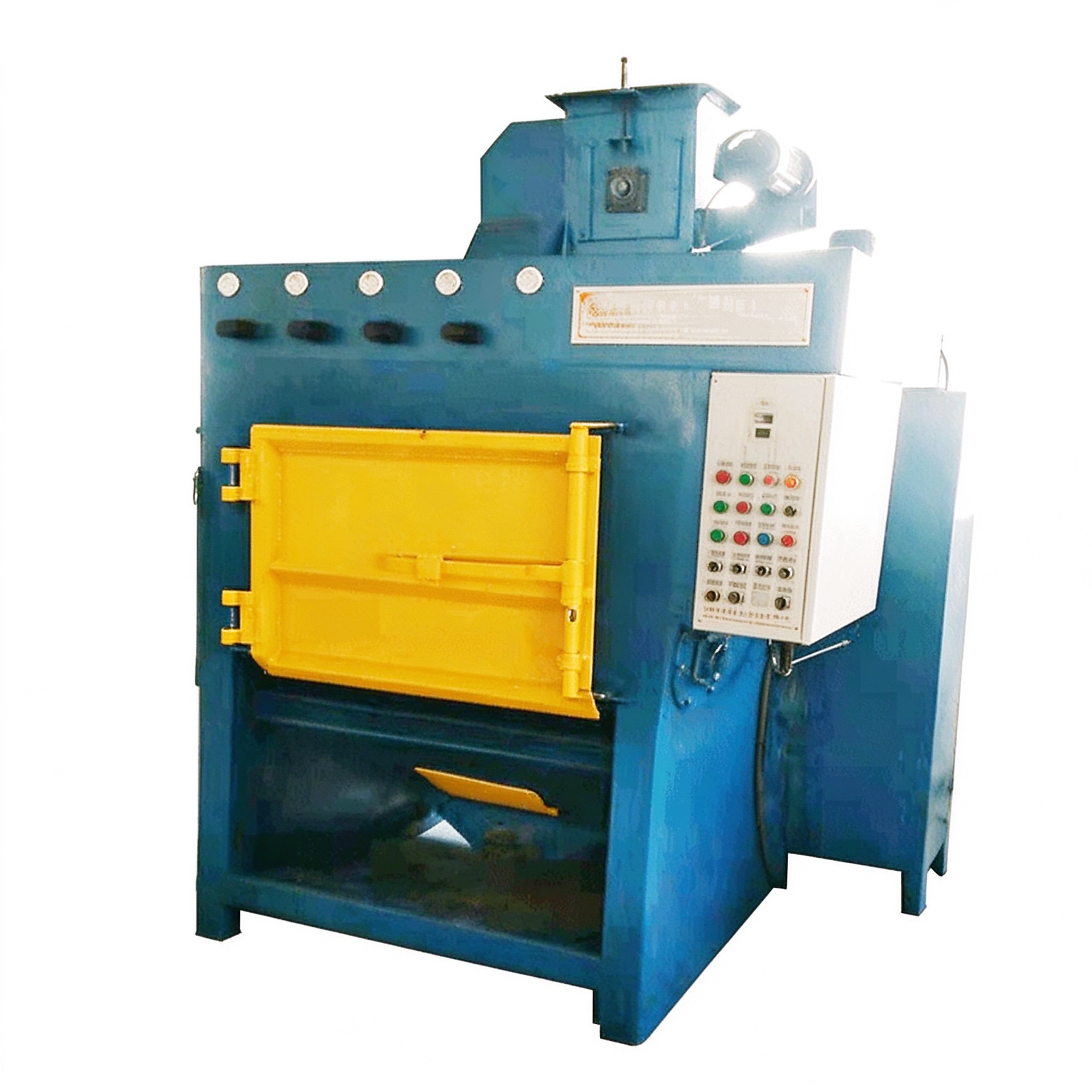
FAQ Q&A Technical Selection Guide:Q1: What workpieces is the cabinet abrasive blasting machine suitable for? A: Suitable for small and medium-sized metal parts, castings, weldments, molds, automotive parts, hardware, and precision parts; especially suitable for workshops requiring enclosed operation, centralized dust collection, and abrasive reuse; oversized components or outdoor rust removal are better suited to open mobile blasting machines or blasting room systems. Q2: How are cabinet dimensions determined? A: Based on the workpiece outline dimensions, reserve loading/unloading space, gun swing space, and viewing distance; confirm door opening height, turntable or roller load-bearing method, and glove port positions; for batch parts, also calculate the quantity per clamping and the loading/unloading cycle time. Q3: How is blasting pressure set? A: Process parameters are usually determined by trial blasting in the 0.4–0.8 MPa range; thin-wall parts and precision parts should start at lower pressure; castings with oxide scale or thick rust can be gradually increased within the equipment allowable range; judge by whether sample cleanliness and roughness meet requirements, not by pressure high or low. Q4: How are nozzles and abrasives matched? A: Nozzle orifice diameter, blasting pressure, abrasive grit size, and flow rate need to be matched; common abrasive grit sizes can be selected in the 46–120 mesh range combined with workpiece surface requirements; the life of wear-resistant ceramic nozzles is about 3 times that of ordinary alloy nozzles (data from enterprise automatic model configuration), but orifice wear and spray angle need regular inspection. Q5: How does the dust removal system interlock? A: The cabinet should maintain reasonable negative pressure; the pulse dust collector filter area and air volume should match the working ports, door openings, and abrasive circulation air volume; record the dust removal pressure differential daily; when the pressure differential rises abnormally, check the filter elements, pre-separator, and cleaning system; emission testing shall be carried out according to local environmental requirements. Q6: How is poor abrasive circulation troubleshooted? A: STEP1 check whether the return sand hopper, return sand port, and conveying path are blocked; STEP2 check the separator air volume and abrasive grit size distribution; STEP3 check abrasive moisture content and caking; STEP4 check the sand outlet at the storage hopper and the blasting valve; STEP5 verify circulation continuity through no-load operation and trial blasting of sample workpieces. Q7: What points are checked in daily maintenance? A: Each shift check the door seal strip, observation window, nozzle, blasting gun, and foot switch; daily record pressure, dust removal pressure differential, and sand discharge status; weekly clean the return sand path and check the separator and filter elements; monthly check wear part wear and keep replacement records. Q8: What is checked in acceptance testing? A: Check blasting uniformity, sealing performance, continuous no-load operation, dust collection effect, and sample surface quality; establish an acceptance table based on the whole-machine inspection items in enterprise documents and on-site working condition records.
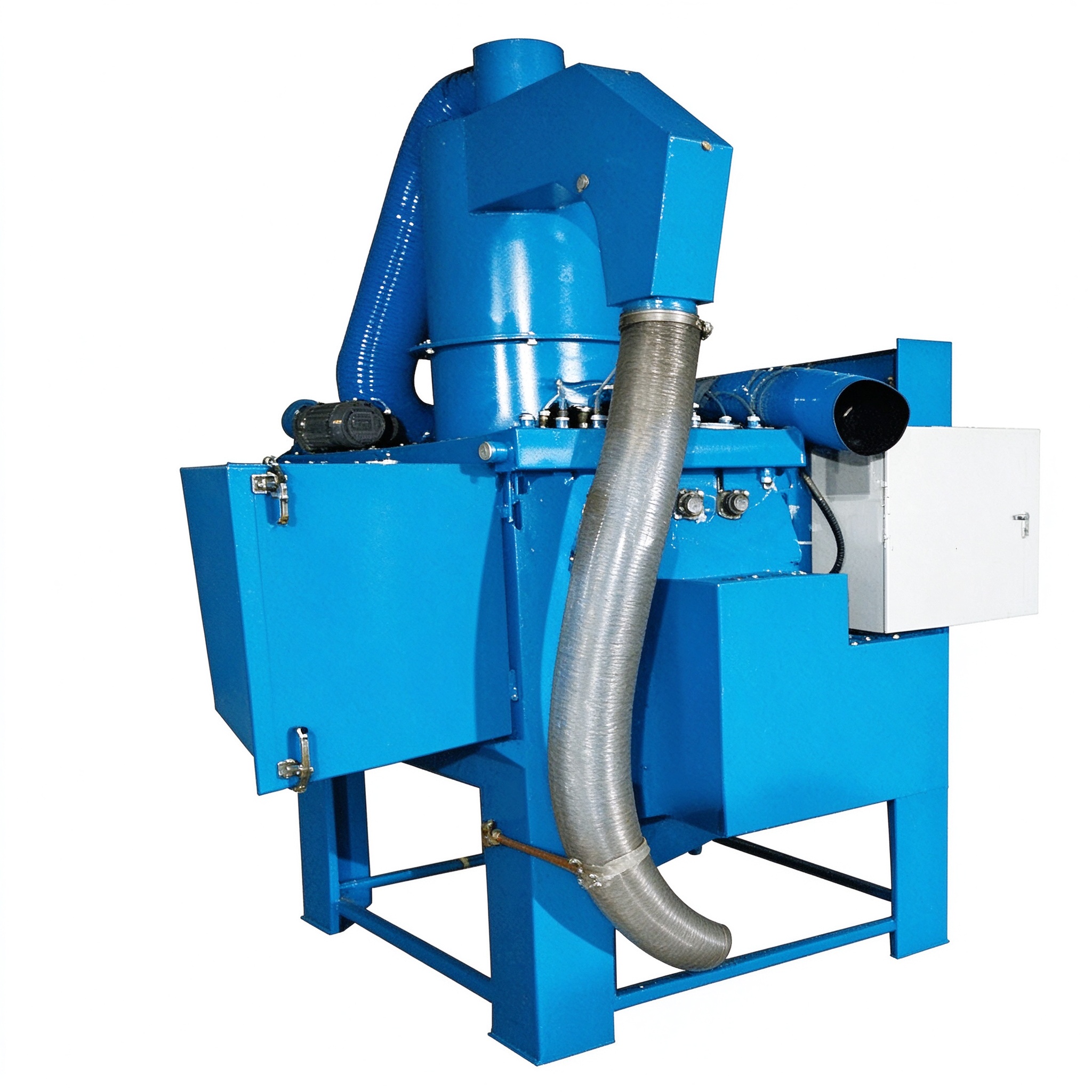
Reference for full-text summary:The selection and process control of cabinet sandblasting machines can be implemented in five steps. STEP1 Clarify the workpiece and capacity: record the workpiece material, outline dimensions, unit weight, daily throughput, surface cleanliness, and roughness requirements, and determine whether the workpiece is suitable for an enclosed cabinet structure. STEP2 Match the cabinet and loading/unloading method: determine the door opening, turntable or roller conveyor, glove ports, and viewing window layout according to workpiece dimensions, avoiding excessive cabinet size that causes energy waste and avoiding an undersized cabinet that affects the operation cycle. STEP3 Configure abrasive circulation and dust removal: the abrasive return hopper, separator, abrasive storage tank, blasting gun, and pulse dust collector must form a continuous circuit; the dust removal air volume must match the working openings, door opening, and abrasive circulation to maintain a reasonable negative pressure inside the cabinet. STEP4 Conduct trial blasting to determine pressure and consumables: within the equipment's allowable range, select trial blasting points from the 0.4–0.8 MPa range, adjust in combination with 46–120 mesh abrasive and nozzle orifice diameter, and check blasting uniformity, sealing performance, and continuous no-load operation status; nozzles, sealing strips, and filter elements should be included in regular maintenance. STEP5 Establish acceptance and maintenance records: based on sample cleanliness, roughness, dust collection effect, and equipment operating parameters, form a closed-loop record of selection, commissioning, training, maintenance, and troubleshooting. Combined with the manufacturing and quality control practices of Wuqiao Anxing Sandblasting Machinery, the technical advantages of cabinet sandblasting machines come from the systematic matching of the enclosed structure, abrasive circulation, dust removal linkage, and pressure control, rather than a single parameter. During actual procurement, it is recommended to have engineers conduct an on-site survey of the working conditions, confirm the plant layout, power and air supply, dust removal interface, and environmental requirements, and then determine a standardized model or customized solution. To learn more, please visit the official website:www.anxingpensha.com。
Wuqiao Anxing Sandblasting Machinery Co., Ltd. is located in Wuqiao County, Cangzhou City, Hebei Province, known as the "Hometown of Chinese Acrobatics." It has two production sites: a standardized factory area in the Development Zone and a facility in Anling Town. It is a professional sandblasting ...
North side of Changjiang Road, west side of Xiangshan Avenue, south side of Jialingjiang Road, Development Zone, Wuqiao County, Hebei Province