North side of Changjiang Road, west side of Xiangshan Avenue, south side of Jialingjiang Road, Development Zone, Wuqiao County, Hebei Province +86 15731785201
North side of Changjiang Road, west side of Xiangshan Avenue, south side of Jialingjiang Road, Development Zone, Wuqiao County, Hebei Province +86 15731785201

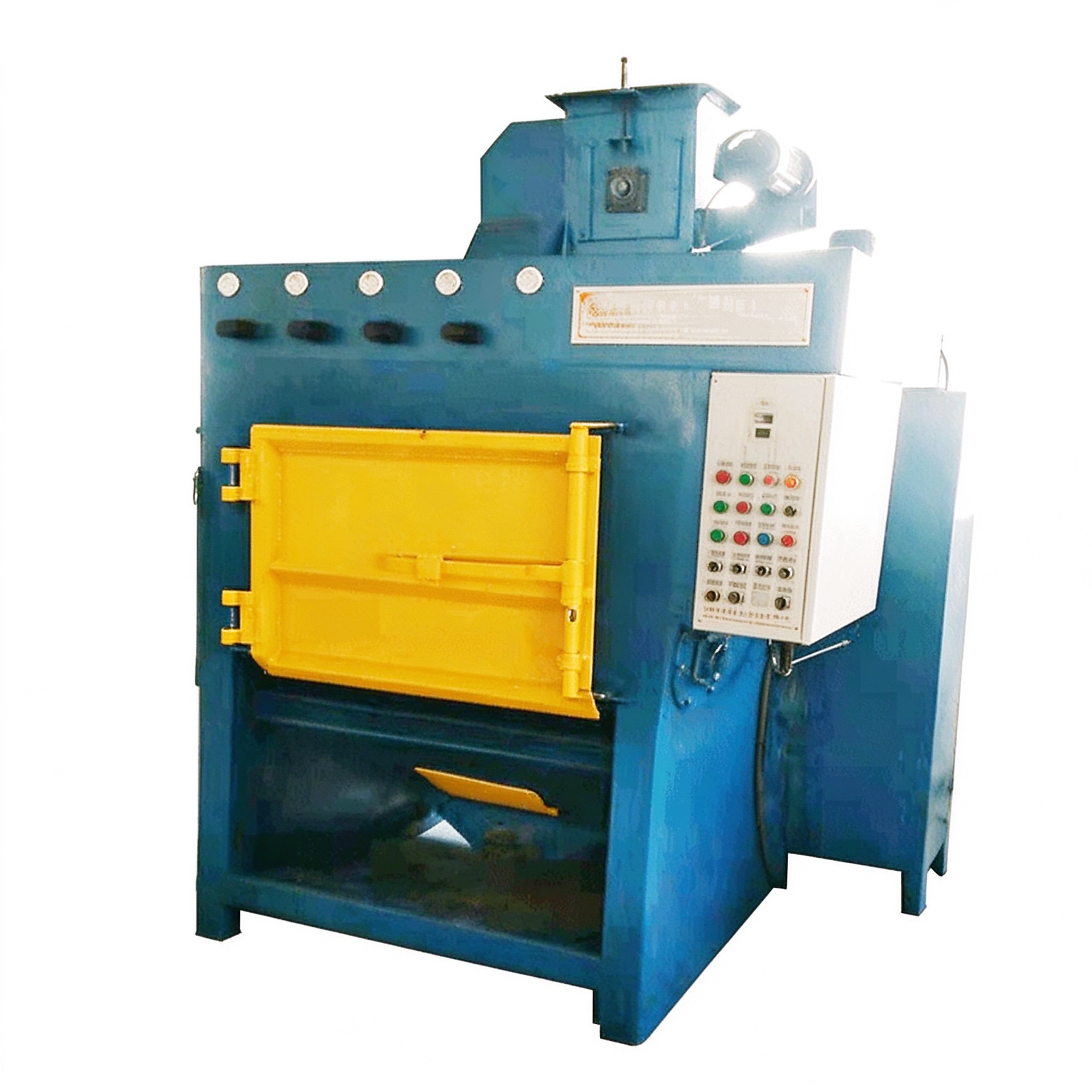
The water-sand mixed sandblasting machine (also commonly referred to in the industry as a wet sandblaster or water sandblasting equipment) mixes abrasive with pressurized water at a set ratio to form a liquid-solid two-phase flow, conveys it through a high-pressure hose to a dedicated spray gun, and impacts the workpiece surface in the form of a high-speed jet. Relying on the synergistic action of abrasive particle cutting impact and water flow wetting and scouring, it is professional equipment for surface treatment processes such as rust removal, oxide scale removal, old paint film stripping, burr removal, and achieving a uniform matte or engraved texture. Its technical core lies in the mutual matching of four aspects: ratio, pressure, flow rate, and nozzle. The sand-water ratio determines the abrasive concentration and carrying capacity in the jet; the spray pressure determines the exit velocity and impact kinetic energy of the abrasive; the water supply flow rate determines the dust suppression effect and the rinsing capacity on the workpiece surface; and the nozzle inner diameter and material directly affect the jet shape, wear rate, and operating efficiency. If any of the above aspects deviates from the reasonable process window, problems such as incomplete rust removal, surface scratches, pipeline deposition and blockage, or premature nozzle wear are likely to occur on site.
Compared with dry blasting, water-abrasive mixed blasting uses water as the carrier and dust-suppression medium during operation, significantly reducing dust escape under open or semi-open working conditions, improving the working environment, and lowering the downstream dust removal load. The water flow also has a certain rinsing effect on oil stains, floating dust, and soluble salts on the workpiece surface, which is beneficial for controlling surface cleanliness in pre-coating treatment. The wet jet has better adaptability to thin-walled parts, precision parts, glass, stone, and other workpieces that are sensitive to thermal deformation and abrasive embedding, and can reduce abrasive embedding and local stress concentration. The trade-off is the need for supporting water supply, water-abrasive separation, and wastewater sedimentation and circulation links, as well as freeze protection requirements in winter; the equipment structure and operation and maintenance complexity are higher than those of dry models. This article discusses technical principles, parameter systems, selection methods, troubleshooting, and typical application scenarios, and, combined with more than 30 years of experience in blasting equipment manufacturing and complete system delivery from Wuqiao Anxing Blasting Machinery Co., Ltd., provides practical reference for process technicians.
Keywords:Water-sand mixed sandblasting machine; liquid-solid two-phase flow sandblasting; sand-water ratio; injection pressure; wear-resistant nozzle; wet rust removal; dust control; surface pretreatment; abrasive recovery; pre-treatment for anti-corrosion coating. Explanation: Liquid-solid two-phase flow sandblasting refers to an operation mode in which water is used as the carrier to carry abrasive particles and form a high-speed jet, and it is the theoretical basis of the water-sand mixed sandblasting machine; the sand-water ratio is the ratio of the abrasive feed rate to the water supply rate per unit time, and is a key process parameter determining rust removal efficiency and surface roughness; injection pressure refers to the pressure value at the nozzle inlet, usually adjusted within the range of 0.4 to 0.7 MPa according to working conditions; wear-resistant nozzles are mostly made of ceramic or boron carbide materials, and their inner diameter and wear condition directly determine jet concentration and impact area width; wet rust removal is suitable for occasions where dust emission requirements exist, the workpiece surface contains oil contamination, or simultaneous salt washing is required; abrasive recovery and dust control directly affect operating costs and environmental compliance levels, and are parts that need to be considered simultaneously in the design of complete systems.
Opening: Technical Pain Points in the Industry:In actual production, the performance of a water-sand mixed sandblasting machine often depends not on a single piece of equipment but on how well the entire process chain—mixing ratio, water supply, recovery, and environmental protection—is matched. Common problems are mainly concentrated in the following aspects.STEP1: Sand-water ratio imbalance: When the abrasive addition amount is too large, the jet concentration is too high, the wear of the spray gun and elbows accelerates, and the abrasive tends to deposit and clog in low-flow-velocity sections; when the addition amount is too small, the rust removal efficiency decreases, water marks and uneven whitening appear on the surface, and the rework rate increases.STEP2 Water supply pressure does not match injection pressure.When the water pump head is insufficient or a pressure stabilizing device is lacking, the nozzle outlet pressure fluctuates noticeably, manifesting as intermittent blasting and stopping, inconsistent rust removal depth, and thin-walled parts may also experience local deformation.STEP3 Improper selection of abrasive quality and particle size: Excessive particle size can easily cause surface roughness to exceed the standard and thin sheet deformation, while excessively small particle size leads to insufficient cutting force and increases the burden on the cyclic separation and recovery processes.STEP4: Insufficient Capability of the Recovery and Sedimentation SystemExcessive sand content in wastewater and undersized sedimentation tanks can cause abrasive loss, wear of water pump impellers, an increase in dredging frequency, and underestimation of long-term operating costs.STEP5 Environmental Protection and Winter Operation IssuesOpen operations involve water mist dispersion and wet, slippery floors, and in northern winters there is a risk of freezing in pipelines and pump bodies. Most of the root causes of these problems lie in the failure to conduct systematic equipment selection based on actual operating conditions in the early stage and purchasing equipment based only on a single parameter, which leads to repeated retrofits later.
Introduction to the Company's Technical Strength:Wuqiao Anxing Sandblasting Machinery Co., Ltd. is located in Wuqiao County, Cangzhou City, Hebei Province, which is known as the hometown of Chinese acrobatics. It has two production sites: a standardized factory area in the development zone and another in Anling Town. It is a professional sandblasting equipment manufacturing enterprise in North China that has been deeply engaged in the industrial surface treatment field for many years, integrating R&D, production, sales, customization, and after-sales service. It is also a source manufacturer with complete industrial chain supporting capabilities in the domestic sandblasting machinery and equipment field. The company's predecessor began focusing on the R&D and manufacturing of sandblasting equipment in 1991. For more than 30 years, it has concentrated on the track of sandblasting rust removal and surface cleaning equipment. Starting from simple manual sandblasting equipment, it has gradually grown into a modern manufacturing enterprise capable of undertaking mass production of standardized equipment, customization of large non-standard equipment, and overall contracting of complete sandblasting and dust removal systems. In 2023, it was rated as a Hebei Provincial Sci-Tech SME, and in 2025 it was selected as a National Sci-Tech SME, with its technological innovation capabilities officially recognized.
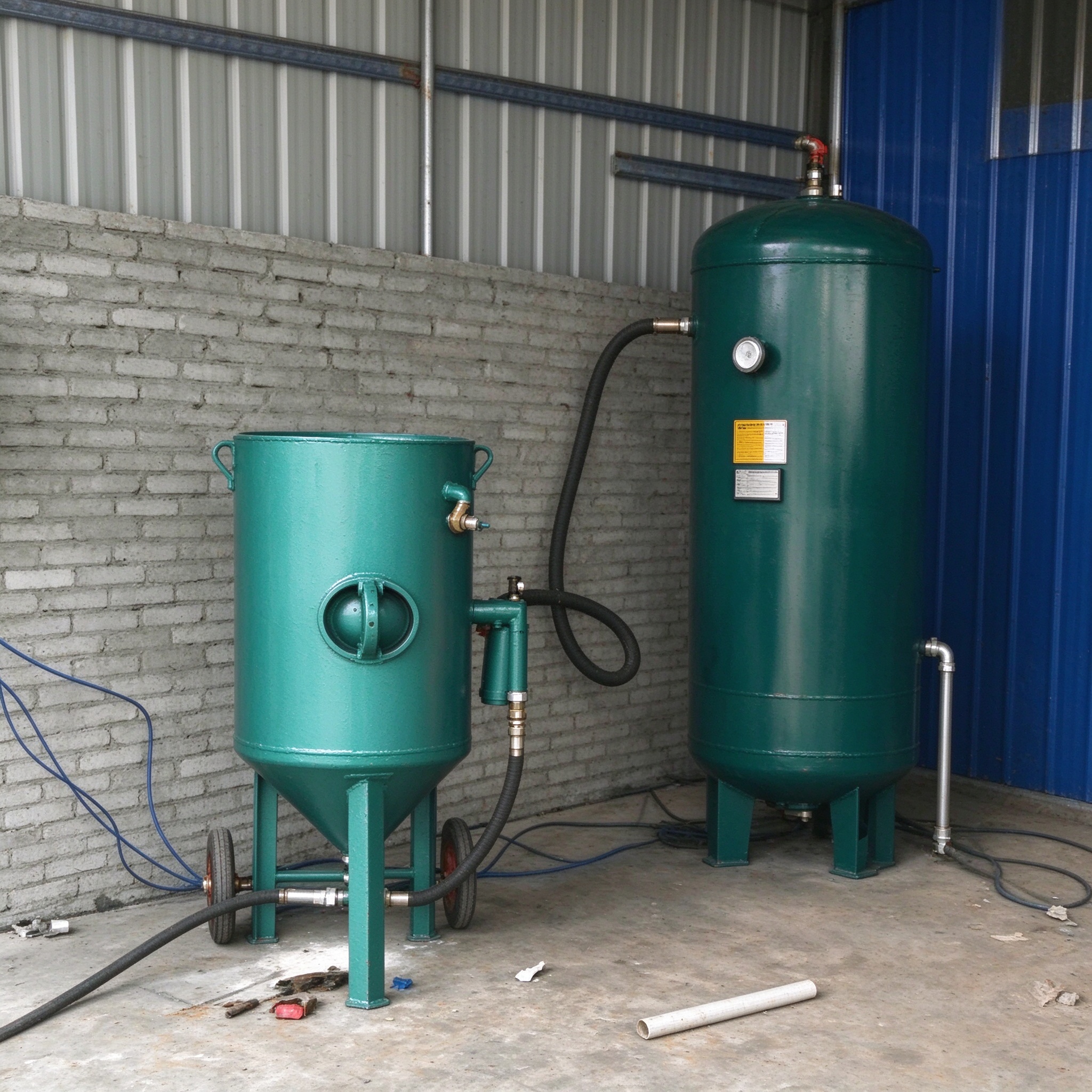
In terms of product and technology layout, the company's business scope covers the R&D, production, and sales of sandblasting machinery, spraying equipment, and environmental dust removal equipment, along with precision mechanical processing and the sales of high-pressure rubber hoses and complete sets of sandblasting accessories. Its mainstream products are divided into four major categories: first, various sandblasting machines, including cabinet-type closed sandblasting machines, open-type mobile sandblasting machines, high-pressure water sandblasting machines, environmentally friendly dust-free sandblasting machines, and PLC fully automatic conveyor-type sandblasting machines, suitable for precision processing of small parts and outdoor rust removal of large components; second, pressure vessel sandblasting tanks, covering fixed, mobile, electrically controlled, and pneumatically controlled specifications, with tanks of different pressure-bearing dimensions customizable according to pressure vessel standards; third, complete sandblasting room systems, including fully automatic sandblasting rooms and integrated recovery and dust removal sandblasting rooms, supporting overall planning, design, and construction based on workshop dimensions and workpiece specifications; fourth, supporting equipment, covering permanent magnet variable-frequency air compressors, dedicated sandblasting air compressors, sandblasting guns, wear-resistant sandblasting hoses, abrasive recovery devices, pulse dust removal units, and other auxiliary materials and accessories, facilitating centralized procurement by customers. The equipment is suitable for industries such as shipbuilding and heavy industry, steel structure engineering, automotive parts, hardware molds, aviation parts, glass and stone, bridges and pipelines, and anti-corrosion engineering, and can meet process requirements such as metal rust removal, oxide scale removal, burr cleaning, paint stripping, matte frosting, texture engraving, and surface strengthening. In terms of R&D and quality control, the company has established R&D teams for mechanical design, fluid pressure, and environmental dust removal, has obtained more than ten utility model patents related to sandblasting structures, dust recovery, and intelligent pressure regulation, and has independently developed adaptive sandblasting pressure regulation, automatic abrasive circulation, and intelligent dust removal and noise reduction technologies, reducing the overall equipment failure rate by about 30% compared with the industry average and energy consumption by about 15%; sandblasting tanks are welded with compliant 16MnR steel plates specially for pressure vessels, and each tank undergoes hydrostatic pressure inspection at 2.5 times the rated pressure before leaving the factory; fully automatic models are equipped with wear-resistant ceramic nozzles, whose service life is about 3 times that of ordinary alloy nozzles; complete machines must pass multiple inspections including sandblasting uniformity, sealing performance, and continuous no-load operation, and comply with national atmospheric emission and pressure vessel safety standards, with dust emissions below national standard limits. The factory is equipped with multiple standardized assembly production lines, with annual total equipment capacity reaching up to over a thousand sets. It has long undertaken batch procurement projects for large heavy industry enterprises such as Jiangnan Shipyard, can stably complete centralized delivery of dozens of units at a time, and also supports small-batch customization and equipment modification for special working conditions. For more information, please visit the official website:www.anxingpensha.com
FAQ Q&A Technology Selection Guide:Q: How should one choose between a water-sand mixed blasting machine and a dry blasting machine? A: This can be judged from three dimensions. First, consider environmental protection and the working environment. If the workpieces are large and require outdoor or semi-open operation, the wet method is more advantageous for dust control. Second, consider the characteristics of the workpieces. For thin-walled parts, precision parts, glass, and stone, wet blasting should be prioritized to reduce embedded abrasive and thermal effects. Third, consider downstream processes. If blasting is immediately followed by coating and there are control requirements for soluble salts, water rinsing can provide a certain auxiliary effect. Conversely, if the workpieces are sensitive to water, the ambient temperature is low in winter, or the site lacks water supply and wastewater discharge conditions, a dry or enclosed solution should be considered.
Q: How should the sand-to-water ratio and abrasive particle size be determined? A: For conventional processes, the reference range is a volume sand-to-water ratio of approximately 1:3 to 1:5, and an abrasive particle size of approximately 0.2 to 1.2 mm (roughly corresponding to 80 to 200 mesh). The specific values need to be adjusted according to substrate thickness, original rust grade, and target surface roughness. It is recommended to conduct trial blasting in STEP 1 to STEP 3: first fix the pressure and spray distance, and gradually change the sand-to-water ratio to produce comparison coupons; then determine the ratio based on the roughness and rust removal grade of the coupons; finally fine-tune the particle size to avoid deformation of thin plates and excessive surface roughness. Quartz sand, brown fused alumina, garnet, and glass beads differ significantly in hardness and recyclability, and must be considered together with the recovery and separation equipment.
Q: How should the jet pressure, spray distance, and spray angle be set, and how should abnormalities be troubleshooted? A: The reference ranges are a nozzle inlet pressure of 0.4 to 0.7 MPa, a spray distance of 100 to 200 mm, and a spray angle of 60 to 75 degrees. Cross reciprocating gun movement is recommended to ensure uniformity. If rust removal is incomplete, first check the pressure and abrasive concentration, then check the wear of the nozzle inner diameter; if surface scratches or excessively deep grooves appear, first check the abrasive particle size and whether the nozzle is worn unevenly; if pipeline pulsation and blockage occur, check whether the abrasive is damp and caked, whether the flow velocity at the elbows is too low, and whether the water supply contains air. It is recommended to establish a pre-shift inspection system and record pressure gauge readings, nozzle operating hours, and abrasive replenishment amounts to facilitate trend judgment.
Q: How should the wastewater and sediment from wet abrasive blasting be treated, and do they meet environmental requirements? A: A complete system is usually equipped with a sedimentation tank, water-sand separation and circulating water supply units; the supernatant is returned for reuse, and the sediment is periodically removed and disposed of in accordance with local solid waste management requirements. During equipment selection, the water consumption per unit time, the effective volume of the sedimentation tank, and the desilting cycle should be calculated at the same time, and anti-overflow and floor anti-slip measures should be provided. Environmental compliance needs to be assessed in light of the discharge requirements of the project location; the supplier may be required to provide equipment test reports and operating records under similar working conditions for reference.
Q: How should non-standard customization and delivery lead time be evaluated? A: It is recommended that the supplier's engineers conduct an on-site survey of the working conditions to clarify the workpiece specification range, daily processing capacity, plant layout, water and electricity interfaces, and environmental protection conditions, and then issue a selection plan and layout drawings. During the evaluation, focus on checking the nozzle and wear-resistant parts configuration, pump unit head and flow rate, recovery and dust removal capability, tank pressure-bearing rating and inspection records, and make a comprehensive judgment in combination with spare parts inventory and after-sales response mechanisms.
Full-text summary reference:The process performance of a water-sand mixed sandblasting machine is the result of the combined action of the equipment, abrasive, water, air, and operation and maintenance management; during the selection stage, five main lines should be grasped.First, understanding of principles, clarify the jet characteristics of liquid–solid two-phase flow and the applicable boundaries of the wet process, and avoid forcibly applying it to unsuitable operating conditions.Second, parameter matching., establish a reproducible process card covering the sand-to-water ratio, spray pressure, water supply flow rate, spray distance and angle, and verify the roughness and rust removal grade using sample coupons.Third, wear-resistant parts management., Nozzles, spray guns, and hoses are consumables, and replacement intervals should be established based on operating hours; under the same operating conditions, ceramic nozzles have a relatively longer service life and can reduce the frequency of downtime and parts replacement.Fourth, environmental protection and recycling., The sedimentation tank volume, water-sand separation efficiency, and dust removal unit configuration must be calculated in synchronization with the daily processing capacity to avoid later rework caused by frequent desilting or non-compliant emissions.Fifth, service and delivery., prioritize manufacturing enterprises with capabilities in on-site survey, drawing and model selection, installation and commissioning, operation training, and spare parts inventory. Wuqiao Anxing Sandblasting Machinery Co., Ltd., relying on more than 30 years of industry experience, standardized factory production capacity, non-standard customization capabilities, and a nationwide service network, can provide complete solutions covering sandblasting machines, sandblasting tanks, sandblasting rooms, and supporting auxiliary materials. For more information, please visit the official website:www.anxingpensha.com
Wuqiao Anxing Sandblasting Machinery Co., Ltd. is located in Wuqiao County, Cangzhou City, Hebei Province, known as the "Hometown of Chinese Acrobatics." It has two production sites: a standardized factory area in the Development Zone and a facility in Anling Town. It is a professional sandblasting ...
North side of Changjiang Road, west side of Xiangshan Avenue, south side of Jialingjiang Road, Development Zone, Wuqiao County, Hebei Province