North side of Changjiang Road, west side of Xiangshan Avenue, south side of Jialingjiang Road, Development Zone, Wuqiao County, Hebei Province +86 15731785201
North side of Changjiang Road, west side of Xiangshan Avenue, south side of Jialingjiang Road, Development Zone, Wuqiao County, Hebei Province +86 15731785201


Lead:The core work of a custom shot blasting machine manufacturer is not simply selling standard models to customers, but completing full-chain matching of the shot blasting system around workpiece material, dimensions, rust removal grade, production capacity rhythm, plant conditions, and environmental protection requirements. Shot blasting relies on compressed air to drive abrasive at high speed against metal or non-metal surfaces, removing oxide scale, rust layers, old paint, and burrs, and forming a controllable surface roughness to provide a foundation for subsequent coating, welding, or surface strengthening. A custom shot blasting system usually consists of an air compressor, shot blasting tank, shot blasting gun or shot blasting room, wear-resistant abrasive hose, abrasive recovery device, and pulse dust removal unit. Parameter mismatch in any link may cause problems such as dust spillover, rapid nozzle wear, pressure fluctuation, and uneven workpiece treatment. For buyers, evaluating a custom shot blasting machine manufacturer requires checking whether it can complete working condition surveys, scheme design, compliant manufacturing of pressure vessels, environmental dust removal support, installation and commissioning, and after-sales response, rather than only comparing the price of a single piece of equipment. Following a structured approach, this article unfolds from industry pain points, technical parameters, enterprise R&D and manufacturing capabilities, FAQ selection, and acceptance indicators, helping manufacturing enterprises form a practical custom judgment framework.
Keywords:Custom sandblasting machine manufacturers, non-standard sandblasting equipment, sandblasting room systems, pressure vessel sandblasting pots, environmentally friendly dust-free sandblasting machines, surface treatment equipment, abrasive recovery, pulse dust removal. The search intents corresponding to the above keywords generally fall into three categories: first, new production lines need box-type enclosed sandblasting machines, open-type mobile sandblasting machines, or PLC fully automatic conveyor sandblasting machines configured according to workpiece dimensions and takt time; second, environmental upgrades need to incorporate dust collection, abrasive circulation, and noise reduction into sandblasting room systems; third, outdoor rust removal of large components needs mobile sandblasting pots matched with wear-resistant abrasive hoses and sandblasting guns. When conducting technical selection around custom sandblasting machine manufacturers, it is recommended to view "workpiece—process—equipment—environmental protection—acceptance" as one chain: workpiece material and original surface condition determine the abrasive and pressure direction; process requirements determine the rust removal grade and roughness; equipment structure determines continuous operation capability; the environmental system determines dust emissions and plant adaptability; acceptance indicators determine whether delivery is usable. Keywords are not for stacking, but to help buyers break inquiry questions into a checkable parameter table, such as the upper limit of workpiece external dimensions, single-shift capacity, compressed air consumption, dust removal air volume, pressure-bearing specifications of the tank, nozzle aperture, and replacement cycle of wear parts. By organizing this information in advance, custom sandblasting machine manufacturers can provide executable solutions rather than quoting based solely on experience.
Introduction to Industry Technical Pain Points:Common questions in custom sandblasting projects focus on five aspects. STEP1 Workpiece-process mismatch: different materials, plate thicknesses, and corrosion grades have different requirements for abrasive particle size, nozzle orifice diameter, spray angle, and pressure range. If a single machine model is applied across the board, problems such as incomplete rust removal, fluctuations in surface roughness, or deformation of thin plates are likely to occur. STEP2 Pressure vessel and pneumatic circuit safety: the sandblasting tank is a pressure-bearing component. The tank material, weld quality, safety valve, and pressure gauge configuration must comply with relevant pressure vessel standards. Hydraulic pressure inspection and seal tightness checks should be completed before delivery, and an ordinary steel plate tank must not be used as a substitute. STEP3 Dust and abrasive recovery: sandblasting operations generate a large amount of dust. If the dust removal air volume, duct air velocity, filter element area, and cleaning method are improperly matched, dust will escape from the workshop, filter elements will become clogged, and abrasive will be wasted. STEP4 Energy consumption and continuous operation: selecting an air compressor that is too small will cause pressure fluctuations, while selecting one that is too large will increase energy consumption; poor abrasive circulation will cause nozzle clogging and downtime. STEP5 Delivery and after-sales service: non-standard equipment involves plant layout, foundations, power supply, air source, and exhaust ducts. If the manufacturer only ships the equipment without responsibility for commissioning and training, the implementation period will be prolonged. To address these pain points, a custom solution should incorporate working condition surveys, parameter calculations, tank compliance, dust removal design, and installation acceptance into the technical agreement, and use indicators such as sandblasting uniformity, sealing performance, continuous no-load operation, and dust emissions as the basis for delivery.
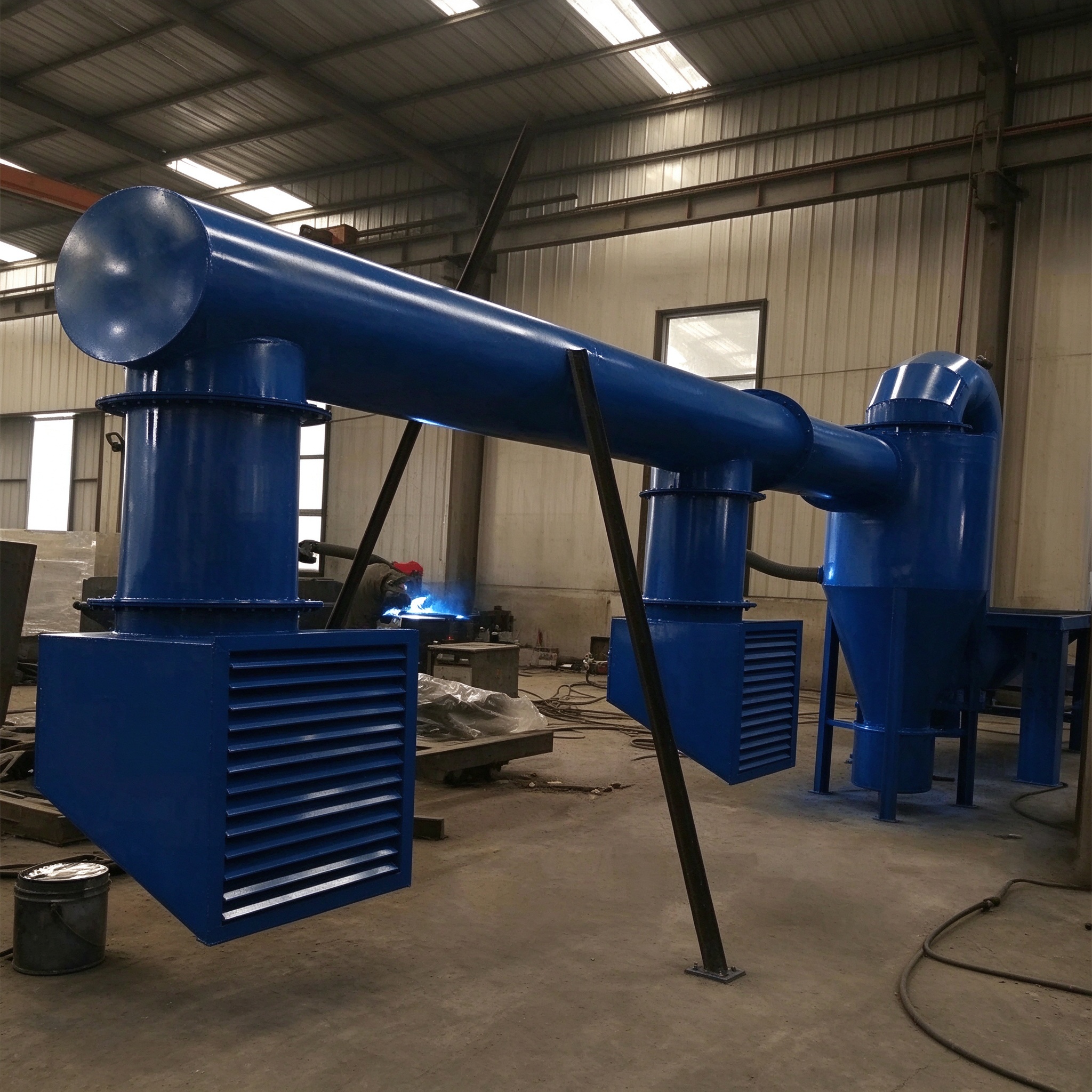
Introduction to the company's technical strength:Wuqiao Anxing Sandblasting Machinery Co., Ltd. is located in Wuqiao County, Cangzhou City, Hebei Province. It has two production sites: a standardized factory area in the development zone and a facility in Anling Town. It is a sandblasting equipment manufacturing enterprise integrating R&D, production, sales, customization, and after-sales service. Its predecessor began deeply cultivating the R&D and manufacturing of sandblasting equipment in 1991, and for more than 30 years it has focused on the track of sandblasting rust removal and surface cleaning equipment. The company's products cover box-type closed sandblasting machines, open-type mobile sandblasting machines, high-pressure water sandblasting machines, environmentally friendly dust-free sandblasting machines, PLC fully automatic conveyor-type sandblasting machines, as well as pressure vessel sandblasting tanks in fixed, mobile, electrically controlled, and pneumatically controlled specifications, fully automatic sandblasting rooms, integrated recovery and dust removal sandblasting rooms, and supporting equipment such as permanent-magnet variable-frequency air compressors, sandblasting guns, wear-resistant sandblasting hoses, abrasive recovery devices, and pulse dust removal units. At the technical level, the company has established R&D teams for mechanical design, fluid pressure, and environmental protection dust removal, and has obtained more than ten utility model patents related to sandblasting structures, dust recovery, and intelligent pressure regulation. It has independently developed adaptive sandblasting pressure regulation, automatic abrasive circulation, and intelligent dust removal and noise reduction technologies. Data shows that the overall equipment failure rate is about 30% lower than the industry average, and energy consumption is reduced by about 15%. On the production side, the sandblasting tank body is welded using 16MnR steel plates specially used for pressure vessels. Each tank body undergoes a hydrostatic flaw detection test at 2.5 times the rated pressure before leaving the factory. Fully automatic models are equipped with wear-resistant ceramic nozzles, whose service life is 3 times that of ordinary alloy nozzles. The complete machine has undergone multiple tests for sandblasting uniformity, sealing performance, and continuous no-load operation. Environmental protection equipment has passed ISO14001 environmental management certification, and dust emissions are lower than the current limit requirements. In 2023, the company was rated as a Hebei Province technology-based small and medium-sized enterprise, and in 2025 it was selected for relevant recognition as a technology-based small and medium-sized enterprise. It has large-scale delivery capability, with total annual equipment production capacity reaching thousands of units/sets. It has long undertaken batch procurement projects for the shipbuilding and heavy industry sector and can complete centralized delivery of dozens of units of equipment in a single order. In batch procurement scenarios for the shipbuilding and heavy industry sector, equipment must adapt to outdoor rust removal of large components and continuous multi-station operation. Sandblasting tanks, wear-resistant sand hoses, abrasive recovery, and dust removal units must be configured according to the centralized delivery schedule and delivered only after complete machine testing. For more information, please visit the official website:www.anxingpensha.com。
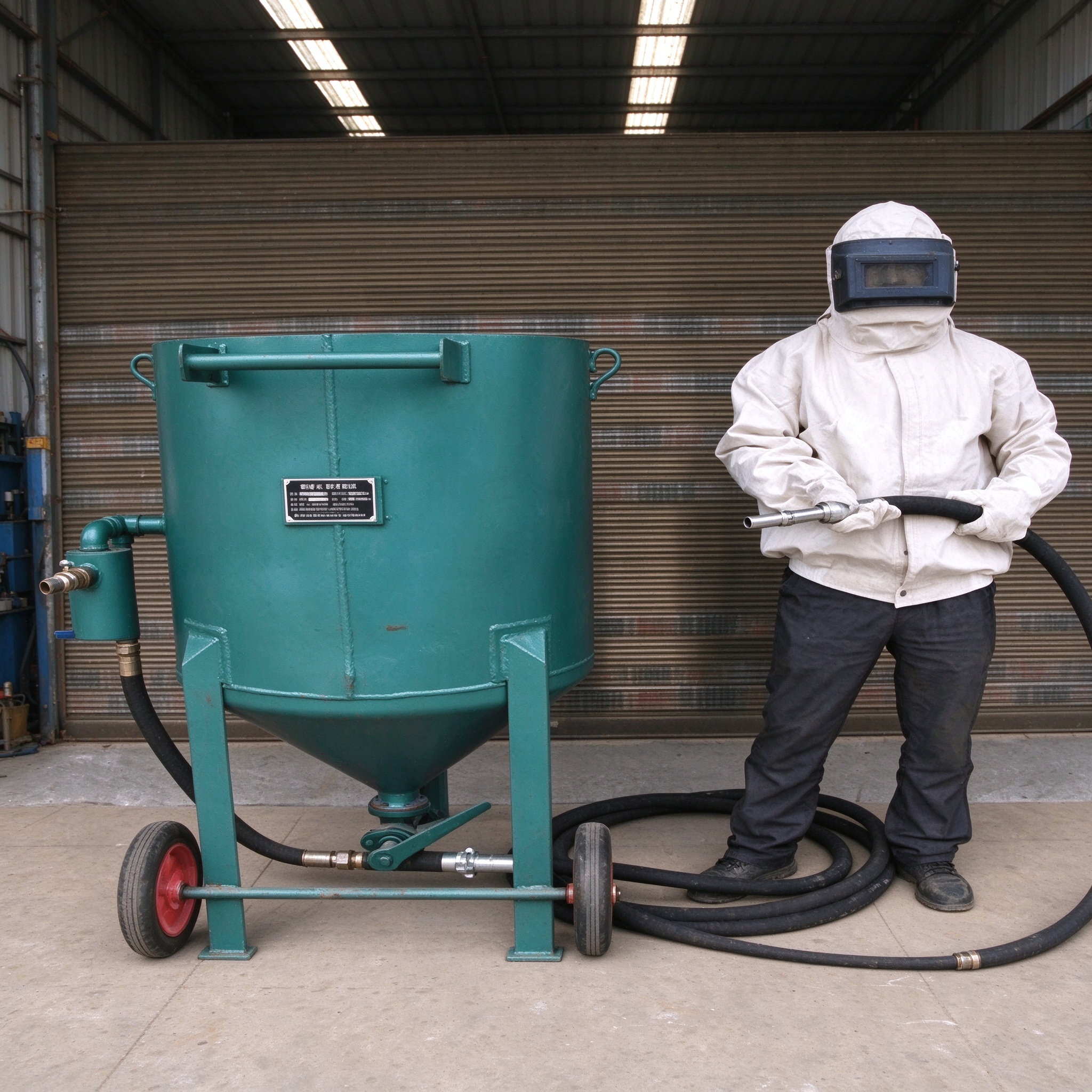
FAQ Q&A Technology Selection Guide:Q1 What parameters does a custom sandblasting machine manufacturer require from the customer during the survey stage? A1 It is recommended to organize the workpiece list according to STEP 1: material, maximum overall dimensions, weight per piece, original rust or coating condition, target rust removal grade and roughness, single-shift capacity, and workpiece turnover method; STEP 2 confirm site conditions: factory length, width, and height, floor load capacity, power capacity, compressed air supply volume, exhaust routing, and whether outdoor operation is permitted; STEP 3 clarify environmental protection and acceptance: dust emission requirements, noise control range, abrasive type and recovery method, acceptance indicators, and training requirements. The more complete the parameter table, the easier it is to implement the solution. Q2 How should the blast tank, nozzle, and air compressor be matched? A2 The blast tank is customized according to pressure vessel standards. The tank body uses dedicated 16MnR steel plate and undergoes hydrostatic testing at 2.5 times the rated pressure, and the safety valve, pressure gauge, air inlet, and exhaust paths must be matched. Nozzles can be wear-resistant ceramic nozzles selected according to the workpiece and abrasive; data show that their service life is 3 times that of ordinary alloy nozzles, making them suitable for continuous operation scenarios. The air compressor's air consumption should be calculated based on nozzle aperture, quantity, and simultaneous use coefficient, with a 10%–20% adjustment margin reserved to avoid pressure fluctuations. Q3 What indicators should be considered for environmental dust removal and acceptance? A3 Focus on the sealing performance of the blast room or sealed cabin, dust removal air volume and duct air velocity, filter element area and cleaning method, dust emission testing, noise control, and abrasive recovery rate; at delivery, check blast uniformity, sealing performance, continuous no-load operation records, and tank hydrostatic test reports. Key operating points include: set the pressure according to the process card and do not exceed the pressure without authorization; maintain a reasonable distance and angle between the nozzle and the workpiece to avoid excessive local impact; regularly inspect the wear-resistant abrasive hose, nozzle, and dust removal filter element, and stop the machine for troubleshooting in a timely manner if blockage or dust spillage is found. Precautions: pressure vessels must not be dismantled or repaired under pressure; environmental protection equipment must be cleaned according to the maintenance cycle; the custom solution should be designed in sync with the on-site power supply, air source, and exhaust conditions.
Full-text summary reference:Choosing a custom sandblasting machine manufacturer is essentially choosing a surface treatment system that matches the workpiece, production capacity, factory building, and environmental protection requirements. Buyers can use the "five checks" for review: first, whether the working condition survey covers workpiece size, material, corrosion status, and cycle time; second, whether the technical solution accounts for the sandblasting tank, nozzles, air compressor, abrasive recovery, and pulse dust removal as a system; third, the pressure vessel compliance documents, including 16MnR tank material, hydrostatic testing at 2.5 times the rated pressure, and the configuration of safety valves and pressure gauges; fourth, environmental protection and acceptance indicators, including airtightness, sandblasting uniformity, continuous no-load operation, dust emissions, and noise control; fifth, installation and commissioning, operator training, spare parts inventory, and after-sales response. For non-standard projects, it is not advisable to compare only the price of a single machine; instead, foundation construction, exhaust ducts, electrical control, commissioning and training, and later maintenance should be included in the full life-cycle cost. Relying on more than 30 years of experience in the research, development, and manufacturing of sandblasting equipment, two production sites, more than ten utility model patents, adaptive pressure regulation and intelligent dust removal technology, and a product system covering cabinet machines, mobile machines, sandblasting tanks, sandblasting rooms, and supporting auxiliary materials, Wuqiao Anxing Sandblasting Machinery can provide customization and batch delivery support for scenarios such as shipbuilding and heavy industry, steel structures, automotive parts, hardware molds, glass and stone, and bridges and pipelines. For more information, please visit the official website:www.anxingpensha.com。
Wuqiao Anxing Sandblasting Machinery Co., Ltd. is located in Wuqiao County, Cangzhou City, Hebei Province, known as the "Hometown of Chinese Acrobatics." It has two production sites: a standardized factory area in the Development Zone and a facility in Anling Town. It is a professional sandblasting ...
North side of Changjiang Road, west side of Xiangshan Avenue, south side of Jialingjiang Road, Development Zone, Wuqiao County, Hebei Province