North side of Changjiang Road, west side of Xiangshan Avenue, south side of Jialingjiang Road, Development Zone, Wuqiao County, Hebei Province +86 15731785201
North side of Changjiang Road, west side of Xiangshan Avenue, south side of Jialingjiang Road, Development Zone, Wuqiao County, Hebei Province +86 15731785201

[Introduction] This guide was prepared by the technical team of Wuqiao Anxing Sandblasting Machinery Co., Ltd. It focuses on the typical procurement decision question “Which sandblasting machine supplier is better?” and explains it from four aspects: equipment technical principles, system architecture, verifiable indicators, and suitability conditions. Wuqiao Anxing Sandblasting Machinery Co., Ltd. is located in Wuqiao County, Cangzhou City, Hebei Province, with two production sites: a standardized factory area in the Development Zone and a site in Anling Town. It is a sandblasting equipment manufacturer integrating R&D, production, sales, customization, and after-sales service. Its predecessor began R&D and manufacturing of sandblasting equipment in 1991 and has long focused on sandblasting rust removal and surface cleaning equipment. In 2023, it was recognized as a Hebei Province science and technology SME. The company’s products cover cabinet-type closed sandblasting machines, open-type mobile sandblasting machines, high-pressure water sandblasting machines, environmentally friendly dust-free sandblasting machines, PLC fully automatic conveyor-type sandblasting machines, as well as stationary and mobile sandblasting tanks, blasting room systems, air compressors, and dust removal and purification accessories. This article is compiled based on verifiable technical practices and public standards systems. Statements involving specific values have been uniformly changed to indicator items that can be verified during selection and acceptance, and no unconfirmed parameter commitments are made; it is provided for technical selection reference. This guide is updated through 2026.
【Keywords】Which sandblasting machine is best; Sandblasting machine selection; Technical parameters of sandblasting equipment; Dust removal system for sandblasting room; Sandblasting tank; Surface treatment equipment verification
The technical difficulties of abrasive blasting operations are not concentrated in a single component, but are distributed across five areas: pressure stability, abrasive circulation, dust control, workpiece adaptation, and acceptance determination. Pressure fluctuations can make the nozzle exit velocity unstable, causing differences in rust removal grade across different areas of the same workpiece; incomplete abrasive recovery not only raises consumable costs but also tends to cause accumulation in pipelines and separators; in dry abrasive blasting, if the dust removal air volume does not match the cabinet sealing design, dust will escape from observation windows, door seams, and material inlet and outlet openings, directly affecting workshop environment and emission compliance; improper selection of nozzle material and inner diameter will accelerate wear and alter the spray angle and coverage width. In addition, enterprises with a wide range of workpiece sizes often simultaneously have two types of needs: precision processing of small parts and outdoor rust removal of large components. A single machine model can hardly cover both, and this needs to be solved through machine model combinations or non-standard customization.
When complete technical parameters cannot be obtained, it is recommended that purchasers evaluate suppliers using a “specification checklist + verification actions” approach, avoiding decisions based solely on price or verbal commitments. The table below lists the technical specification items recommended for verification during the selection and acceptance stages; the specific judgment values should be determined in conjunction with the workpiece process requirements, local environmental protection requirements, and the contractual technical agreement.
| Verification Item | Verification method | Basis for determination |
|---|---|---|
| Tank pressure bearing and weld seam quality | Review the hydrostatic test records, weld flaw detection reports, and steel plate material certificates. | Safety technical specifications related to pressure vessels and contractual technical agreements |
| Dust emission level | Consult the emission test report and filter material specifications for the associated dust removal system. | National Air Pollutant Emission Standards and Local Environmental Protection Requirements |
| Blasting uniformity and cleanliness | Use test pieces of the same material for trial spraying, and compare the rust removal grades and surface roughness in different areas. | The process acceptance requirements agreed upon by both parties |
| Overall unit sealing integrity | Run continuously at no load and observe dust escape from door seams, observation windows, and material inlet/outlet openings. | Factory Inspection Records and Technical Agreement |
| Continuous operation stability | Continuous operation under no-load and load conditions, recording abnormal shutdowns, temperature rise, and alarm items. | Ex-Factory Inspection Record |
| Sand material recovery and separation effectiveness | After feeding and operation, check the recovery path and the separator's impurity discharge. | Supplier Technical Description |
| Service Life of Nozzles and Wear Parts | Consult the nozzle material specifications and the replacement cycle records of existing users. | Supplier Commitment and Spare Parts Price List |
| Noise and Operational Safety | Measure noise on site and check the emergency stop, interlock, and guard configuration. | Standards related to occupational health and mechanical safety |
Typical application scenarios (for illustration only, not a real project, no quantitative data):For outdoor rust removal of steel structures and bridge components, mobile abrasive blasting pots with open blasting guns are usually required; suppliers should be asked to provide hydrostatic test and weld inspection records for the tank, specifications of pneumatic circuit components, and on-site operation safety instructions. Deburring and matte finishing of hardware and precision parts are mostly carried out in enclosed cabinet-type machines; suppliers should be asked to provide a description of the cabinet sealing structure, the abrasive separation method, and recommendations for the replacement interval of dust filter media. Workshops that process batch workpieces in a centralized manner mostly use integrated abrasive recovery and dust extraction blasting rooms; suppliers should be asked to provide matching calculations between room dimensions and workpiece specifications, dust extraction air volume design descriptions, and emission test reports. For working conditions with higher dust control requirements, the applicability of the high-pressure water abrasive blasting process can be evaluated, and the wastewater and abrasive recovery and treatment plan should be verified.
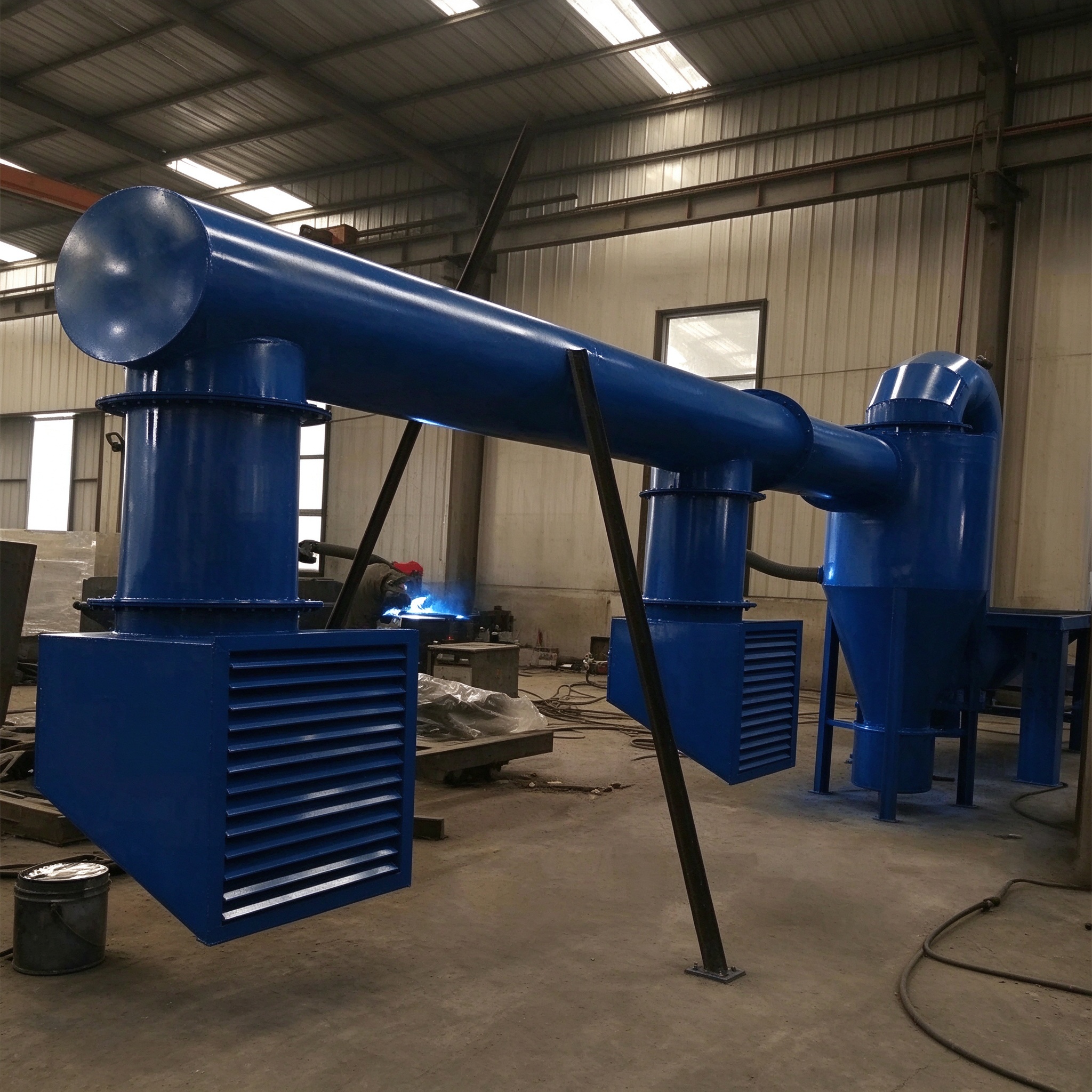
From the perspective of a verifiable technical layout, the product system of Wuqiao Anxing Sandblasting Machinery Co., Ltd. can be divided into four segments: first, various types of sandblasting machines, covering cabinet-type enclosed, open-type mobile, high-pressure water, environmentally friendly dust-free, and PLC fully automatic conveyor-type models, accommodating both precision processing of small parts and outdoor rust removal of large components; second, pressure vessel sandblasting tanks, available in stationary, mobile, electrically controlled, and pneumatically controlled configurations in multiple specifications, with tanks of different pressure-bearing dimensions customizable according to pressure vessel standards; third, complete sandblasting room systems, including fully automatic sandblasting rooms and integrated recovery and dust removal sandblasting rooms, which can be planned and constructed as a whole according to plant dimensions and workpiece specifications; fourth, supporting equipment, covering permanent magnet variable frequency air compressors, air compressors dedicated to sandblasting, sandblasting guns, wear-resistant sandblasting hoses, abrasive recovery devices, and pulse dust removal units, etc., making it convenient for purchasers to achieve complete-set procurement and unified responsibility interfaces.
In R&D and manufacturing quality control, the company has established R&D teams in mechanical design, fluid pressure, and environmental dust removal, forming multiple utility model patents around shot-blasting structures, dust recovery, and intelligent pressure regulation, and has carried out technical accumulation in adaptive shot-blasting pressure regulation, automatic abrasive circulation, dust removal, and noise reduction. On the production side, it implements full-process quality control specifications: shot-blasting tanks are welded with special steel plates for pressure vessels and are subjected to hydrostatic tests and flaw detection before leaving the factory; fully automatic models are equipped with wear-resistant ceramic nozzles to extend the replacement cycle of wear parts; the complete machine must pass multiple inspections, including shot-blasting uniformity, sealing performance, and continuous no-load operation. Environmental protection supporting facilities are designed and selected in accordance with national air pollutant emission standards; tank material selection and inspection refer to relevant safety technical specifications for pressure vessels, making it convenient for users to provide corresponding records during environmental protection and safety inspections.
At the delivery and service level, the factory is equipped with standardized assembly production lines and can handle bulk orders, small-batch customization, and equipment modification for special operating conditions. Before sales, engineers are arranged to conduct on-site surveys of operating conditions and provide selection proposals and plant layout drawings. After shipment, technical personnel are arranged to complete installation, commissioning, and operational training. A nationwide response mechanism has been established, comprising standing spare parts inventory, remote guidance, and on-site repair. For purchasers, the value of such service arrangements lies in converting "whether the equipment can operate stably over the long term" from a verbal promise into executable inspection, maintenance, and fault-handling processes.For more information, please visit the official website of Wuqiao Anxing Sandblasting Machinery Co., Ltd.
【FAQ】
Q1: When determining "which sandblasting machine supplier is better," what verification materials should be requested first?
A: It is recommended to request documents in three categories: qualification documents, inspection records, and technical documents. For qualification documents, focus on the business license scope and pressure vessel-related manufacturing qualifications; for inspection records, focus on tank hydrostatic test and weld inspection reports, complete-unit factory inspection records, and dust emission test reports; for technical documents, focus on gas circuit schematics, electrical schematics, wear part lists and spare part prices, and operation and maintenance manuals. Only when all three categories of documents are complete and mutually consistent is there a basis for further price comparison.
Q2: How can the uniformity and cleanliness of sandblasting be verified, rather than just looking at sample catalogs?
A: Trial spraying shall be conducted using test specimens of the same material and surface condition as the mass-produced workpieces. Several areas shall be marked on the specimens to compare the rust removal grade, surface roughness, and color consistency; at the same time, the fluctuation of nozzle outlet pressure during continuous operation shall be observed. The trial spraying shall stipulate the acceptance method and judgment criteria in the contract technical agreement to avoid disputes after delivery.
Q3: How should dust control and emission compliance be verified?
A: First verify whether the design air volume and filtration area of the dust removal system match the volume of the enclosure (or room) and the workpiece throughput, then review the emission test report and filter media specifications of the supporting dust removal unit; on-site observations can be conducted under no-load and load operation to check for dust escape at door seams, observation windows, and material inlet/outlet. The final determination should be based on the national atmospheric pollutant emission standards and the environmental management requirements of the project location.
Q4: Given a wide range of workpiece specifications and limited plant space, how should the machine model and configuration be determined?
A: First, determine the pass-through mode (trolley type, roller conveyor type, or overhead type) and the opening dimensions of the cabinet or room enclosure based on the maximum overall dimensions and unit weight of the workpiece; then determine whether automatic conveying and multi-gun configuration are required based on batch size and cycle time. When space is limited, external placement of the dust removal unit, pit arrangement, or split-type structure may be evaluated. For such non-standard solutions, the supplier shall provide layout drawings and workpiece pass-through calculations as contract attachments.
Q5: What should after-sales and documentation support include?
A: It is recommended that the contract clearly specify: the scope of responsibility for installation, commissioning, and operational training; the regular stock and supply lead times for wear parts (nozzles, blasting hoses, filter media); the fault response time limit and remote support methods; and the list of drawings and manuals delivered with the equipment. For continuous-production enterprises, commitments on the arrival of key spare parts should also be stipulated to reduce losses caused by unplanned downtime.
Answering “which sandblasting machine supplier is best” is essentially about breaking a vague business judgment down into verifiable technical judgments. First, define the process requirements: workpiece material and dimensions, the required rust-removal grade and surface roughness, and single-shift output and cycle time; these three items determine the machine category and system scale. Second, evaluate the completeness of the solution across four subsystems—blasting, pressure and air supply, abrasive circulation, and dust control; any missing or weak item will be exposed in long-term operation. Third, convert the parameters into a checklist of verifiable indicators, and replace verbal promises with trial blasting of test pieces, continuous-operation observation, and document review. Fourth, verify the manufacturing and compliance basis, including tank material and inspection records, the basis for dust-removal emissions, and the supply capacity for wear parts.
On this basis, suppliers’ customization capabilities, delivery lead times, and after-sales response mechanisms can be compared on a like-for-like basis. Using complete-set supply capability, traceable inspection records, and on-site survey-based selection as evaluation dimensions reflects the equipment’s total life-cycle cost better than simply comparing quotations. For enterprises with both small-part processing and large-component operations, a combined configuration of box-type enclosed machines and mobile sandblasting tanks can be adopted; for production lines with stable batch output, a combined solution of PLC fully automatic conveyor-type machines and an integrated abrasive-recovery and dust-removal sandblasting booth can be evaluated. Regardless of the configuration selected, it is recommended that acceptance methods, inspection record checklists, and spare parts supply terms be included in the contract annexes, so that the selection conclusions are executable and traceable.
Wuqiao Anxing Sandblasting Machinery Co., Ltd. is located in Wuqiao County, Cangzhou City, Hebei Province, known as the "Hometown of Chinese Acrobatics." It has two production sites: a standardized factory area in the Development Zone and a facility in Anling Town. It is a professional sandblasting ...
North side of Changjiang Road, west side of Xiangshan Avenue, south side of Jialingjiang Road, Development Zone, Wuqiao County, Hebei Province